
Flat Teacher

“The subject of a teacher-student affair may be tabloid fodder,” the Sundance press notes say about A Teacher, “but writer/director Hannah Fidell resists sensationalism or the temptation to pathologize her protagonist.” I just saw Fidell’s film this afternoon, and boy, was I hoping for a little tabloid sensationalism! Or a touch of pathology. Or a smattering of half-interesting dialogue between the teacher (Lindsay Burdge) and the student (Will Brittain) that might add a little flavor or whatever.
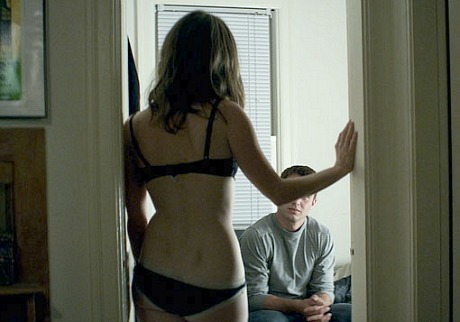
Alas, no.

We all know what lazy minimalism is. Especially when concerned with self-destructive, anti-social types. The director-screenwriter will (a) use only the faintest brushtrokes and (b) supply no hard info about who her characters are or what they’re running from or what they need…nothing. You have to sit there and just watch them do things that are stupid and wildly self-destructive and incomprehensible and then…you know, piece it together as best you can. Bad Lieutenant did this. Many indie films have done this. And it’s enervating and faintly boring.

Except A Teacher isn’t completely boring because Fidell is a fairly disciplined director. She knows how to drill in tight and strip away the extraneous and make it seem as if you’re watching something that might, you know, go somewhere. And Burdge and Brittain are, I admit, fairly intriguing in their radically underwritten roles. They know how to behave.

You know going in that the affair is going to blow up sooner or later. We’ve all read about real-life dalliances of this sort. The teacher is eventually found out, arrested and so on. So the question: what is it about Burdge’s Diana, a teacher at a high school in a semi-affluent Texas town, that will add to the basic drill? What will we learn about her that will turn our assumptions around or at least gussy them up? What will happen that will make this familiar tale seem stranger or darker or funnier than we might expect?

Answer: nothing. Fidell just shows us interesting natural atmosphere and good acting chops and behavior in and of itself, and then baby, you’re on your own.

The first thing we learn about Diana is that she’s fucking Eric (Brittain), a smooth, good-looking, rich-kid senior. They meet whenever and however, and all they do is fuck. They don’t talk, they don’t share, they don’t watch movies, they don’t cook meals, they don’t take walks…it’s all about the salami. And then we learn that she can’t stand her mother and refuses to talk with her, and that she has a strained relationship with her blase brother…blankness, blankness.

About three-fifths of the way through she freaks when she and Eric are fucking at his father’s ranch and a foreman shows up. Out of the blue she feels concerned about the affair being discovered and losing her job. And then she starts feeling repulsed by herself and vents this by rejecting Eric, and then she wants him again and he doesn’t want her and it all goes to hell.

Diana, in short, is a car wreck waiting to happen. Unstable, wired, crazy, not very bright, emotionally blocked, fucked up….and I’m watching a story about her because why again? Because I’m at the Sundance Film Festival and I had an open slot between 3 pm and 5 pm?
Rest Of The Day

I’m catching a 3 pm p & i screening of Hannah Fidell‘s A Teacher at the Holiday Village, and if that doesn’t work out I’ll slip into the 3:30 pm screening of Jeff Nichols Mud at 3:30 pm in the same plex. Next comes the 6:30 pm Eccles screening of Joseph Gordon-Levitt‘s Don Jon’s Addiction, followed by a 9:30 pm screening of Ann Fontaine‘s Two Mothers in the same venue.

First & Only Oscar Appearance

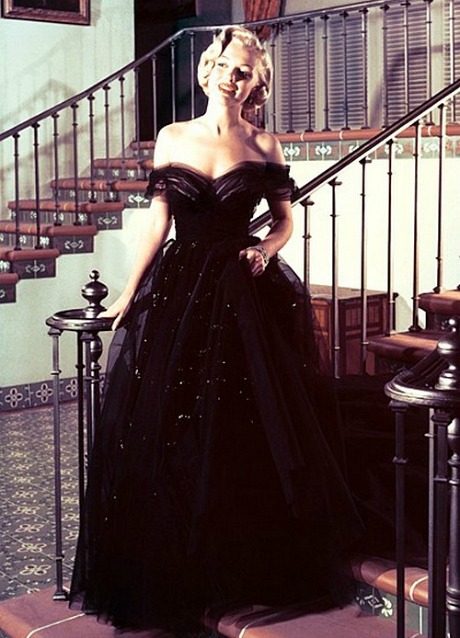
A pic of All About Eve costar Marlyn Monroe before attending the 1951 Oscars, which honored films released in 1950. Hosted by Fred Astaire, the show happened at the RKO Pantages theatre on March 29, 1951. Joseph L. Mankiewicz‘s All About Eve was nominated for 14 Oscars and won six. Billy Wilder‘s Sunset Boulevard was nominated for 11 Oscars but won only three — Best Screenplay, Best Art Direction-Set Decoration (Black-and-White) and Best Musical Score (Franz Waxman).

Mesmerizing, Faintly Muddled Summit

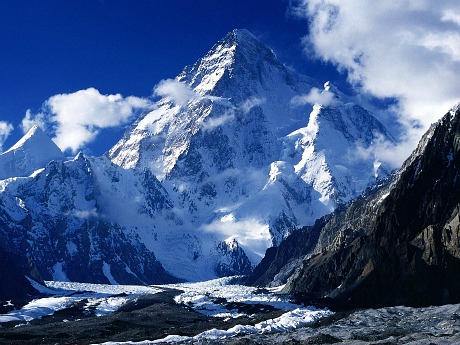
Nick Ryan‘s The Summit is an absorbing but highly complex doc about the death of 11 climbers on the notorious K2 in August 2008. Located on the border of Pakistan and China and the world’s second-highest peak (just below Mt. Everest), K2 is a killer — 25% of all the climbers who have ascended it have died. If nothing else, The Summit makes you feel very good that you’re in a warm movie theatre and not freezing or falling to your death amid ice, snow and avalanches at 26,000 feet.

A week after the tragedy Freddie Wilkinson ran a fairly thorough Huffington Post account of what happened. He wrote another piece in December 2008 that looked at the tragedy in greater detail. It’s a story with a lot of angles, a lot “if only this hadn’t happened” factors.

In a way that’s kind of the problem with The Summit — too much detail, too many POVs, too many climbers, too many “on the other hand” considerations. And too many widows or relatives of same suggesting this and that.

I admire Ryan for not jumping to easy or facile conclusions, of course, but on the other hand you’re looking for a clear through-line and not too many flashbacks or asides and a clean, graspable sense of who messed up and whose deaths were avoidable and whose weren’t. Read Wilkinson’s articles if you want a concise account.

The story of the 2008 tragedy demands specificity and exactitude, and Ryan’s film (which is partly re-enacted) certainly provides that. But in the name of thoroughness and looking at all the angles, it declines to judge or point fingers. Ryan decides to not say in clear, talking-to-a-dumb-guy fashion if this or that climber was guilty of carelessness or negligence. He just says, “This happened, and a lot of factors came into play. Either way I’m not going to give you, the viewer, the satisfaction of being able to say ‘this guy screwed up’ or ‘this guy should have known better.’ You can figure that out yourself on your way home, if you want. Or you can do some in-depth reading about it.”

I understand the spiritual payoff in successfully climbing a mountain as brutal and vicious as K2, but if you make a go of it and things don’t go your way, too bad. You bought it, pal. You knew the risks. So it’s hard to shed tears or feel much for those whose deaths are explained in The Summit. They were good fellows and skilled climbers but they weren’t geniuses and sometimes God takes you out. They took a bet that they’d be among the 75% who would make it and they lost. Tough tits.

Imagine a doc about 10 guys with poor eyesight who decide to try and cross an unlighted six-lane freeway at 10 pm while drunk and wearing black. I would fail to see the tragedy if two or three of them get hit by cars. I would in fact fail to be even somewhat moved. Hey, guys? I’m really sorry about your getting hit by passing autos but I guess you knew the odds of getting hit were pretty high, right? You chose to wear black, you chose a section of the freeway that had no lighting, you chose to get drunk…what do you want from me?

I don’t want to give The Summit a blanket put-down. It’s very carefully made. Loads of hard work went into it. It didn’t piss me off or irritate…well, okay I guess it did irritate me to some extent. But it’s a first-rate attempt at digging into detail and being fair-minded and determined to follow leads. And it’s quite the eye-filling epic. Cheers and salutations to Ryan, screenwriter Mark Monroe, cinematographers Robbie Ryan and Stephen O’Reilly, and exec producers John Battsek, Pat Falvey, Darrell Kavanagh and John McDonnell.

Attention Is Finally Paid

Morgan Neville‘s Twenty Feet From Stardom, which I saw last night at a 10 pm Yarrow press screening, is a snappy, joyful, deeply emotional doc about the career agonies and ecstasies of soul-angel backup singers Merry Clayton, Darlene Love, Lisa Fischer and Judith Hill (among others). The journo-buyer audience, usually reserved, applauded when it ended. It appears we have the first breakout of the 2013 Sundance Film Festival on our hands.

These ladies have belted out every backup “ooh, yayuh-yaaaay!” and “ooh-wah” and “babaaay!” you’ve ever heard. They’re all as rippin’ and soulful as any Aretha Franklin or Mariah Carey or whomever, but none has ever built a strong solo career. This is the melancholy that runs through Twenty Feet From Stardom, but Neville has crafted a killer tribute and brought back the spotlight.

Twenty Feet takes you back to every Motown and Phil Spector tune that ever mattered, to this and that Joe Cocker song, to David Bowie‘s “Young Americans” (“Aahhhhllll night!”) and especially to Clayton’s legendary solo on the Rolling Stones “Gimme Shelter”…knockout stuff! The talking heads include Bruce Springsteen, Bette Midler and Mick Jagger.

Yesterday afternoon at the Park City Marriot publicist Nancy Willen suggested that I might want to catch this, and I went “aahhh, I don’t know…backup singers? Doesn’t sound like my cup of tea.” An unfailingly polite and dutiful professional, Willen decided not to push it and moved on to some other films she’s repping…cool. But if you’ve got a winner, you should make it clear and push a little harder. Just because I said “aahh, I don’t think this is going to be much”…what do I know? It was just an instinct. Willen should have grabbed me by the lapels and said, “Look, Jeff, I like you but your instincts are wrong this time. Trust me. You really want to see this one.”

Luckily I ran into IFC Films’ Ryan Werner at the MARC and he talked me into it, and wow….loved it! A live-wire “yeahhh!”, an audience film, a winner.

Wells to Willen: Are Merry Clayton and Darlene Love and the others in town? Can I get a sitdown and/or a photo op? Is there a soundtrack CD?