
Most Appallingly Unfunny Comedy in Cinema History

The one and only time I saw Steven Spielberg‘s 1941 was inside a small Manhattan screening room about a month before it opened, or sometime in mid-November of ’79. When it began with a parody of the opening Jaws beach scene with a pretty blonde taking a nude swim in the sea, complete with John WilliamsJaws theme music, I wanted to say out loud, “Holy crap, Spielberg is paying tribute to himself!?…he’s starting this film with an homage to his own Hollywood success to get a laugh!? My God!” Stanley Kubrick gave it to Spielberg straight when the latter visited the Elstree set of The Shining. “I saw your last movie, 1941,” Kubrick said. “It was great. It wasn’t funny but it was expertly made. You should have sold it as a drama.” I liked one scene — i.e., when Robert Stack‘s General Stillwell is chuckling happily and then choking up during a Hollywood Boulevard screening of Walt Disney‘s Dumbo.

A special extended version of 1941 running 146 minutes — 28 minutes longer than the original 118-minute cut — will screen at the American Cinematheque on Sunday afternoon at 5 pm, and I must say there’s a perverse part of me that wants to attend and endure this calamity all over again, just so I can say (a) “I saw the nearly two-and-a-half hour version!” and (b) “Let no one say I’m not willing to reconsider an opinion.”

Read more

1971: They Won’t Forget

Until a couple of days ago I’d never quite thought of 1971 as one of the truly legendary years in American cinema, or at least not along the lines of 1939 or ’62 or ’99. But on 3.18 a longish piece by a guy whose name might be Cole Brax (a vague echo of Cole Trickle, Tom Cruise‘s character in Days of Thunder) suggested this very thing. He didn’t make a complete-enough case for ’71’s lasting glory, but he definitely began the conversation. Key quote: “What I do know is that in 1971 many of the greatest filmmakers who ever lived released some of their best work. At the time, most of my favorite directors in film history were still active or just getting started. I don’t know what was in the water or the air that year (probably drugs), but the films that came out of that annum created a ripple effect that is felt to this very day.”

As noted Brax only lists a portion of the finest so here’s a more complete rundown, and listed in order of my personal preference:

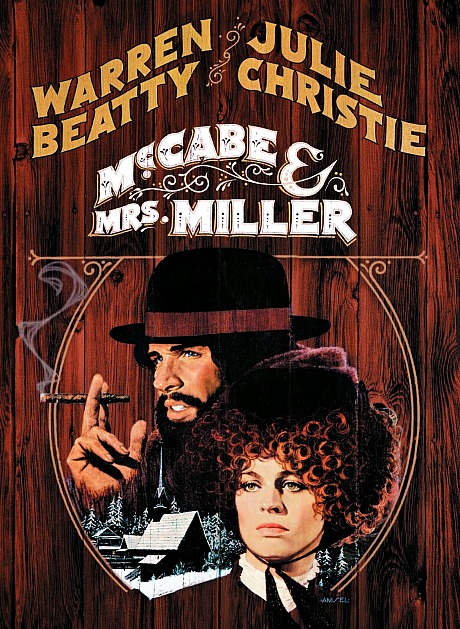
Top 27 1971 Films: (1) The French Connection; (2) The Last Picture Show; (3) A Clockwork Orange (4) The Hospital, (5) McCabe & Mrs. Miller, (6) Sunday Bloody Sunday, (7) Get Carter, (8) Straw Dogs, (9) Murmur of the Heart, (10) Dirty Harry, (11) Klute, (12) Walkabout, (13) Two English Girls, (14) Death in Venice, (15) Two-Lane Blacktop, (16) Taking Off, (17) Carnal Knowledge, (18) Harold and Maude, (19) Roman Polanski’s Macbeth, (20) The Emigrants, (21) The Devils, (22) Play Misty for Me, (23) The Panic in Needle Park, (24) THX 1138, (25) Duel, (26) Little Murders, (27) Le Mans.

Read more

I’ll Have To Pay Attention to Nolan, But He’s No Longer Welcome In My Head

A 3.19 article by Nerdist contributor Kyle Hill reveals that Interstellar co-screenwriter Jonathan Nolan didn’t agree with the ending that his brother Chris went with. Speaking on 3.28 during a seminar at Caltech’s Jet Propulsion Lab in Pasadena, Jonathan said that he would have preferred a “much more straightforward” finale. He basically said that Matthew McConaughey would have died in the middle of the “Einstein-Rosen bridge” or wormhole.

The second I read this I realized that I don’t ever want to see Interstellar again. I honestly wouldn’t sit through it if you paid me $50 or even $100 to do so. Okay, I would see it again for $1000. But the more I think back upon that exasperating film, the more repelled I feel.

Read more

Breast-Fed by Mama Satan

My blood is up about watching Todd Kessler‘s Bloodline, the 13-episode Netflix series that began streaming today. I’m especially looking forward to hanging with Kyle Chandler, one of the most engaging and fascinating middle-period actors around today. If only scuzzy Ben Mendelsohn wasn’t playing the older “bad” brother. I know I complained about this only a month ago, but Mendelsohn exudes the exact same reptilian vibe in role after role. (The only exception has been his amiable-gambler role in the not-yet-released Mississippi Grind.) Like I said before, Mendelsohn walks into a room and it’s “okay, here’s the sweaty scumbag who’s going to poison the well and drag everyone to hell.” He’s Lurch in The Addams Family. He always glares, always perspires, always seethes and seems to constantly smoke no matter what role he’s playing. Bad guys are always more interesting if they don’t radiate venality out of every pore, as Mendelsohn does. And yet 95 times out of 100 casting directors always hire actors who look like they were born evil and breast-fed by Mama Satan.

Weathered Carrot-Head Meets Silky “Young” Brunette

Ben Palmer‘s Man Up has no U.S. distributor and is presently only scheduled to open in Ireland, the U.K. and a couple of other territories. It might be okay but I was slightly bothered by an age-gap issue right off the top. It’s an old tradition in Hollywood-funded romcoms and romances for the guy to be 20 or 25 years older than the girl. (58 year-old Clark Gable romancing 24 year-old Sophia Loren in 1959’s It Started in Naples) but Man Up‘s fleet indie-ish vibe suggests a non-traditional approach. Simon Pegg is 45 but (I’m sorry to say this but it’s true) looks like he’s pushing 48 or 49. Lake Bell turns 36 next week and was 35 when the film was shot. Man Up begins with Pegg assuming Bell is a 24 year-old woman he met online, so the film is telling us she looks ten years younger than her age. So while Pegg and Bell are only 10 years apart in actuality, their appearances suggest a gap of 20 or even 25 years. In short Pegg looks old enough to be Bell’s dad. Which is obviously fine if they’d made that part of the story, but apparently they haven’t. This aside, Bell delivers a fairly convincing British accent.

Read more

Where Shivani Rawat and Megan Ellison Part Ways

Yesterday Variety ran a James Rainey profile of Shivani Rawat, a 29 year-old woman of Indian heritage and financial privelege who’s running ShivHans Pictures, a Manhattan-based production company focusing on low to medium-range budgets ($8 million to $14 million). The money is coming from 5-Hour Energy honcho Manoj Bhargava, described in the piece as Rawat’s godfather and a close friend of her investor father, Mahipal Rawat.


ShivHans Pictures’ Shivani Rawat

The three films made so far by ShivHans are Dan Fogelman‘s Danny Collins, Jay Roach‘s Trumbo and Matt Ross‘s Captain Fantastic. All three are being distributed by Bleecker Street, an entry-level Fox Searchlight-style outfit run by former Focus co-CEO Andrew Karpen.

Fogelman tells Rainey that Ms. Rawat could be “the next Megan Ellison.” Whoa, whoa, whoa. There are two noteworthy similarities between Rawat and Ellison, both being 29 and both having used family (or, in Rawat’s case, extended family) wealth to buy their way into elite film circles. But in one instance at least, they seem to part ways in terms of having an eye for quality.

Ms. Ellison clearly has sublime taste, having produced Zero Dark Thirty, Foxcatcher, Her, American Hustle and Richard Linklater‘s forthcoming That’s What I’m Talking About. But Ms. Rawat’s taste buds may be less refined, at least as far as her reportedly impassioned support of Danny Collins is concerned.

Read more