“There Is No Golden Goose, But I’ve Got Some Chicken That’ll Do”

SNL‘s Anderson Cooper is about 50% gayer than the real deal. Larry David was terrific (“I own one pair of underwear…that’s it!”) but making a laugh line out of Bernie Sanders‘ call for a revolution is 33% timidity, 33% complacency and 34% we’re finished. Hillary: “If you get into bed with Bernie Sanders tonight, you’re going to wake up tomorrow with Donald Trump.” And she’ll never ask Bernie to be her veep. And she won’t make a granny ticket by tapping Elizabeth Warren either (although she should) for fear of alienating angry conservative rural males.

Should Carell’s Big Short Performance Be Called A Lead or a Strong Supporting?

Today’s eyebrow raiser is Paramount’s decision to run Steve Carell as Best Actor for his for his performance as Steve Eisman, a real-life investment specialist, in Adam McKay‘s The Big Short (Paramount, 12.11.)

I wasn’t allowed to catch that special DGA screening two nights ago (i.e., Thursday, 10.15), but I’ve spoken to three guys who did attend, and two regard the Carell-as-Best-Actor thing as a “yeah, maybe, I guess” or “you could make a case that he’s a lead.” A third feels that calling him a lead stretches the definition as Short, he contends, is an ensemble piece made up of three or four parallel storylines, and Carell is basically playing a strong supporting role.


Steve Carell as Steve Eisman in Adam McKay‘s The Big Short.

The main characters besides Carell/Eisman are Christian Bale as Michael Burry, Ryan Gosling as Greg Lippmann and, the least prominent of the bunch, Brad Pitt as Ben Hockett.

The three guys I’ve spoken to all agree that Carell’s performance stands out more than that of his costars, but only one of them (call him Observer #1) half-agrees that it deserves to be called a lead performance. Then again he’s analogizing it to Michael Douglas‘s performance in Traffic, which was kind of a lead but not entirely. His role was somewhat larger than Benicio del Toro‘s Mexican narcotics officer but not tremendously so. It was Benicio, remember, who wound up winning the Best Supporting Actor Oscar while Douglas wasn’t nominated for anything.

Perhaps Paramount has decided to “run” Carell as a lead so they can push Bale as a Best Supporting Actor contender without having them compete with each other? Something like that?

Read more

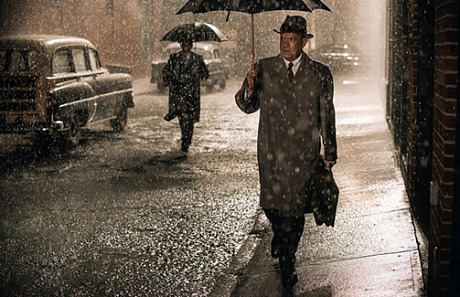
What Are Joe Popcorn’s True Feelings About Spielberg’s Spies?

It would also be nice to post some reactions to Steven Spielberg‘s Bridge of Spies, which opened yesterday and is doing fairly well for a dialogue-driven espionage tale aimed at over-40s. Rather than solicit random comments perhaps readers could address certain opinions and observations from a 10.14 Film Comment review by Michael Sragow?

Remark / observation #1: “As he did in Munich, Spielberg broadens and coarsens a fascinating tale into an overbearingly obvious and preachy statement on the cruelty of political divisions (and borders) and the importance of preserving humane values.”

Remark / observation #2: “Whenever they collaborate on a movie (this is the fourth time), Spielberg and Tom Hanks say they play to their strengths. But by now they have succumbed to their weaknesses. They prod each other into even greater pseudo-innocence and forced, excessive sentiment. Their mawkishness seems to double when they’re in each other’s sight.”

Remark / observation #3: “Partly because of Spielberg’s determination that audiences get the right messages and feel the proper feelings, Bridge of Spies, despite tense and witty passages, is misshapen, over-long and cripplingly erratic.”

Read more

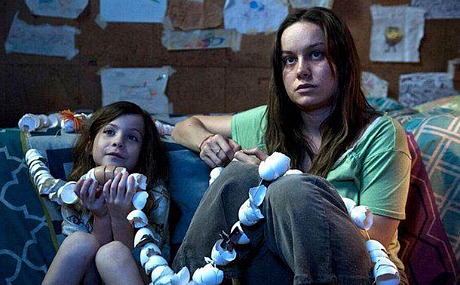
Larson Is Presumably Locked But Will Room Land Best Picture Nom?

Lenny Abrahamson‘s Room has finally been seen by the ticket-buying public. Including, naturally, a smattering of HE regulars. With your assistance I’d like to post opinions about the following: (a) In direct, personal terms would you describe the film as devastating, very affecting, somewhat affecting, moderately good, somewhat frustrating or somewhat draining?, (b) What was the vibe after the film ended and everyone was filing out and talking things over in the lobby?, (c) Brie Larson is said to be locked for a Best Actress nomination — agree or disagree?, and (d) does the film have the heft and heat to land a Best Picture nomination, or is it so urgent and powerful that even asking this question indicates questionable perceptions on my part?

Honestly? I’ve Never Re-Watched Urban Cowboy. Saw It Once At A NYC Screening.

Author-journalist-screenwriter Aaron Latham, quoted in Blake Harris‘s Slashfilm oral history piece (10.16) about the making of James Bridges’ Urban Cowboy (’80): “Debra Winger came out of the whole method tradition. She wanted to live the role. Like she would go shopping as her character. So, of course, she wanted John Travolta to really fall in love, to really have an affair. But John would have none of it. He has a different approach. He believes that acting is a craft or maybe an art. It’s something you do. It’s not method.

“For example, during the making of the movie, everybody in the cast and crew sort of started adopting, piece by piece, rodeo gear to wear. Except Travolta. Who always wore his green tennis shoes and his t-shirts and never once — outside the movie — did he wear cowboy clothes. But what he did do, was he’d hang out a lot with the cowboys. We had kind of a little company of real Gilley’s regulars who appeared in small roles in the film and John liked to hang out with them and go home and have dinner with their families. So he would do research. [Where] Debra wanted to live it, he wanted to observe it. And I guess he had some rule with himself that he wouldn’t date people he was working with. I don’t know.

Read more

Truth and Beasts, Weekend’s Finest, Have Both Tanked

Even before Friday’s box-office reports appeared, I was hearing that James Vanderbilt‘s Truth was doing poorly on both coasts. A friend who attended the 9:50 pm show at Manhattan’s Lincoln Plaza reported that the theatre was nearly empty, and the Los Angeles-based LexG tweeted that “per the Arclight seating chart Room and [Bridge of Spies] are packed tonight, [but] Truth empty all shows. Nobody tell @wellshwood.”

On top of which Cary Fukunaga‘s Beasts of No Nation, which began airing on Netflix as it also opened yesterday in select venues, reportedly tallied a lousy $17K in 31 situations for a per-screen average of $1,742, which sucks wind. Ditto Deadline‘s projected 3-day cume of $54,000. Over and out.

Was I therefore wrong yesterday in stating that Truth and Beasts are the best films opening this weekend and that viewers should take heed? No, I was not wrong. These films are the finest newbies.

I tweeted the following last night: “The public, bless ’em, sometimes has curious taste in films.” Which was a polite or roundabout way of saying that the public only occasionally exhibits taste of any kind in choosing what they’ll buy tickets to, and that they are often lazy, ignorant and ineducable when it comes to catching the highest quality fare. On top of which complexity (i.e., a lack of black-and-white simplicity) scares them to death.

Boxoffice’com’s Phil Contrino: “It doesn’t look good. The release feels really rushed to me. They put the trailer out way too late. Plus the critical reactions have not been enthusiastic enough. I think it’s going be overshadowed by bigger Oscar contenders like Steve Jobs and Room.”

Read more

Son of “The More Gnashing of Teeth Among 1.85 Fascists, The Better”

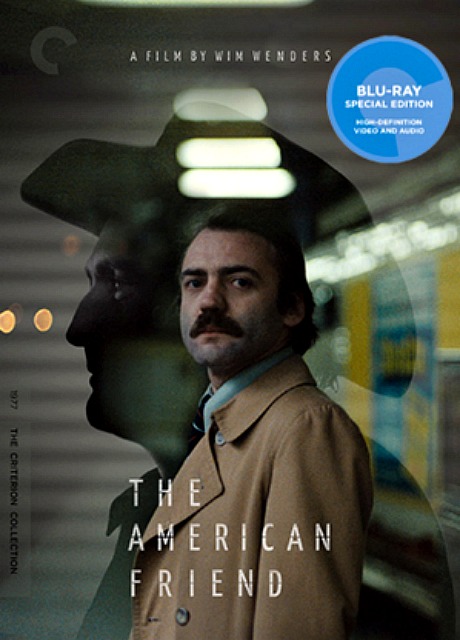
Criterion’s Bluray of Wim WendersThe American Friend (’77), which was announced today, will be presented within a 1.66:1 aspect ratio, which is how it was projected at the New York Film Festival a little more than 38 years ago. The American Friend “is one of those films that I wanted to literally move into,” I wrote last year. The gloomy Hamburg realm was, at the time, a reflection of my own personal weltschmerz and vice versa. It inspired me to pitch a column to a couple of publications called ‘Hollywood Weltschmerz.’ I was (and perhaps on level I still am) Dennis Hopper taking polaroid photos of himself while lying on a pool table. In late ’77 or early ’78 I tried to figure a way to paste my face onto Bruno Ganz‘s in that famous poster, but I couldn’t get it right.”

Read more

Enough With The Grief

I’ve heard second-hand poop from a guy who’s seen Angelina Jolie‘s By The Sea (Universal, 11.13), which will open AFI Fest on 11.5. It’s been described as “an old-fashioned European art film” and, the source added, a good one in that vein. But now Jolie is describing it as a grief movie about her mother. I’m telling you right now that bummed out feelings are not, in and of themselves, anyone’s idea of compelling subject matter for a film.

I’m saying this having just struggled through Reed Morano‘s Meadowland, another grief movie. Nobody can tell me much about downish mood pits, trust me, and I sure as hell don’t want to sit through a film that tries to soak me in someone else’s quicksand. Thanks but nope.

In a new Vogue interview, it’s said that Jolie “wanted to explore bereavement — how different people respond to it. She set the action in the ’70s, when her mother was in her vibrant 20s, and began simply with a husband and wife. She gave them a history of grief, put them in a car, and drove them to a seaside hotel to see how the pair — Roland, a novelist with a red typewriter, and Vanessa, a former dancer with boxes of clothes and hats — attend to their pain. Vanessa is frail, tortured, hemmed in. She feeds her mourning a diet of pills and suicidal fantasies. Roland is defeated by the seclusion of her anguish, and drinks. And so it goes on until innocent newlyweds move in next door…”

Read more

It’s All About Vikander — Redmayne Is Out

You know and I know that the only Danish Girl performance that anyone has spoken about since Toronto is Alicia Vikander‘s supporting turn as Gerda Wegener, i.e. Mrs. Eddie Redmayne. Vikander vs. Carol‘s Rooney Mara, Youth‘s Jane Fonda, Love & Mercy‘s Elizabeth Banks and (if you ask me) Spotlight‘s Rachel McAdams. In the Best Actress rundown I still say Joy‘s Jennifer Lawrence, Suffragette‘s Carey Mulligan, Room‘s Brie Larson, Brooklyn‘s Saoirse Ronan and Truth/Carol‘s Cate Blanchett. Update: I didn’t mean Redmayne is out-out. It’s entirely possible he’ll land a Best Actor nomination, but a win will never happen.

Difference in Daftness

“I always enjoy Bond movies but of course they are daft, and you need very intelligent actors to play them with just the right twinkle in the eye.” — The Guardian‘s Peter Bradshaw in a 10.16 post.

They weren’t always this way. Bond films didn’t start sipping the crazy water until Goldfinger. The first two, Dr. No and From Russia With Love, were tongue-in-cheeky with a light, self-amused attitude, but they didn’t stand on a rooftop and shout “look how batshit ludicrous we can be!” That attitude started to creep in with Goldfinger, gained traction with Thunderball and then went full-tilt boogie with You Only Live Twice.

Back to Bradshaw: “But the promotional machine insists that these intelligent people pretend to be glassy-eyed devotees in the cult of Bond and all its luxury-brand sponsors, for the benefit of journalists and hype-merchants who are themselves pretending. Perhaps the Bond cast will just freak out, en masse, on the red carpet and start screaming their hatred of Bond — like 12-year-old piano prodigies forced to practice 17 hours a day who end up deliberately smashing their fingers in a car door.”