
16 Years Ago

Soon after arriving in Park City for the 2002 Sundance Film Festival, I filed the following: “Roaming around Park City left me with a fatigued sense of déja vu. Like I’ve done this too many times before and the thrill is…well, I’m sure it’ll come back once things get rolling.

“The area has been experiencing a drought so there’s not much snow, but every year I return Park City seems a little dryer, a little less exotic, and a little more of an orchestrated Mardi Gras. It’s as if the town is becoming more and more of a real-estate experiment — how many more condos, homes, buildings and new businesses can the local hustlers add to an already over-developed burgh before Park City has relinquished its former silver-mining-town identity entirely?
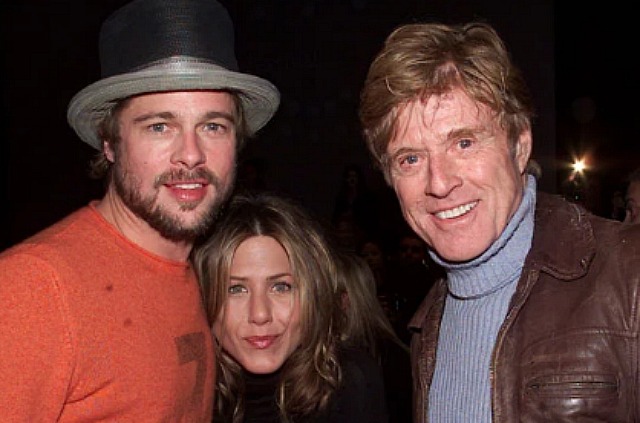

Brad Pitt, Jennifer Aniston and Robert Redford during the 2002 Sundance Film Festival.

“When I first came here in ’93 I thought, ‘Wow, cool.’ Now I’m going, ‘Hmm, yeah …okay.’ This festival used to be run and enjoyed by the hip elite; now it’s a mob scene everywhere you go. I guess all things lose their charm if you experience and re-experience them often enough. I wish it would snow and just blanket everything. Then I could run out into the middle of it and fall on my back and make an angel and maybe throw snowballs at cars.”

Some of the Sundance 2002 films: Niki Caro‘s Whale Rider, Rebecca Miller‘s Personal Velocity, Justin Lin‘s Better Luck Tomorrow, Susanne Bier‘s Open Hearts, Ted Demme & Richard LaGravenese‘s A Decade Under The Influence, Todd Louiso‘s Love Liza, Joe Carnahan‘s Narc, Mark Romanek‘s One Hour Photo, Steven Shainberg‘s Secretary, Gary Winick‘s Tadpole, Patricia Cardoso‘s Real Women Have Curves.
Some Have A Secret

“I often write about social media mobs…and what I have found is that they are not frequently misinformed, but they are almost always misinformed. You just don’t know what happened unless you were (a) there or (b) someone has actually investigated whatever claims have come forth. But that’s not how mobs work.

“This atmosphere makes it difficult, if not impossible, to dissent. I was recently talking to a friend about the #MeToo movement. In hushed tones, she told me she had a confession to make. “Don’t tell anyone,” she said, “but I don’t think Woody Allen raped his daughter.”

“Luckily for her, she was in good company — I also doubt the veracity of Woody Allen’s guilt because the evidence just doesn’t support the claims — but she said this as though she were confessing to a terrible crime.

“And she was: a thought crime, one so potentially harmful to her standing among her own friends that expressing it to anyone besides a known thought criminal was unthinkable. The resistance, it seems, is intersectional in everything but opinions.” — from “Call-Out Culture Is a Toxic Garbage Dumpster Fire of Trash,” posted by The Stranger’s Katie Herzog on 1.23.18 at 3:27 pm.

Son of Gangs vs. Gangs

I was told earlier today that the Gangs of New York Wikipedia page mentions a noteworthy piece by yours truly, posted in December 2001, that described the differences between a 1.37:1 work print version of Gangs that I saw on VHS vs. the final 2.39:1 release version. Here’s a link to the original article, and here’s a repost of it:

If Miramax Films and Martin Scorsese had decided to release a polished, cleaned-up version of the Gangs of New York work print they had in the can (or, if you want to get technical, that was stored on Marty and editor Thelma Schoonmaker‘s Avid) sometime in October ’01, we’d all be enjoying a better, more rewarding film than the Gangs that will open nationwide four days from now (12.20.02).

I’ve seen both versions and most of you haven’t, so I know something you don’t. The best Gangs of New York will not be hitting screens this weekend, and may never even be seen on DVD, given Scorsese’s apparent disinterest in releasing “director’s cut” versions of his films, or in supplying deleted scenes or outtakes or any of that jazz.

The work-print version is longer by roughly 20 minutes, and more filled out and expressive as a result, but that’s not the thing. The main distinction for me is that it’s plainer and therefore more cinematic, as it doesn’t use the narration track that, in my view, pollutes the official version. It also lacks a musical score, with only some drums and temp music.

This leaves you free, in short, to simply pick and choose from the feast of visual information that Gangs of New York is, and make of it what you will. And if that isn’t the essence of great movie-watching, I don’t know what is.

It also points out what’s wrong with the theatrical release version, which I feel has been fussed over too intensively, compressed, simplified, lathered in big-movie music and, to some extent, thematically obscured.

Miramax and Scorsese had the superior work-print version in their hands 14 months ago. It’s a little rough around the edges, but it’s not tremendously different from the version being released on Friday. It is only missing Leonardo DiCaprio‘s narration, a musical score and some CG effects, which tells me it could have easily been prepared for a December ’01 release. But Miramax decided otherwise and pushed it back it until now. If you ask me their reasons for doing so were short-sighted and wrong.

Read more

Kenney’s Memory Sullied

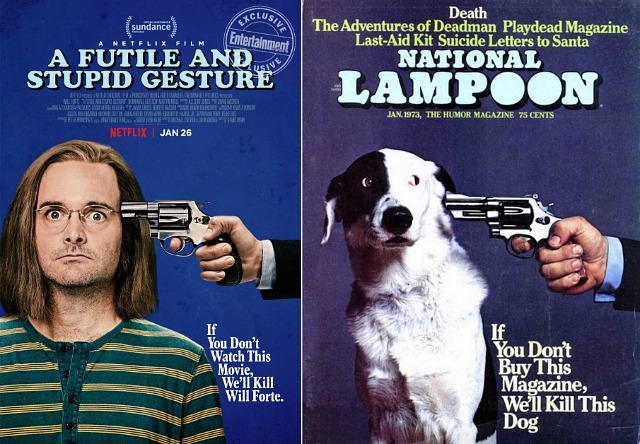
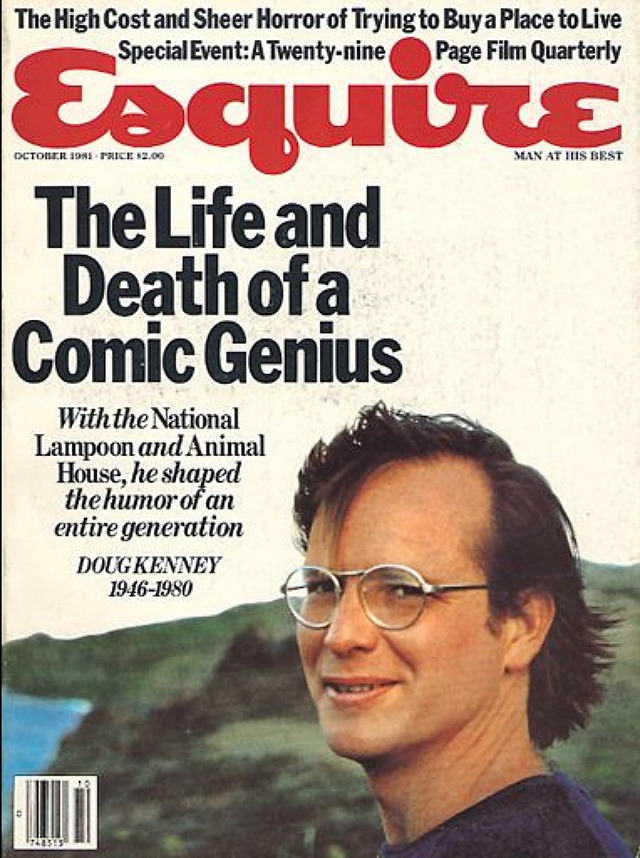
This morning I saw…no, endured David Wain‘s A Futile and Stupid Gesture (Netflix, 1.26). Based on the same-titled 2006 biography by Josh Karp, it’s a half-surreal, half-inept and wholly depressing saga of National Lampoon co-founder, Animal House producer-screenwriter and self-destructive genius Doug Kenney.

I don’t want to overstate my reaction, but ten minutes in I was saying to myself “nope, naaah, nope, nope…wrong, fake, not believable…shit, this is mindblowingly bad.”

It dishonors the legacy of the National Lampoon by suggesting that Kenney and his editorial colleagues weren’t very interesting. John Aboud and Michael Colton‘s screenplay supplies clunky exposition and by-the-numbers plotting until it seeps out of your ears. The interplay among National Lampoon staffers isn’t brisk or brainy or cruel enough — there’s no believing it. Cranking out monthly NatLamp issues couldn’t have been this tedious.

There’s no believing Will Forte‘s performance as Kenney for an instant, partly because (a) he looks and and sounds like an actor pretending to be an allegedly funny guy rather than the Real McCoy, and (b) partly because Forte was a bit overweight during filming and therefore doesn’t look like Kenney as much as late-period Truman Capote.

Domnhall Gleason‘s performance as NatLamp co-founder Henry Beard is bland and lifeless, and he wears the same stupid-ass ’70s wig in scene after scene, despite the passing of time and refining of hair styles. The ’70s wigs that everyone wears, in fact, really look like wigs, and the sideburn paste-ons have to be seen to be believed.

There was an older guy two or three rows back who was laughing his head off at too many of the jokes. I eventually couldn’t stand it and turned around and gave him the HE stink-eye.

Read more