Historic Convergence of Icarus and ’18 OIympics

A little more than two months ago, it was announced that Russia’s Olympic team had been barred from the 2018 Winter Games in Pyeongchang, South Korea. The reason for this historic, forehead-slapping decision can be found in Bryan Fogel‘s Oscar-nominated documentary Icarus, which has been paying on Netflix since last August.

Talk about a timely documentary with the South Korean games just beginning and Russia conspicuously absent from each and every event.
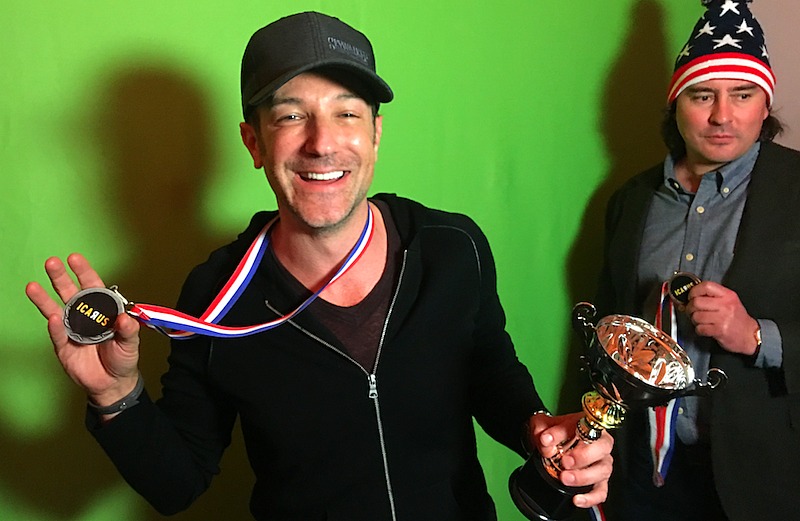

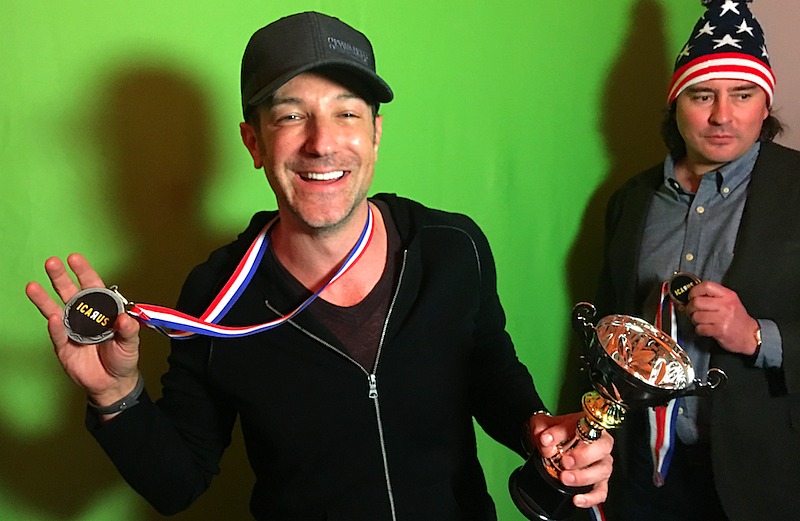
Icarus director Bryan Fogel during last night’s Netflix party at Hollywood Athletic Club; (r.) Icarus co-producer Andrew Siegman.

The reason for Russia’s removal from the 2018 Winter Games was initially explained in a 5.12.16 N.Y. Times report about a massive state-run doping program, which has been organized and then exposed by Grigory Rodchenkov, director of Russia’s antidoping laboratory during the 2014 Winter Olympics in Sochi.

The Russian banning came after incontrovertible evidence, supplied by Rodchenkov, of “a brazen and pervasive state-run doping program that has likely tainted Russian results for the entirety of modern Olympic history,” as Vulture‘s Jada Yuan put in last year.

The story of how Rodchenkov came to confess his participation in this massive doping program, and how he was then forced to leave Russia for the U.S. in order to save his life, is the stuff of Icarus, which had its big debut at Sundance ’17 and was re-celebrated last night at Hollywood Athletic Club party on Sunset Blvd.
Read more

Just Like That

I’m as startled and saddened as everyone else about the sudden death of composer Johann Johannsson. He was found dead yesterday in his Berlin apartment. Hugs and condolences to family, friends, colleagues and fans of this gifted artist, who was only 48.


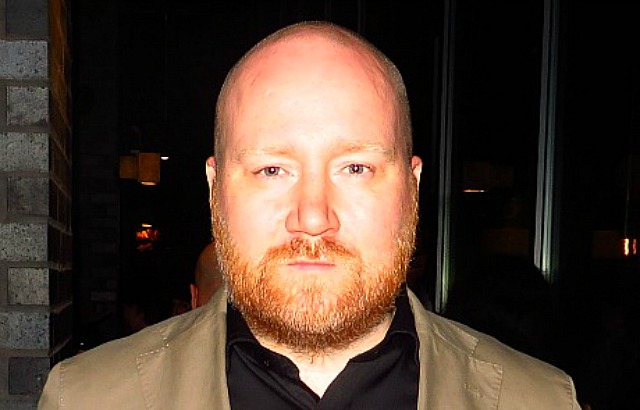
Johann Johannsson during Toronto Film festival’s Theory of Everything after-party in September 2014.

I last spoke with Johannsson during the 2014 Toronto Film Festival, when he was doing interviews to promote his Theory of Everything score, which wound up winning a Golden Globe award in early ’15. An amiable fellow, obviously bright, etc.

We actually had our longest chat during the TIFF Theory of Everything after-party. I especially recall Johannsson reminding me about Alex North having composed a rejected score for 2001: A Space Odyssey, and that it’s purchasable online.

I was totally turned around by Johannsson’s churning, disruptive score for Darren Aronofsky‘s mother!.

Johannsson’s last completed score was for Garth Davis‘s Mary Magdelene, which Universal will open on 3.22.

Who dies suddenly at 48?

Johnannson’s scores in no particular order: Denis Villenueve‘s Prisoners, Sicario and Arrival, James Marsh‘s The Theory of Everything and The Mercy, Darren Aronfosky‘s mother!, Panos CosmatosMandy, Davis’s Mary Magdalene.

Eye of the Beholder

Abby Kohn and Marc Silverstein‘s I Feel Pretty (STX, 6.29) is basically about the power of a positive self-image. It’s about a plump, bordering-on-fat woman (Amy Schumer) who discovers a wildly positive view of herself after being hit on the head during a workout session. She suddenly sees a total knockout in the mirror. If she thinks she’s beautiful then she is, etc.

The premise is similar to that of John Cromwell‘s The Enchanted Cottage (’45). It was about a disfigured Air Force pilot (Robert Young) falling in love with a shy, homely maid (Dorothy Maguire), and how their feelings for each other transform them into handsome/beautiful, at least in their own eyes. The audience saw them as highly attractive also but the supporting characters in the film didn’t.

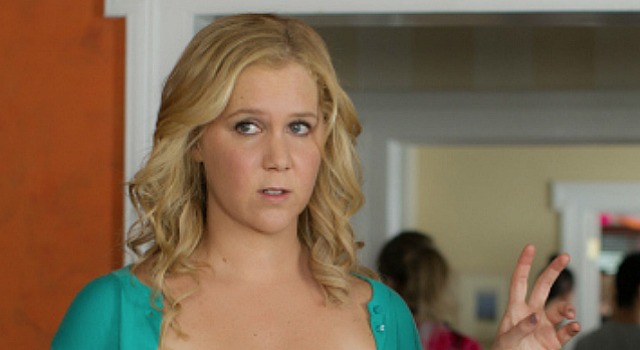
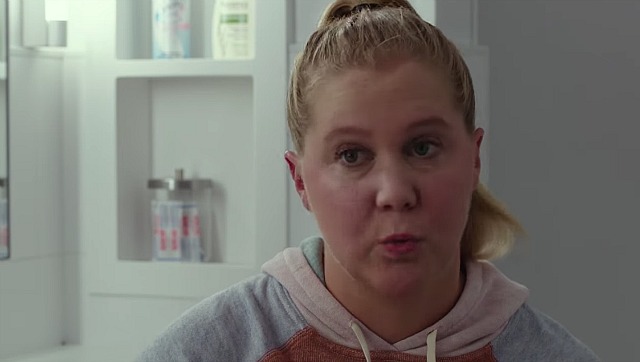
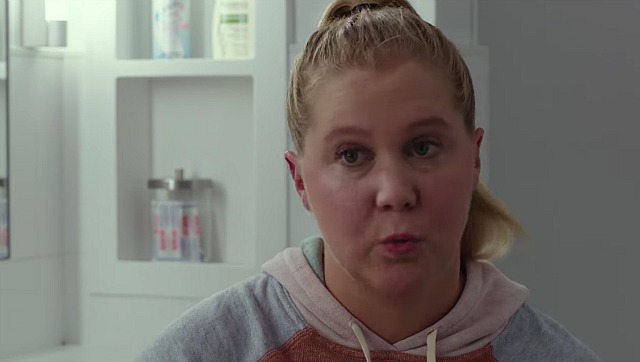
There probably isn’t any delicate, tippy-toed, politically correct way to say that the Schumer who stars in I Feel Pretty looks different than the one who starred in Trainwreck three years ago.

Note: Around 9:25 pm I somehow deleted this post on my WordPress iPhone app. I had to re-post all over again, but somehow the original comments were saved. I don’t know what happened.


Schumer in Trainwreck, which opened three years ago at South by Southwest.

Schumer in I Feel Pretty.

Nothing Remotely Clever About This

The only time I’ve ever seen those idiotic, irritating VHS scratches or static lines or whatever the fuck they are was on old, worn-down, VHS tapes that had recorded upon over and over. They never appeared on a store-bought or store-rented VHS tape.

Sam Loomis Wasn’t The “Seein’ Illusions” Type

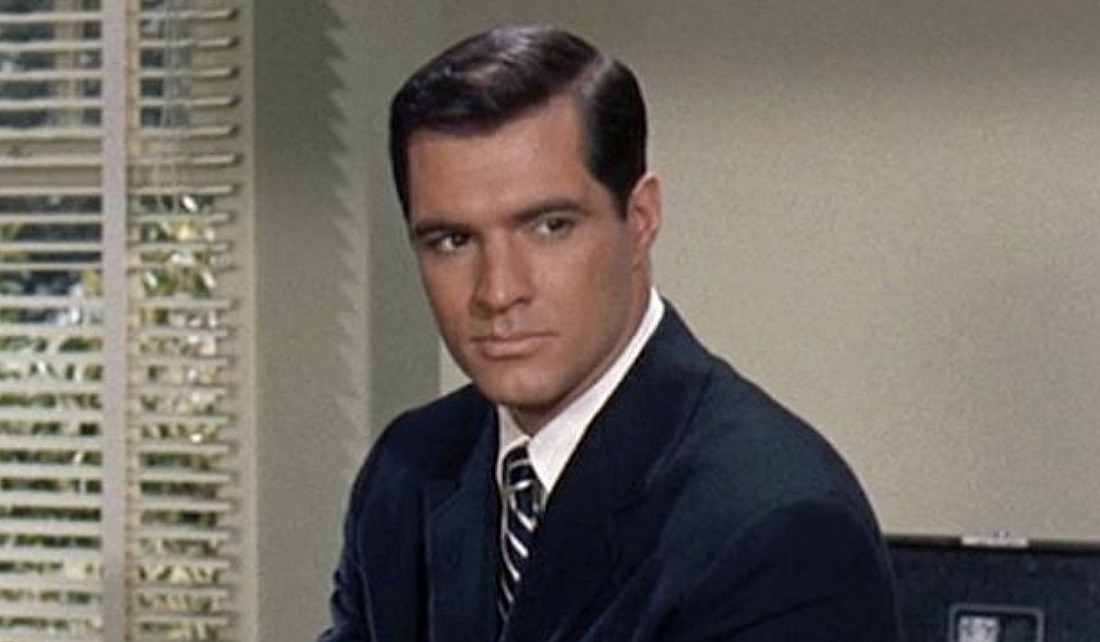
John Gavin, who had only one truly decent role as an actor and, when you get right down to it, only one really good line in his entire career, has left this mortal coil. He was 86. Until today I never knew (or cared to know) that the tall, handsome, dark-complexioned Gavin was born Juan Vincent Apablasa, and that he was of Mexican and Chilean descent, and was fluent in Spanish at an early age.

Gavin’s moment in the sun came when he played Fairvale hardware store owner Sam Loomis, the randy boyfriend of Janet Leigh‘s Marion Crane, in Alfred Hitchcock‘s Psycho (’60).

His one great line happened when Marion’s sister Lila (Vera Miles) visited Sam’s store in search of Lila. When Sam realized the conversation was becoming too personal and agitated, he told store clerk Bob (Frank Killmond) to “run out and get some lunch.” When Bob said, “Oh, that’s okay, Sam, I brought it with me,” Loomis said, “Run out and eat it.”

The Rock Hudson-esque Gavin was also pretty good in Douglas Sirk‘s Imitation of Life (’59) and as the young Julius Caesar in Kirk Douglas and Stanley Kubrick‘s Spartacus, although he always brought a certain chiselled stiffness to whatever he played.

Gavin almost stepped in as the new post-George Lazenby 007 in Diamonds Are Forever (’71), but that went south when Sean Connery was lured back with a grand payday.

Read more

Hot Seat

5:45 pm update: Rose McGowan has apparently cancelled her previously scheduled appearance on Real Time with Bill Maher, presumably due to the recent suicide of her former manager, Jill Messick.

Earlier: Two days after the tragic suicide of her ex-manager Jill Messick, Rose McGowan is due to appear on tonight’s Real Time with Bill Maher. If you were Maher, would you ask McGowan about that claim from Messick’s family that Messick was “victimized” and partly nudged towards self-destruction by certain charges alleged by McGowan? Or would you go easy in the name of sensitivity?

Producer friend: “Even though Rose is a victim whom I support, I think she went too far in bringing Jill into this. If I was Jill’s family, I would feel that Rose has some residual responsibility for Jill’s passing. It’s all too sad. I just hope Rose handles the Maher thing well and not in her usual manic way.” Me: “‘Residual responsibility’? If you accept that statement from Jill’s family, Rose’s comments about Messick to the N.Y. Times last October and in her Brave book prodded Jill toward suicide.”

Tonight’s other Real Time guests are Rep. Adam Schiff, Johann Hari, Richard Painter and White House journalist April Ryan.

Robbie Janney SBIFF Finale

Hollywood Elsewhere regrets having to leave Santa Barbara yesterday afternoon, and thereby missing last night’s SBIFF tribute to I, Tonya‘s Margot Robbie and Allison Janney, both of whom are Oscar-nominated in their respective acting categories. To judge by the clips Hollywood Reporter awards columnist Scott Feinberg did another swell job of interviewing. Robbie hasn’t a chance of winning Best Actress, as we all know — Three BillboardsFrances McDormand will almost certainly take it, although there’s a very slight chance of Lady Bird‘s Saoirse Ronan pulling off a surprise win. Janney, on the other hand, is almost guaranteed to beat Lady Bird‘s Laurie Metcalf (my personal pick) for the Best Supporting Actress Oscar.

Read more

Deathbed Exchange

I don’t know for a fact that Rod Lurie’s deathbed director (i.e., a major brand-name helmer who begged Lurie to never work with a certain actor, according to Lurie’s account) was the late John Frankenheimer, and that the actor Lurie promised to never hire was Val Kilmer. But these are pretty good guesses.

Lurie described the late unnamed helmer as a “mentor” on Facebook yesterday, which is the same term he used in describing Frankenheimer in a 10.4.16 interview to promote Killing Reagan. (Quote: “My mentor was John Frankenheimer.”) When I asked Lurie about this, he said “no comment.”

Frankenheimer is on the record for having loathed and despised Kilmer after working with him on the horribly troubled Island of Dr. Moreau shoot in the mid ’90s. Frankenheimer has been widely quoted as saying “even if I was directing a film called The Life of Val Kilmer, I wouldn’t have that prick in it.”

Frankenheimer was also quoted as saying “I don’t like Val Kilmer, I don’t like his work ethic, and I don’t want to be associated with him ever again.”


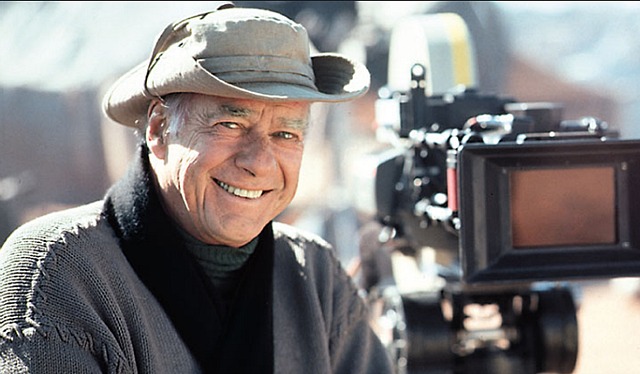
The late, great John Frankenheimer.

Frankenheimer, whom I knew slightly, died on 7.6.02. By that point Lurie, who apparently became chummy with Frankenheimer after writing something fair and respectful during a rough patch in Frankenheimer’s career (possibly during or after the Dr. Moreau debacle), was well situated as a feature director, having made Deterrence (’99), The Contender (’00) and The Last Castle (’01).

So let’s imagine Lurie sitting by Frankenheimer’s bedside sometime in early or mid ’02, except Lurie isn’t Lurie — he’s me. Speaking with my attitude, my philosophy, my sense of things.

Including the fact that I harbor no ill feelings about Kilmer. I helped report that “Psycho Kilmer” Entertainment Weekly article that ran in mid ’96, but I had a nice chat with him at a party he threw at his home back in ’04 or thereabouts. (He had just finished working on Oliver Stone‘s Alexander.) I ran into Kilmer again in the fall of ’11 while having lunch with Descendants costar Judy Greer. We waved and smiled as Kilmer sat at a nearby table. When I tried to pay the bill the waitress told me the check had been taken care of by “that man sitting over there,” except Kilmer had left by that point.

Anyway….

Frankenheimer: I want you to promise me one thing, Rod. I may not be around much longer, but I want to know that you’ll never, ever work with that prick. Please.

Lurie: Uh-huh.

Frankenheimer: Will you promise me this?

Lurie: No Kilmer?

Frankenheimer: I want your word.

Lurie: For what…the rest of my life?

Frankenheimer: We’re friends and I want you to promise me this.

Lurie: Look, John, I love you like a father and I’m sorry for what you went through, but you can’t…

Frankenheimer: What?

Lurie: You know as well as anyone that we all…

Frankenheimer: Rod…

Read more

Strangely Porcine

As we all know, the hairs on the sides and lower rear of your head never fall out. When hair surgeons do the micro-replacement procedure to follically enhance the above-the-forehead area, they use hairs from the back of your head for this very reason. But they do it selectively, or not so you’d notice. It therefore makes no sense that the rear of President Trump‘s windswept head would look like the ass of a pig. Puzzling. I can only surmise that Trump’s hair surgeons removed every last hair from the back of his head for top-of-the-head implants. As one with a certain Czech Republic perspective on such matters, I am totally fine when the wind kicks up.

Horrific Aftermath

The family of the late Jill Messick, a chronic depression sufferer who committed suicide yesterday, is claiming that Messick was “victimized” and partly nudged towards self-destruction by certain charges alleged by former client Rose McGowan.

McGowan’s charges appeared in a 10.28.17 N.Y. Times story as well as her recently released “Brave” book.

A longtime producer and former Miramax exec who served as McGowan’s manager when the actress was allegedly raped by Harvey Weinstein in January 1997, Messick allegedly felt diminished by statements that McGowan made about her not being a vigilant-enough defender of McGowan during a time of great anger and trauma, and then undermining her claim of having been raped in an email written to Weinstein.


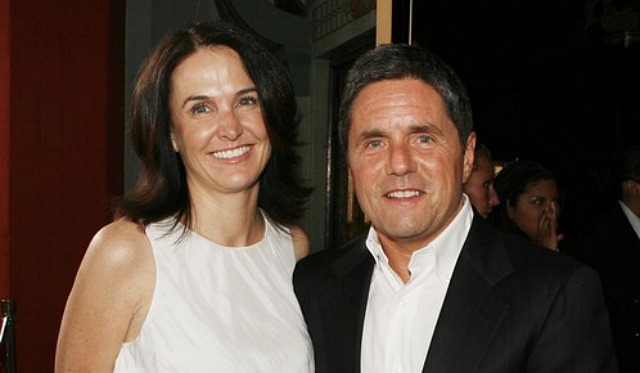
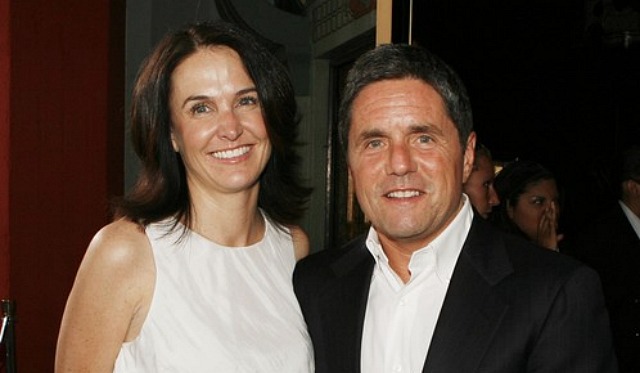
Jill Messick and Brad Grey, now both deceased, in 2007.

In a 10.28.17 story by N.Y. Times reporter Susan Dominus, McGowan said that the 1.28.97 Sundance Film Festival meeting with Weinstein at Deer Valley’s Stein-Erickson lodge was arranged by Messick.

McGowan has said that Messick comforted McGowan when she learned of the attack. “But in the months to come,” Dominus wrote, “McGowan did not feel supported by her management team.

Anne Woodward, now a manager herself, was a young assistant in Messick’s office at the time, and was in on many of Ms. Messick’s calls. ‘I remember that Rose was extremely upset and did not want to [accept a hush money offer from Weinstein],’ Ms. Woodward said. ‘She wanted to fight.’

“[But] no one around her, as Ms. Woodward recalls, supported that instinct. ‘It was an emotionally shocking way to see a woman being treated,’ Ms. Woodward said. ‘That’s what stuck with me.'”

Read more

Rockwell Dances Better Than Cagney

Sam Rockwell, the likely winner of a Best Supporting Actor Oscar next month, was given the royal tribute treatment last night at the Santa Barbara Film Festival.

Critics-award-wise, Rockwell’s performance in Three Billboards Outside Ebbing, Missouri was lagging behind Willem Dafoe‘s in The Florida Project all through December, but then Rockwell suddenly surged at the Golden Globes and has the been the heir apparent golden boy ever since. This aspect wasn’t mentioned, of course, by Vanity Fair contributor and moderator Krista Smith.

The only beef I had with the presentation is that no mention was made of Rockwell’s performance in Lynn Shelton‘s Laggies, one of those confident, charismatic, rock-steady performances that doesn’t miss a trick.


(l. to r.) Krista Smith, Rockwell, actor-director Clark Gregg.

From “Rockwell’s Moment,” posted on 10.26.17: “I’ve been a Sam Rockwell fan for ages. He’s primarily known for playing loopy eccentrics or crazy fucks. He plays a somewhat more interesting character in Three Billboards outside of Ebbing, Missouri — Jason Dixon, a small-town, none-too-bright deputy who screws his life up with violence and stupidity, and then actually self-reflects and grows out of a place of despair and self-loathing. And you admire him for that. This is why, I suspect, Rockwell is looking at a likely Oscar nomination.

But his two most likable performances, for me, were variations of droll — Owen, a droll father figure type, in Nat Faxon and Jim Rash‘s The Way, Way Back (’13), and Craig, a droll single dad and a possible romantic attachment for Keira Knightley, in Lynn Shelton‘s Laggies (’14). And he was even more winning as the perversely droll Mervyn in Martin McDonagh‘s A Behanding in Spokane, a B’way play that happened in 2010.

Read more