Long Shelf Life of Infamy

Frontline‘s hour-long show on Harvey Weinstein popped last night (3.2), and is now streaming. Cut and dried, dead to rights. Testimony, dimensionality, the big creep. I’m mesmerized by any disaster residue — a burning house, the wreckage of a recent horrific incident. Who isn’t?

From Maureen Ryan’s 3.1 Variety review: “[Weinstein] offers not just snippets of testimony but also a sense of powerful specificity — it’s one more brick in an large and unavoidable wall.”

It also “helps to see the faces of those Weinstein hurt, and it’s important to witness what recalling these incidents does to these women.” Produced and directed by Jane McMullen, Weinstein “reminds the viewer, on a visceral level, that these women are still angry. Not just about being attacked, but at being silenced for so long.

Read more

In This Maven’s Opinion…

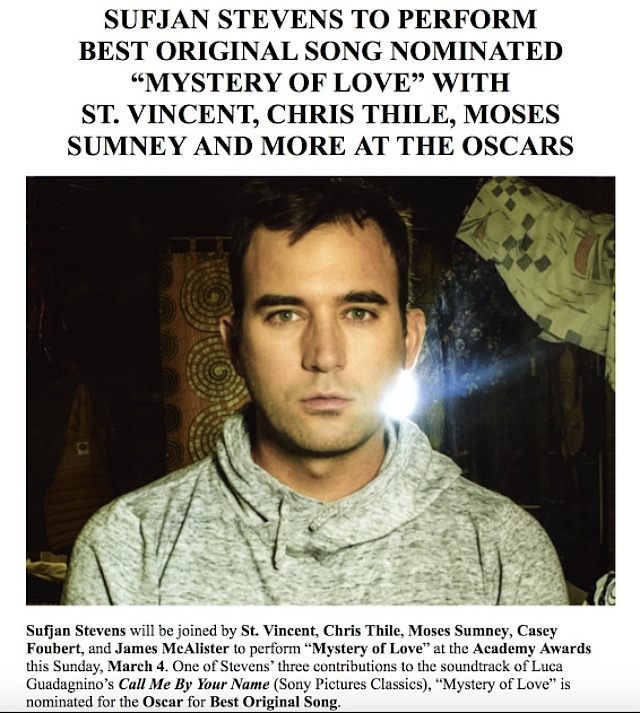
Yesterday I asked Jett, who knows the music industry and works for a music distribution company called Believe Digital, what he thinks of Sufjan Stevens, St. Vincent, Chris Thile, Casey Foubert and James McCallister performing “Mystery of Love” as an ensemble on tonight’s Oscar telecast.

Jett: “St. Vincent playing with Sufjan is cooler, to be honest, than Sufjan alone. Sufjan and St. Vincent are beautiful indie performers at the top of their games. Nice indie tandem to make the Oscars feel a little less stiff.”

HE: “What about Thile, Foubert and McCallister? What do they bring to the table, and who among them is your favorite? And why?”

Jett: “I don’t know the others all that well. Not the same star power. St. Vincent is my favorite from her earlier albums. I listened to her a lot when I was at Syracuse and post-college. Savage live performer. Love Sufjan too but for different reasons. He’s my generation’s less depressing Eliott Smith.”

HE: “You’re hazy on Thiel, Foubert and McAllister? But you’re a music guy. You know the industry.”

Jett: “They’re not big artists. They’re performers. Difference.”

Late Breaking Lament

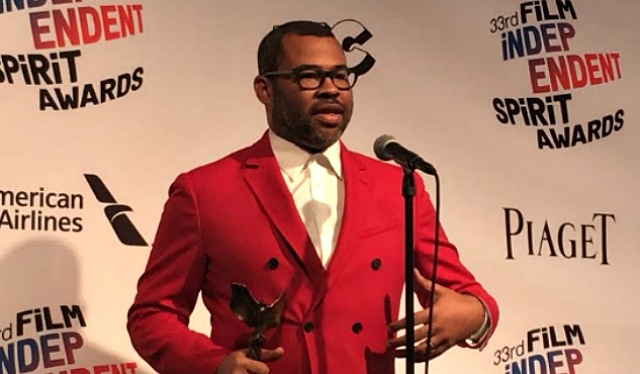
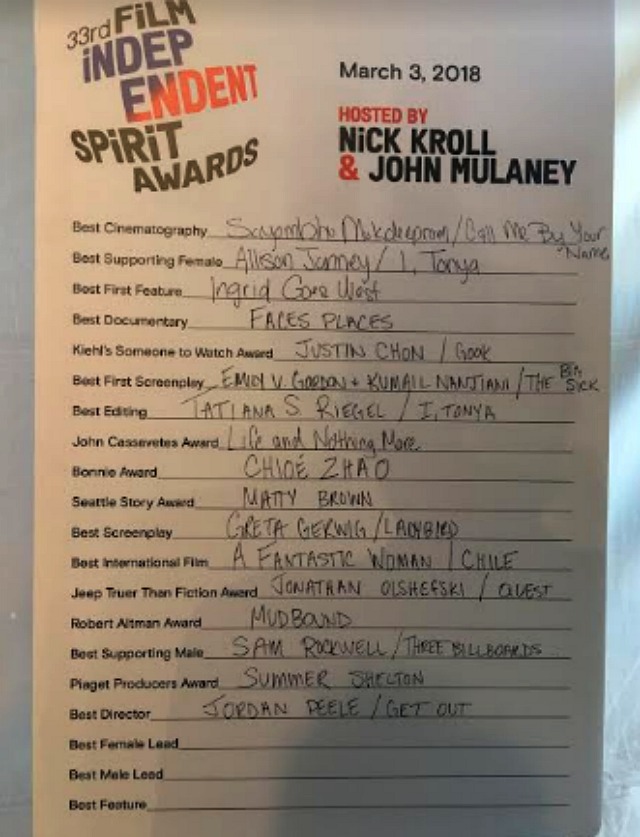
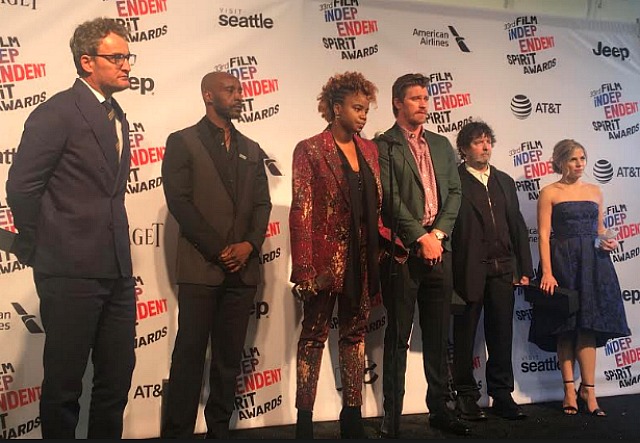
Since I took the below photos from my perch in Spirit Awards press tent, Call Me By Your Name‘s Timothee Chalamet has won for Best Actor and Three BillboardsFrances McDormand has won for Best Actress. As I’m writing this Black Panther‘s Chadwick Boseman is announcing the nominees for the Best Feature award, and the winner is…wait for it…Get Out. Yeah, that’s what they think and you can’t fight City Hall. C’est la fucking vie.

Blunt Opinions Cut Both Ways

From Scott Feinberg‘s latest “Brutally Honest Oscar Ballot” transcript (from an actress in the Academy), posted in The Hollywood Reporter on 3.2:

“I eliminated The Post first. To me, it was the most boring movie. I remember that era, and that Kay Graham flew in to LBJ’s parties every weekend down on his ranch — that I would have liked to have seen! I give it nine yawns out of ten.

“Then Three Billboards — there were a lot of things about it that bothered me. I heard the writer-director [Martin McDonagh] talk, and he seems like a very nice guy, but his film offered an awful take on what middle America is like. It was pretentious and false. If it was meant to be a farce, I didn’t find it funny. I don’t find bigotry funny, I don’t find a grownup hitting children funny, I don’t find someone blowing up a police station funny. These people were just caricatures.

“Then I eliminated Get Out. It’s a good B-movie and I enjoyed it, but what bothered me afterwards was that instead of focusing on the fact that this was an entertaining little horror movie that made quite a bit of money, they started trying to suggest it had deeper meaning than it does, and, as far as I’m concerned, they played the race card, and that really turned me off.

“In fact, at one of the luncheons, the lead actor [Daniel Kaluuya], who is not from the United States [he’s British], was giving us a lecture on racism in America and how black lives matter, and I thought, ‘What does this have to do with Get Out? They’re trying to make me think that if I don’t vote for this movie, I’m a racist.’ I was really offended. That sealed it for me.”

Dry, dismissive response from Daily News critic Bob Strauss in 5, 4, 3, 2…

Meet The Deplorables

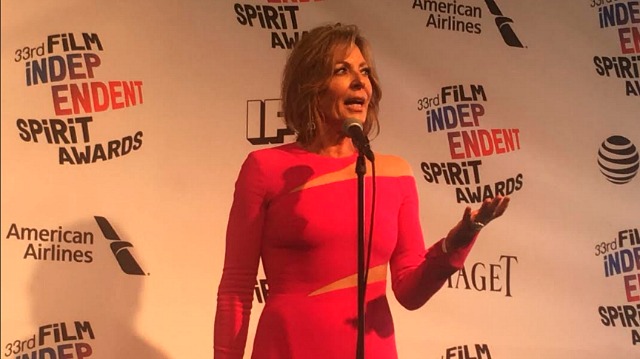
Question to Best Supporting Actress Spirit Award winner Allison Janney that I would’ve asked if the clock didn’t run out: “You played a deplorable in I, Tonya. Have you ever spoken to any actual hinterland deplorables who’ve seen it, and if so what were some of their reactions?”


I, Tonya‘s Allison Janney in Spirit Awards press tent following her winning Best Supporting Actress award.

Read more

Couldn’t Get Around To Death Wish Review

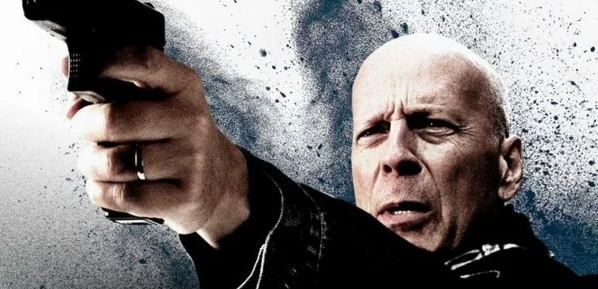
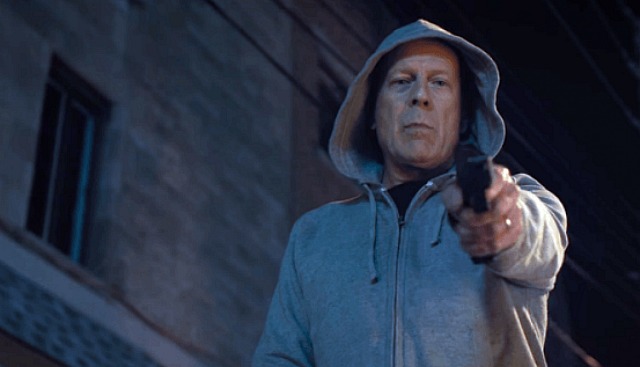
The night before last I caught Eli Roth and Joe Carnahan‘s Death Wish. I didn’t completely despise it. I chortled two or three times. The performances by Bruce Willis and Vincent D’Onofrio are reasonably decent. But it’s not my idea of really well-written (they should have stayed with Joe Carnahan’s original 2015 script), and is therefore not very believable. I was sitting there going “fake, oversold, uhn-uh, nope, bullshit, not right, cliche, sloppy,” etc.

But at the same time it was occasionally competent enough to make me wonder if Death Wish might improve its game, at least during the first act. It never did. It’s mainly a fantasy wallow for righties and NRA enthusiasts and lost-in-their-own-realm LexG-types, and one that constantly nudge-nudges those who are already in the pro-gun camp.

It’s certainly not as precise or zeitgeisty as Michael Winner and Charles Bronson‘s 1974 Death Wish (exploitation films work better if they dial it down and take their time in delivering the payoff moments). It’s nowhere near as good as the first John Wick (’14), and not as occasionally satisfying as Antoine Fuqua‘s The Equalizer (ditto), which was otherwise a second-rater.

There’s a place in my head for top-tier rightwing action flicks about showing no mercy to scurvy bad guys. I still say the all-time best in this realm is Tony Scott‘s Man on Fire (’04), and for reasons far too numerous to list here.

The most important thing to remember if you’re going to make one of these things is to (a) avoid happy-family cliches and (b) stay away from trying to message the audience with thin slices of conservative theology. Death Wish flubs it on both counts.

Its first-act depiction of the family life of Chicago-based surgeon Paul Kersey (Willis, married to Elizabeth Shue‘s Lucy Rose and about to send Camila Morrone‘s Jordan off to college) is way too alpha and serene. This will come as a shock to Roth and Carnahan, but real-life families occasionally irritate or bore each other, and sometimes they even argue. And then comes an “oh, please!” when Willis asks a friend of Jordan’s what book she’s reading, and she says it’s a school assignment, and that the author is Milton Friedman, the conservative economist who advised Ronald Reagan and Margaret Thatcher. (I don’t remember if she mentioned a title, but it was probably “Capitalism and Freedom.”) I wonder if this scene is from Carnahan’s original screenplay or what.

I understand why Roth’s film is set in Chicago, which is regarded as the most gun-violent city in the U.S. right now (despite the fact that on a per-capita basis Chicago’s murder rate was lower last year than that of seven other cities). But Roth is trying to sell the idea that wealthy suburbanites (like Willis’s Kersey) are living under siege conditions, and that feels to me like an NRA fantasy. (My limited understanding is that the vast majority of Chicago’s gun deaths have occured in the city’s unruly south side.)

Read more