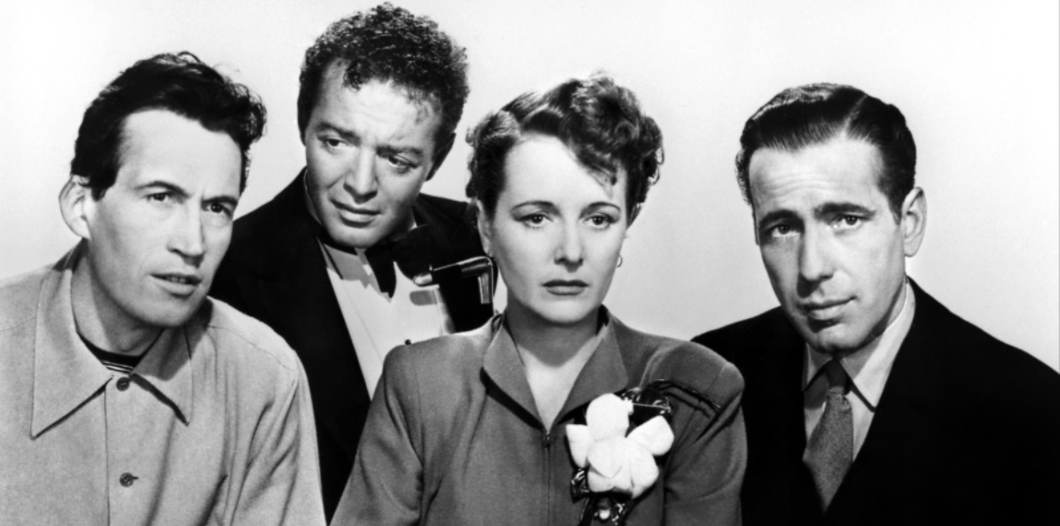
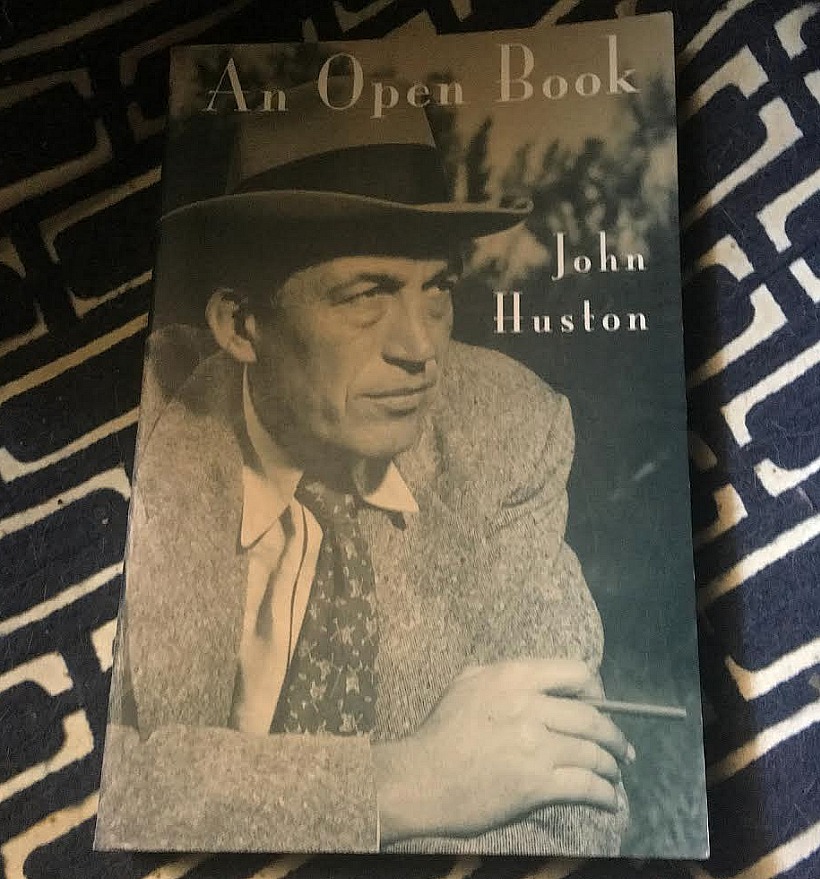
John Huston Was Actually Young Once

All my life I’ve regarded John Huston (1906-1987) as quite the fellow, and now at long last I’m reading his autobiography, which was first published in 1980. A 1994 trade paperback version was just delivered by Amazon.

Huston was first and foremost a lion, and not incidentally a director of above-average and sometimes brilliant films for over 45 years in a row.

The ones he made during his first decade are unassailable — The Maltese Falcon, Across The Pacific, Let There Be Light, The Treasure of the Sierra Madre, Key Largo, The Asphalt Jungle, The Red Badge of Courage and The African Queen. Huston’s early to mid ’50s output was pretty formidable also — Moulin Rouge, Beat The Devil, Moby Dick and Heaven Knows, Mr. Allison.

For the next 30 years Huston’s films were in and out, but at least they included The Unforgiven, The Misfits, The Kremlin Letter, Fat City, The MacKintosh Man, The Man Who Would Be King, Under The Volcano, Prizzi’s Honor and The Dead.

From David Thomson‘s “New Biograhical Dictionary of Film”: “Huston was…the movie director who told manly, energetic stories, and [who] liked to end them on a wry chuckle. He was himself a writer, a painter, a boxer, a horseman, a wanderer, a gambler, an adventurer and a womanizer.

“More than most he relished the game of getting a movie set up and the gamble of out-daring and intimidating the studios. His best pictures reflect those tastes and that attitude and had an expansive, airy readiness for ironic endings, fatal bad luck, and the laughter that knows men are born to fail.”
Read more

Five Weeks Later

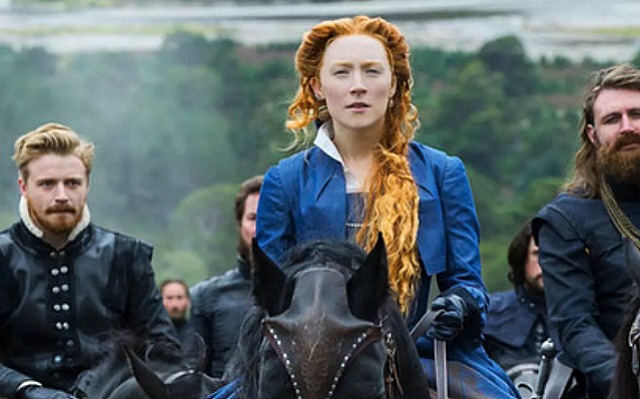
Last September Focus Features announced that Josie Rourke and Beau Willimon‘s Mary, Queen of Scots would open on 11.2.18 — a good award-season date that gives everyone (Academy, HFPA, BFCA, guilds, critic groups) plenty of time to see it and assess its value. Now the opening has been pushed back to 12.7.18. I don’t know what this means exactly. Maybe nothing. An award-season release between late October and late November is generally preferred over a December one, although there’s nothing “problematic” with an early December date.

Mary, Queen of Scots will presumably tell the basic story of Mary Stuart (Saoirse Ronan), who ruled over Scotland for 14 and 1/2 years (December 1542 through July 1567), experienced all kinds of marital and political intrigues during her reign and after, and who was imprisoned by Queen Elizabeth in 1568 and lost her head some 19 years later, in 1587, also at Elizabeth’s behest. Pic is based on John Guy’s 2004 biography “My Heart Is My Own: The Life of Mary Queen of Scots” (“[A] portrait of a shrewd and charismatic young ruler who relished power and, for a time, managed to hold together a fatally unstable country”).

Pic costars Margot Robbie (Queen Elizabeth), David Tennant, Jack Lowden, Martin Compston, Joe Alwyn, Brendan Coyle and Guy Pearce.


Saoirse Ronan in Josie Rourke‘s Mary, Queen of Scots (Focus Features, 12.8).

Read more

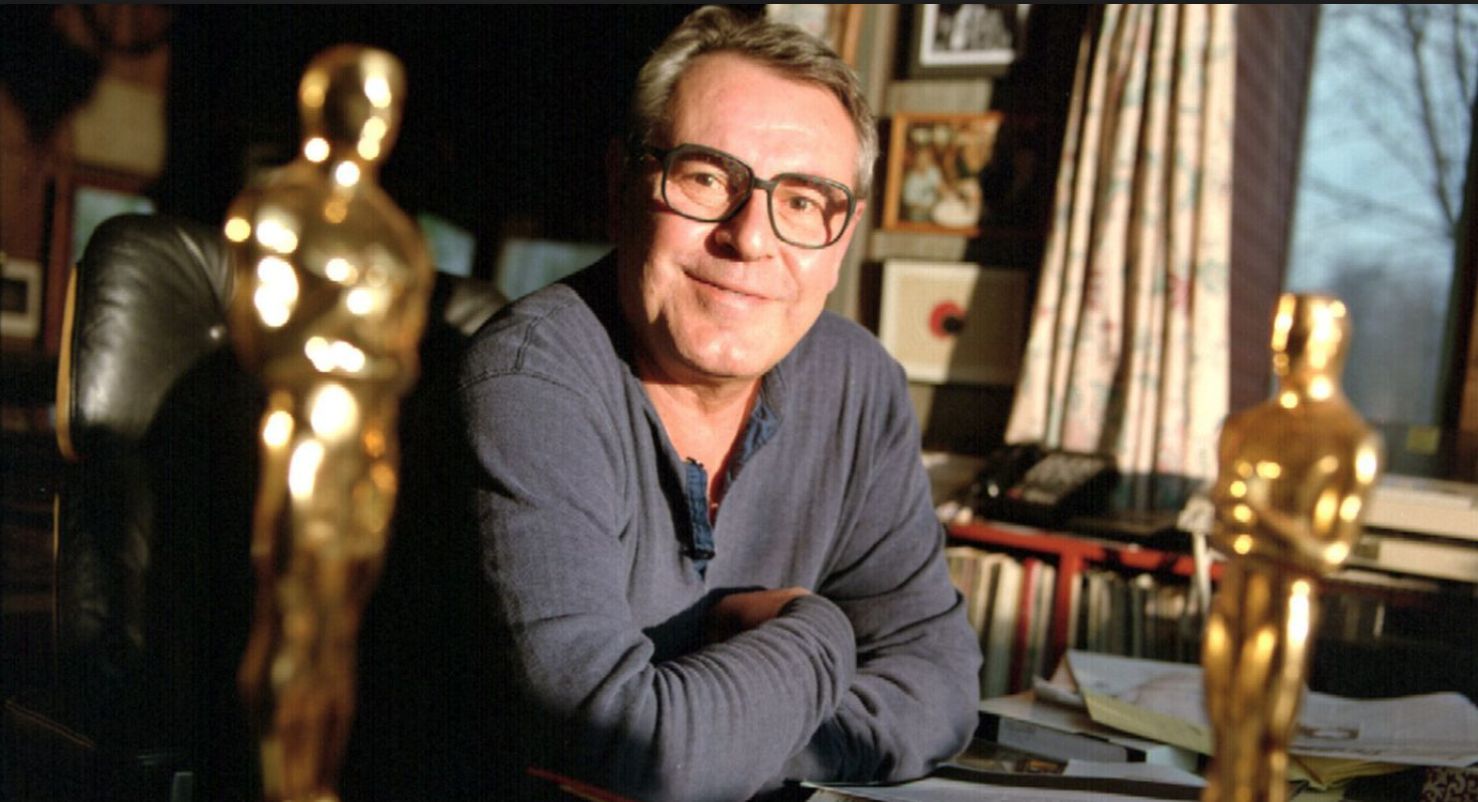
Respect for Milos Forman

The legendary Milos Forman has passed at age 86. An acclaimed Czech-born director, sometime actor (Heartburn) and all-around bon vivant, he lived a long and hungry life — not the fastest operator but always the striver.

Forman is best known for a high-flying decade (’75 to ’84) when he was Hollywood’s go-to guy for flavorful, distinctive adaptations of three distinguished plays — One Flew Over the Cuckoo’s Nest, Hair and Amadeus. And for his attempt to movie-ize Ragtime, the 1975 E.L. Doctorow novel.

But his grandest era was his Czech New Wave run in the mid to late ’60s, when he directed the acclaimed Loves of a Blonde (’65), a quirky, episodic thing with a native sense of humor, and The Fireman’s Ball (’67), which got Forman into a bit of trouble with the Communist Czech government for lampooning their bureaucratic mindset.

Forman continued to fly high during his American breakout period in the early ’70s, mainly due to the critical popularity of Taking Off (’71), an offbeat American family comedy that costarred Buck Henry and Lynn Carlin.

From Forman’s Loves of a Blonde (’65).
In the mid ’70s I played Dr. Spivey in a Stamford Community Theatre production of One Flew Over The Cuckoo’s Nest, and from this immersion I felt that I came to know Dale Wasserman‘s adaptation of Ken Kesey’s celebrated book pretty well. And I honestly felt that the play had a certain coiled-spring, caged-animal tension that Milos Forman’s 1975 film version lacked. Everyone loved it, of course, and I’m not putting it down, but I never got over my first impression — i.e, “it’s good but the play was better.”

Sometime in ’81 I saw Peter Shaffer‘s Amadeus at the Broadhurst, and revelled in Ian McKellen and Peter Firth‘s performance as Salieri and Mozart. It was such a huge, radiant high that I had difficulty adjusting to Forman’s film version, which opened in September ’84. It was a handsome, well-crafted thing and a Best Picture Oscar champ, of course, and like everyone else I was taken by F. Murray Abraham‘s Salieri. But Forman’s film just didn’t have that same snap and pizazz, and I hated Thomas Hulce‘s performance as Mozart and flat-out despised Elizabeth Berridge‘s bridge-and-tunnel performance as Constanze Mozart (i.e., “Wolfie”). A good film but the play was much better.

So what American-funded Forman film did I really like without reservation? Oddly, Hair (’79). This may have been because I never saw the original stage musical, but it also had something that felt straight and real and self-owned. Treat Williams, John Savage and Beverly D’Angelo costarred. Forman’s pic was well-reviewed but was seen as a financial failure, having cost too much ($11 million) for what it earned ($15 million and change).

Read more

Speaking As A Serious Animation Hater…

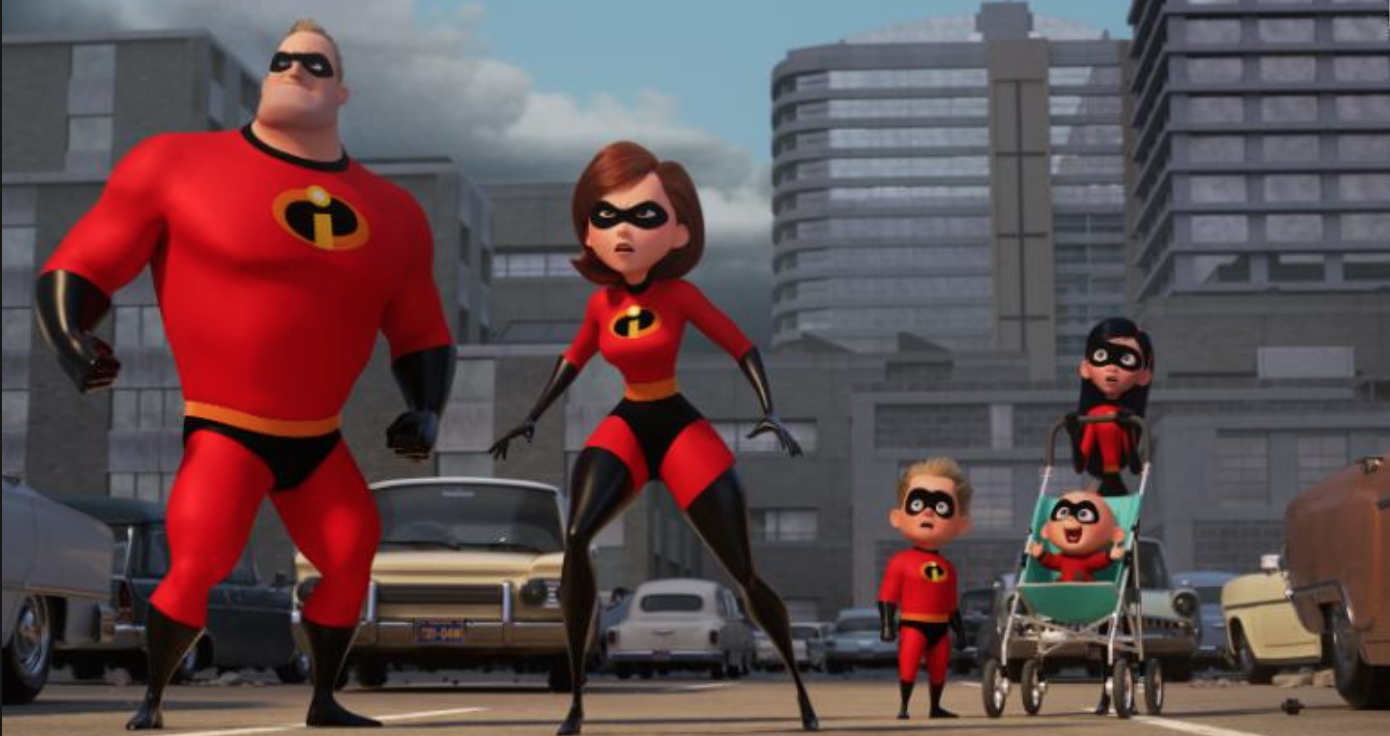
Incredibles 2 is obviously going to be sharp, funny and witty, swiftly paced, adult-friendly, visually exciting…the kind of family-friendly animated feature that I can actually watch and enjoy. Movies of this sort are few and far between, but then you knew that. Disney will release this burst of Brad Bird energy on 6.15.18. For the record: Hollywood Elsewhere totally loved Bird’s original Incredibles, which is now 14 years old.

One of Biggest Collapses in Award-Season History

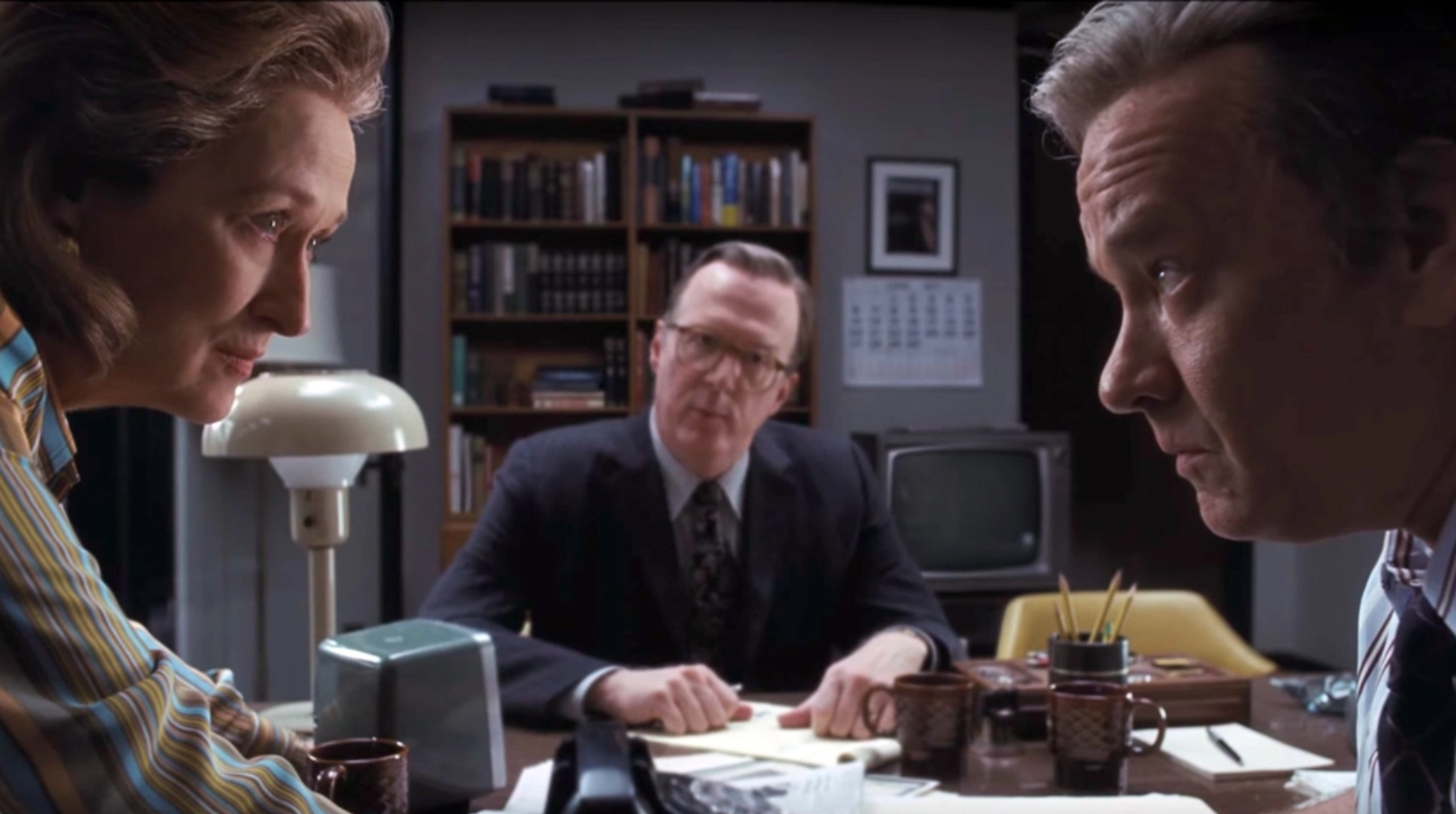
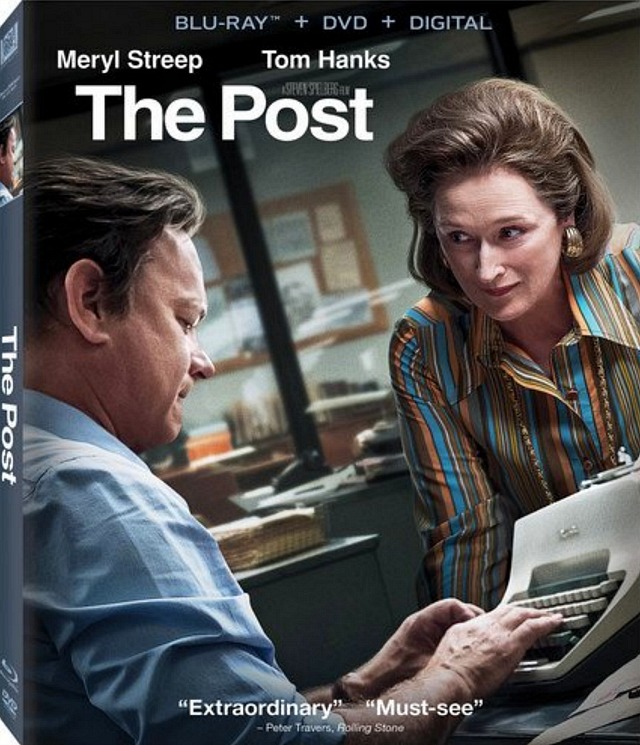
With Steven Spielberg‘s The Post about to appear on Bluray in a few days, it’s an opportune time to recall just how decisively this journalism drama, which almost everyone admired, was ignored to death in the 2017 Oscar race.

Every Gold Derby and Gurus ‘o’ Gold spitballer predicted that The Post would be a hot Best Picture contender, at least among the 50-plus set. Indeed, it gathered a Best Picture Oscar nomination along with a Best Actress nomination for the formidable Meryl Streep. On top of which the National Board of Review honored The Post as 2017’s Best Film, and it received six Golden Globe noms including Best Motion Picture, Drama.

But the real story, unknown at the time by business-as-usual critics and prognosticators, is that the New Academy Kidz were determined to deep-six The Post because it was too Oscar-baity, too boomer-friendly and too “who cares?”

Hollywood Elsewhere has just learned that a secret NAK meeting was held at a private residence in Burbank last November, and that the NAK leadership used this occasion to explain and ratify its basic agenda.

The Post is exactly the kind of lofty, self-important, high-toned Best Picture contender that we don’t want to give Oscars to any more,” the NAK chairman said in a speech to approximately 175 members, according to one witness. “And perhaps not even nominate. The old white farts who used to run things are being put out to pasture, and we’re the new crew…younger and more diversified and trying to tip the vote in our direction, however and whenever we can.

“From here on we’re going to do what we can to undermine high-dignity movies and support films that we like, and that might mean horror films, cheeseball genre movies, Creature From The Love Lagoon fantasias…anything that doesn’t walk or talk like traditional, Kris Tapley– or Tom O’Neill-sanctified Oscar bait material…the kind of film that those National Board of Review geezers will salivate over sign unseen.

“That kind of movie represented by The Post may not be completely over and done with as far as the Oscars concerned, but it sure as hell won’t get any more carte blanche Best Picture nominations from here on in. Not from us, it won’t. Because we’re the New Academy Kidz, and this is our moment.”

Blazing Eyelids

Hannah Jewell, a pop culture writer/columnist with the Washington Post, clearly angered Beirut screenwriter-producer Tony Gilroy the other day.

Jewell was asking him to respond to criticism from the American-Arab Anti-Discrimination Committee’s Abed Ayoub that Beirut is racist, and to answer why the film has no Lebanese characters. Jewell, who spent time in Lebanon, seems to be on the same page as film critic, cultural protectionist and ethnic representation advocate Jen Yamato.

Gilroy’s eyes start blinking like an Al Capone machine gun almost immediately. The REM is fucking fantastic. Watch the video for this aspect alone.

Wells to Gilroy: Don’t be angry, brah. I’m glad I saw this, by the way, because I’ll know in the future to cool my jets if I ever provoke this kind of blinking during a chat with you.

Gilroy: “To anyone who spent time in Beirut in its heyday, it has really become Paradise Lost. I understand the sorrow but there are no Lebanese characters in the film. There’s nobody in this film who is Lebanese. Everyone is an interloper. The PLO are invaders, the Americans are invaders, the Israelis are invaders. The movie’s about Jon Hamm‘s character. He’s an Arabist, he’s married to a Lebanese woman, sponsoring a Lebanese boy.”

Jewell: “Why is it called Beirut then?” Gilroy: “Because it’s a good title, and it takes place there. Nobody speaks Mandarin in Chinatown.”

Gilroy to Jewell: “Did you feel [the film] was anti-Arab?” Jewell: “I have to say that there were moments in it that felt like it was written in 1991, and that certain [aspects and observations] have become cliches in talking about Lebanon, and to make a movie about that country without some [natives] in it seems like a huge push.” Gilroy: “Story-telling, in a two-hour experience…everything takes a back seat to telling a good story. Would I be interested in inserting a scene that might satisfy…what would be the sequence or scene be that would satisfy this need and not stop [the movie] in its tracks…if we do a movie about Florida, should only Floridians play in it?…we have to protect everybody, you say…but the definition of who needs to be protected could be debated ad nauseum.”

Jurassic Paycheck

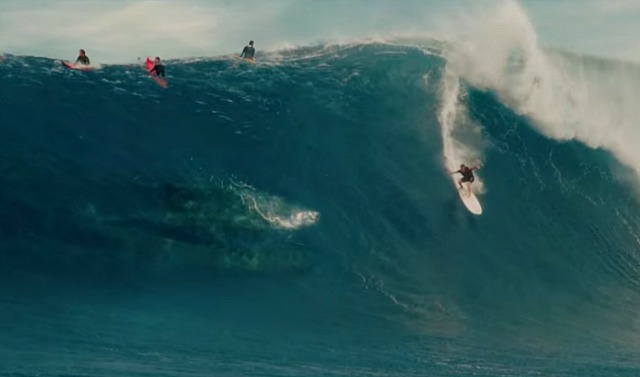
The image of whatever that thing is, a gargantuan salt-water alligator, about to eat a surfer makes the new teaser for Jurassic Park: Fallen Kingdom (Universal 6.22) worth the watch.

Thierry Fremaux’s “Godfather” Plea

A 4.13 interview with Cannes Film Festival director Thierry Fremaux was posted this morning by The Playlist‘s Charles Barfield. Fremaux says he was not only “heavily criticized” by his superiors but was almost fired for programming two Netflix films, Okja and The Meyerowitz Stories, during last year’s festival. Because Netflix hadn’t agreed to that ridiculous French law of having to wait three years to stream these films after booking them into French theatres.

Fremaux says he pleaded with Netflix this year to submit to the French system in order to allow Alfonso Cuaron‘s Roma and Orson WellesThe Other Side of the Wind to play at next month’s festival. Netflix declined, of course.

“I am asking them to accept that rule,” Fremaux relates. “They show dozens and dozens of films each year on Netflix. Could they not release just one film a year theatrically in France in order for it to come to Cannes?”

This reminds me of a tearful plea heard in The Godfather, Part II, conveyed by Talia Shire‘s Connie Corleone to Al Pacino‘s Michael Corleone:

“Michael, I hated you for so many years. I think that I did things to myself, to hurt myself so that you’d know…that I could hurt you. You were just being strong for all of us the way Papa was. And I forgive you. Can’t you forgive Fredo? He’s so sweet and helpless without you.” We all know what Michael’s ultimate response was — a bullet in Fredo’s head while he was fishing on Lake Tahoe with Al Neri.

“The consequence of the chronology means [Roma and The Other Side of the Wind would] come out three years later,” Fremaux explains. “Sure, it’s absurd. On a personal level, I think it’s time to change it, but for now, in 2018, we are where we are. If they accepted to bring out the film, to give it to a distributor and to say, ‘Look, we also financed Orson Welles’s The Other Side Of The Wind, they would be heroes and it would be fabulous for their image.”