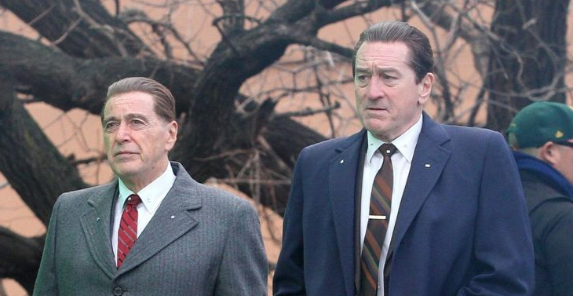
Will There Be Two Versions of “The Irishman”?

Late this afternoon the legendary Martin Scorsese sat for a mostly French-language q & a today following a Director’s Fortnight screening of Mean Streets. The questions were almost entirely about the genesis and making of this 1973 classic. Scorsese recalled his Little Italy upbringing in the ’50s and early ’60s, and the crackling atmosphere of the 1973 Cannes Film Festival, where Mean Streets premiered and actually got booed by some.

The healthy-looking 75 year-old (who again was wearing violet socks) mentioned that the troubled bond between Harvey Keitel‘s Charley and Robert De Niro‘s Johnny Boy is based on the relationship between Scorsese’s dad and his nee’er-do-well younger brother. Scorsese also recalled the real-life influence of a man of the cloth, a kind of “street priest” who counselled him during his early-to-mid-teen years.

But all this fell by the wayside when Scorsese mentioned that his forthcoming The Irishman, a $180 million gangster flick funded mostly by Netflix, contains about “300 scenes.”

Right away I leaned forward and wondered if I’d just heard that. Because 300 scenes could translate into a helluva running time, perhaps as long as 450 minutes or 7 hours and 30 minutes. I asked Scorsese’s rep for a confirmation or clarification, but heard zip. Then an Associated Press story run by The New York Times reported the “300 scenes” quote, and I knew I hadn’t been hearing things.

In other words (and I’m just spitballing here) The Irishman could wind up as an expanded Netlix miniseries in addition to being shown as a shorter theatrical feature. Who knows? I know that a film with 300 scenes will definitely be a bear, length-wise. Too much of a bear for theatres, in fact, if Scorsese intends to use all or most of that footage.

The average scene used to last two minutes, give or take. But scenes today are shorter, or roughly a page and a half or 90 seconds per scene. By this standard a typical two-hour movie might contain 75 to 90 scenes. If the scenes last 90 seconds a film with 75 scenes would run 112 minutes; if the scenes number 90 the running time would be 135 minutes without credits.
Read more

Older, Beefier Bill & Ted

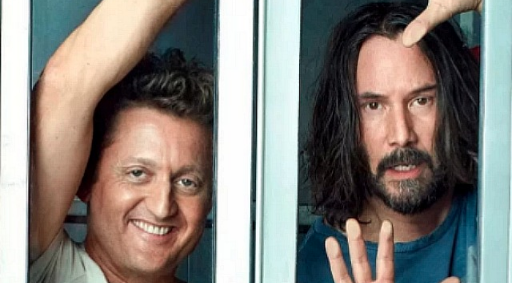
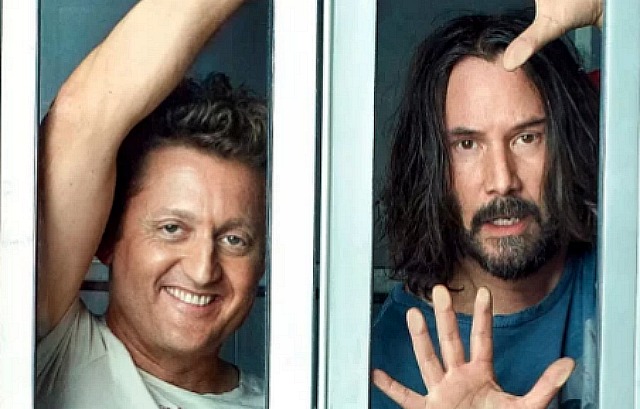
It was reported yesterday that 52 year-old Alex Winter and 53 year-old Keanu Reeves will costar in a third installment of the Bill & Ted franchise, titled Bill & Ted Face the Music. Bill & Ted’s Excellent Adventure began things in ’89; Bill & Ted’s Bogus Journey followed in ’91.

HE’s reaction is roughly the same as my thoughts about Dumb and Dumber To, which I explained in a 9.25.13 piece called “Long of Tooth“:

When Jim Carrey and Jeff Daniels costarred in the Farrelly Brothers’ Dumb and Dumber (’94) they were roughly 32 and 39 years old, respectively. Obviously not spring chickens but relatively buoyant, fresh-faced, elastic of bod. They’re currently costarring in the Farrelly’s Dumb and Dumber To, which I suspect will be funny and inventive (I was a fan of the Farrelly’s Three Stooges flick), but now we’re talking about a 51 year-old and a 58 year-old playing the same characters.

Dumbasses in their 30s vs. dumbasses in their 50s are different equations. You’re supposed to mellow down and gather a little wisdom out as you get older. You can fall into dumb-shit situations when you’re youngish but guys with creases on their faces are supposed to be craftier and less susceptible.

Read more

Wilder Musings

When Joseph McBride replied at some length to my questions about Irma la Douce and his commentary on a forthcoming Kino Lorber Bluray, I replied at length also. Here’s what I said:

“So unlike most critics, you’re not of the opinion that Billy Wilder peaked with Some Like It Hot, The Apartment and One, Two, Three? And that as a director he enjoyed two peak periods — his initial nine-year run (1944’s Double Indemnity to 1953’s Stalag 17) and then his seven-year run at the very top of his game, or between ’59 and ’66 (Some Like It Hot to The Fortune Cookie)?

“You believe, in other words, that Wilder’s decline period (The Private Life of Sherlock Holmes through Buddy Buddy) wasn’t about ‘decline’ as much as a commercially downspiraling artistic growth period, or something along those lines?

“Wilder’s first peak period began with his auteurist breakthrough via Double Indemnity (’44) and The Lost Weekend (’45). He greatly strengthened his hand with Sunset Boulevard, (’50) and then was dealt a stunning commercial setback with the release of Ace in the Hole. Correct me if I’m wrong, but I’ve always believed that the commercial failure of Ace, not to mention a consensus that he’d succumbed to an overly hard-bitten, overly acidic tone, all but stopped Wilder in his tracks.

“I’m saying that Ace in the Hole either persuaded or forced Wilder to become a humorous, light-hearted, mainstream director-for-hire after Stalag 17, which ironically was quite the critical and commercial success, opened in mid ’53.

Background: “Wilder began working on Stalag 17 sometime after the original B’way play version began its run in March 1951. I don’t know the precise logline, but Wilder’s Paramount-supported involvement was probably concurrent with the opening of Ace in the Hole in July ’51. He began shooting Stalag in February of ’52 and presumably wrapped the usual eight or ten weeks later.

According to Peter Graves ‘the film was held from release for over a year due to Paramount Pictures not believing anyone would be interested in seeing a film about prisoners of war…the 1953 release of American POWs from the Korean War led Paramount to release it on an exploitation angle.’

Back to letter: “For whatever reasons, perhaps best known by yourself and other Wilder scholars or perhaps just due to the bland mentality of the Eisenhower ’50s, Wilder’s first auteur phase ended with Stalag 17 or at least was put on hiatus for a five-year, five-film period from ’53 to ’58.

Read more

Irma la Meh

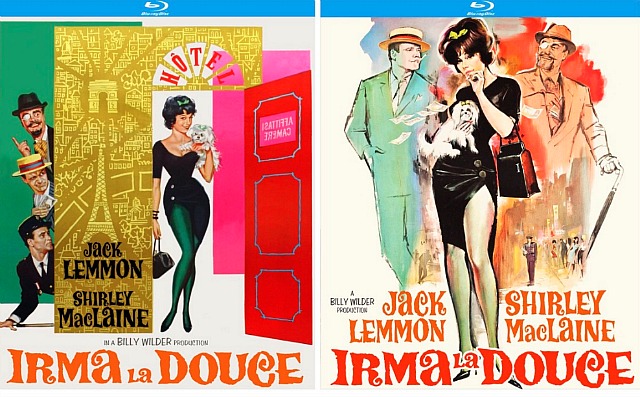
I saw on Twitter that in mid July Kino Lorber is bringing out a 4K remastered Bluray of Billy Wilder‘s Irma la Douce (’63). The disc will contain audio commentary by author and film historian Joseph McBride, with whom I maintain a correspondence.

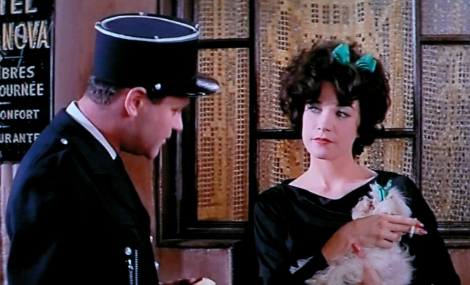
So I wrote McBride the following: “What is there to say about the overlong, inauthentic Irma la Deuce? I like Andre Previn‘s musical score, but it moves so slowly and takes so long (147 minutes). Jack Lemmon‘s performance as Shirley MacLaine‘s policeman lover isn’t so much nervy or heart-touching as glumly dutiful. Lou Jacobi, as a local Pigalle bartender, is the only really good thing in it.”

McBride’s reply: “I’ve been working on a critical study of Wilder, following my critical study of his mentor Ernst Lubitsch, called “How Did Lubitsch Do It?” (Columbia University Press, 6.26). And so I was honored to be asked by Olive Films to talk about Wilder and Irma.

Irma represented an important stage in my own sexual liberation. I had to see it three times while I was a horny but guilt-ridden Catholic high school student and kept walking out before I could make it all the way to the end. So I thank Billy Wilder for helping free me from my religious scruples about sexuality.

“Ironically in that light, Irma is one of Wilder’s most romantic films, while also dealing with the seamy side of life, a paradoxical combination he often explored in his films both in Europe and the U.S. Irma shows him taking advantage of the new frankness allowed Hollywood filmmakers in 1963 and, as he often did, helping lead the charge. It deals openly with prostitution and mocks sexual hypocrisy, themes that pervade his body of work.”

I’d forgotten that Irma was Wilder’s most popular film. It cost $5 million to make, and brought in $25,246,588 — quite the sum in 1963 dollars.

Read more

“Attractive” Isn’t The Idea

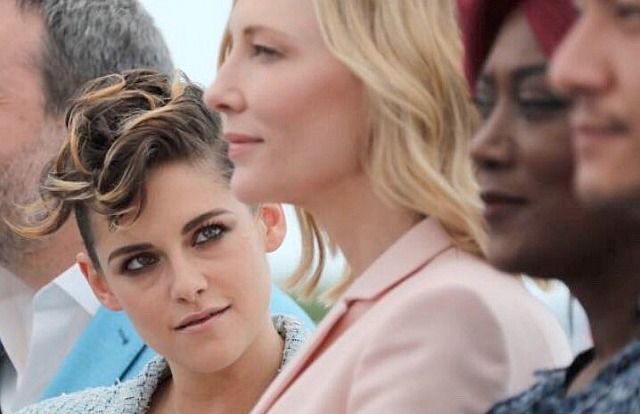
Before last night’s screening of Asghar Farhadi‘s Everybody Knows, Salle Debussy journalists were more or less obliged to sit through live video of the red-carpet arrivals as well as opening remarks and tributes inside the Grand Lumiere. I was half-watching and half-texting while scrolling through Twitter. But Kristen Stewart‘s appearance struck me as comment-worthy.

I asked a youngish British journalist sitting to my right what she thought of Stewart’s radically cut, blonde-streaked hair, and she said “Oh…uhhm.” In other words she found it striking but didn’t want to share any impressions. I said, “The shorn sides and odd streaks and the smoky eye makeup…it’s just not very attractive.” Certainly not in a conventional hetero sense of that term, I meant, which is what Hollywood Elsewhere more or less goes by.

The journalist said, “Well, I don’t think ‘attractive’ is the idea.” What would the idea be then, I wondered? I actually was telling myself that the idea was to project an edgy sapphic thing, or some kind of statement against what most of us would call conventional foxy norms. But I didn’t want to discuss in detail that so I just said, “She doesn’t want to project an attractive appearance?” No response so I added, “You mean as a gay thing?”

That stopped the conversation in its tracks. British journo woman stared silently at the screen and I went back to Twitter.

Kenyan Lesbian Drama Conflicting with Scorsese Sitdown

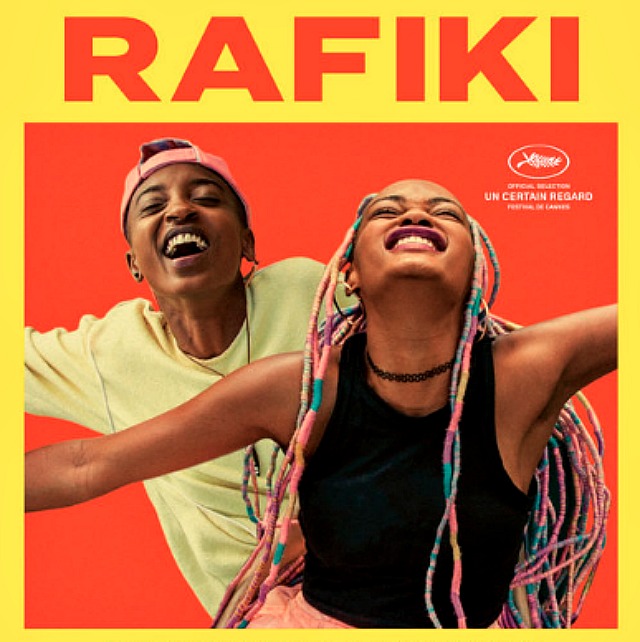
The biggest Cannes film today (Wednesday, 5.9) is Wanuri Kahiu‘s Rafiki, a Kenyan-made lesbian love story that’s been locally banned by Kenya’s conservative-minded government. It will screen at 1:45 pm and again at 10:15 pm at the Salle Debussy. I would normally be catching the earlier screening, but there’s a conflict and a complication with the great Martin Scorsese, who came to town yesterday.

Scorsese, currently in post with his $180 million Netflix gangster flick The Irishman, will sit for a discussion at the Theatre Croisette this afternoon (4:30 pm) following a Director’s Fortnight 2:30 pm screening of Mean Streets. I’d prefer to catch the 82-minute long Rafiki at 1:45 pm and then slip into the Scorsese q & a, but I’m afraid the security goons won’t let me in. I might have to attend Mean Streets in order to catch the Scorsese sitdown (which I regard as essential) without incident, and then catch Rafiki at 10:15 pm. Not the end of the world.

Read more

Cohen-Faciliated Russki Dough Covered Stormy’s $130K

While Hollywood Elsewhere slept in Cannes, persuasive evidence about Russian financial influence upon Donald Trump attorney Michael Cohen and the Trump mob family in general came to light via Stormy Daniels‘ attorney Michael Avenatti, and it sounds and tastes fairly delicious. It was all over the news shows last night, but the summary and follow-through by MSNBC’s Lawrence O’Donnell is my favorite so far.

From the 5.8.18 N.Y. Times story by Mike McIntire, Ben Protess and Jim Rutenberg:

“A shell company that Michael D. Cohen used to pay hush money to a pornographic film actress received payments totaling more than $1 million from an American company linked to a Russian oligarch and several corporations with business before the Trump administration, according to documents and interviews.

“Financial records reviewed by The New York Times show that Mr. Cohen, President Trump’s personal lawyer and longtime fixer, used the shell company, Essential Consultants L.L.C., for an array of business activities that went far beyond what was publicly known. Transactions adding up to at least $4.4 million flowed through Essential Consultants starting shortly before Mr. Trump was elected president and continuing to this January, the records show.

Read more