High Intrigue

Of the three films I’m planning to catch today, Kleber Mendonca Filho and Juliano Dornelles‘ Brazilian, politically-driven Bacarau (which screens tonight at 10 pm) seems to have a special energy, to go by the trailer. Filho’s last film, Aquarius, played in Cannes three years ago. Sonia Braga stars in both.

Boilerplate: “Bacurau, a small town in the Brazilian countryside, mourns the loss of its matriarch, Carmelita, who lived to be 94. Days later, its inhabitants notice that their community has vanished from most maps.”

Filho to The Jarkata Post: “I am a Brazilian filmmaker. I live at a time when Brazilian society is suffering and stories are springing up.”

Read more

Great Coppola Summary

I’ve just read an excellent, day-and-a-half-old Michael Fleming interview with Francis Coppola. (It was posted at Cannes dinner hour on Monday, 5.13).

It reminded me what a great and expansive interview subject Coppola can be when the spigots are truly turned on — a fact that I gratefully realized 38 years ago when I cold-called Coppola at the Sherry Netherland one night and got him to talk for nearly two hours. It resulted in a two-part transcript piece that I posted in The Film Journal, which I was managing editor of from late ’80 to the early summer of ’83.

Fleming’s q & a is a straight-on, plain-spoken review and summary of everything Coppola is, was and hopefully will be.

Among the topics: (a) His family, luck and longevity, and his up-and-down fortunes; (b) The ongoing saga of his long-delayed, now-in-preparation Megalopolis with possible castings of Jude Law and Shia Leboeuf; (c) Absorbing summaries of the shootings and backstage battles behind The Godfather, The Godfather, Part II, Apocalypse Now and The Cotton Club; (d) Plans for a forthcoming, somewhat shorter re-edit of The Godfather, Part III (with Al Pacino‘s Michael Corleone dying inside after the shooting death of his daughter rather than toppling over on his Italian-villa patio at the finale); (e) The touch-and-go beginnings of his hugely successful wine business; (f) A slam at former MGM honcho Gary Barber for being obstinate and obstructive over the re-edit of The Cotton Club (Coppola’s tale mirrors an HE account of this episode that I posted on on 9.7.17), and (g) an announcement that with Barber now out the door The Cotton Club Encore will be screened at the forthcoming 2019 New York Film Festival and receive a limited theatrical window before going to video and streaming.

It reminds, as I noted a year and two-thirds ago, that “one good thing came out of The Cotton Club was Michael Daly‘s “The Making of The Cotton Club,” a New York magazine article that ran 22 pages including art (pgs. 41 thru 63) and hit the stands on 5.7.84.

It was one of the most engrossing accounts of a troubled production I’ve ever read, and it still is. Dazzle and delusion, abrasive relationships, murder, tap dancing, “pussy”, cocaine, flim-flam, double talk, financial chicanery and Melissa Prophet. Excellent reporting, amusing, believable, tightly composed…pure dessert.

Coppola tells Fleming about the participation of a somewhat shady guy during the Cotton Club filming, and how he surprisingly came to be Coppola’s ally in some respects. Coppola calls him “Joey” but Daly’s piece identifies him. Coppola describes him as “pretty bright and, whatever his past was, pretty nice.”

Anyway, that’s it. Totally worth reading. As good as this sort of thing gets.

It rained last night in Cannes. The current weather forecast is for rain, clouds and chilliness for the next week or so — terrific. Today’s events are (a) a press conference for The Dead Don’t Die at 11 am (which I’m not inclined to attend), (b) Alice Silverstein‘s Bull at 2 pm, (c) Ladj Ly‘s Les Miserables at 4:45 pm, and (c) Kleber Mendonça Filho‘s Bacarau at 10 pm.

Passive Zombie Contemplation

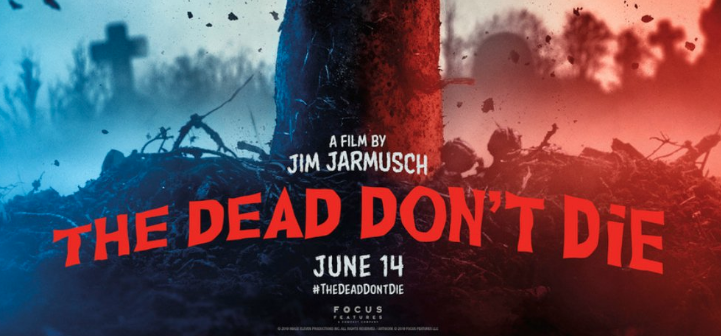
Dry, droll and deadpan are what you always get with Jim Jarmusch (and that’s fine with me), but The Dead Don’t Die, a small-town zombie comedy, is too slow, passive, resigned, lethargic and self-referential. It kind of works during the first half, but gradually spaces itself out.

Die‘s central problem is that it’s about watching a zombie apocalypse rather than somehow dealing with it.

Strange as this sounds, none of the characters actually try to survive. Well, they do but half-heartedly. It’s a hipster goof-off riff, but if you want to get serious and divine a social-political message, the film is basically saying “we’re going so wrong now and are more or less fucked at this point so why even fight it?”
Jarmusch occasionally flirts with the thematic thrust of George Romero‘s Dawn of the Dead (passive, brain-dead consumers are real-life zombies) and takes shots at the spreading Trump cancer, but he doesn’t really engage. Well, he does but in the manner of an aging, despairing, heavy-lidded type.

The Dead Don’t Die is baroquely amusing here and there, but the mood of laid-back nihilism and a general “submission to the plague” mentality is too persistent. Around the two-thirds mark the lack of any semblance of narrative energy starts to work against itself.

Horror fans are going to stay away in droves, Joe Popcorn is going to say “where’s the movie?” and Jarmusch devotees are going to feel under-nourished.

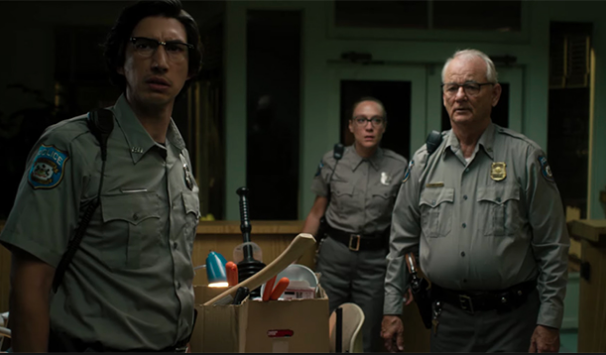
Bill Murray, Adam Driver and Chloe Sevigny play cops in an upper New York State town called Centerville, and all they really do is watch and comment, watch and comment, watch and comment.

Tilda Swinton plays the only truly cool character — an eccentric small-town samurai mortician.

Tom Waits plays a kind of Greek chorus character named Hermit Bob — a woods-dwelling hobo who provides despairing commentary now and then, especially toward the end. Steve Buscemi, RZA, Danny Glover and Caleb Landry Jones are typical Jarmusch-styled eccentrics (a snarly Trump fanatic with a dog named Rumsfeld, a wisdom-dispensing UPS delivery man, a kindly townie, and a gas-station owner with an encyclopedic knowledge of film and comic books, respectively).

I’m sorry to be panning. I’m a huge fan of Only Lovers Left Alive (which I only saw once but has gotten better and better the more I’ve thought about it) and Paterson. I had the feeling during tonight’s screening that Jarmusch wrote the script too quickly and hadn’t really thought things through. But the main problem is that his story and direction are just as lethargic as his characters.

Wicker Man

John Wick: Chapter 3 – Parabellum (Summit, 5.17) “is a case of bigger but not better,” says a regional film critic pally. “The first Wick was a pleasant surprise. The second one (’17) was fine **, but didn’t really improve on the first.

“Now we have the third, which is so over-the-top it’s actually exhausting. Fight scene after fight scene, some truly gross-out moments (a sword rammed into a bad guy’s eye, heads exploding, etc.), and a body count that’s through the roof (must be something like 200 deaths).”

HE thought: John Wick: 200 Deaths isn’t a bad title.

“The film definitely has a sense of humor, and the sf-like elements (everything regarding the super criminal organization The Table) are fun, but overall the film, while entertaining, is also cringe-worthy. While watching it I couldn’t help thinking that if the action weren’t so obviously preposterous, John Wick 3 would deserve an NC-17 rating. And maybe it still does.

“Maybe the R rating points out, once again, how the MPAA goes soft on violence and hard on sex. All I know is, I wouldn’t want any kid of mine to see this film.”

** In HE’s humble opinion John Wick, Chapter 2 was not fine.

Badge

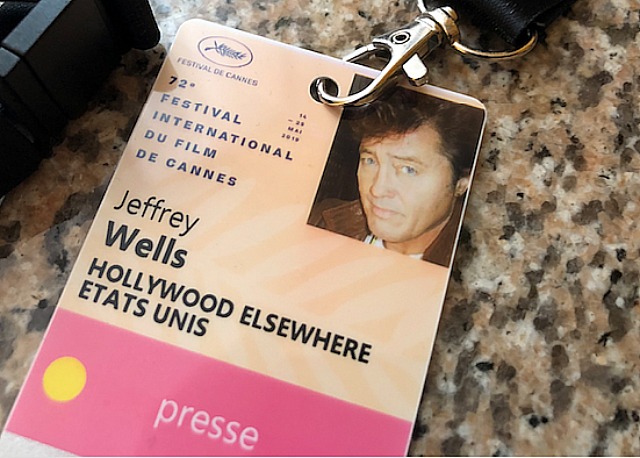
After last January’s dismaying Sundance credentials episode, I needed the emotional and psychological boost of my beloved pink-with-yellow-pastille badge, which the Cannes Film Festival press office been gracious enough to dispense for the last seven or eight years.

The feelings of comfort and affirmation that this pass bequeaths cannot and should not be minimized. Pink-with-yellow-dot doesn’t just put a smile on your face — it imprints a smile in your soul. A regular pink pass is fine — it just means having to wait in line for 30 to 40 minutes, and is much better than a dreaded blue or yellow or (God forbid) Cannes market badge. But pink-with-yellow-dot means you can stroll in at the last minute, which allows you to file at your nearby apartment until just before a screening begins.

Who am I if not a pink-with-yellow-pastille guy? What am I? What is the sum total of my decades of filing, reporting and dispensing gut-instinct observations if not this? Life is hard, but it’s a lot less arduous if you’re wearing one of these babies.

Shatterankle

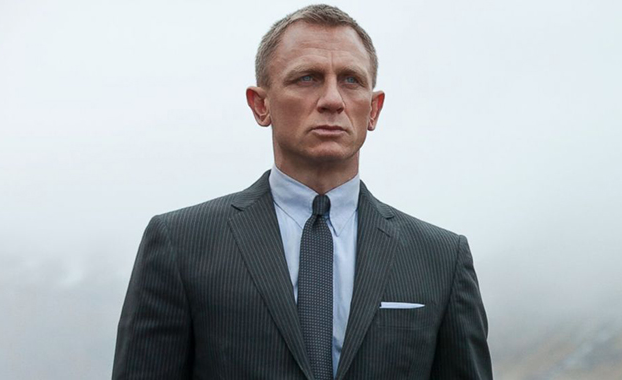
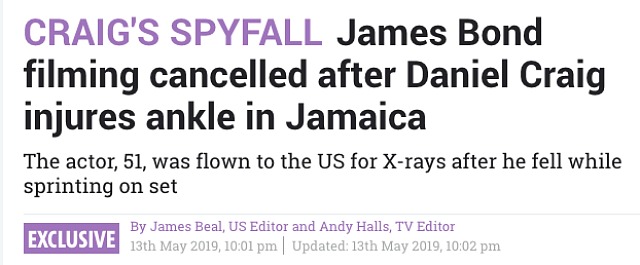
Daniel Craig pulled a Tom Cruise last week in Jamaica, injuring his ankle during a running scene and consequently throwing the shoot of Bond 25 (aka Shatterhand) out of whack.

What was your first thought after hearing of this? Right — you wondered how old Craig is (51) and if that might have been a slight factor. The answer is “it might well have been.” Craig is squarely middle-aged and not even within flirting distance of being “old”. But you do wither slightly at that age. Running, fighting and leaping-wise, the optimum window is between your late teens and mid to late 40s. After that an actor is probably better off playing “M” or “Q.”

Genes, luck and discipline are always key factors in shooting action scenes, but one or more of these probably failed Craig, who’s been injured three or four times before while Bonding. Biology, man. You can run but you can’t hide.

After the fall Craig “was in quite a lot of pain and was complaining about his ankle,” according to a source who spoke to The Independent‘s George Simpson. “As you’d expect he was also pretty angry that it had happened. He threw his suit jacket on the ground in sheer frustration.”

Craig: “Fuck, fuck, fuck, fuck, fuck! I’ve done this kind of action scene dozens of times before. What the hell happened?”

Sean Connery was 52 or so when he shot in last Bond film, Never Say Never Again (’83). Pierce Brosnan was the same age when he hung up his Bond spurs in ’05. Roger Moore was 57 or 58 when he did his final Bond, A View to a Kill (’85). They were all pushing it. They all tasted a bit of luck.

HE says the ideal Bond actor should be in his early 30s (the rugged-looking Connery was 32 when he made Dr. No) to late ’40s, depending on the breaks. After that it starts (I say “starts”) to become a game of roulette mixed with careful choreographic planning.

Read more

Clooney-Feinberg

Catch 22 producer, co-director and costar George Clooney to The Hollywood Reporter‘s Scott Feinberg: “The studios are less and less telling the kinds of stories that I like to tell. Mid-range or even small budget. You know, Warner Bros. isn’t going to make Good Night, and Good Luck now; they’re not going to make Michael Clayton, quite honestly, now. So [projects like those] are going to end up at Hulu or Netflix or Amazon or Apple or one of those places.”

Has Hollywood Elsewhere seen even a frame of Catch 22 (Hulu, 5.17), much less all six episodes? Nope, and with the Cannes Film Festival beginning later today, there isn’t much time to do so. 100% Rotten Tomatoes score, 75% on Metacritic.

Read more

Usual Pre-Festival Revelry

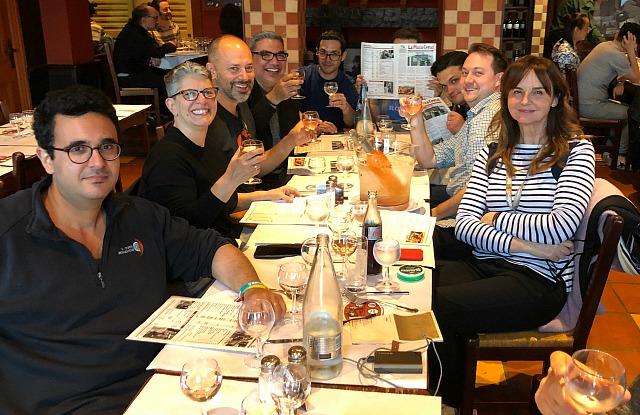
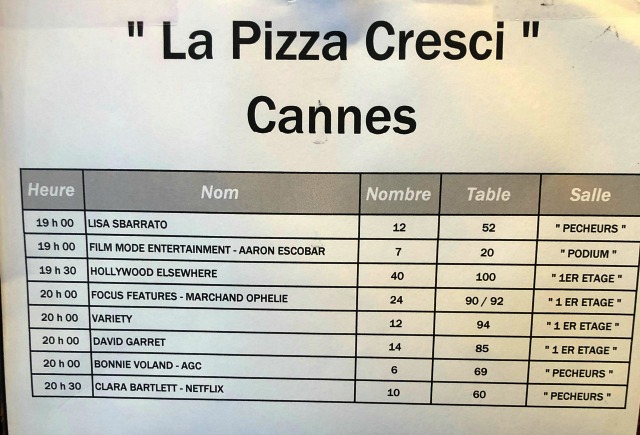
The La Pizza guys honored HE’s reservation, but they somehow got the idea that 40 guests were expected. “That was a mistake, possibly on my part,” I explained, half expecting to get my knuckles rapped. “I’d like to predict but people do what they want…I mean, the guests could be as few as 20 or 25.”

The waiters were counting on a much bigger bill and tip, you see, so they were a teeny bit miffed. I must have said “I’m sorry” three or four times, but the La Pizza guys were giving me side-eyes left and right.

I explained that Toronto Star critic Peter Howell was on deadline, a plane carrying Indiewire‘s Anne Thompson was late, N.Y. Times “Carpetbagger” Kyle Buchanan was downstairs and not into the upstairs crowd and Variety‘s Owen Gleiberman had opted to join his colleagues (including editor Claudia Elller) three or four tables down from ours. And Variety‘s Steven Gaydos was inexplicably MIA. And no sign of Deadline‘s Pete Hammond.

Plus there’s a kind of Hatfields-vs.-McCoys separatism between wokester critics and the not-so-woke, I told the waiters. It’s not the one-for-all, all-for-one crowd it used to be. A lot of prickly pears out there.

But things eventually worked out. Our banquet-sized table filled up, everyone ate and drank and the mood turned joyful and even boisterous. Raucous applause broke out when Thompson arrived; more cheers when Indiewire‘s David Ehrlich dropped by.

The bill ended up at 359 euros. Film at Lincoln Center exec director Lesli Klainberg generously picked up half the tab…that’s the American spirit!

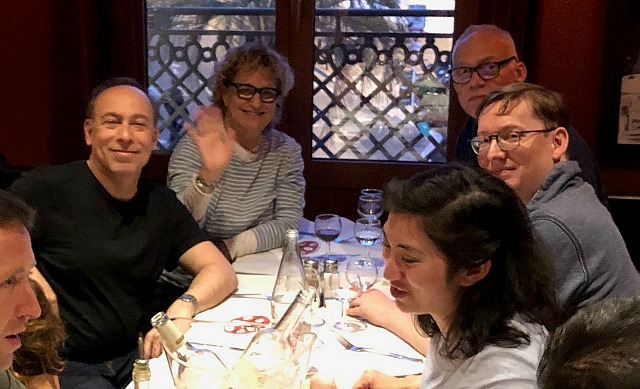
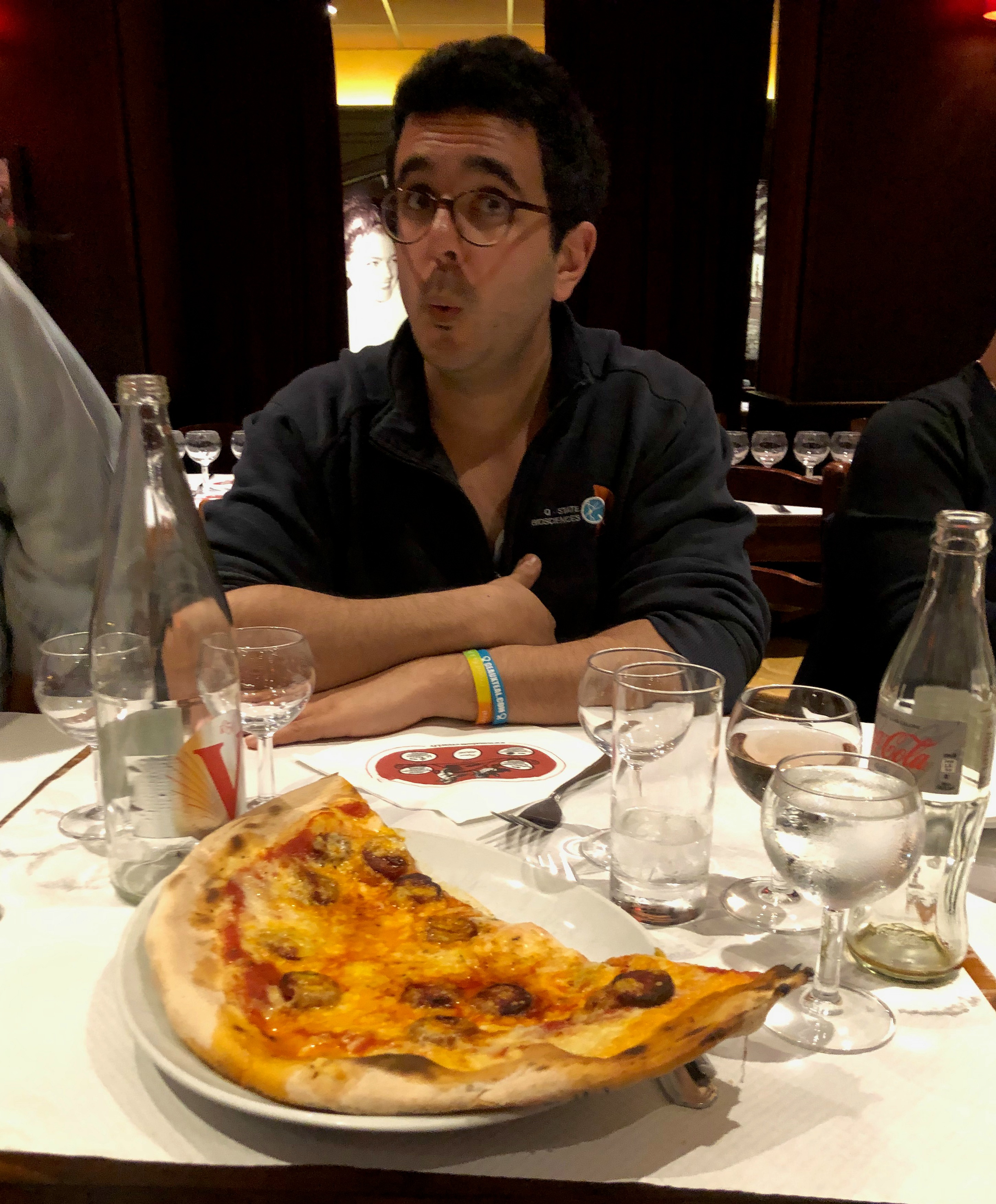
Top group photo (l. to r.): Variety‘s Owen Gleiberman, Claudia Eller, Asian bureau chief Patrick Frater, Brent Lang. Fourth pic from the top (l. to r.): World of Reel‘s Jordan Ruimy, Film at Lincoln Center’s Lesli Klainberg, Miami Film Festival’s Carl Spence, Indiewire‘s Eric Kohn, Apple guy Matt Dentler, John Von Thaden from Magnolia Pictures and director (Show Me What You Got) & dp Svetlana Cvetko.

Read more

Doris Day’s 17-Year Peak

Doris Day has passed at age 97. Nothing sad or tragic in this — she lived a long, luminous and bountiful life, if not over the last half-century then certainly during her 25-year heyday. Day was semi-hot between 1940, when her big-band singing career began to happen at age 18, and the launch of her film career in 1948. She was huge throughout the ’50s and early ’60s but it all began to wind down around 1965, when her “world’s oldest virgin” routine finally began to get old.

From “Doris Day Is More Or Less Okay,” posted on 1.10.10:

“Day was fairly great in Pillow Talk, Lover Come Back, Young Man With A Horn and Love Me or Leave Me. I remember something tart and tolerable about her performance in Young At Heart, in which she played the love interest of a dark-hearted Frank Sinatra. And she was reasonably “good” in those bizarre comedies of sexual constipation that she made in the early to mid ’60s.

“And yet it’s hard to think of another veteran of ’50s and ’60s cinema who was more of an icon for uptight middle-class values and zero sexuality.

“I know I suddenly liked Day a lot more when I heard that rumor about her having had an affair with Sly Stone — but that story turned out to be bogus. Day did apparently have a fling with L.A. Dodgers base-stealer Maury Wills.”

Day was offered the Mrs. Robinson role in The Graduate, but turned it down for moral reasons. Mistake.

In 2010 director Douglas McGrath (Infamous, Emma) made a case for Day, then 87, receiving a special career-honoring Oscar. McGrath wrote persuasively and with feeling about Day’s special qualities. She committed to her light-comedy roles, held her own with the likes of James Stewart, Kirk Douglas and James Cagney, and deserved a tribute for the same reason that Cary Grant was tributed in 1970 — i.e., because she was iconic.

The only Day performance I had a problem with was her costarring role in Alfred Hitchcock‘s The Man Who Knew Too Much. I adore aspects of this 1956 thriller (the murder in the Marrakech marketplace, the assassination attempt in Albert Hall) but Day’s grating emotionalism makes it a very hard film to watch. She cries, shrieks, trembles, weeps. And when she isn’t losing it, she’s acting pretentiously coy and smug or singing “Que Sera Sera” over and over.

Read more

Abominable Interior

I caught Joe Berlinger‘s Extremely Wicked, Shockingly Evil and Vile last week. The reason I didn’t feel moved to post anything is that I was impressed as far as it went, but the only element that really got me was Zac Efron‘s icy, understated portrayal of serial killer Ted Bundy.

It’s a straightforward, well-measured, non-emphatic portrait of a fiend, drawn from the point of view of Bundy’s onetime girlfriend Elizabeth Kendall (Lily Collins). The source is Kendall’s book “The Phantom Prince: My Life with Ted Bundy“. Kudos to screenwriter Michael Werwie for pruning it down just so.

I was never bored, irked or irritated, but it’s obviously and necessarily an alienating thing to sit through, and the whole time I was telling myself “this is fairly decent but I can’t say I’m enjoying it, and how could I?”

Efron is fascinating. Before this his best performance was in Me and Orson Welles, but this is much stronger for its subtlety. He’s playing an extremely scary guy without overtly signalling full-monster vibes. Well, he does but with dozens of little darting, brush-flick ways.

What other films contain a top-notch lead performance while otherwise making you wish they would end soon?

Eyeball Candy vs. Exciting The Imagination

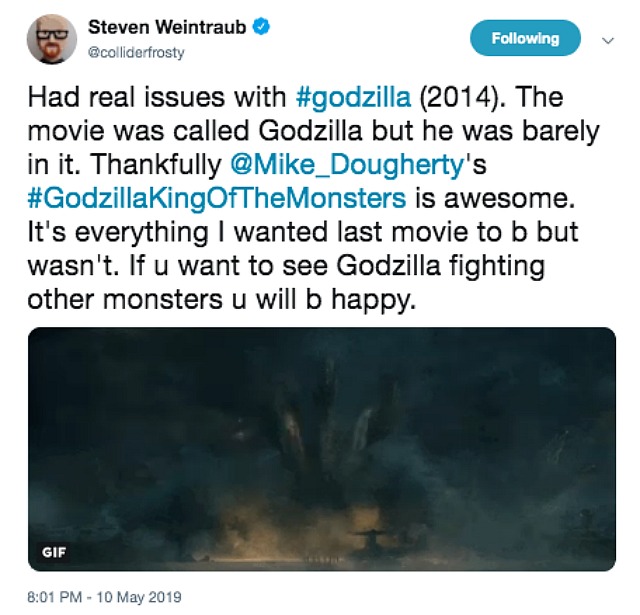
Hollywood Elsewhere hasn’t seen Mike Dougherty‘s Fat Godzilla (Warner Bros, 5.19) and I’m pretty much determined to excuse myself until it streams, but I strongly disagree with Steve Weintraub’s praise on principle. More doesn’t mean better. I’ll always prefer a monster film that invests in hints of things to come rather than one that pushes it all in your face.

From my 5.10.14 review of Gareth EdwardsGodzilla: “I liked the fact that Edwards tones Godzilla down for most of its running time. Over and over he uses suggestion — visual and aural hints and implications — instead of blatant show-and-tells. He deserves admiration for delaying Godzilla’s first big MCU roar until the two-thirds mark and also holding back on the trademark fire-breathing until the big super-finale, in which San Francisco gets it but good.”