Pied Piper of Self-Pitying Incels?

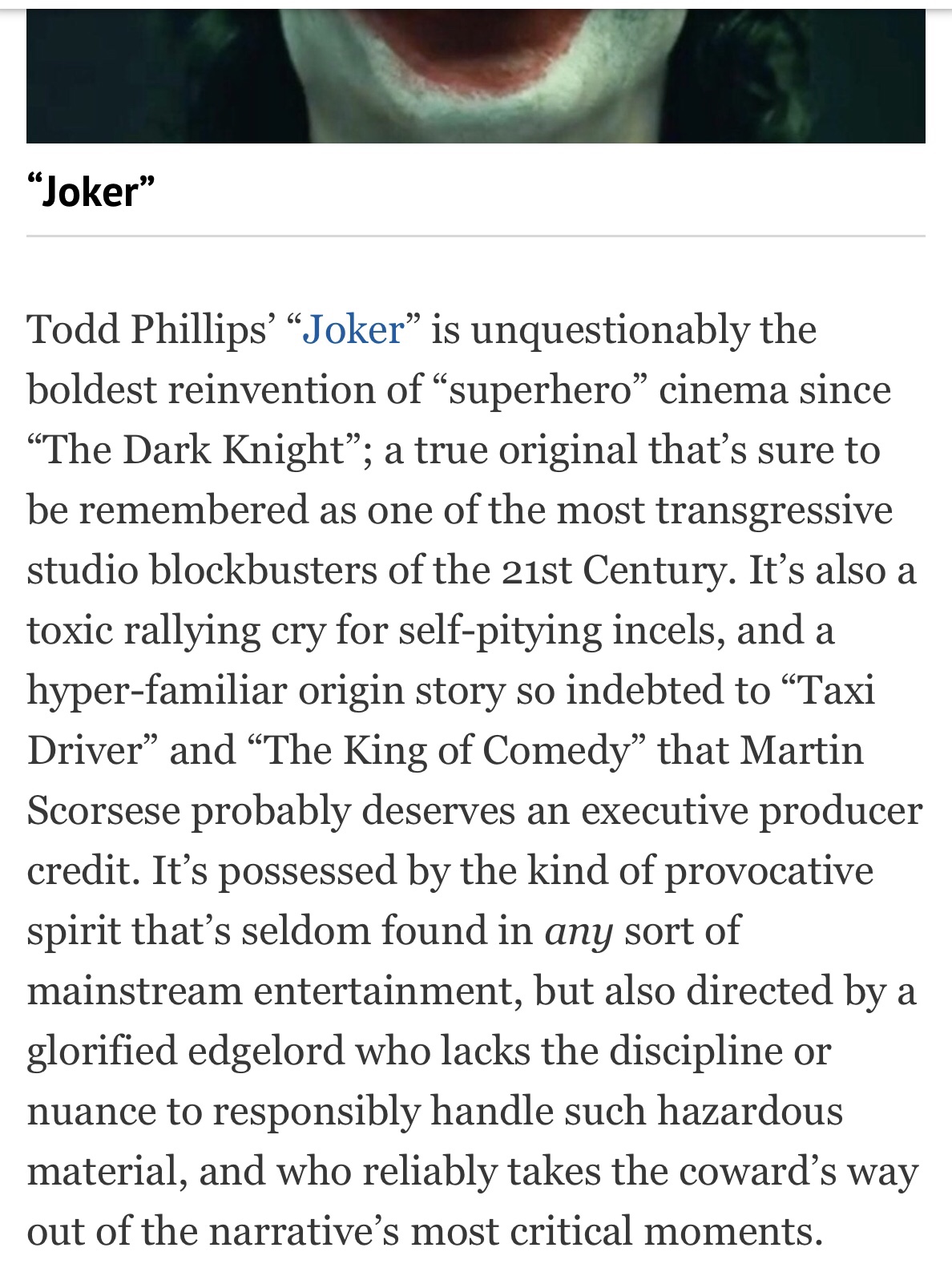
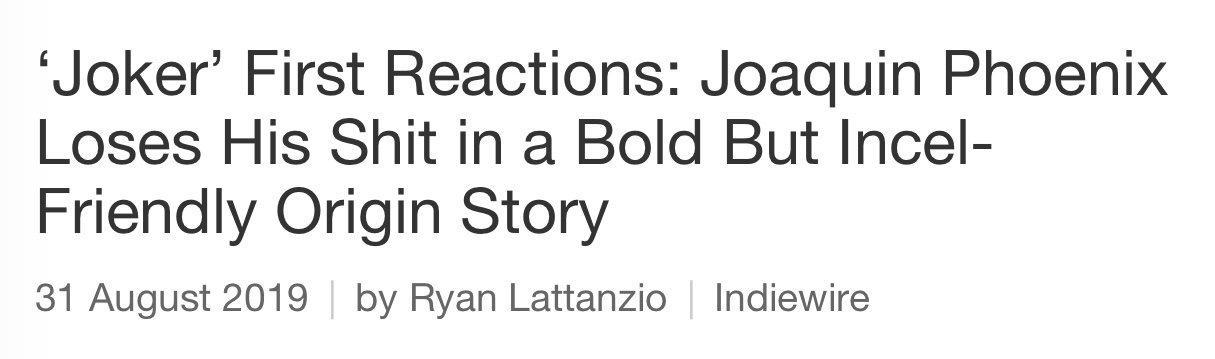
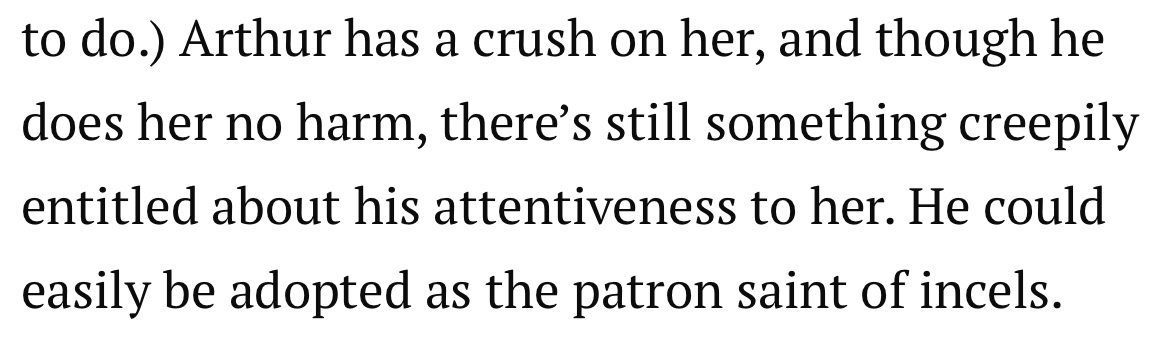
From this point on, no semi-hip person will be able to contemplate, discuss or even tap out a tweet about Joker without dealing with the side-issue that stubbornly refuses to go away…incels!

The only disappointment of Telluride ‘19 that comes to mind is Tom and Julie’s curious decision not to screen it. Seriously, why didn’t they? It’s the thing to see right now.

I’m Very Sorry…

(a) …that I’ve missed the 1 pm Chuck Jones showing of Fernando MeirellesThe Two Popes. Now, if I want to be vigilant, I’ll have to catch it tomorrow morning at 9:30, except that’s when I need to file;

(b) …that every time a hurricane approaches the news networks always insist upon trying to amplify or otherwise whip up the fear over actual threat levels. It’s partly about responsibility (people should know the hard facts and act responsibly) and partly selling fear. People always tune in when afraid, and the news guys are always ready to sell the shit out of the possibility of death and destruction;

(c) …that I have a hole in the left pocket of my tight black jeans, and that when I forget and drop some coins in regardless (because I’m absent-minded) it always seems to take a good ten minutes for all the coins to work their way down my leg and out onto the sidewalk;

(d) …that all three of my pocket combs (primary plus two back-ups) fell out of my rear pocket of my unlucky white jeans yesterday, and now I’m combless until I can find a store that sells them (which is no easy feat if you know Telluride).

(e) …and for this:

First Time For Everything

“Many have asked, and with good reason: Do we need another Joker movie? Yet what we do need — badly — are comic-book films that have a verité gravitas, that unfold in the real world, so that there’s something more dramatic at stake than whether the film in question is going to rack up a billion-and-a-half dollars worldwide.

Joker manages the nimble feat of telling the Joker’s origin story as if it were unprecedented. We feel a tingle when Bruce Wayne comes into the picture; he’s there less as a force than an omen. And we feel a deeply deranged thrill when Arthur, having come out the other side of his rage, emerges wearing smeary make-up, green hair, an orange vest and a rust-colored suit.

“When he dances on the long concrete stairway near his home, like a demonic Michael Jackson, it’s a moment of transcendent insanity, because he’s not trying to be ‘the Joker.’ He’s just improvising, going with the flow of his madness.

“And when he gets his fluky big shot to go on TV, we think we know what’s going to happen (that he’s destined to be humiliated), but what we see, instead, is a monster reborn with a smile. And lo and behold, we’re on his side. Because the movie does something that flirts with danger == it gives evil a clown-mask makeover, turning it into the sickest possible form of cool.” — from Owen Gleiberman‘s 8.31.19 Variety review.

Sandler Scores But Safdies Are Crazy

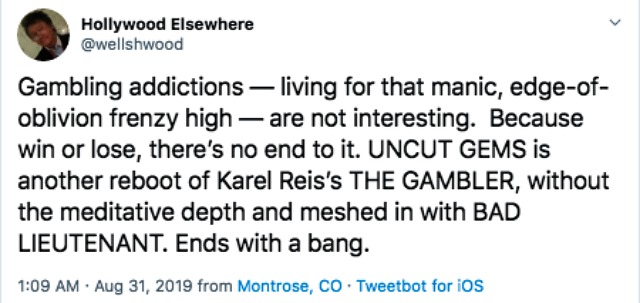
Adam Sandler is completely immersed in the manic mode of an insatiable edge-junkie gambler in Josh and Benny Safdie‘s Uncut Gems. For this is a hyper, hammerhead experience that, unlike Karl Reisz and James Toback‘s The Gambler or Abel Ferrara‘s Bad Lieutenant, has zero interest in looking or reaching beyond the hustling mood-rush aspects of his character’s wildly self-destructive addiction.

It’s all frenzy, all movement, all “no, wait…you know I’m good for it” or “no, man, c’mon…I put the bet down before that shit happened.” He owes, he bullshits, he runs around, he bullshits some more….homina homina bullshit bullshit junkie highs flashing as the walls move in closer and closer.

If you know anything about the gambling disease you know it’s never about winning — it’s about the rush journey…the bolt, the buzz and the tasting of doom and salvation in the exact same breath. It is therefore hugely exasperating to sit through because the Safdies don’t want to go anywhere. A certain thing happens at the very end, and when it did I immediately muttered “thank God.”

Credit Where Due

Rupert Goold‘s Judy is a servicable, mildly approvable portrait of a major talent in decline and disarray, but a lot some of it feels a bit slow and middling. But Renee Zellweger‘s performance as the withered but still spirited songbird Judy Garland, who tragically passed in London from an accidental drug overdose at age 47, will almost certainly result in a Best Actress nomination. The film is worth seeing for Zellweger and Zellweger alone.


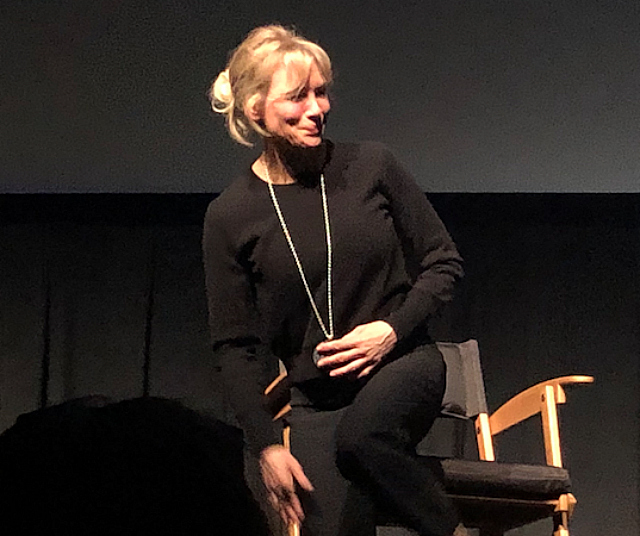
Judy star Renee Zellweger during yesterday’s Telluride Film Festival brunch.

McQueen’s Shadow

Ford v. Ferrari director James Mangold may not want to admit this but his film, which roars into highly pleasurable third-act overdrive during its depiction of the 1966 Le Mans race, owes a huge nostalgic debt to Steve McQueen‘s Le Mans (’71).

Shot in the summer and early fall of’70, Le Mans was an all-around calamity — box-office failure, critically drubbed (the atmosphere and versimilitude are top-notch but it’s a frustrating film in other respects) and a kind of spiritual end-of-the-road experience for McQueen himself.

Nonetheless the annual Le Mans races during that era (mid ’60s to early ’70s) are owned and imprinted by the McQueen legend, and if I’d been in Mangold’s shoes I would have inserted a very quick, very fleeting glimpse of McQueen’s Michael Delaney character…maybe driving, maybe hanging around, maybe watching from the stands. Just a little tap-on-the-shoulder acknowledgment.

Posted on 10.1.15: “Steve McQueen: The Man & Le Mans may seem at first glance like a standard nostalgia piece about the making of McQueen’s 1971 race-car pic, which flopped critically and commercially. (I own the Bluray but I’ve barely watched it — the racing footage is authentic but the movie underwhelms.) Yes, in some ways the doc feels like one of those DVD/Bluray ‘making of’ supplements, but it soon becomes evident that Clarke and McKenna are up to something more ambitious.

“What their film is about, in fact, is the deflating of McQueen the ’60s superstar — about the spiritual drainage caused by the argumentative, chaotic shoot during the summer and early fall of ’70, and by McQueen’s stubborn determination to make a classic race-car movie that didn’t resort to the usual Hollywood tropes, and how this creative tunnel-vision led to the rupturing of relationships both personal (his wife Neile) and professional (McQueen’s producing partner Robert Relyea, director John Sturges), and how McQueen was never quite the same zeitgeist-defining hotshot in its wake.”

Responding to Feinberg

Hollywood Reporter award-season columnist Scott Feinberg on Christian Bale and Ford v. Ferrari. “If Fox can convince its stars and Oscar voters that [Christian] Bale is actually a supporting actor in the film, then he could be a contender. If Bale and Matt Damon wind up pitted in the same category, however, my hunch is neither will make it.”

HE reply: If Academy voters can be convinced that Olivia Colman was delivering a lead performance in The Favourite and (reaching back almost four decades) that Ordinary People‘s Timothy Hutton, whose psychologically burdened Conrad Jarret character was the be-all and end-all of that film and who appeared in each and every scene, gave a supporting performance…if they buy this horseshit, they can be convinced of anything.

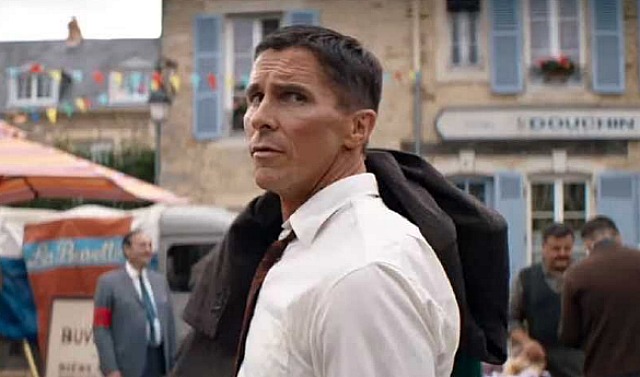
But there’s another angle here, and that’s that Bale’s Ken Miles, the late British race-car driver, is not doing anything especially new or head-turning here. He’s playing yet another variation of the same asocial skeezy guy that he played in The Fighter and The Big Short. Bale is constitutionally incapable of playing smooth, measured, steady-as-they-go guys who don’t glare or twitch or scrunch their face up or bulge their neck veins…okay, maybe this isn’t fair as Bale does turn it down here and there in Mangold’s film. But Bale will always exude a kind of curious, facial-flicky weirdness, and I’m saying this as a huge, hyuuuge admirer of his Dick Cheney.

Sidenote: Bale’s all-time biggest career mistake was wearing mandals in The Big Short. When I saw his big, protuberant man-toes in that film I went “ohhhh, no…please!!!”

Spot-on Feinberg: “Not to suggest all car racing movies are the same or will be regarded as such in the awards season, but I suspect that Ford v. Ferrari will ultimately enjoy a trajectory fairly similar to Ron Howard‘s Rush (’13), for which a supporting actor (Daniel Bruhl) got a lot of heat, including Critics’ Choice, BAFTA, Golden Globe and SAG noms, but ultimately came up a bit short with the Academy in all categories.”

Fascinating Confidence

In 2040 or 2041, Richard Linklater‘s film version of Stephen Sondheim and George Furth‘s Merrily We Roll Along, a musical, will stream worldwide. Costarring Ben Platt (25 now, 45 in ’40), Everybody Wants Some!’s Blake Jenner (who will be 47 or thereabouts when the film debuts) and Booksmart’s Beanie Feldstein (who will also be 45 upon release).

Linklater, significantly, will be 80 or 81 when it’s all over.

Merrily We Roll Along is a nearly 40 year-old stage musical. It’s based on the 1934 play of the same name by George S. Kaufman and Moss Hart.

Pre-Brunch Chatter

Anne Thompson to Eric Kohn in a Mountainside Inn echo chamber: “A lot of Netflix and Amazon here.” Renee Zellweger and Adam Driver are being tributed here, which means they’ll both be Oscar-nominated.

“I’ve heard Zellweger’s performance is great,” Thompson says, implying that the film itself may be…who knows? Likewise, “I hear good things about Adam Sandler‘s performance in Uncut Gems.”

Randy Newman, composer of Marriage Story score, is here! First-out-of-the-gate Ford vs. Ferrari happens Friday afternoon. Thompson: ScarJo “is a movie star…a major movie star” who went for the Marvel franchise dough and sort of got off the quality-movie track, but now she’s back.


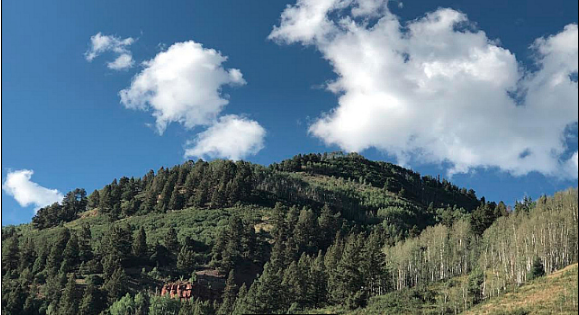
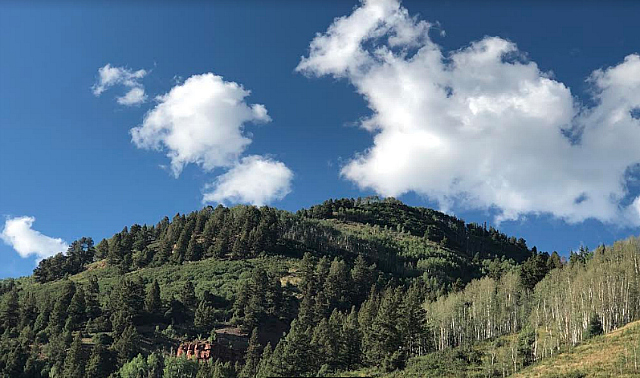
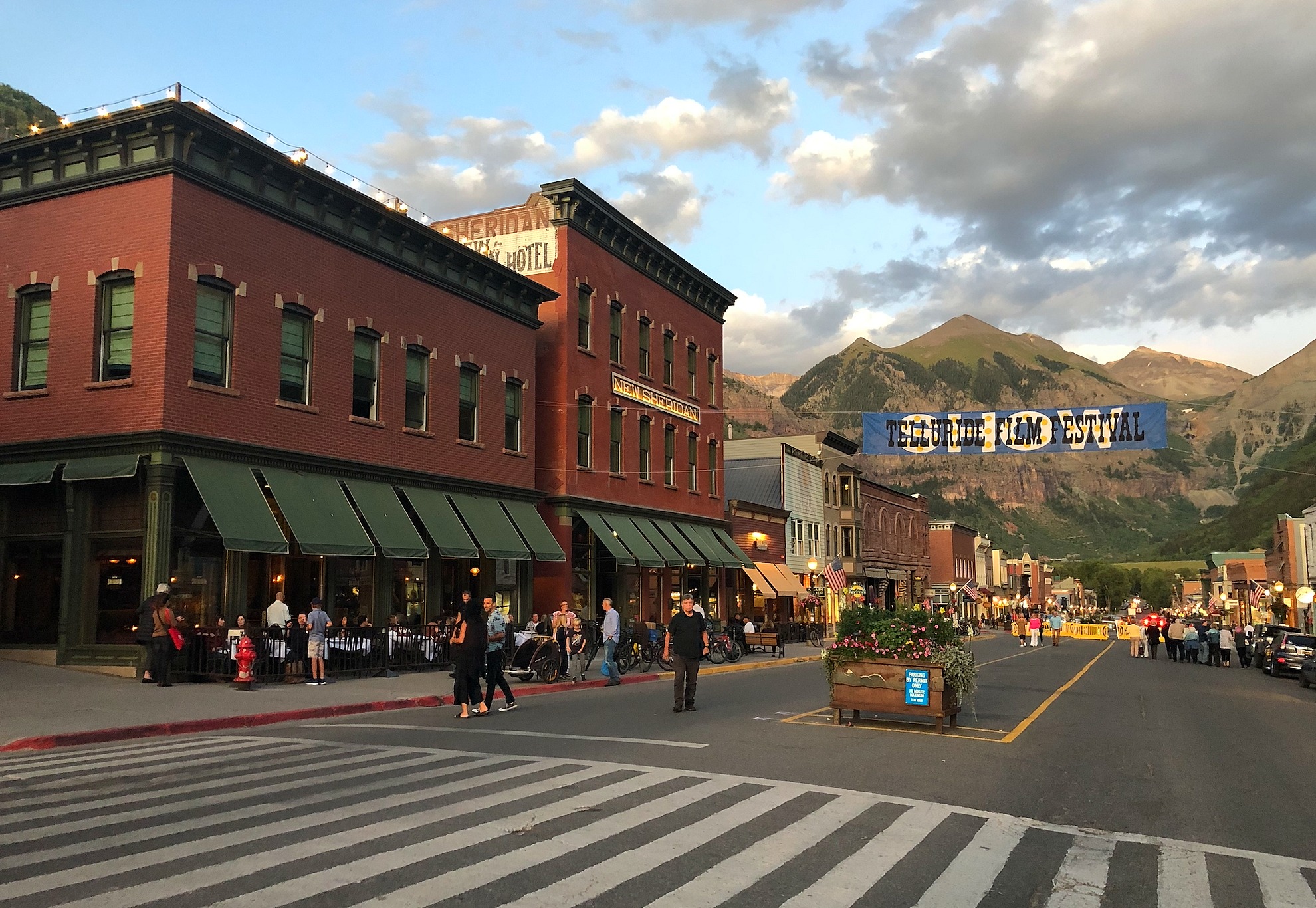
Every year I run this photo…same angle, same banner, same crowds, same skyscape. A perennial.

Heart Wants What It Wants

An involvement in a messy, months-long extra-marital affair probably isn’t going to enhance the political prospects of Representative Ilhan Omar, the 37 year-old Somali-American who reps Minnesota’s fifth Congressional district, and who is no stranger to political storms. She’s the one who referred to 9/11 perpetrators in curiously vague terms (“some people did something”) and who’s also been unfairly characterized by President Trump as anti-Israel.

Especially with Tim Mynett, the 38 year-old married political consultant (E Street Group) Omar is allegedly involved with, having reportedly been paid “roughly $222,000 from 2018 to 2019 for fundraising consulting, travel consulting, and internet advertising.”

I understand and to some extent sympathize with people who’ve been carried away by love’s torrential currents. The fact is that good people sometimes fall out of love and move on to other partners, and especially to guys when their partners are older and (I’m sorry) less fetching than the newbie. I think people should be left alone by reporters when sad stuff like this happens, but that’s not how things work. This thing popped three days ago, and it’s not going away.


E Street Group’s Tim Mynett, Rep. Ilan Omar.

Beth Mynett

The applicable rule from Omar’s perspective is “never, ever fuck the help”, especially if you’re in the public political eye and married to someone else, and especially if the “help” is married to a significantly older woman. Tim Mynett has “been” with 55 year-old Beth Mynett, medical director of the D.C. Department of Corrections, since ’06 and married to her since ’12. They have a 13 year-old son.

Stories by NBC News, the Washington Examiner, the N.Y. Post and UK’s Daily Mail stem from Beth Mynett having filed divorce papers earlier this week.

She said in the divorce filing that she was “devastated by the betrayal and deceit that preceded [Tim’s] abrupt declaration” of love for Omar last April, but she told her husband that she “loved him and was willing to fight for the marriage.” However, she said he told her that “was not an option for him,” according to court documents.

It’s a mess, a mess, a hot mess.