Your Own Ones

An interpretation about Paul Greengrass and Tom HanksNews of the World (Universal, 12.25) was discussed this morning. The basic premise has to do with love and family values and tribal identity. It’s about a widowed 60ish Civil War veteran (Hanks) agreeing to to deliver a white, German-descended girl (Helena Zengel), taken and raised by Kiowa natives many years earlier, to her aunt and uncle in the San Antonio area.

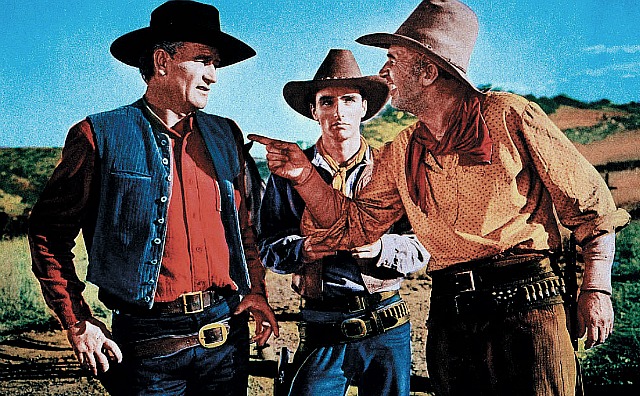
The idea of white captive children being raised by 19th Century Native Americans was explored to some extent by John Ford‘s The Searchers (’56), Herschel Daugherty‘s The Light in The Forest (’58) and Arthur Penn‘s Little Big Man (’70).

Historical accounts have reported that a good number of white youths raised by Indians, especially if they were captured at a young age, didn’t want to return to white society. They had bonded, been embraced and felt a special kinship.

This is dramatized briefly in News of the World when Zengel’s character calls out to a Kiowa tribe on the far side of a river, pleading that she wants to return to them, that she speaks their language and doesn’t want to lose them, etc.

Couple this with a longstanding belief that something inherently evil and genocidal resides in European-descended white people — that they’ve always invaded, plundered, murdered, enslaved and otherwise destroyed native cultures. Certainly as far as their settling (i.e., occupation) of the Americas and Western Hemisphere was concerned.

The hole in that viewpoint, at least as far as News of the World is concerned, is that the central white person is played by the fundamentally decent Tom Hanks.
Read more

For The Sake of Emphasis

This morning’s (12.19) edition of Richard Rushfield‘s The Ankler newsletter lists the annual Ankler awards, aka “Winners of the Worst Year.” Somewhere near the end Rushfield mentions the failings of online Oscar know-it-alls:

Here comes something I’ve said repeatedly since HE launched 16 and 1/2 years ago [August ’04] and which I mentioned at least once or twice during the Mr. Showbiz, Reel.com and moviepoopshoot days [October ’98 to August ’04]: In the eyes of the Movie Godz there’s nothing of less value in the Oscar punditry game than guessing how guild and Academy voters are going to vote.

There’s no harm in predicting if you want to get into that (I do to some extent) and if you want to measure your digital worth by it, knock yourself out. But in my view the only thing that matters in this racket is passionate advocacy — lobbying for what you love, and explaining over and over why this or that movie or performance or feat of music or cinematography or what-have-you rings your bell and deserves Oscar favor.

Argue and lobby for those efforts that you believe in your heart of hearts contain the Right Stuff, or at least for those contenders who’ve been repeatedly nominated or whose time has come. (French Exit‘s Michelle Pfeiffer, for example.) But to sit in the bleacher seats and bicker with colleagues about which nominees are more popular with the Academy hoi polloi…good heavens!

Unmentioned Element in “Never Rarely”

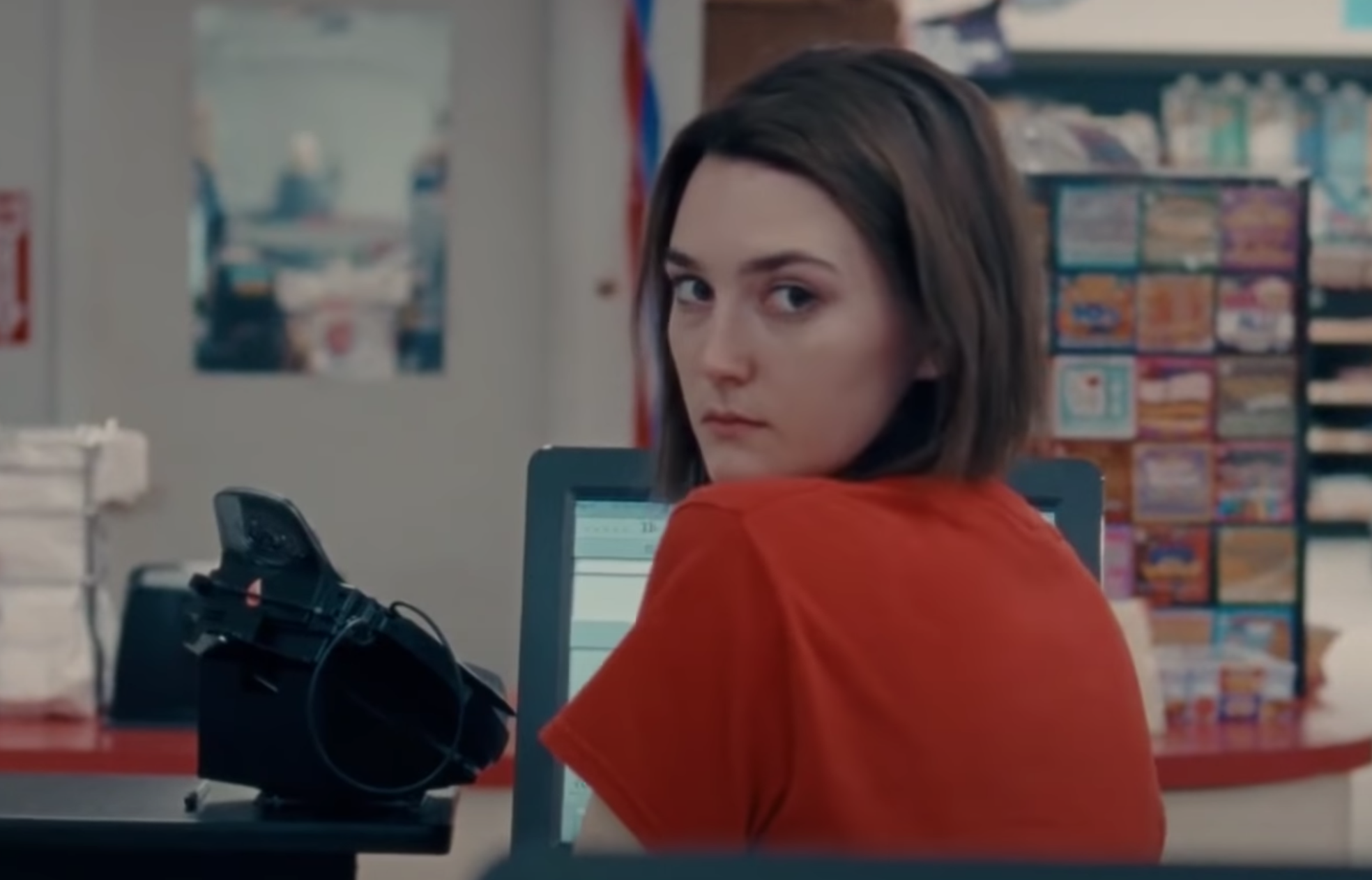
Yesterday a discussion arose about Eliza Hittman‘s Never Rarely Sometimes Always (Focus Features), and the New York Film Critics Circle having handed it awards for Best Actress (Sidney Flanigan) and Best Screenplay (Hittman).

I’m mentioning this because “friendo” offered an interesting thought: “It’s telling, to me, that no one in liberal media, including all the critics who championed Never Rarely, seemed to understand a fundamental aspect of the film, which is that the heroine is quite ambivalent about having an abortion.

“It’s not a ‘pro-life’ movie, but it does contain an element of that. But, of course, that dimension of it — the very thing that makes it complex — has to be denied by the very people who claim to love the film, because it doesn’t mesh with the the general pro-choice agenda.

“It’s not like I really like watching dead-serious art films about abortion. But I think once in a while they awaken your perceptions, and this one, with its bracing message that literally no one in the critical community got, did that for me more than 4 Months, 3 Weeks and 2 Days.

“That element in Never RarelySidney Flanigan‘s profound ambivalence about what she’s about to go through, her deep desire not to do it, because there is in fact a live human in there…this element is literally the only drama in the film. That’s what’s so hilarious about the woke film-critic-industrial-annoyance-complex not getting it.

“What do they think the movie is about? If their left-wing boilerplate interpretation were accurate, it might as well be a movie about two teenagers hopping a bus to go to New York City to pay $500 in unpaid parking tickets.”

HE to friendo: “I honestly never considered any kind of vague pro-life undercurrent. I thought Flanigan’s character was just about buried trauma, fear of the chilly unknown, anxiety, uncertainty, wounded feelings. Why ever would she want to keep the child? I mean, she’s hiding her pregnancy from her parents, and Lord knows an expectant mother needs a serious job or a trust fund plus a serious partner with which to have a child. She has nothing.”

Read more

No One Ever Accused John Wayne…

…of being an exceptionally gifted actor. Appealing, yes. Gifted, no. He knew how to react brilliantly — how to respond in his usual taciturn, straight-from-the-shoulder way to certain aggressive behaviors and situations, and at just the right speed and with just the right sense of timing. And he certainly knew how to seethe and sulk.

But in terms of owning a scene on his lonesome, relying solely on his own dialogue and delivery while others listen and watch, he rarely got there. But he did once.

The below scene from Red River is probably the best acting moment in his entire life. It’s about resolve, painful rejection, parental disdain, nihilism. If Wayne had turned up the anger just a hair, it wouldn’t have landed as well. It would have also missed if he’d turned it down a notch.

Name me any other scene in which Wayne hit the mark as movingly and efficiently as he does here. Those famous bookend scenes in The Searchers (i.e., the door opening and closing upon Wayne’s Ethan Edwards) don’t count because all he was doing was just standing there — the emotional expressiveness was entirely John Ford‘s.

Ford to Howard Hawks after seeing Red River: “I never knew the big sonuvabtich could act.”

Read more

Moments of Stillness

I didn’t want to submit to Darius and Abraham Marder‘s Sound of Metal (Amazon, now streaming) because I’d heard it was a chore to sit through. Plus I despise metal rock, and didn’t want to hang in that world at all. Plus I didn’t want to aurally experience any kind of simulated deafness or diminished hearing…later. But I knew I’d have to watch it sooner or later, and I was finally guilt-tripped into catching it last night. Alright, fine, fuck me, here we go.

Eureka! Sound of Metal is an absorbing and quite delicate film about using tragedy to transition from one world to another, and one that offers a doorway into a spirit world…not so much a world of deafness and signing but one that harbors a realm of cosmic serenity and stillness…a world that expresses the age-old axiom “never speak unless you can improve upon the silence.” Radiance is everywhere.

I’m more in love with writing than almost any other human activity, but I also adore the sound of gifted speaking voices (particularly those of great English-language actors) and singing and musical performance (especially Beethoven’s Ninth and Eric Clapton‘s “Unplugged” album), not to mention the sounds of nature and the city and everything else, etc. So I can’t completely submit to the majesty of cosmic silence, but I know that this is the realm of peace and solace…the one in which God resides.

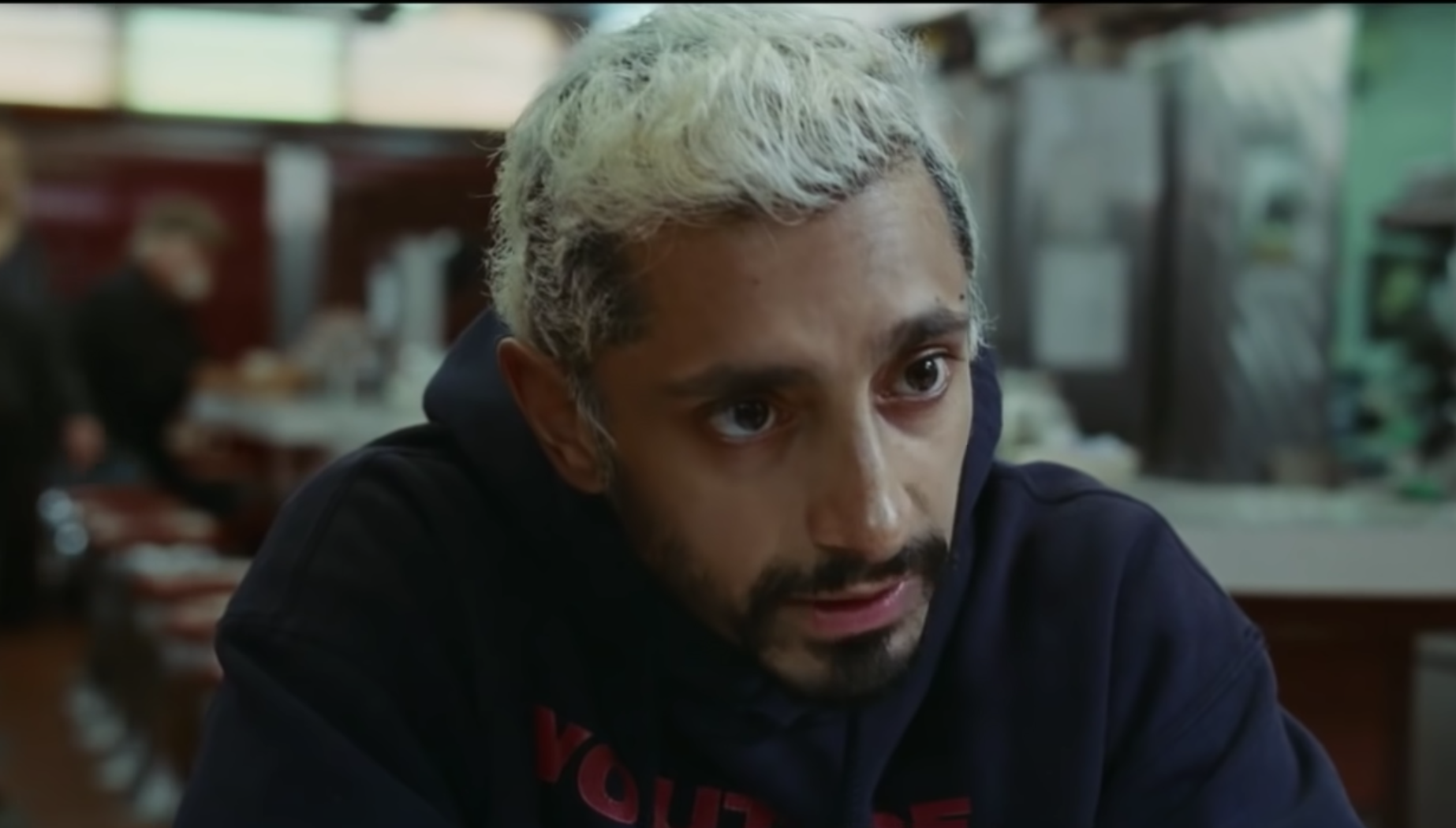
I completely agree that Riz Ahmed‘s performance as Ruben Stone, a metal drummer whose hearing suddenly collapses at the beginning of a tour, deserves a Best Actor nomination. He’s only been a quality-associated actor for six years or so (Nightcrawler, Rogue One, The Night Of) but Ruben is by far the best role he’s ever lucked into, and as you might expect his best moments in the film are non-verbal. Just about all of them, I would say.

I also agree that Paul Raci, the 60ish guy who ploys Ruben’s straight-shooting guide and teacher at a rural deaf camp, deserves a Best Supporting Actor nom. Raci, whose parents were deaf and who knows the realm inside and out, is perfect in the part. Like Harold Russell was perfect in The Best Years of Our Lives, I mean. Raci is actually a blend of Russell and Lives costar Hoagy Carmichael.

Also excellent are Olivia Cooke as Lou, Ruben’s singing-bandmate girlfriend who insists that he enroll in deaf-camp training, and Mathieu Amalric as her wealthy French dad.

The sound design team — supervising sound editor Nicolas Becker, production sound mixer Phillip Bladh, whoever else — definitely deserve Oscar noms, and…oh, hell, the Oscars themselves.

Ruben adapts well to silence and signing, but he still longs for sound and speech. A sizable portion of Act Two is about him selling his mobile home, drums and sound gear so he can afford cochlear implants. But once the implants are embedded and activated, the sound that he hears is like that of an empty tin can attached to a taut metal wire. He pays $30K for this? I can’t believe in this day and age that expensive artificial devices sound this bad.

Read more