Lest We Forget: Yamato vs. Coens

Posted on 2.4.16, or 5 and 1/3 years ago: Last weekend The Daily Beast‘s Jen Yamato actually tried to hold Joel and Ethan Coen‘s feet to the fire over the lack of diversity in the casting of Hail, Caesar!

Apparently Yamato was not doing a put-on interview; she apparently meant every word. Kudos to the Coens for shutting her down and calling her question “idiotic.” The exchange was posted in a 2.3 Daily Beast piece:

The “overwhelming whiteness” of the casting in Hail, Casear! “could conceivably be explained away by pointing to the milieu of Tinseltown circa the 1950s, when the industry’s racial demographic was far less diverse than it is today,” Yamato writes. [Wells interjection: Hollywood was “less diverse” in the early 1950s than it is today? In the waning days of the Truman administration there were no minorities cast in mainstream films except in a spotty, token, peripheral fashion — cooks, maids, butlers, field hands, coat-check girls.]

Back to Yamato: “I asked the Coens to respond to criticisms that there aren’t more minority characters in the film. In other words, why is #HailCaesarSoWhite?”

“’Why would there be [more minority characters]?’ countered Joel Coen. ‘I don’t understand the question. No…I understand that you’re asking the question, [but] I don’t understand where the question comes from. Not why people want more diversity, [but] why they would single out a particular movie and say, ‘Why aren’t there black or Chinese or Martians in this movie? What’s going on?’ That’s the question I don’t understand. The person who asks that question has to come in the room and explain it to me.”

Yamato asked, “As filmmakers, is it important or not important to consciously factor in concerns like diversity?”

“’Not in the least!’ Ethan answered. ‘It’s important to tell the story you’re telling in the right way, which might involve black people or people of whatever heritage or ethnicity…or it might not.’
Read more

Noah Softballs Miranda

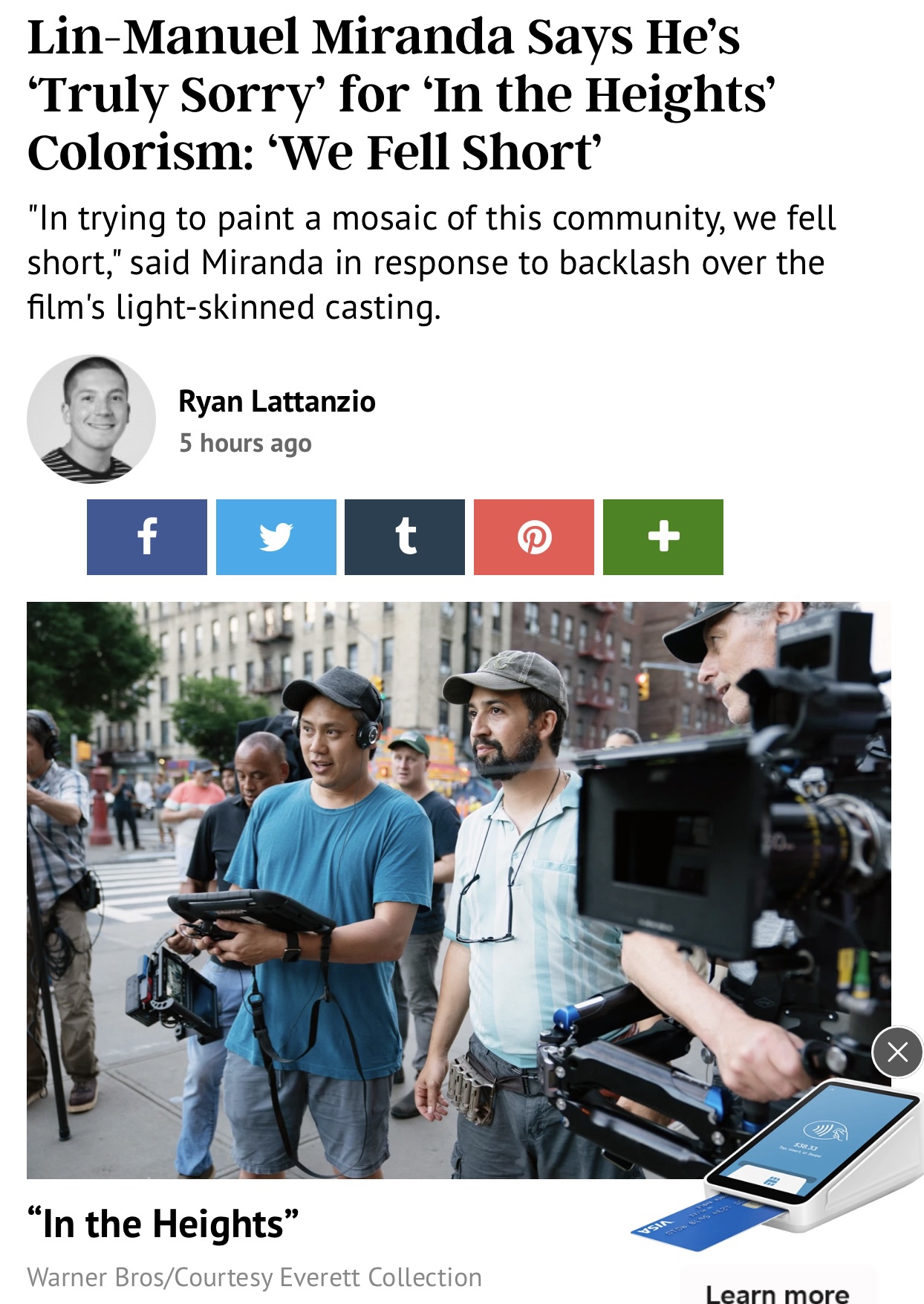
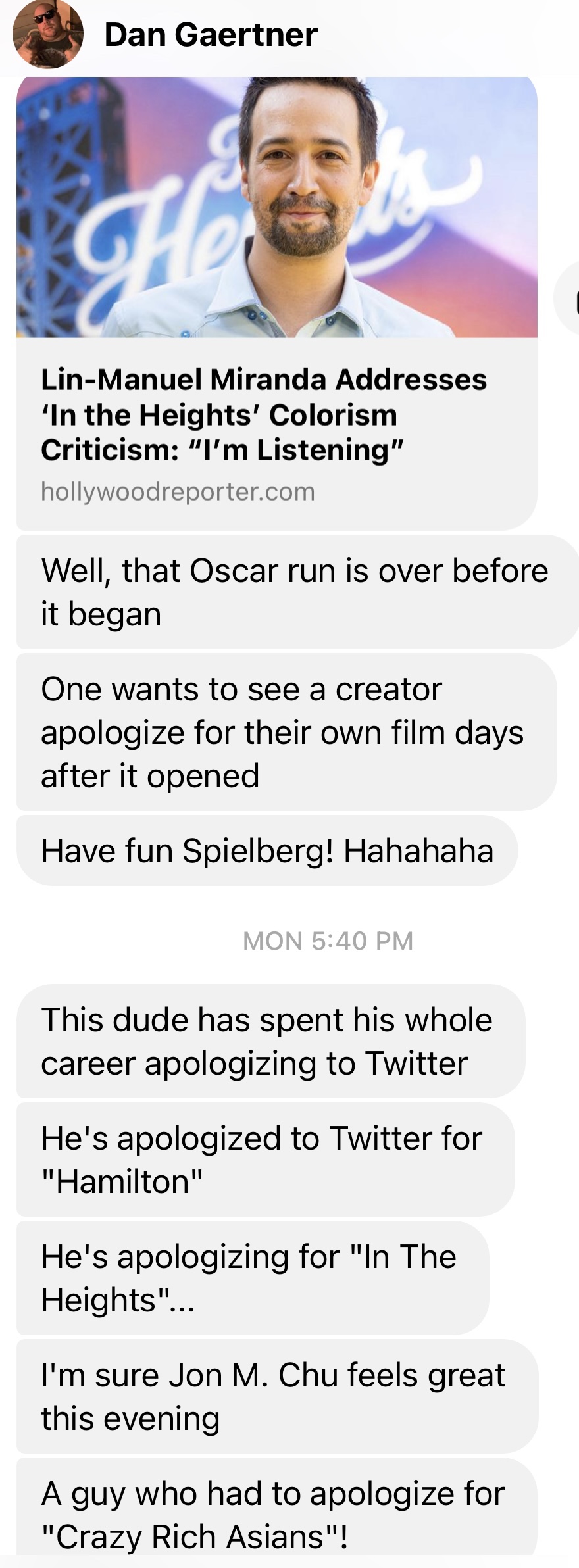
Lin-Manuel Miranda to Trevor Noah about Afro-Latinos complaining that they weren’t represented in In The Heights (9:03 mark): “I am listening, and I do want to do better with each project, and I want to keep having at-bats.”

Miranda’s response was obviously polite, respectful and soft-spoken, but “I’m listening” completely sidesteps the reason[s] why he and director Jon Chu didn’t include dark-skinned Afro-Latinos in their film of In The Heights.

LMM presumably didn’t create any Afro-Latino characters in either the stage version or the film because…are you sitting down?…because they hadn’t been part of his experience while growing up in Inwood (north of Washington Heights) and so members of this ethnic group simply weren’t included in the musical…it was his choice, his decision, his way of looking at life and community.

Another way of putting it is “gee, I’m sorry I didn’t populate my musical with one or two Afro-Latino characters. I didn’t fail to do so out of malice or indifference, I assure you. Afro-Latinos just weren’t part of my growing-up-in-Inwood world…no offense but we all write about what we know, what we’ve been through, what we’ve seen and felt and tasted.

“But I have an idea…wanna hear it? My idea is this: write your own stage musical about the Afro-Latino community in Washington Heights.”

Read more

More Brown Blood…Yeesh

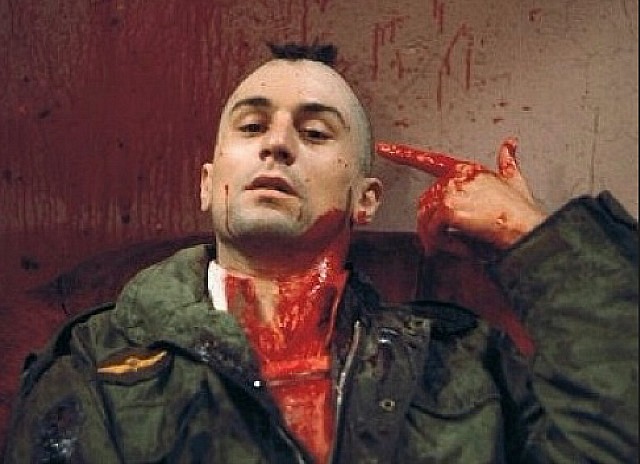
In a 6.15 Los Angeles Times article by Randee Dawn, Fran Lebowitz has shared a comment with Pretend It’s A City collaborator Martin Scorsese about Taxi Driver.

Lebowitz: “[Marty] said to me numerous times: ‘You know what ruins Taxi Driver? The color red. The studio wouldn’t give me enough money to correct the color red, and that’s why it’s horrible.’ To which I say, ‘You know what’s wrong with Taxi Driver, Marty? Nothing.’”

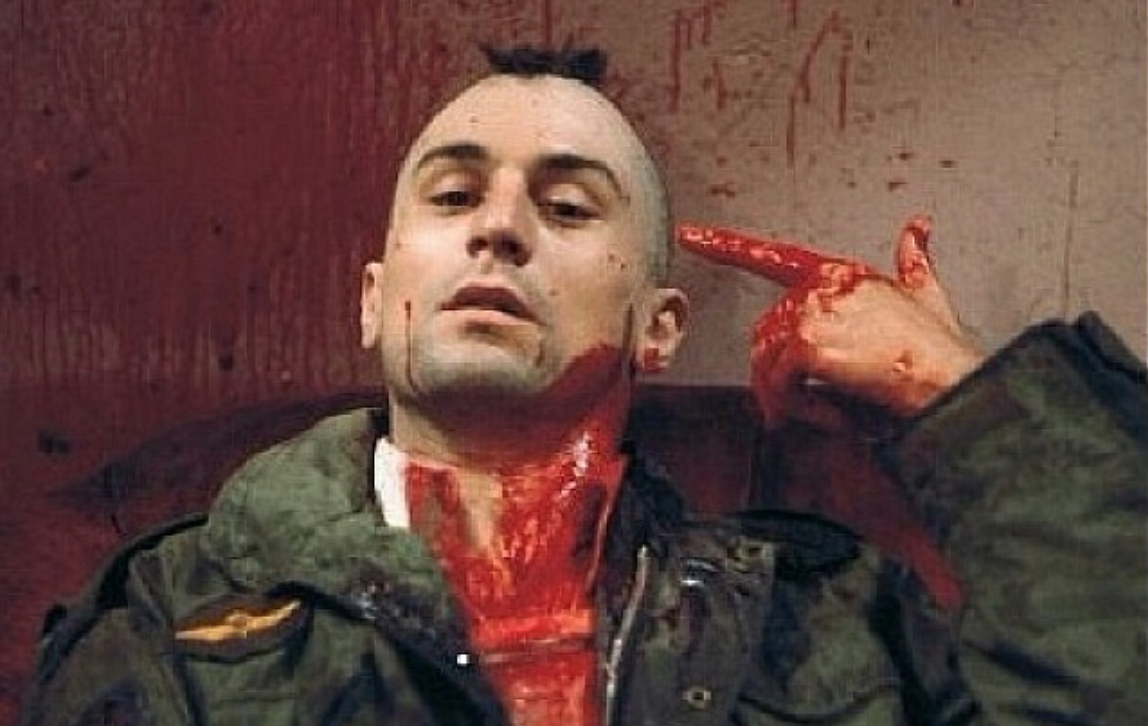
HE to Scorsese, Leibowitz: Wrong — the brownish sepia tint during Taxi Driver‘s East Village shoot-out sequence is fucking terrible. It’s always been terrible, and it always will be terrible. And now, after 46 years of saying the sepia brown color is fine and this is how the film was released and so on, Scorsese is suddenly admitting that it looks awful. Which of course is an accurate statement.

On 3.11.11 I ran a piece called “Taxi Driver‘s Brown Blood“. It was about (a) Grover Crisp and Martin Scorsese‘s Bluray restoration of Taxi Driver (it popped on 4.5.11). and more particularly (b) a technical question asked of Crisp by The Digital BitsBill Hunt.

Hunt asked about the brownish, sepia-tone tinting of the climactic shoot-out scene, which had been imposed upon Scorsese by the MPAA ratings board. Scorsese had naturally always intended this scene to be presented with a more-or-less natural color scheme, in harmony with the rest of the film.

Hunt to Crisp: “Why didn’t you and Scorsese restore the originally shot, more colorful shoot-out scene?”

“There are a couple of answers to this,” Crisp replied. “One, which we discussed, was the goal of presenting the film as it was released, which is the version everyone basically knows. This comes up every now and then, but the director feels it best to leave the film as it is. That decision is fine with me.”

HE response: “There can be no legitimate claim of Taxi Driver having been restored without the original natural color (or at least a simulation of same) put back in. The film was shot with more or less natural colors, was intended to be shown this way, and — with the exception of the shoot-out scene — has been shown this way since it first opened in ’75.

Read more

“Maybe A Bat Sneezed Into A Turkey…?”

The good stuff starts at 2:48 pm

Jon Stewart: “I think we owe a great debt of gratitude to science. Science has, in many ways, helped ease the suffering of this pandemic, which was more than likely caused by science.”

Stephen Colbert: “Do you mean perhaps there’s a chance that this was created in a lab? There’s an investigation.”

Stewart: “A chance? Oh my god, there’s a novel respiratory coronavirus overtaking Wuhan, China, what do we do? Oh, you know who we could ask? The Wuhan novel respiratory coronavirus lab. The disease is the same name as the lab. That’s just a little too weird, don’t you think? And then they asked those scientists…they’re like ‘how did this…so wait a minute, you work at the Wuhan respiratory coronavirus lab. How did this happen?’ and they’re like ‘mmmm, a pangolin kissed a turtle?‘ and you’re like ‘no…the name of your lab! If you look at the name! Can I…let me see your business card. Show me your business card. Oh, I work at the coronavirus lab in Wuhan. Oh, cause there’s a coronavirus loose in Wuhan. How did that happen?‘” (Thanks to World of Reel‘s Jordan Ruimy.)

Year Late, Dollar Short

HE apologizes to AwakenwithJP for ignoring this incredibly helpful essay for nearly a full year, and offers added apologies to inspirational woke behaviorists Chris Bumbray and Glenn Kenny for not acknowledging their invaluable example.

Special HE shout-out to L.A. Times film writer Jen Yamato — obviously not a “white person” although she seems to understand the AwakenWithJP message and posture so completely that it doesn’t seem fair to acknowledge inspirational figures without at least mentioning her Twitter sentiments.

Death Phrase

In January 2020 I pointed out that any film in which a character emphatically says to another “you have no idea” (as in “you have no idea what you’re dealing with”) is automatically a bad film.

The 2021 equivalent of “you have no idea” is “than you can possibly imagine” — any film that contains these five words is automatically, irrevocably bad.

At 1:21 in this new trailer for Chris McKay‘s The Tomorrow War (Amazon, 7.2) , a woman says “our enemy is smarter, faster and stronger than you can possibly imagine.” That’s it…game over!

Repellent Horseshit

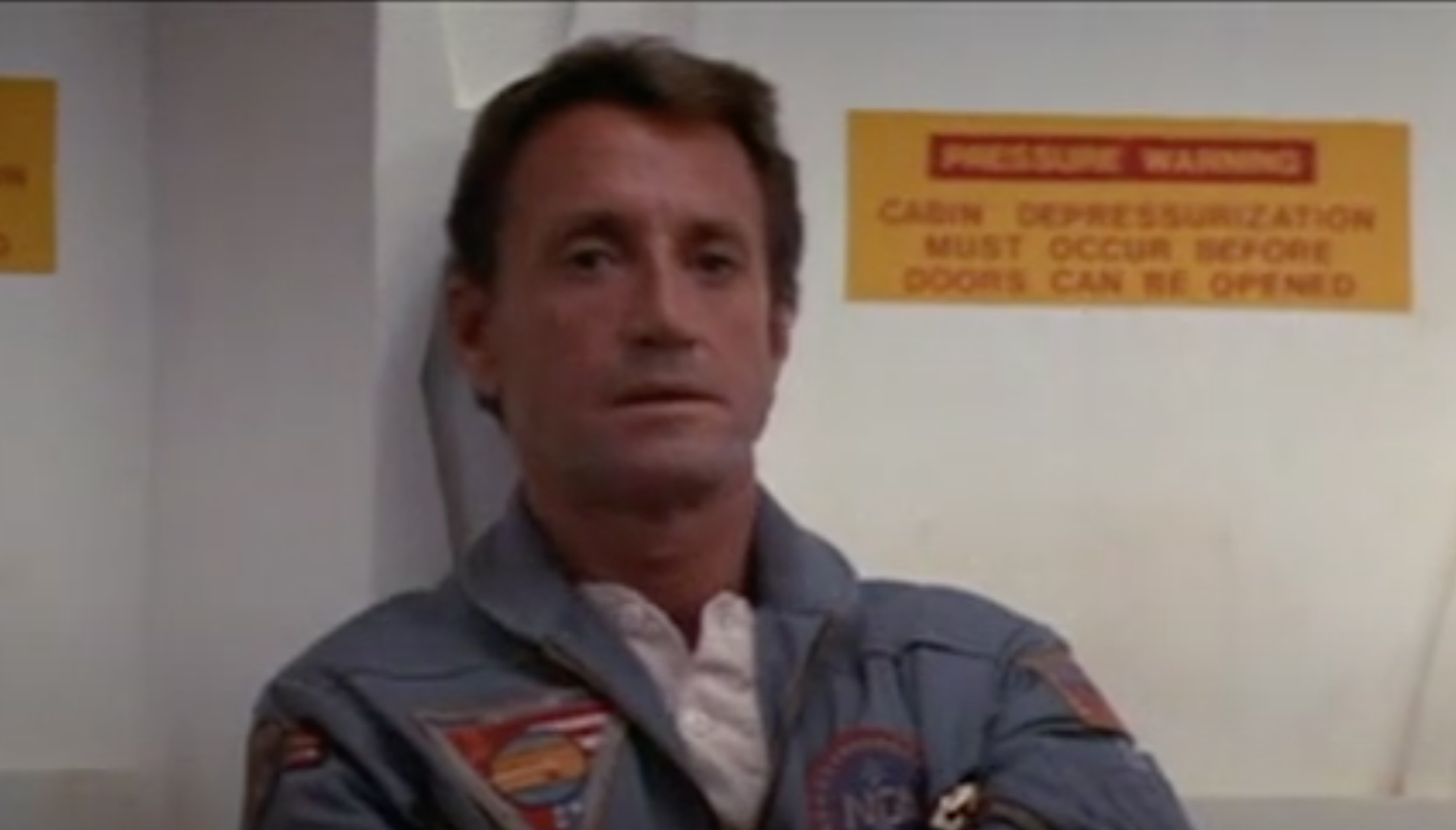
I hated Sam Raimi‘s The Quick and the Dead when I saw it 26 and 1/3 years ago. I put it out of my mind and never gave it a second thought. And yet it’s astonishing how young and slender Russell Crowe seems, certainly compared to the Brumus he grew into over the last decade or so. He was 30 when the film was shot, but he looks like he’s 22 or 23. Lean and mean, babe in the woods, etc.

Gene Hackman played the same kind of dirty ruthless scoundrel that he played in Unforgiven. The difference is that the bloody finale in Clint Eastwood’s 1992 classic feels like gripping realism and not cynical, make-believe, vomit-bag movie bullshit, which is what Raimi’s film (based on a script by Simon Moore) is basically about.

Read more

Totalitarian Woke Bitchslap of Tom Hanks

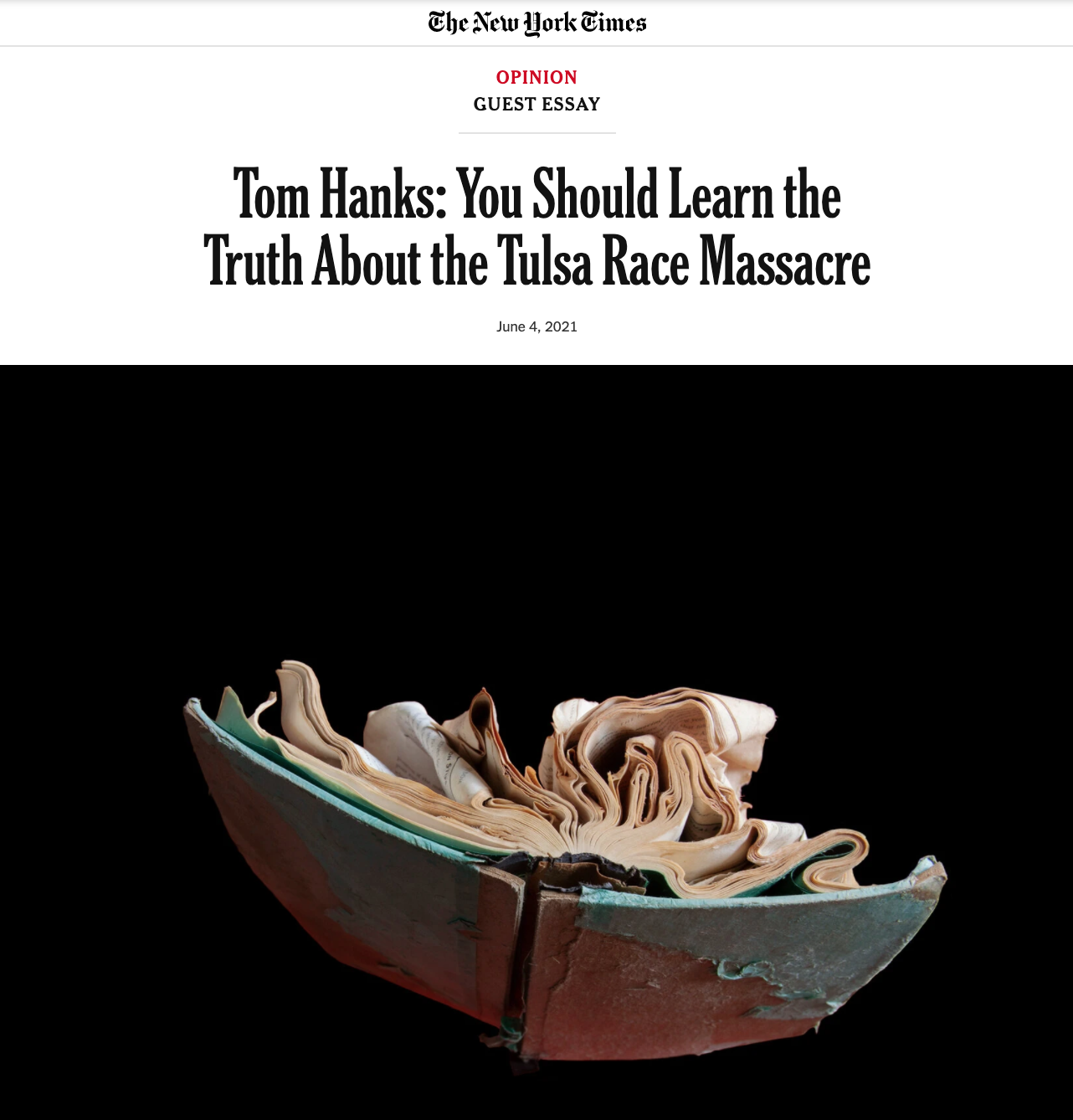
For the sin of sounding like a compassionate, kind-hearted liberal in the matter of historical racial hatred and the ugly legacy of Tulsa, Tom Hanks should be cancelled admonished and, if you will, physically disciplined.

It is Hollywood Elsewhere’s opinion that Hanks should be lashed and banished and sent out into the desert like Moses. He should be denied bread and water within a range of 500 miles of Los Angeles in all directions.

Why? Because Hanks wrote a 6.4 N.Y. Times op-ed piece that failed to embrace Robin DiAngelo-styled anti-racism. He therefore isn’t woke enough.

So said NPR’s Eric Deggans on 6.13. Degans’ essay was titled “Tom Hanks Is A Non-Racist — It’s Time For Him To Be Anti-Racist.”

And he’s right, dammit. But first, Hanks must be made an example of. Deggans and his wokester brethren need to nip this liberal humanitarian shit in the bud. Hanks and people who think like him need to fucking learn.

Kubrick Fucked With Regardless

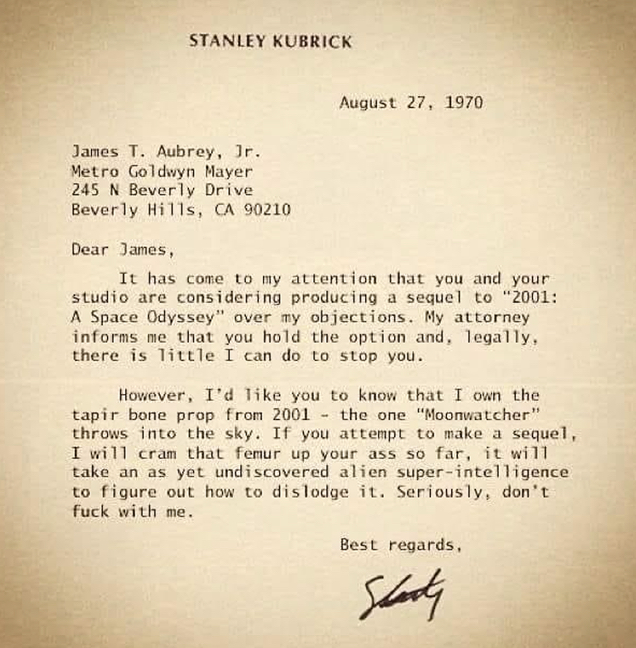
…and the legacy of a great classic was soiled by the disreputable hand of producer, director, screenwriter and cinematographer Peter Hyams. 2010: The Year We Make Contact (’84) is arguably three things — the worst space-travel film ever made, the worst big-time sequel ever made, and one of the worst films ever made. No, it wasn’t former MGM honcho Jim Aubrey who pushed it through (he resigned from MGM in ’73) but David Begelman. The stink of Aubrey-ism nonetheless prevailed.

(As for the alleged Kubrick letter itself, Snopes clarifies.)

Imagine A World…

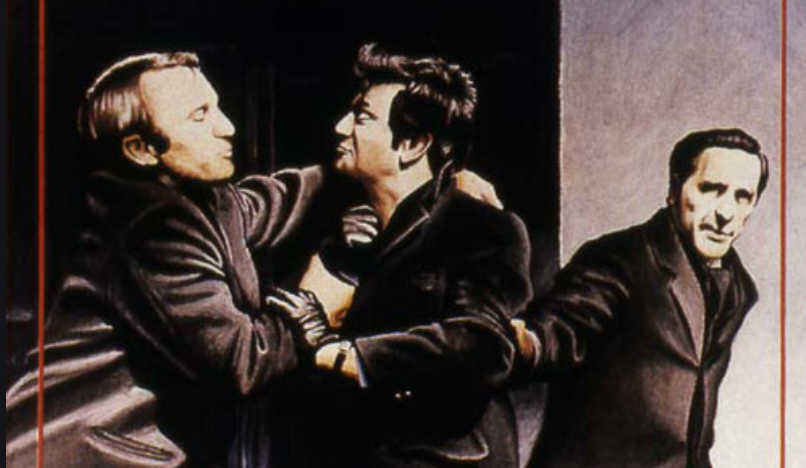
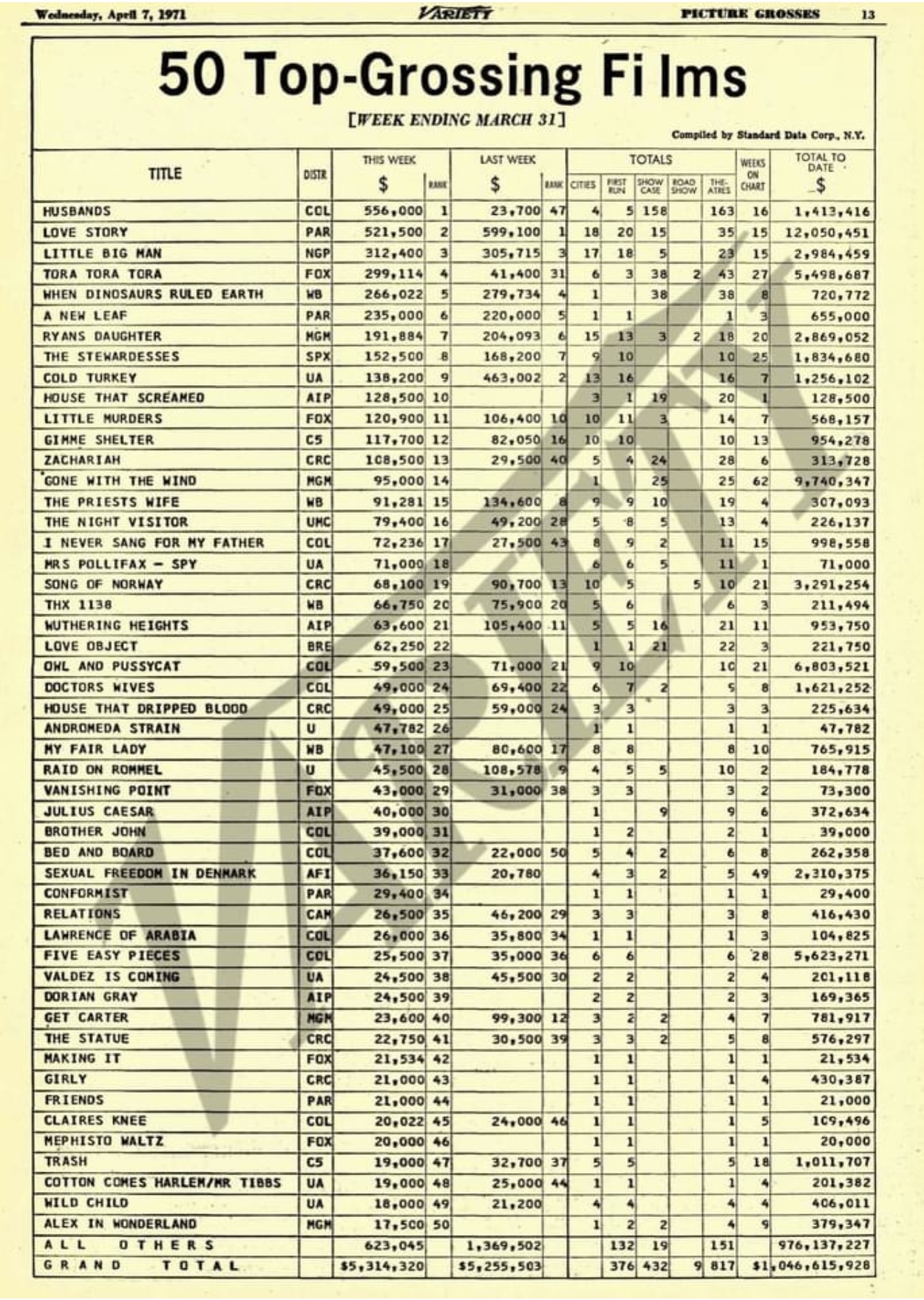
…in which a small, scrappy, boozy John Cassevetes midlife crisis film (16 weeks in limited release) briefly out-earns the long-running Love Story and Little Big Man (popular films had “legs” then), not to mention the monumentally masterful Tora Tora Tora. Meanwhile, amid the bottom third of the list, are The Conformist, Five Easy Pieces (28th week!), Bed and Board and Get Carter. Altogether a tasty smorgasbord for the avid film buff.