“Mangrove” Could’ve Been Best Picture Nominated…

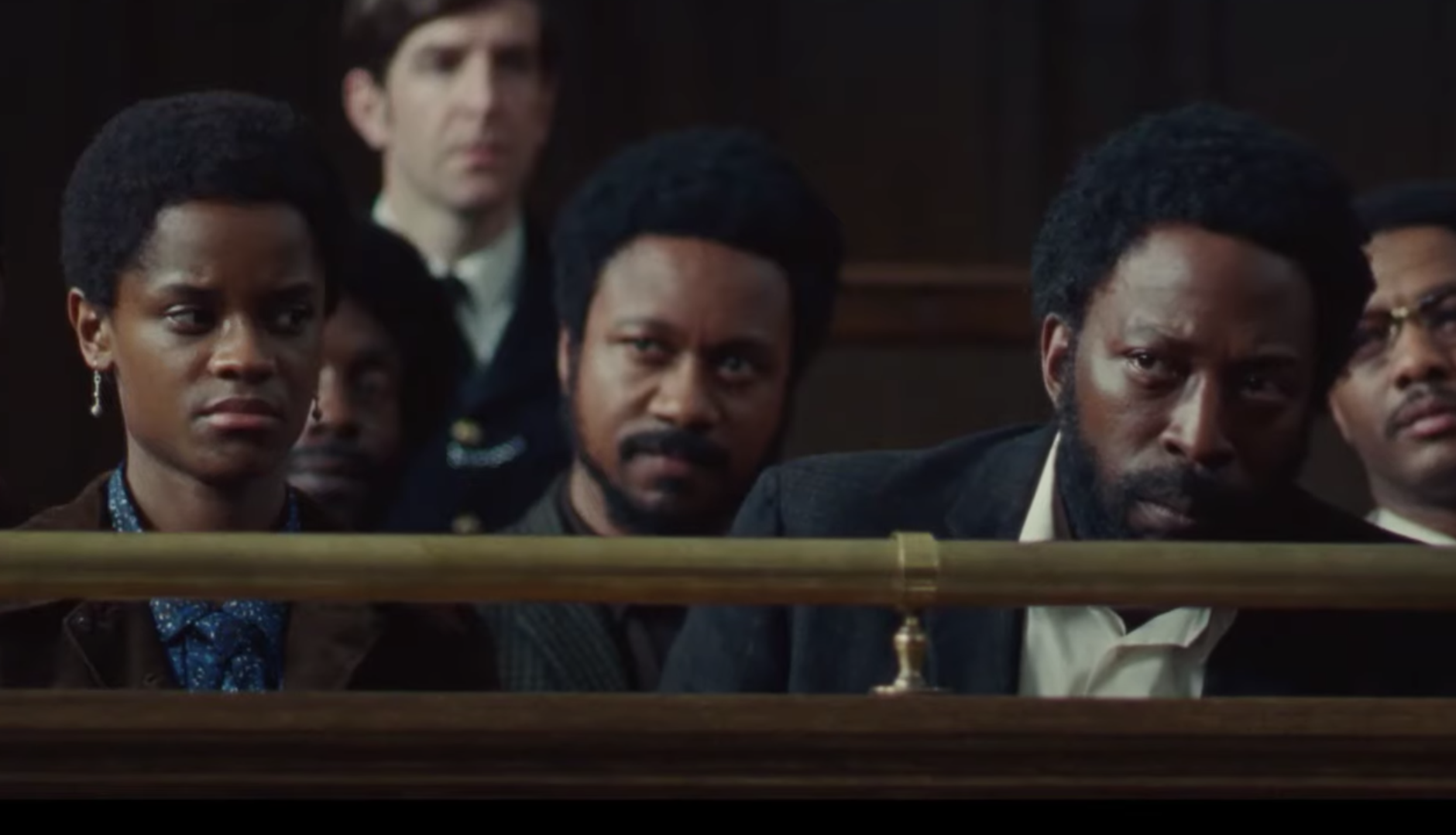
…but it wasn’t. Because Amazon decided early on to campaign Small Axe, the Steve McQueen anthology series that began on British TV and which included Mangrove, a brilliant Chicago 7-like courtroom drama, for Emmy awards. This decision was greeted with shock and surprise by award-season handicappers because of the high regard in which Mangrove and Lover’s Rock, another portion of Small Axe, were held.

This 12.22.20 HE piece explains the reasoning behind Amazon’s decision fairly thoroughly.

And today the whole Amazon strategy collapsed like a house of cards with the Emmy nominations almost totally snubbing Small Axe, except for a single nomination — best cinematography in a limited/anthology series.

This is a major forehead-slapper. Had McQueen’s film been theatrically released and somehow qualified for a Best Picture nomination, it might well have beaten Nomadland. Or at least, it should have in the eyes of the Movie Godz, being a significantly better film and all.

Repeating for extra emphasis: The entire Small Axe anthology was entirely shut out by the Emmys. Why? What the hell happened? What do Amazon execs have to say about all this? Talk about a nonsensical wipe-out.

Late To Brilliant Mangrove“, posted on 12.7.20:

Yesterday I finally saw a good portion of Steve McQueen‘s Small Axe quintet — specifically Mangrove, Red White and Blue and Lover’s Rock. (I’ve yet to watch Alex Wheatle, which I’m been told is the least of the five, and Education.) I was delighted to be finally sinking into the Big Three. McQueen is such a masterful filmmaker. He elevates material simply by focusing, framing and sharpening. His eye (visual choices) and sense of rhythm are impeccable. This, I was muttering to myself, is ace-level filmmaking…this is what it’s all about.

I was hugely impressed by all three, but especially by Mangrove, a gripping, well-throttled political drama which echoes and parallels Aaron Sorkin‘s Trial of the Chicago 7.

Both are about (a) landmark trials involving police brutality in the general time frame of the late ’60s and early ’70s, (b) activist defendants and flame-fanning media coverage, (c) an imperious, disapproving judge (Alex Jennings is McQueen’s Frank Langella), (d) a passionate barrister for the defense (Jack Lowden as a kind of British Bill Kuntsler), and (e) a decisive verdict or narrative aftermath that exposed institutional bias.

Mangrove (Amazon, currently streaming) is primarily about the late Frank Crichlow (Shaun Parkes), the owner-operator of a neighborhood-friendly Notting Hill restaurant that served spicy food, attracted a cutting-edge clientele (locals, journalists, activists, Jimi Hendrix) and became a kind of community nerve center for political hey-hey.
Read more

The Big 20th

The 20th anniversary of the 9/11 attacks will fall on Saturday, 9.11.21 — roughly 8 and 1/2 weeks from now. It’ll be treated as a fairly big deal by everyone, I suspect, and by the mainstream media in particular. Documentary tributes, historical assessments, first-hand recollections, etc.

But after repeatedly looking back at the particulars and reflecting on the social changes that have occured since and particularly the huge mess that the George Bush administration made of Iraq and Afghanistan…where the hell do you start and what’s really left to say?

I was at the Toronto Film Festival when the 9/11 attacks happened, and two distinct and primal thoughts were coursing through my head that day. One was that what had happened was Pearl Harbor all over again, and that no one would ever forget it…that was obvious. The other was that I wanted to hop a bus down to Manhattan immediately because I regarded it (and still do) as more of a home than Los Angeles, where I’ve lived since ’83. I don’t know anyone who feels emotionally close to Los Angeles. It’s just not that much of a rootsy place.

I lived in Manhattan for nearly six years, ’78 to ’83, as a struggling journalist, and in a pair of commuter towns in my childhood and teens (Westfield, N.J. and Wilton, Connecticut), and when that ghastly day arrived I guess I wanted to experience the horror among “friends”, so to speak. It felt somehow wrong or derelict to be in Toronto, of all places. I just wanted to be there. I suddenly wanted to reconnect with my lifelong Manhattan roots…a town I’d visited off and on from the time I was five or six years old…a city I’d begun visiting without my parent’s knowledge starting when I was 14 or thereabouts…I just felt terrible about not being there. It sounds perverse, but I wanted to share the aroma of crushed rocks and asbestos clouds and gasoline fumes.

Movie-wise a terrible tragedy arose from the 9/11 attacks, and that was the explosion of superhero movies. This happened, I believe, out of some kind of deep-seated need to dramatize and savor the vanquishing of villains by omnipotent good guys…figures who would rid our hearts of uncertainty and ambiguity.

D.C. superhero flicks have been a multiplex fixture since Batman Begins (’05) and the MCU onslaught began with 2008’s Iron Man. We’ve been living with them for 15 or 16 years now with no end in sight. Not only were many of the movies themselves oppressively formulaic and numbing to the soul, but the concurrent rise of cable and streaming led to the gradual collapse of middle-class theatrical stand-alones.

In a 3.25.17 N.Y. Times piece called “The Perverse Thrill of Chaotic Times,” Teddy Wayne wrote that “the common denominator in all these films is that we safely watch cataclysms from afar. Nearly all of us saw the Kennedy assassination and other national tragedies on a screen, not in person. A common observation after Sept. 11 was that the destruction of the World Trade Center seemed out of a movie.”

There’s another thing I can say for sure about 9/11, and that’s that four excellent films arose directly from it — Tony Scott‘s Man on Fire (’04), Paul Greengrass‘s Flight 93 (’06), and Kathryn Bigelow and Mark Boal‘s The Hurt Locker (2009 stateside) and Zero Dark Thirty (’12).

Starting in ’02 or ’03 I began writing off and on about the 9/11 story of Port Authority employee Pasquale Buzzelli — i.e., “the 9/11 surfer”. I gradually got to know Pasquale and particularly his wife, Louise, during the aughts, particularly when I was living in Brooklyn in ’05 and again during my return to NYC between late ’08 and early ’11. I tried helping them find a co-writer for Pasquale’s book, “We All Fall Down.”

That’s all I have in my head right now. More to come, I’m sure.

Mosquito Swarms on High Seas

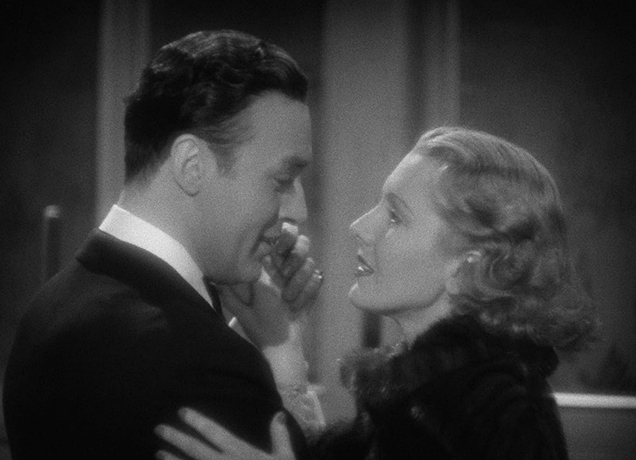
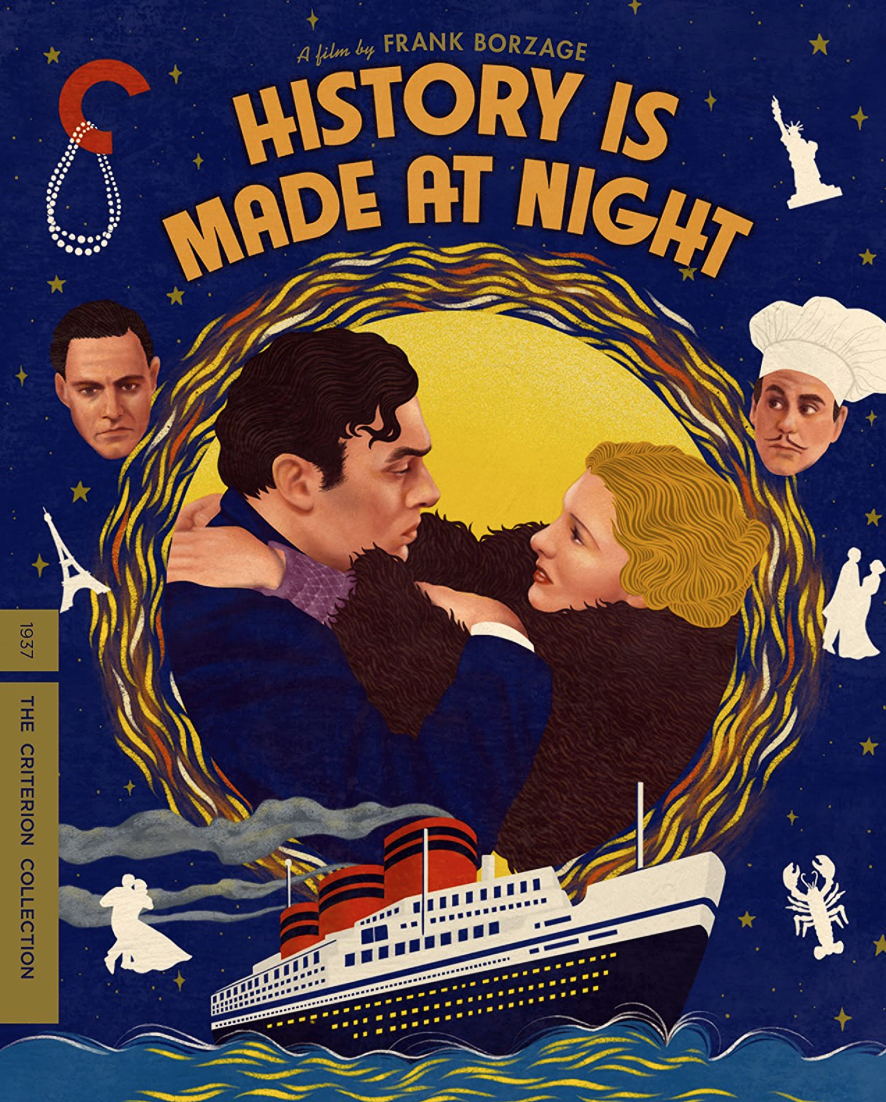
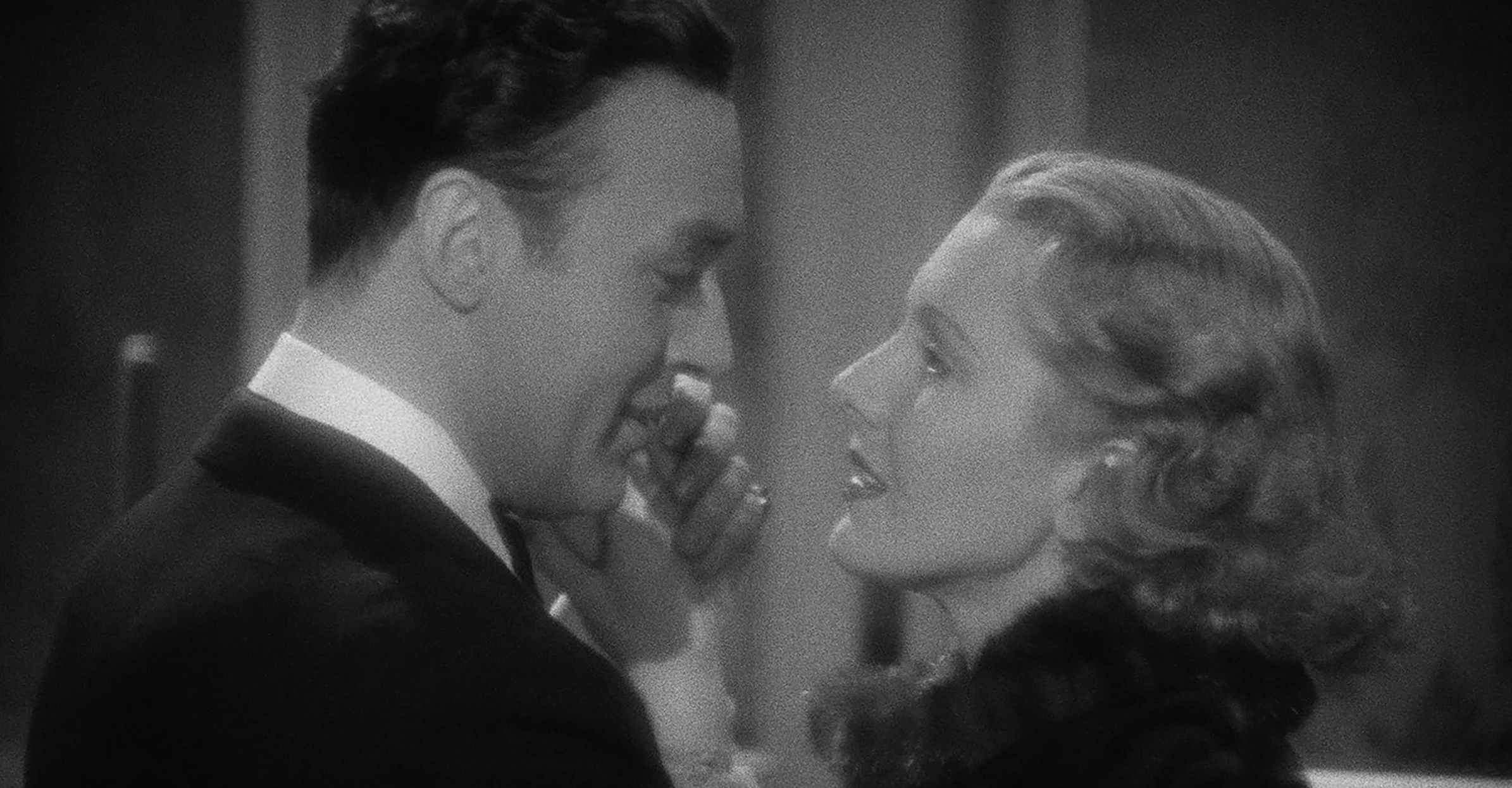
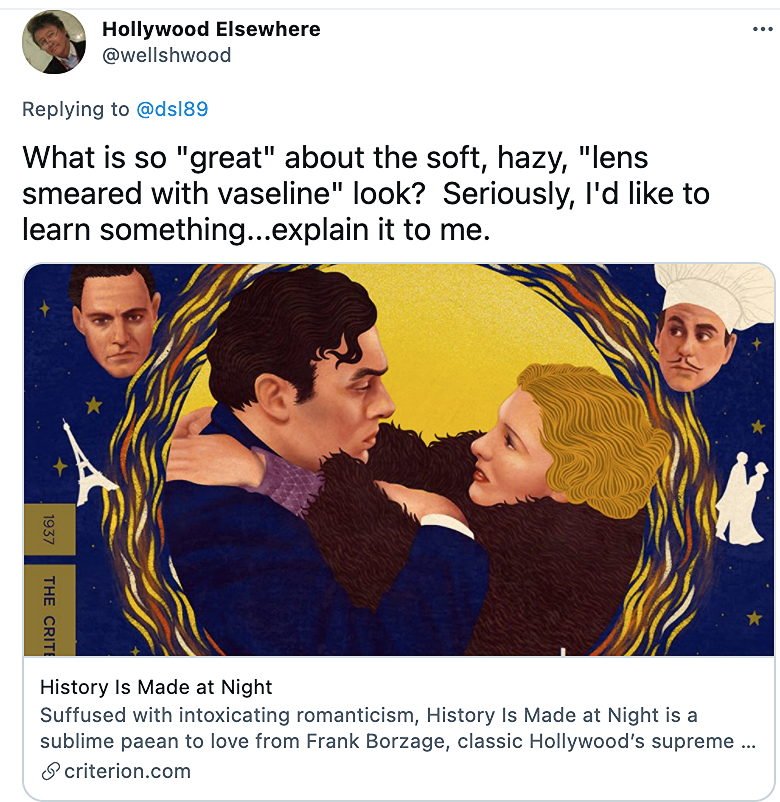
Earlier today on Twitter PopCulture.com staff writer Daniel S. Levine (@dsl899) enthused about Criterion’s recently released Bluray of Frank Borzage‘s History Is Made At Night (’37). The film is proudly bannered as a restored 4K digital transfer. Levine called it “great.”

What this Bluray seems to provide, based on frame captures, is another lovingly restored grainstorm experience — a hazy, soft-focused relation of Criterion’s Bluray of The Awful Truth (released on 4.7.18). Borzage’s 1937 film probably looks as good as it ever will on Bluray, agreed, but it’s certainly not the stuff of profound visual transportation. Not in my book, it isn’t.

So I asked Levine what exactly is so “great” about the Criterion Bluray in question. Not only did he decline to reply, but he blocked me.

If I was Levine I would’ve manned up and said something like “this is the most lusciously rendered version of this classic Borzage film ever savored in HD…the heavy-mosquito-swamp atmosphere is not a problem but a beautifully detailed, other-worldly immersion…Jean Arthur, Charles Boyer and Colin Clive covered in hundreds of trillions of micro-mosquitoes…it’s glorious!”

Be Gentle With “F9” Fans

There’s always been a Grand Canyon-sized gulf between the cinematic preferences of press + industry sophistos who attend the Cannes Film Festival vs. the locals and tourists who occasionally attend a festival beach screening.

There’s nothing particularly “wrong” with the latter preferring the simple, oafish, completely free pleasures of F9 outdoors to, say, trying to score tickets to one of the indoor festival screenings, many if not most of which would probably rub your hoi polloi types the wrong way.

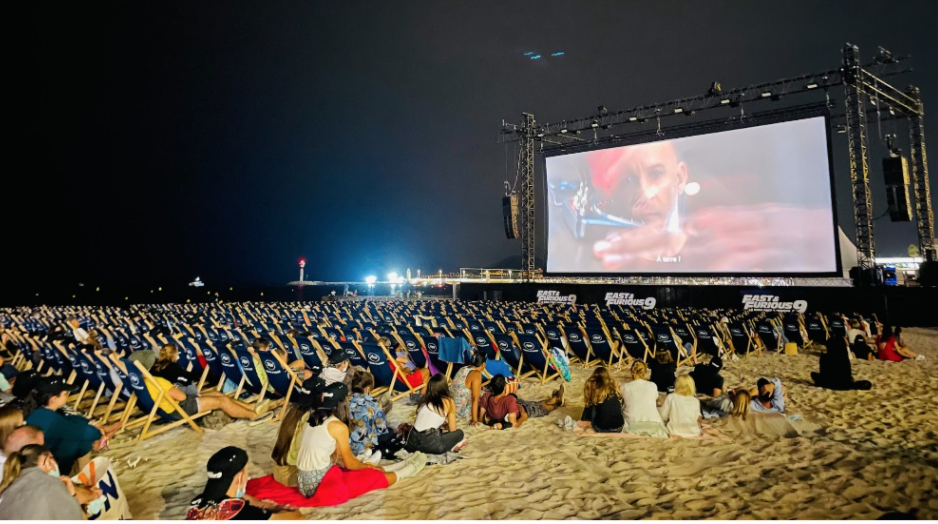
Consider nonetheless this report about last night’s F9 screening by Variety‘s Manori Ravindran, and more particularly the last seven words in the opening paragraph: “F9 may not have been the planetary blockbuster anyone expected at Cannes, but amid the randy nuns, self-indulgent musicals and bovine documentaries, it was the planetary blockbuster we needed.”

Remember that Mad magazine bit when the alarmed Lone Ranger shouts “Indians everywhere, Tonto!…we’re surrounded!” and the faintly grinning Tonto says “what you mean ‘we’?”

In the same spirit, HE asks Revindran “what do you mean F9 was what ‘we‘ needed”?

Given the all-but-universal understanding that the Fast & Furious franchise is soul cancer for the chumps and that some of us could be forgiven for assuming that F9 producers are in league with satanic forces, are you, a London-based Variety staffer, saying that you…what, identify with the rabble? Or are you suggesting that F9 is a pleasure to sit through?

Ravindran notes that soon after F9 was unveiled in early June as a high-profile beach freebie, it was “instantly mocked by some who balked at Vin Diesel’s Dom Toretto putting the pedal to the metal in highbrow Cannes.

“But come Monday evening, hundreds of people — [mostly] holiday makers — lined up along the Croisette hoping to score a striped deckchair or sandy spot to watch the latest chapter in Universal’s 20-year-old franchise.

“Cannes’ July dates, as opposed to the usual May affair, meant many were at the film festival for the first time in their lives, and rather than struggle to navigate a finicky ticketing system for an auteur movie they might not even like, the familiarity of another Fast and the Furious movie promised an evening of guaranteed thrills.”

Read more

Schrader’s “Card Counter” Doing Venice, Telluride…Right?

HE to Paul Schrader a few minutes ago: “Great news about The Card Counter (Focus, 9.10.21) allegedly going to Venice and Telluride. I don’t know this for a fact, but Jordan Ruimy alleges from Cannes that you spilled the beans during a recent q & a, stating that The Card Counter will in fact be premiering on the Lido and, two or three days later, in the happy hamlet of Telluride.”

Boilerplate synopsis: A gambler called William Tell (Oscar Isaac) attempts to give guidance to a young guy named Virk (Tye Sheridan) who is out for revenge against a mutual enemy (presumably a character named “Major John Gordo”, played by Willem Dafoe). Tiffany Haddish plays a character named “La Linda.” (Do I have this right?)

HE to Focus marketing: The Venice and Telluride debuts are roughly six weeks off — isn’t it time for a trailer? Not to mention the 9.10.21 commercial debut.

Schrader to L.A. Times guy Mark Olsen on 9.11.20: “I don’t want to get too deeply involved in the plot, but what I will say is [that] over the years I’ve kind of developed my own little genre of films. And they usually involve a man alone in a room, wearing a mask, and the mask is his occupation.

“So it could be a taxi driver, a drug dealer, a gigolo, a reverend, whatever. And I take that character and run it alongside a larger problem, personal or social. It could be debilitating loneliness like in Taxi Driver. It could be a midlife crisis [as] in Light Sleeper. It could be an environmental crisis like in First Reformed.

“So now I have a character and he’s in his room, he’s alone. And he has a mask on. And the mask he wears is a professional poker player. And the problem that runs alongside him is that he’s a former torturer for the U.S. government. So it’s a mix of the World Series of Poker and Abu Ghraib.”

Read more

What Kind of Drunk Are You?

Early this morning “Steve Brodyremarked about my umpteenth posting of “A Little Residual Ingmar,” a story about a momentary attraction to Harriet Andersson and a subsequent humiliation from the wicked tongue of Erland Josephson.

“I always admired Josephson as a performer,” Brody said, “[but] this anecdote made me revere him as a human being as well.”

HE response: “Your last line isn’t 100% sincere, but your trademark toxicity is showing. I’ve been around enough actors at parties to know that when some get drunk they become silly or gleeful or morose (i.e., like anyone else). And some turn bloodthirsty. Sober Josephson may have been one thing, but you can always spot a prick when they pick on someone of a lesser status, especially when the victim doesn’t speak the prick’s language.

“Josephson with a buzz-on wasn’t mean — he was sadistic. But then you relate to that, don’t you?”

Full disclosure: During my peak drinking days (early to mid ’90s plus my longish wine-sipping period in the aughts) I was not a happy or silly type after I’d downed two or three — I became snappy and acrid. (Which is precisely what my alcoholic dad used to do.) I didn’t lay into people with a will and a whip, but I would throw stingers. Thank God that part of my life is over and done with.

HE to community, whether you drink or not: What happens when you’ve bent the elbow a bit — do you turn goofy, sentimental, snippy and ascerbic, or wicked and withering?

Bobbing Woke Heads

Hollywood Elsewhere congratulates Alex Castro, Variety‘s vp of video, for the impressive production values (especially the title graphics) that are the best part of “The Take“, a new showbiz chit-chat show (lasting 7:40) that popped on 7.9.21.

The co-hosts are Variety‘s senior correspondent Elizabeth Wagmeister and awards editor Clayton Davis, who completely cemented their woke reps last April when they openly lamented Anthony Hopkins winning the Best Actor Oscar, and, more precisely, the late Chadwick Boseman not taking it instead. Total “hooray for our side” cheerleaders.

The tone and attitude of The Take is completely vapid, of course — a showbiz Live With Regis and Kathy Lee minus the wit. But it feels first-rate, or at the very least looks slick and polished.

Anderson Over Pugh

I said yesterday that Ever Anderson, the 13 year-old daughter of Milla Jovovich and Paul W.S. Anderson who plays the young version of Scarlett Johansson‘s Natasha in Black Widow, is the most fetching presence in the film.

I wrote, in fact, that Anderson “has a much more interesting face (indications of emotional complexity, soulful eyes) than Johansson and costar Florence Pugh combined.”

Instead of a “muscular hardcase sisters against their violent pursuers” action thriller, Black Widow would’ve been far more intriguing if Anderson had been made ScarJo’s costar (instead of Pugh), and the story had been some kind of time-warp mother-daughter thing in which ScarJo’s Natasha and her younger self (Anderson) are paired, and the basic dynamic would’ve been been Natasha protecting and schooling her younger self.

Not everyone has “it,” but Anderson definitely does.

She’ll next play Wendy Darling in David Lowery‘s Peter Pan & Wendy (Disney, ’22), which will be the fourth Peter Pan adaptation over the last decade.

Read more