No offense, but the practical-minded realists in this country who’ve been double vaxxed are sick and tired of your submental vaccine-avoiding bullshit. The combination of the Delta variant and your ridiculous obstinacy now threatens to put this country right back into the pandemic hole that we’ve only recently began to climb out of.
So guess what? We’ve decided to follow the French and President Emmanuel Macron in particular. As of September 1, 2021, unvaccinated Americans will become untouchable and unserviceable. Anyone without a vaccine card will be prohibited from entering cinemas or restaurants, flying on planes, taking trains or using public bathroooms. Just like in France, baby!
You did this to yourselves, fellas. I’m sorry but we were almost out of the woods a couple of months ago and you guys — you! — messed it up for everyone. And dammit, we’re not standing for this crap any longer. So it’s your call — grow up and join the sane, sensible majority or suffer the consequences. You’ve got a little more than a month — get the stab or else.
Don’t like the new rules? Tough. Planning to vote against me in ‘24? Go for it. But public access-wise, transportation-wise, going out for dinner and a movie-wise and even using the bathroom at the mall-wise, yourstupidunvaccinatedasseswillbegrassasof9.1.21. Like it or lump it.
Last March the intemperate, hyperventilating wokejackalmob did their best to bring about my death. It was partly about HE having posted an insensitive comment, albeit one that might have been mentioned by any half-attuned industry insider who knows how Oscar-voting sentiments tend to work on deep-down levels. It was mainly a matter of indelicate timing.
I naturally apologized for this transgression, despite (a) my not having actually written a damn thing myself (I’d posted an excerpt of an email chat) and (b) my having quickly removed the post when the Twitter banshees went nuts.
Right after the Ferguson Grand Jury verdict was read, and just before a Disney-lot screening of Into The Woods, I tweeted that a possible “strike a match rather than curse the darkness” response to this otherwise tragic event might be a surge of industry Best Picture support for Selma. Yup — another instance of the wrong HE tweet at the wrong time. But all I said was that symbolically lighting a candle rather than lamenting the ugliness might be a good thing in the end.
The Twitter community didn’t dig it. I was all but roasted alive for saying this. Many people tweeted that I sounded like an insensitive asshole. How dare I suggest, after all, that there was (or might be) linkage between Ferguson and Selma‘s Oscar chances.
But at heart I had tweeted a positive sentiment. I was thinking, you see, of Martin Luther King’s words about how only love can eradicate hate. I was thinking that standing by a film about human dignity, compassion and human rights would serve as a positive response to the Ferguson situation.
Okay, I didn’t say it in quite the right way. But I was trying to suggest that in a roundabout fashion this would be a way of showing love and respect for the right things and the right people.
For me, the stand-out portion was when Kohn asked DuVernay if she saw “any direct connections between today’s climate in the immediate aftermath of Ferguson in the story of Selma.” DuVernay responded as follows: “Yes, absolutely. It’s the same story repeated. The same exact story.
“An unarmed black citizen is assaulted with unreasonable force and fatal gunfire by a non-black person who is sworn to serve and protect them. A small town that is already fractured by unequal representation in local government and law enforcement begins to crack under the pressure. People of color, the oppressed, take to the street to make their voices heard. The powers that be seek to extinguish those voices.”
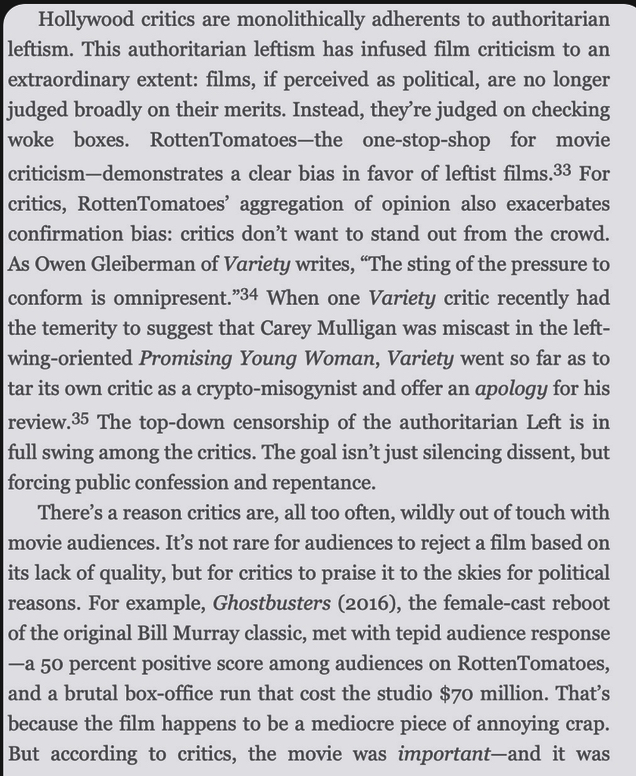
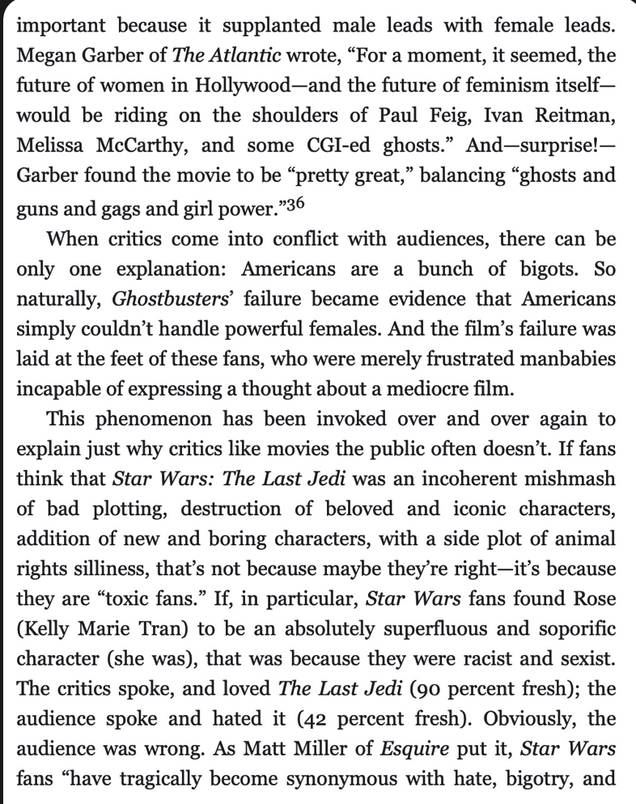
I don’t agree with each and every line of what follows. Some of it is too blunt and strident, and the opening line should read “Hollywood critics monolithically adhere to authoritarian leftism.” But certain passages, I regret to say, are somewhere between close to the truth and dead-on. The part that mentions Variety editors having apologized for critic Dennis Harvey‘s review of Promising Young Woman…that’s what got me. I’m not a huge fan of the author, but as I was reading this I had to ask myself “what if this had been written by someone I’m mostly okay with?”
“You are Goochee, you need to drehss the paht.” — Al Pacino‘s Aldo Gucci.
Ridley Scott‘s House of Gucci (UA Releasing, 11.24) seems an appropriately chilly nest-of-vipers flick along with a healthy serving of Italian wealth porn.
I saw Tom McCarthy‘s Stillwater last night, and except for the “wait, what the fuck just happened?” section during the last 25 or so minutes it’s not half bad.
It’s longish (140 minutes) but not in a punishing way, plus unusual and complex and definitely, absolutely not a “Liam Neeson goes to France to crack heads and get his daughter out of prison” film.
All the critics have said that it’s four or five flicks in one — a criminal investigation thing, a fish-out-of-water thing (muttering, slow-on-the-pickup dad in Marseilles), a family relationship thing, a romantic relationship film, a fatalistic character piece.
But you know what? I liked that it has its finger in several pies and that it’s all over the map. French films follow this meandering path all the time…a little this, a little that, a detour, a change-up, a sudden acceleration followed by a slowdown, a little romance, something else unexpected happens, etc.
What Stillwater is, basically, is a film that says (a) if you’ve fucked up before, you’ll probably fuck up again because some people are just fuck-ups or are simply lacking sufficient brain cells to figure stuff out and do things right, and (b) life is fucking brutal, man.
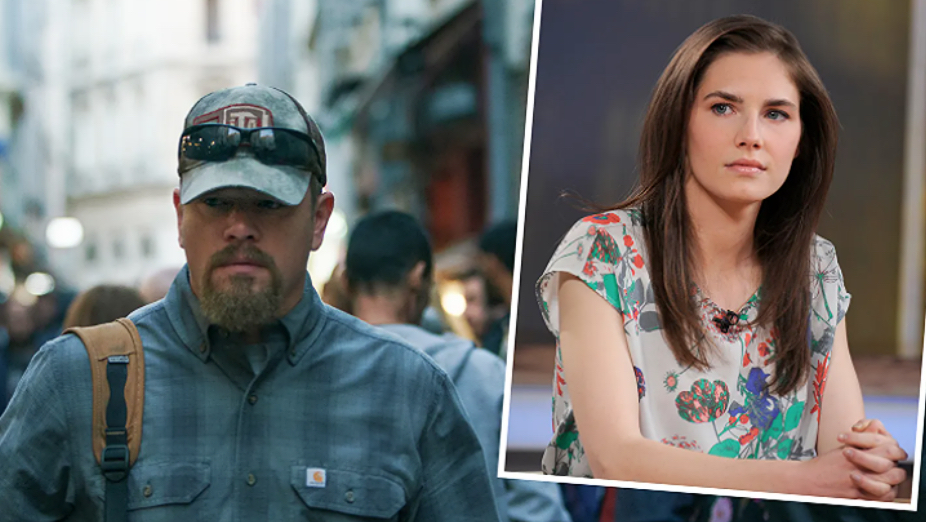
It’s about Bill Baker (Matt Damon), a somber-mannered, goateed, cap-wearing, flirting-with-fat, not-especially-brilliant bumblefuck dad from Oklahoma, visiting Marseilles for the eighth or ninth time to visit his imprisoned daughter (Abigail Breslin), who’s serving nine years for the murder of her girlfriend. Only this time Bill becomes involved in a long-range effort to clear her name after (possibly) exculpatory evidence comes to light.
He decides to move full-time to Marseilles, and in so doing gets platonically involved with Virginie (Camille Cottin), a theatre actress, and her young daughter Maya (Lilou Siauvaud). And then romance seeps in.
Here’s a Stillwater discussion I had this morning with a friend…
HE: Stillwater is definitely a decent film. Four or stories or movies in one. Then it takes a crazy-ass turn near the end and there’s no trusting it. But it has a good meditative ending on a front porch.
Friendo: Oh, bummer.
HE: It’s not a bummer — it just has a weird third act or final half-hour. It’s worth seeing. It’s a real middle-class movie about human beings. It’s curious and atypical and well acted.
Friendo: So did the daughter do it or what?
HE: My impression was that even though fortune eventually smiles, she might have actually [redacted]. Maybe. Plus Damon’s bumblefuck is a tough guy to hang with and identify with and gradually come to like. Always with the fucking hat and the short-sleeved plaid shirt, always with the fucking goatee, always with the yokel accent, always swallowing his words and vowels. And a Trump voter on top of everything else.
Friendo: Sounds kind of like a ’70s or ’80s movie.
HE: It is, and it’s very nice to see a complex, character-driven thing in an AMC gladiator arena. Stillwater is like a French movie…tedious stuff, surprising stuff…this happens, bad things happen, this or that emotion pops through, then it’s back to an investigation, then it’s back to a family thing, then the cops come and then they leave.
Her understandable beef is that the film, loosely inspired by Knox’s conviction for the November 2007 murder of roommate Meredith Kercher (which was later overturned and then invalidated in 2015), has brought renewed negative associations back into her life. Once again she’s being regarded far and wide as an allegedly immoral woman with a shady past.
Even a term like “notorious” (which I’ve just used) is hurtful, Knox is arguing, because it implies there’s something wanton or dicey about her, when in fact she was wrongly accused and convicted by Italian authorities. Kercher’s actual confessed murderer is a sketchy dude named Rudy Guede.
In reviews and discussions of Stillwater, many critics and columnists have mentioned Knox’s 2007 murder conviction but not her 2015 exoneration. You have to admit that Knox has a point.
Medium excerpt: “’We decided [to] leave the Amanda Knox case behind,’ McCarthy tells Vanity Fair. ‘But…take this piece of the story — an American woman studying abroad involved in some kind of sensational crime and she ends up in jail — and fictionalize everything around it.”
“Let me stop you right there. That story, my story, is not about an American woman studying abroad ‘involved in some kind of sensational crime.’ It’s about an American woman NOT involved in a sensational crime, and yet wrongfully convicted.”