Lovable Lunkhead

I had never seen either version of Angels in the Outfield. Mainly because Field of Dreams aside, I’m not much for sports fantasies. I’d certainly never considered watching the 1994 version, which earned a 33% Rotten Tomatoes rating with a 49% audience rating.

The other night, bored and listless, I decided to watch the black-and-white 1951 version. To my surprise it won me over within 15 or 20 minutes.

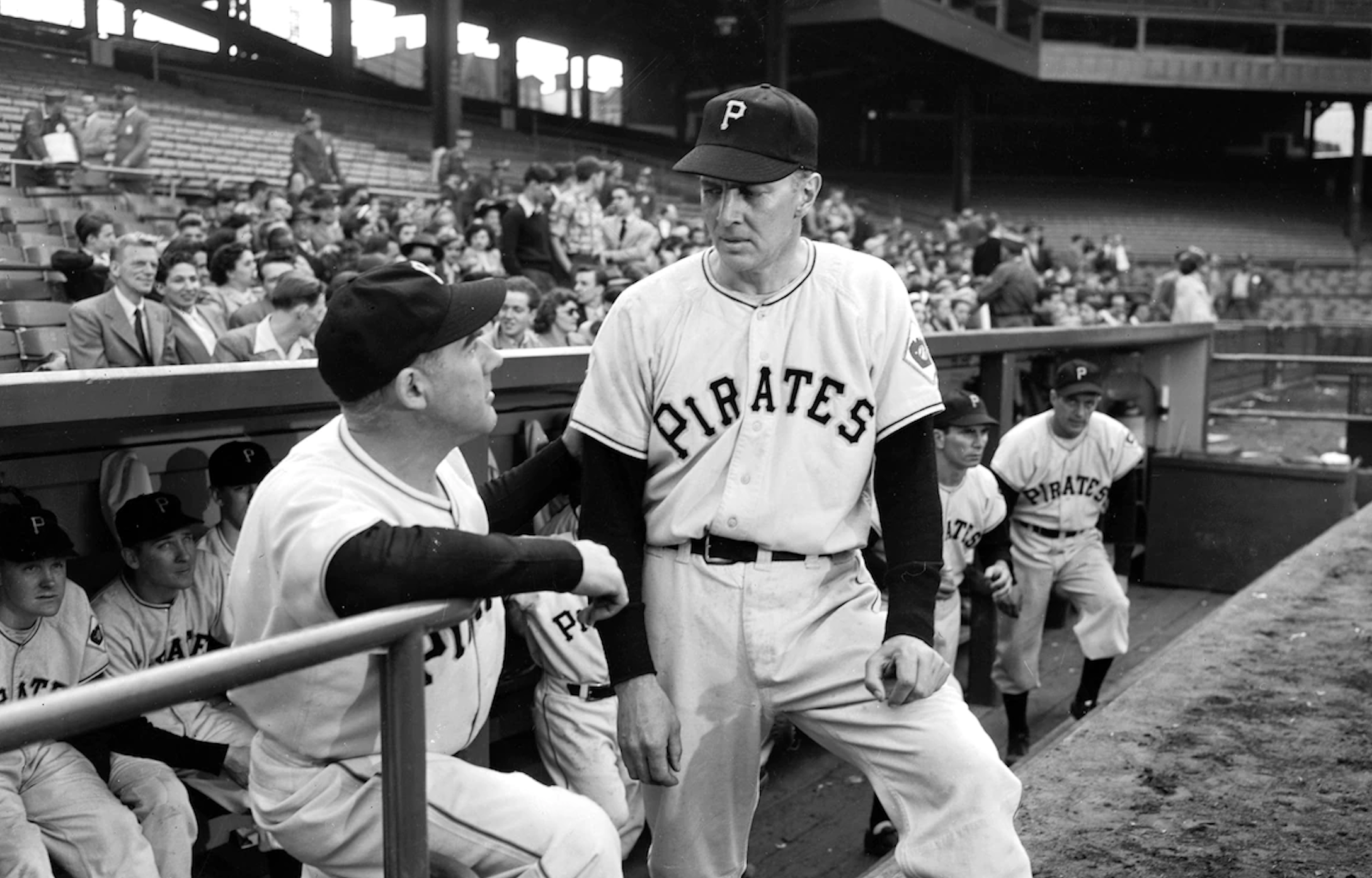
It’s basically a redemption story — A Christmas Carol set in Pittsburgh. Paul Douglas is Guffy McGovern, a coarse, foul-mouthed brute of a Pittsburgh Pirates manager, loathed by just about everyone. One evening he’s visited by an invisible, craggy-voiced angel who tells him “become a better person and I’ll fix it so the Pirates start winning some games.” Douglas goes along, and before you know it everything has turned around — his life, the fortunes of the Pirates, even his non-existent love life (i.e., local reporter Janet Leigh takes an interest).

Complications ensue, of course, but that’s pretty much it — an abusive asshole becomes a better person with some heavenly assistance. It’s a minor effort but it works.

Based on a story by Richard Conlin, Angels in the Outfield was written by Dorothy Kingsley and George Wells, and directed by Clarence Brown, king of the “house” helmers.

How Miserable Will 2022 Be?

…or will the world finally catch a break? Probably not. The only chance of Democrats not getting murdered in November would be to grow spines and stand up like persons of principle and (a) completely renounce the progressive nutter Robespierre woke wing and (b) announce a commitment to sensible, practical, fair-minded liberalism.

Only shallow hormonal idiots go out on New Year’s Eve to get bombed and yell ‘YeaaAAAGGGHHHHH!” when the big moment arrives.

3:10 pm Pacific: Ten minutes ago the clock struck twelve in Paris. No fireworks due to Omicron, but once again I’m feeling all nostalgic about Jett, Dylan and I watching the Eiffel Tower fireworks display from the same vantage point, 22 years ago exactly.

Read more

Only Now Can It Be Revealed

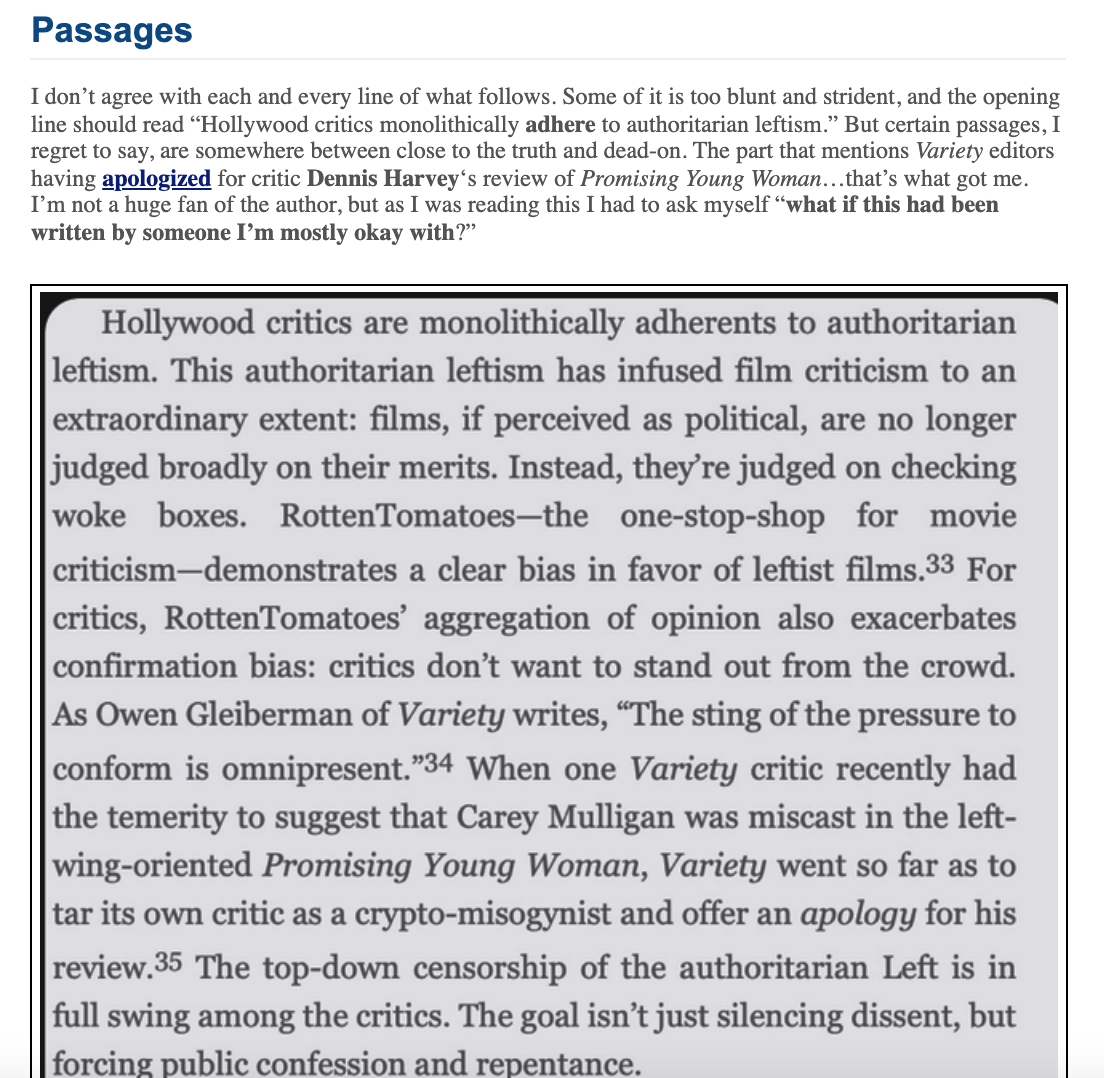
On 7.30.21 I posted an excerpt from a book of political-cultural analysis, but I didn’t reveal the author’s name. It was a passage about how elite film critics have all been trained to kowtow to the wokester authoritarian left, but I didn’t name the male author because I wanted the content to be considered rather than the branding. I also didn’t feel comfortable with aligning myself with this person as I didn’t agree with some of his opinions. But in the months since this posting I’ve gradually begun to feel a greater degree of allegiance.

In the comment thread one person guessed his name correctly. The author’s identity is after the jump.

Read more

Reminder for Woke Bluenoses

…who are deeply alarmed about Licorice Pizza, and particularly the non-sexual, one-sided ’70s relationship between Gary (Cooper Hoffman), a 15 year-old actor and waterbed salesman, and Alana (Alana Haim), a 25 year-old whom Gary has a huge thing for but never scores with.

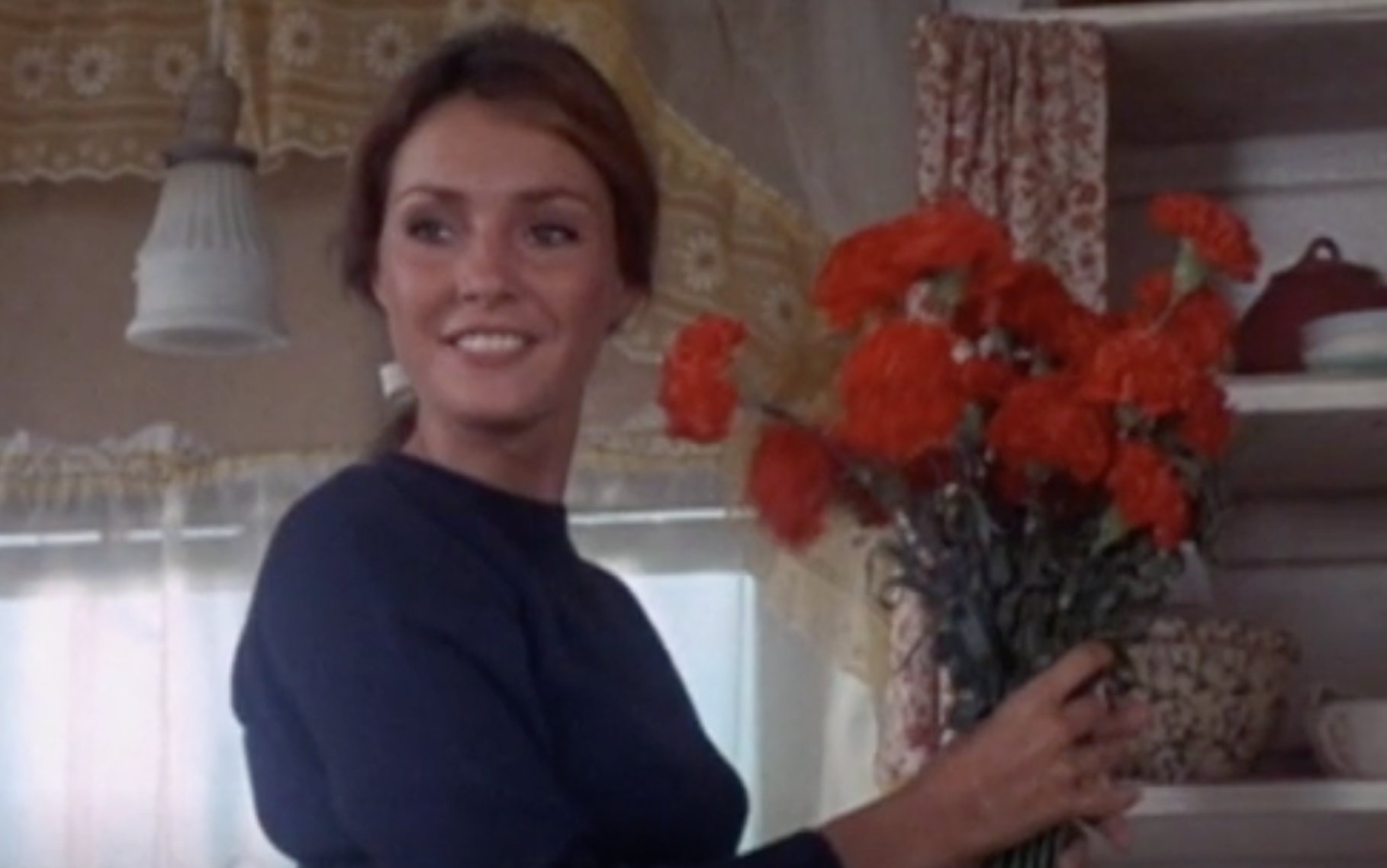
A similar kind of relationship was depicted a half-century ago in Robert Mulligan‘s Summer of ’42, except back then the younger lad (Gary Grimes as an anxious 14 year-old named “Hermie”) and the 20something woman (Jennifer O’Neill‘s “Dorothy”) did the actual deed…once.

Dorothy is heartsick over her young Air Force pilot husband having been shot down over France, and so, half-drunk, she invites Hermie to bed. Hermie is not only aroused but transformed by this episode, but the next morning Dorothy disappears, never to be seen or heard from again.

Herman Raucher‘s screenplay is based on his own actual experience. At age 14 he really did get lucky with a heartsick 20something he called “Dorothy.” If only some wokester scolds from the 21st Century could have somehow been time-tripped back to 1942 Nantucket and saved poor Herman from the terrible trauma of making love with a beautiful woman at age 14.

Related: Posted on 11.22.21.

Zero Tolerance

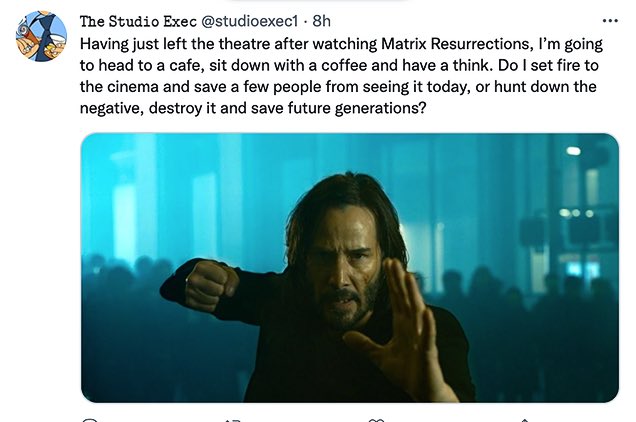
The sane world has spoken, and there’s absolutely no ambiguity about the quality of Lana Wachowksi‘s The Matrix: Resurrections — it’s utter howling hell to sit through, and anyone who would recommend it is therefore a kind of clueless (perhaps even demonic?) emissary.

It follows that N.Y. Times opinion writer Kara Swisher cannot and will not get a pass for writing the following: “The reason I liked The Matrix Resurrections [is because it’s a story] about the limits of big tech, big media and big politics and the importance of heartfelt, real family connections.

“These are critically important ideas as we move into the next iteration of tech, which will have a lot more to do with virtualizing everything. How we evolve and connect as humans as the world moves to VR is a critical issue.” Dear God in heaven!!

“At this point, this Matrix movie about how they probably shouldn’t have made another Matrix movie becomes just another Matrix movie, albeit one that wears its self-awareness like an ‘ask me about my self-awareness’ T-shirt.

“For what it is, it’s still pretty engaging, losing steam only when it tries to make topical points about our red-pilled political climate. The new iteration of the Matrix converts ordinary people into swarms of murderous hate-bots to protect its grip on power; its creator gloats about how easy it is to control people with feelings, rather than facts. ‘If we don’t know what’s real,’ a character says to Neo, ‘we can’t resist.’

“None of this is objectionable. But minus a shot of bathroom graffiti guaranteed to turn every dude on Reddit into an expert on the thematic resonances between this film and Don DeLillo’s ‘Americana’ (Don-pilled!), it’s served up without even the modicum of subtlety and egg-hunt mystery that made the original Matrix such a durable chew toy for undergrad post-modernists.

“There’s nothing to unlock in Resurrections — it’s a movie whose password is ‘password.'” — from “The Matrix: Resurrections Is A Crucial Keanu Reeves Movie,” written by The New Yorker‘s Alex Pappademas and posted on 12.30.21.

A Life In Full

If you lived 99 more-or-less bountiful years, and seemed to somehow grow in emotional stature the older you got, and then, upon your passing, inspired a torrent of love notes and fond recollections, you could say from heaven “yeah, I guess I got some of that right…some of it definitely worked out.”

Oscars Won’t Seem Quite So Dead If…

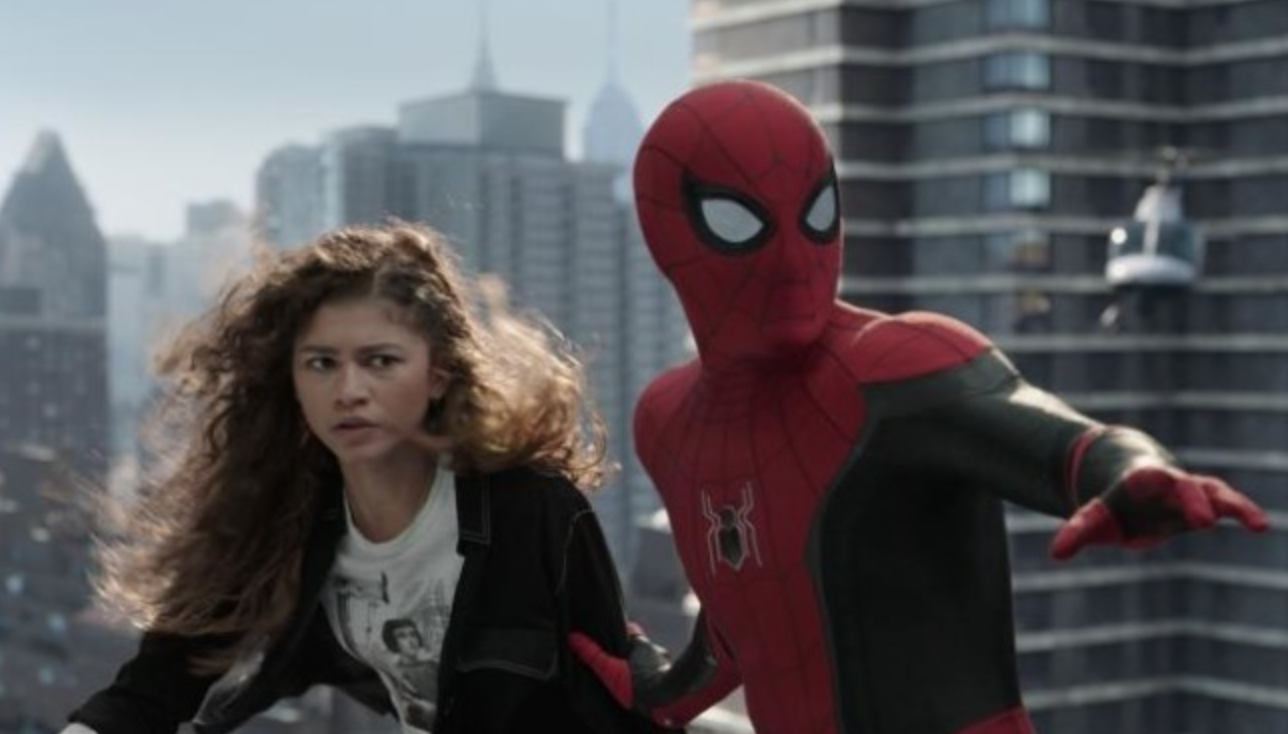
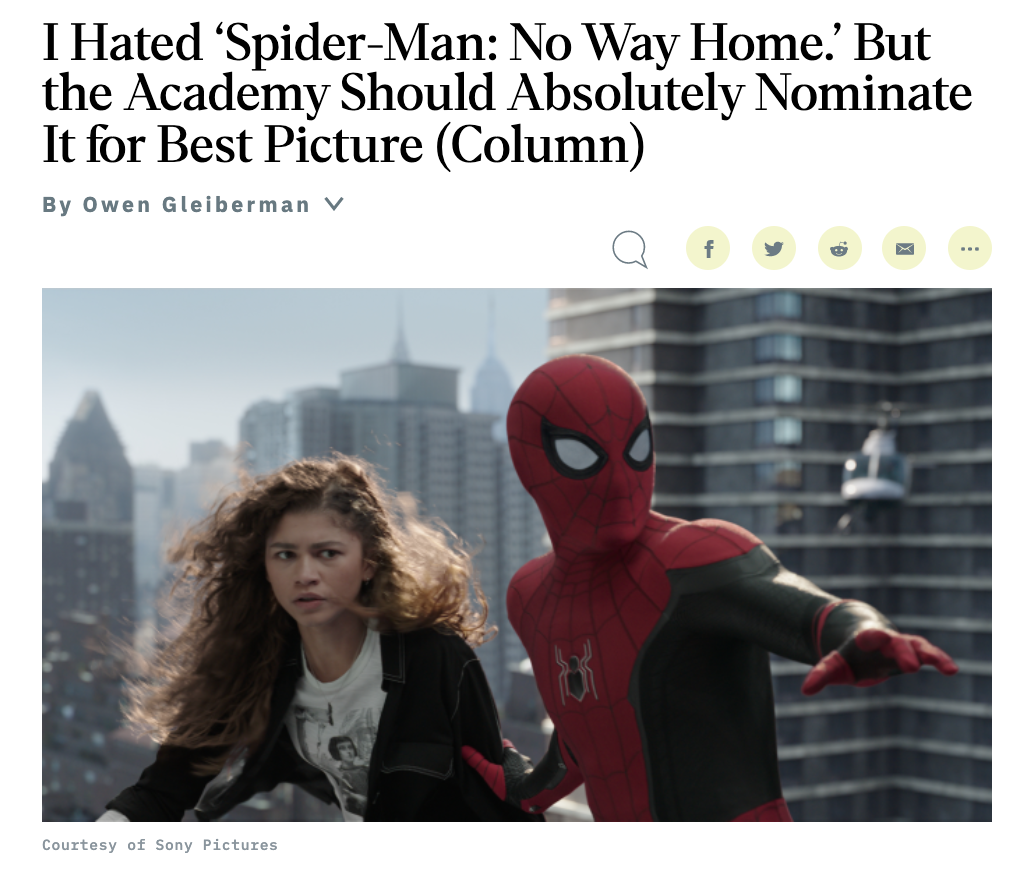
Variety‘s Owen Gleiberman: “The biggest hurdle the Oscars face, especially in the time of a pandemic accompanied by a streaming revolution, is that the films that tend to be nominated are winning a smaller and smaller slice of the audience.

“[If] the nominees include Belfast, The Power of the Dog, Licorice Pizza, The Lost Daughter and The Tragedy of Macbeth, that will read as a roster straight out of the too-smart-for-school megaplex.

“I’m not saying don’t nominate those films. I’m saying that if those are the only films nominated, it’s going to be another year of the Oscars’ slow-motion implosion. Would it really be such an unspeakable vulgarity this year for the Oscar slate to include Spider-Man: No Way Home? Not as a token mainstream gesture but because it’s a film that honestly meant something to the larger public. Why has this become such an insane idea?

“What’s actually insane is leaving a movie like that one out of the mix. If the Oscars want a future, it would be a shrewd strategy for them to not inflict the death of a thousand cuts on themselves by using the dagger of elitism.”

HE to Gleiberman #1: Which Twitter elitists have insisted that handing a Best Picture nomination to Spider-Man: No Way Home would be “an insane idea”? I’m presuming we’re talking about the same dweebs who believe that Drive My Car is the film of the year, but…

HE to Gleiberman #2: If one of the nominees is King Richard, no one will think this is “straight out of the too-smart-for-school megaplex.” There are two family movies in Best Picture contention this year — one is excellent, the other less so. King Richard is the excellent one.

Smiles Aren’t Taught

I remember very clearly the first time infant Jett smiled. He was lying next to me in bed. Daybreak or soon after. A small, sudden eruption of joie de vivre. Babies surprise you like that.

Planning My 1971 New Year’s Eve…

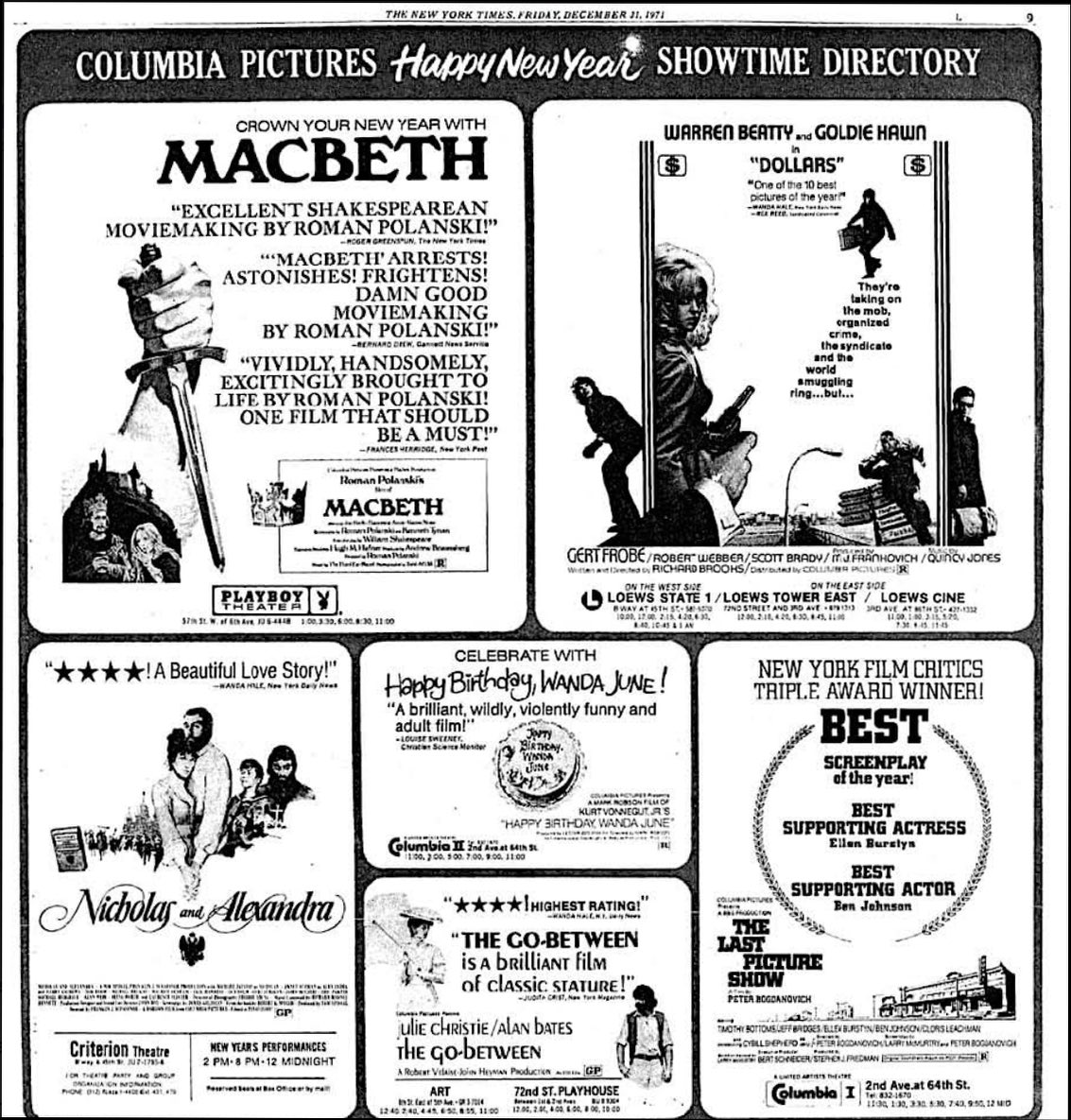
…and looking to the fine marketing people at Columbia for guidance. Thinking it over, kicking it around. I would first and foremost have to sneak in a large bottle of Moet Chandon champagne and at least four or five plastic cups…that’s a given. Right off the top Nicholas and Alexandra is a no-go; ditto Happy Birthday, Wanda June and Richard BrooksDollars. For me it boils down to either Roman Polanski‘s Macbeth or Peter Bogdanovich‘s The Last Picture Show. [Thanks to Larry “Jerry Garcia” Karaszewski for the screen grab.]

Honest admission: I’ve somehow never seen Joseph Losey‘s The Go-Between.

As Hollywood Guys Went, Evans Was Incandescent

A sudden surge of Robert Evans nostalgia just hit me, like a ghost tapping me on the shoulder but more like a flutter or passing breeze of some kind…maybe it was Kid Notorious himself.

Evans died a little more than two years ago. I’m almost teary-eyed as we speak, thinking back to those crazy times of the mid to late ’90s when I was his brief and temporary pallie, so to speak.

“I’d rather be remembered than rich.” — Evans in a 1977 interview.

There’s something terribly somber and sobering in the idea of the once-churning Evans dynamo being silent and still, above and beyond the fact of a life having run its course and come to a natural end.

I don’t like finality as a rule. I prefer the idea of fluidity, of a beating pulse and the constant search for action and opportunity and fresh air. I don’t like it when a store closes and is all emptied out and boarded up with “for lease” signs pasted on the windows. Keep it going, sweep the floors, stock the shelves, pay the bills. All things must pass, of course, but not now…later.
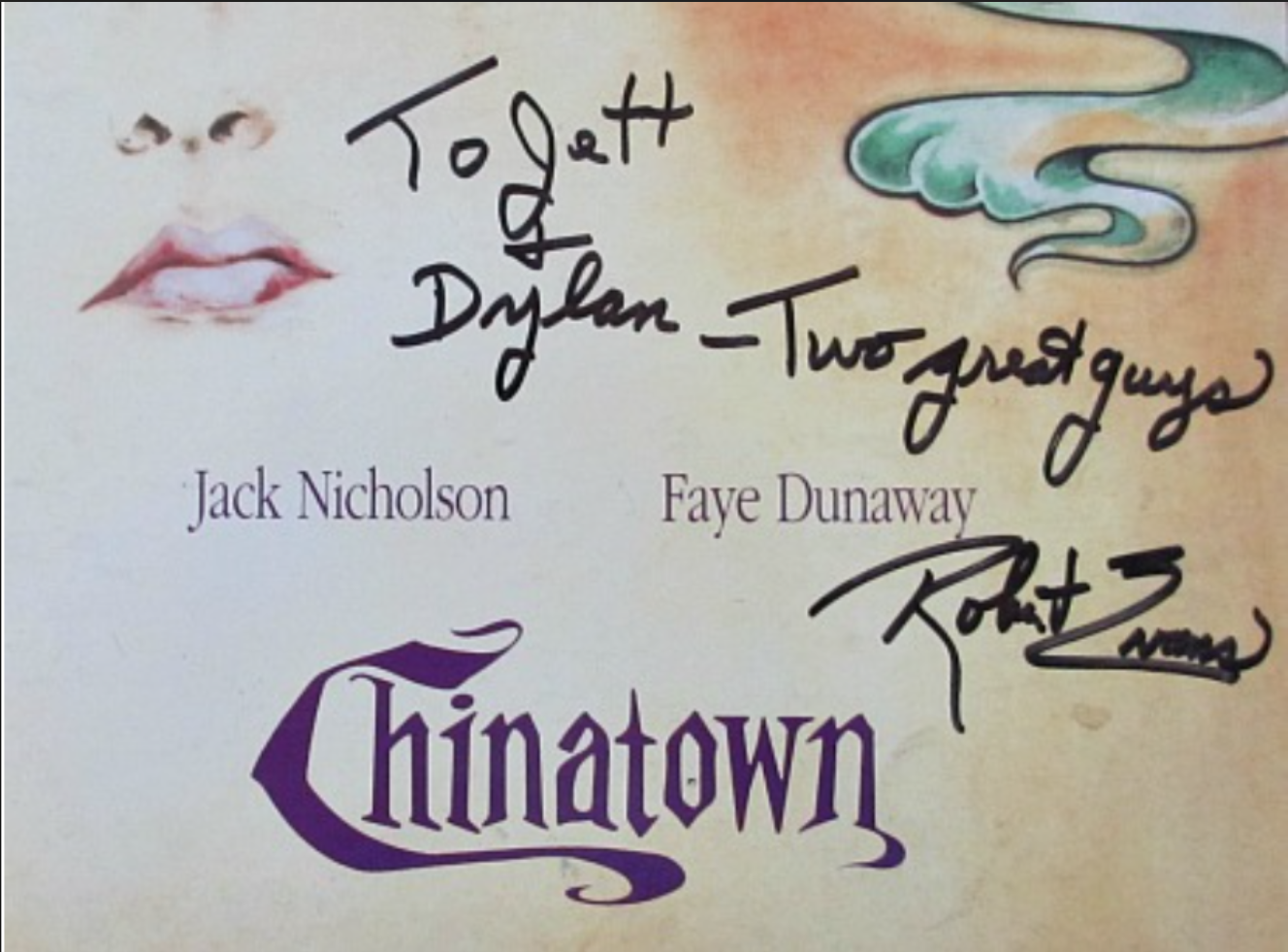
The last time Evans and I saw each other was over dinner at the Palm in ’02, sometime around the release of Nanette Burstein and Brett Morgen‘s The Kid Stays in the Picture. Evans covered the meal, but they never brought him a check. I didn’t ask and he didn’t explain. Some kind of gratis deal he had with management — Evans arrives, orders, eats, leaves a generous tip and leaves.

In the published view of director Peter Bogdanovich, Evans “was good Hollywood, not bad Hollywood.”

When Evans broke in as a producer in the mid ’60s “he brought a fresh kind of attitude to the movies,” Bogdanovich says. “He had very good taste and he produced movies of his own that were damn good.

“He was a movie fan too. It’s rare to have executives that really like movies. Not all executives are like that. He was really enthusiastic, and he encouraged talent. I loved Bob. He was friendly and amiable and charming.”

In a 10.28 tribute piece Variety‘s Owen Gleiberman wrote that “you can see why they thought Evans would be a movie star in the late ’50s. Evans was gleamingly handsome, yet he always had a touch of the geek about him. With his toothy grin and beautiful slick coif, he looked like a cross between Tom Cruise and the young Donald Trump, and as his career as an actor fizzled, the role of producer became the perfect fit for him. He was born not to tell a story but to sell it.”

Bogdanovich agrees: “Bob was the last of a breed. He connected to the Hollywood of the ’50s. They made fun of him because he was an actor who became a studio head. But why not? He played the part very well.”

But Gleiberman and Bogdanovich disagree about Evans’ vision of a genetically Italian Godfather.

Read more

Now Wait Just A Damn Minute…

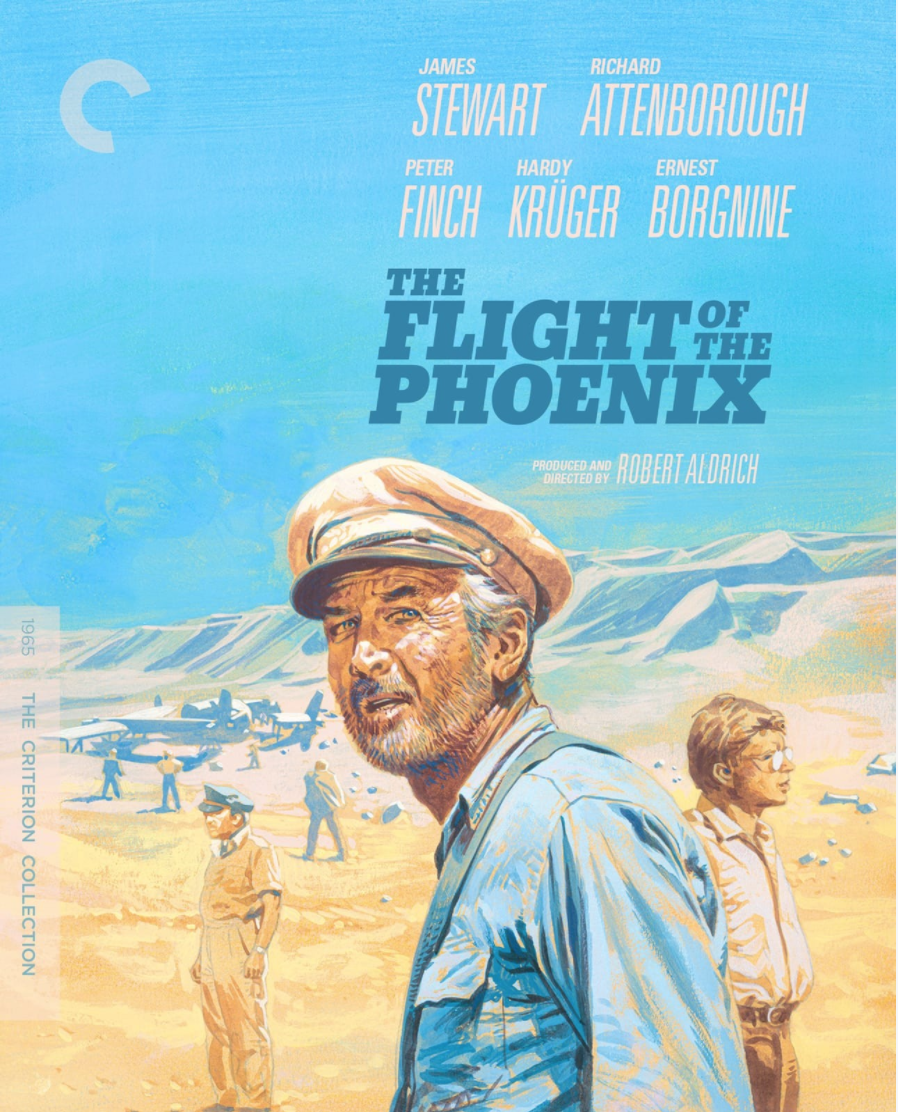
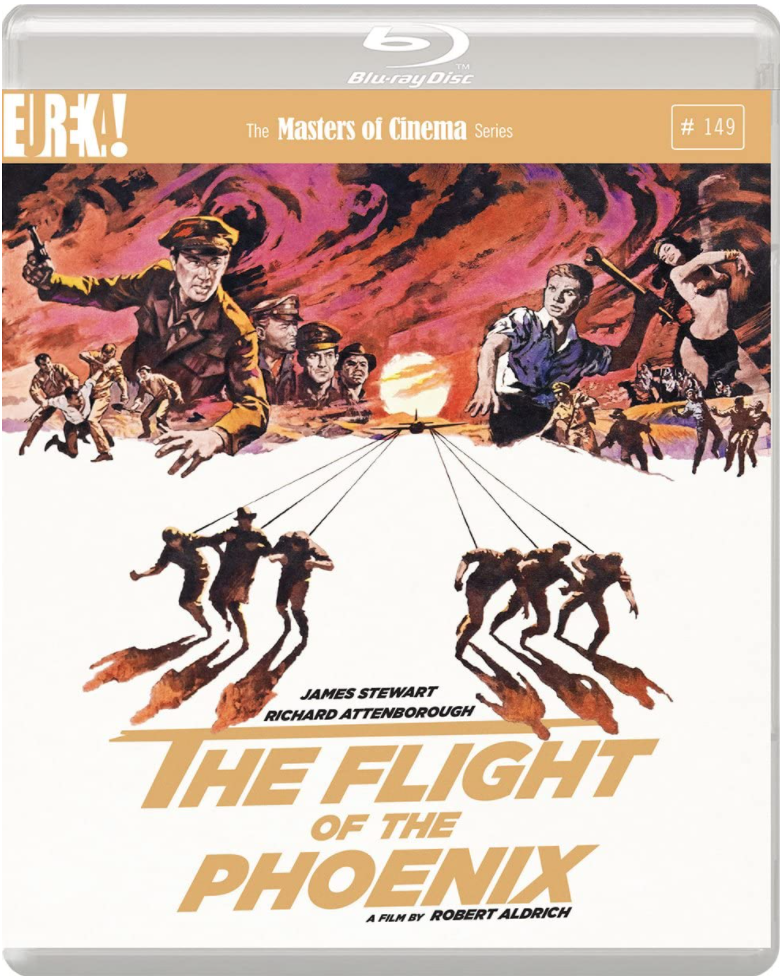
Five and 1/3 years ago I was persuaded to buy Eureka Entertainment’s Region 2 Bluray of Robert Aldrich‘s The Flight of the Phoenix (’65).

DVD Beaver’s Gary Tooze wrote that the Eureka Bluraylooks magnificent,” certainly compared to the unexceptional DVD from 13 years ago. “This 1080p looks fabulous — richer colors, far superior contrast and some impressive detail on the film’s many close-ups…our highest recommendation!”

This despite an opinion that I posted on 5.22.16 that Joseph Biroc‘s cinematography for the Aldrich film, while professionally handled as far as it went, never seemed distinctive enough to warrant any special excitement, and certainly didn’t seem to be prime Bluray material.

Quote: “I’ve seen it two or three times on cable, and as best I can recall it just looks sufficient…it’s nothing more than a professionally shot, decently framed desert-locale thing…I certainly don’t remember any mesmerizing visuals.”

And now Criterion wants cinefiles to shell out $31.96 for their own “2K digitally restored” Flight of the Phoenix Bluray? In a pig’s eye.

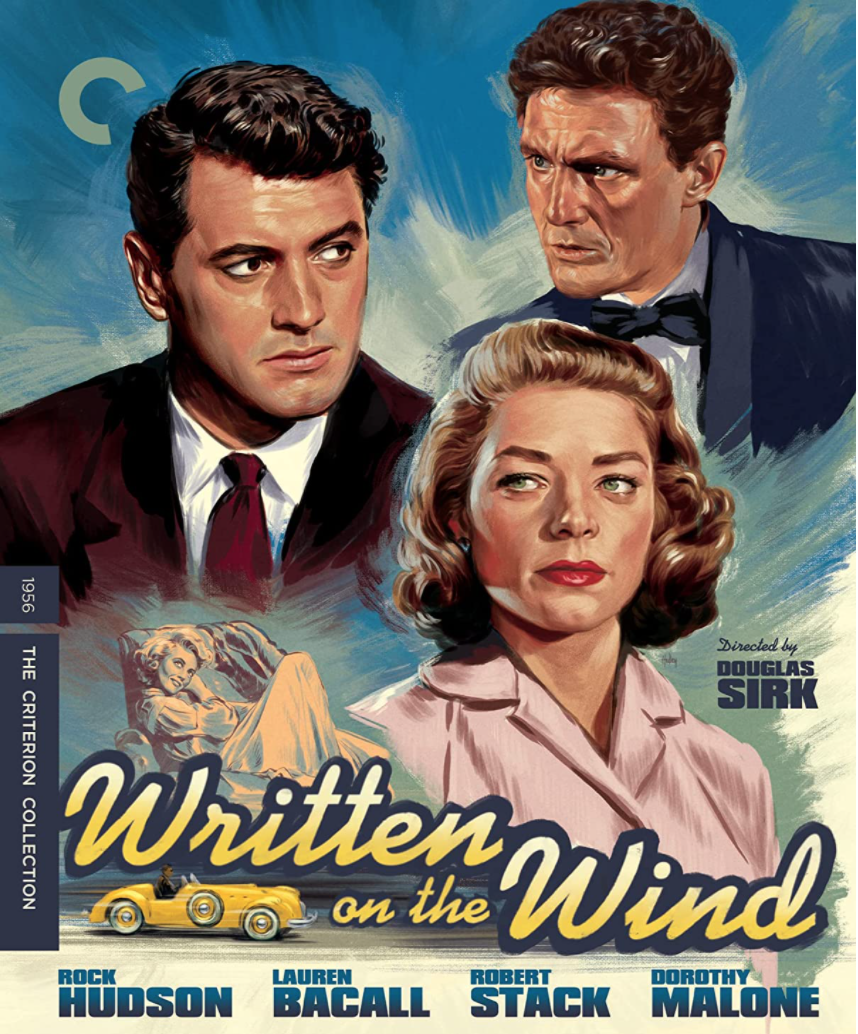
Sirk Fetishists Still Holding Sway at Criterion

“‘When Douglas Sirk retired from American filmmaking and returned to Europe at the end of the 1950s, his reputation was that of a director who simply churned out glossy Hollywood weepies. But after a major critical reappraisal, spurred by the critics of Cahiers du Cinema, the German-born filmmaker was reclaimed as an auteur with a varied body of work, an eye for visual stylization, and a sophisticated understanding of Brechtian artifice, not to mention one of cinema’s greatest ironists.’

“So read a portion of a Film Society of Lincoln Center announcement about “Imitations of Life: The Films of Douglas Sirk” (1.23.15 thru 1.6.16), a comprehensive retrospective that “tracks Sirk’s artistry from his early German films through to his early Hollywood forays into multiple genres and on to the now-canonical works of his late career.”

Respectful Sirk Takedown,” posted on 2.22.10: “The German-born Douglas Sirk has long been considered a world-class, pantheon-level filmmaker. That’s because the film dweebs have been telling us for years that the dreadfully banal soap-opera acting, grandiose emotionalism and conservative suburban milieus in his films are all of an operatic pitch-perfect piece and are meant as ironic social criticism. (Or something like that.)

“The dweebs are playing an old snob game. They’re basically saying that you have to be a serious cineaste to recognize Sirk’s genius, and that if you don’t recognize it then you need to think things through because you’re just not as perceptive as you need to be.

There’s no winning against this mindset, which is somewhere between a schoolyard bully move and an intellectual con. The dweebs (and I’m talking about a very small and cloistered group of big-city critics) have put one over on us. And I’m suggesting, due respect, that the time has come to push back on Sirk and to consider him once again as the Guiding Light-level director that some (myself included) believe that he always was.

Sirk was mostly dismissed by critics of the ’50s and early ’60s for making films that were no more and no less than what they seemed to be — i.e., emotionally dreary, visually lush melodramas about repressed women suffering greatly through crises of the heart as they struggled to maintain tidy, ultra-proper appearances.

In his praise of Written on the Wind, Roger Ebert wrote that “to appreciate [this film] probably takes more sophistication than to understand one of Ingmar Bergman‘s masterpieces, because Bergman’s themes are visible and underlined, while with Sirk the style conceals the message.”

Aaaah, the old concealment game! John Ford used to do this also, but you can watch Ford’s films, or at least savor what’s good about them (despite the Irish sentimentality). If Ebert’s comment isn’t Orwellian film-dweeb speak, I don’t know what would be.

Criterion’s Written on the Wind Bluray pops on 2.1.22.