Blake’s Epitaph

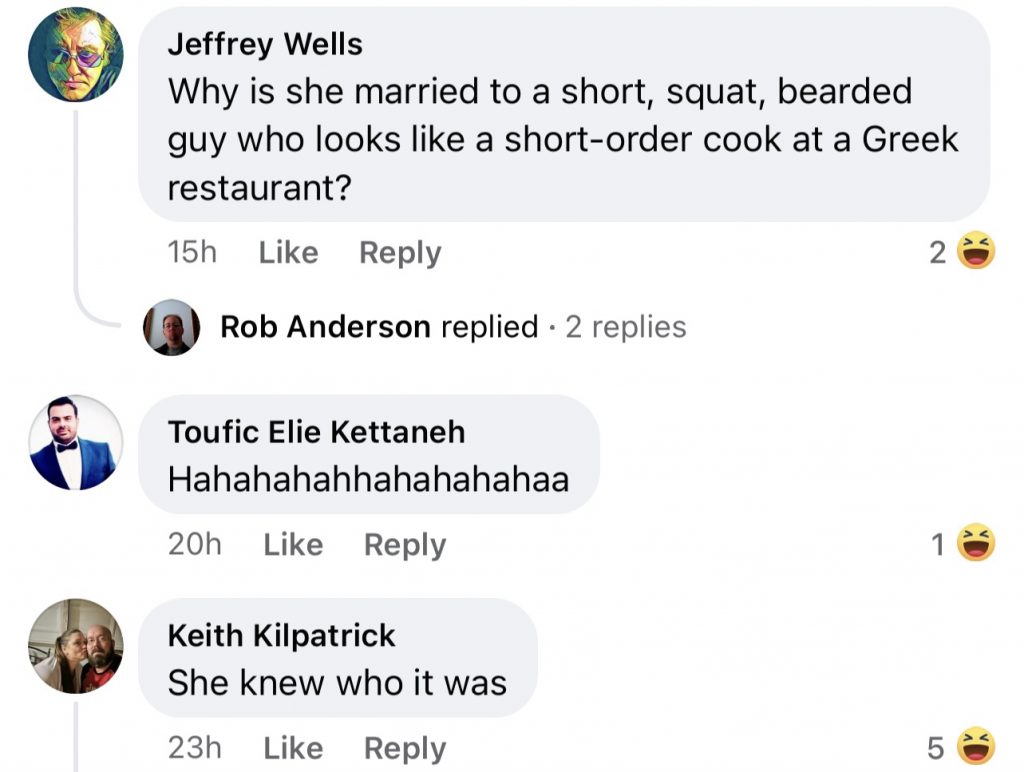
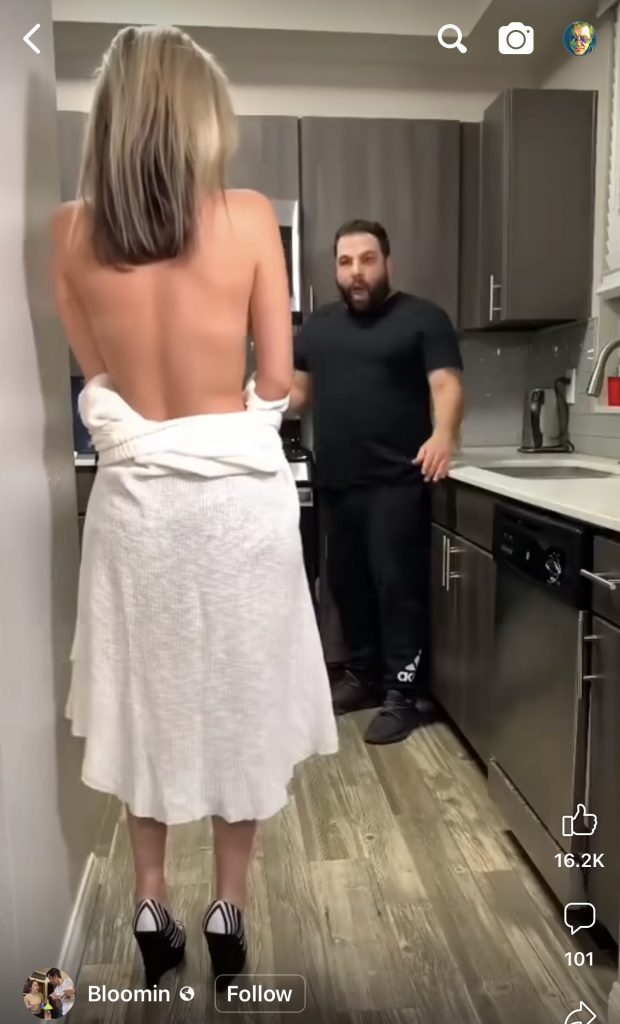
Robert Blake, the brilliant veteran actor who wasn’t convicted of plotting to kill his wife, Bonny Lee Bakley, on 5.4.01, but whom many believe was guilty of complicity in the crime, died earlier today from heart disease in Los Angeles. He was 89 years old.

A belief in some quarters that Bakley was a fairly bad egg obviously doesn’t excuse or justify her unfortunate demise. Even the worst of us are entitled to live another day and maybe make things right. But prosecutors had no forensic evidence implicating Blake in the murder, and could not tie him to the murder weapon. Blake was found guilty, however, in a civil trial.

I somehow missed the fact that Quentin Tarantino‘s novel of “Once Upon a Time in Hollywood”, based on his film of the same name, is dedicated to Blake. Brad Pitt‘s Cliff Booth character is also accused of offing his wife.

A personal recollection posted on 3.17.05: “I used to tool around on a white Vespa scooter when I first came to Los Angeles in the early summer of ’83. One day in the late fall of ’83 it was stolen. I reported the loss to the cops right away, and a few hours later an officer called to say it had been found in Studio City. I was told where to go to pick it up (i.e., a location on the concrete L.A. river bed near Magnolia,

“I forget how I got there without wheels but somehow I did, and as I approached the location I saw two uniformed cops approaching from a couple of hundred yards away with a much shorter civilian walking between them. Closer, closer…who’s the pint-sized guy in the middle? It was Blake — he was the one who had spotted the abandoned scooter and made the call. I was introduced and thanked him profusely. Ever since I’ve felt a certain affection, a certain debt.”

No, The Kid Doesn’t Turn Out To Be Gay

I know one thing — JLaw needs to save herself from what’s been happening for the last seven or eight years. (Longer?)

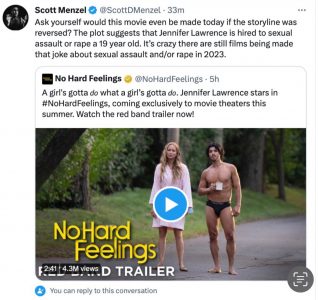
Read this 10.31.22 Script Shadow review of the No Hard Feelings screenplay (co-written by John Phillips and director Gene Stupnitsky) and then watch the trailer and tell me what you think. Sony will open No Hard Feelings on 6.23.23.

Will ya look at what Scott Menzel wrote? Loony tunes. A kid is 9 years old — a 19 year-old is a man or close enough. Jesus. Try watching Murmur of the Heart or Beau Pere, Scott. Live a little.

Never Forget or Forgive

The most unforgettable and unforgivable “death reel” in the long history of the Academy Awards, or at least since “in memoriam” film tributes became a regular staple of that show, happened during the 77th Oscar telecast, which aired on 2.27.05.

For on that night the biggest tribute to a fallen star was for the beloved Johnny Carson, whose relationship to movies was nil but who’d hosted the Oscar telecast several times. Emcee Chris Rock delivered a special Carson tribue along with (I think) a medley of clips. I’m not sure how long the Carson memoriam lasted but it was no in-and-out quickie. Nothing the least bit wrong with this — Carson (who passed on 1.23.05) was a luminous talent and a legendary entertainer.

But with all due respect, there is still a little bugger called proportionality, not to mention a tiny matter of iconic movie greatness, and the appalling fact is that the 77th Oscar telecast producer, the lamentable Gil Cates, decided to give Carson much more affection and attention that night than the great Marlon Brando, arguably the greatest and most influential actor of the 20th Century, who passed at age 80 on 7.1.04.

Cates decided against a special Brando tribute, and slipped him into the end of the standard death reel, affording his memory roughly 14 seconds, give or take. (2:53 to 3:06). A special tribute for Carson; 14 seconds for Brando. Basically because Cates liked Carson and didn’t like Brando.

Read more

McQueen’s Breakout Lead Performance

Steve McQueen‘s first attention-grabbing feature performance was as a cool gunslinger in John SturgesThe Magnificent Seven (’60), and his first real breakout effort, of course, was as “cooler king” Virgil Hilts in Sturges’ The Great Escape (’63).

But the first lead turn in which he commanded and totally dealt a trademark “Steve McQueen” performance — a stoic, steely-eyed, minimal-emotion type — and indeed the first film in which he played the guy that he would play for the rest of his career…that film was Don Siegel‘s Hell Is For Heroes (’62).

The hardscrabble, low-budget war film, shot in suffocating heat in Northern California, was a turbulent one to make, and McQueen was unpopular among his costars and collaborators. But when you watch the film now, McQueen burns through as the hard-ass hero. He’s essentially giving the same performance he would later give as Jake Holman in The Sand Pebbles — a frosty, alienated loner but indispensable when the chips are down in a combat situation.

Wiki excerpt: “Columnist James Bacon visited the set and said that McQueen ‘is his own worst enemy’. Costar Bobby Darin overheard the remark and replied, “Not while I’m still alive.” McQueen and Siegel were continuously at odds during the production, with the two nearly coming to blows several times. In one scene, when McQueen was unable to cry while on camera, Siegel resorted to slapping him hard and blowing onion juice into his face, before administering eye drops that ran down the actor’s face.”

Kino Lorber’s Hell Is For Heroes Bluray pops on 4.11.23.

Read more

Among Karloff’s Greatest Films

What was Boris Karloff‘s finest film of the second half of his career, in which he arguably gave his finest-ever performance?

His two most iconic films (containing his most iconic performances) were the original Frankenstein (’31) and Bride of Frankenstein (’35). His most interesting supporting roles were in Howard HawksThe Criminal Code (’31) and Scarface (’32), as a Christian fanatic in John Ford‘s The Lost Patrol (’34), and as a cruel-hearted examiner in Val Lewton‘s Bedlam (’46).

And he was reputedly wonderful as serial killer Jonathan Brewster in the Broadway stage version of Arsenic and Old Lace — Jonathan was the older brother of Mortimer Brewster (played by Cary Grant in the 1944 Frank Capra film version) who was enraged when people said he resembled Boris Karloff.

But the grand old actor’s fullest performance was as himself (a Karloffian horror star named “Byron Orlok”) in Peter Bogdanovich‘s Targets (’68), which is certainly among his all-time best and arguably his best since Bride of Frankenstein.

What’s great about Karloff in Targets is that he finally played his own actual self — a kindly, well-dressed and impeccably-mannered English gentleman. And above all a fellow of dignity and refinement.

There’s a great little moment when Orlok is being driven from one Los Angeles location to another, sitting in the back seat and gazing out at the ugly billboards, used-car lots, taco stands and tacky mini-malls. He sighs, shakes his head and says, “This used to be such a lovely city” or words to that effect.

Directed and written by Bogdanovich, Targets is about the elderly Orlok agreeing to make a promotional appearance of The Terror (’62) at a Los Angeles drive-in theatre and also (concurrently) about a Charles Whitman-like psycho who murders his family, picks off several innocent drivers on the 405 freeway, and ends up being thrashed by Orlok as he’s about to shoot patrons at the same drive-in.

At long last, the white-haired, 80 year-old Karloff was no longer sinister but a hero and vanquisher!

Lying USA Today Poll on Woke Plague

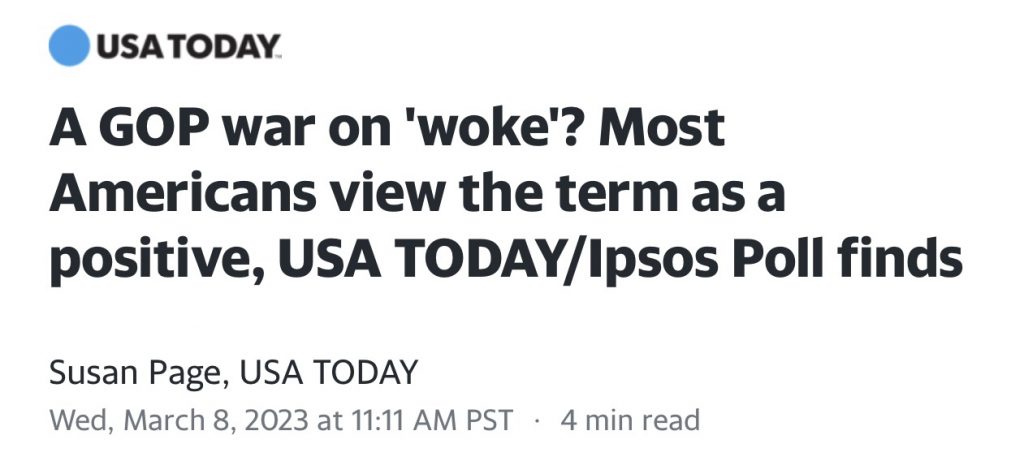
Leaning on a recent Ipsos poll, a 3.8 USA Today article by Susan Page contends that “most” Americans — 56% — regard “woke” as a positive term, or a characterization of people who are aware of social inequities and attuned to social justice.

HE doesn’t believe this survey as it sharply argues with a 10.10.18 Atlantic article by Yascha Mounk that claims most Americans despise wokeness, which is almost invariably accompanied by notions of p.c. beratings and condemnations.

Last night the USA Today piece provoked a debate between myself and a journalist friendo.

Friendo: The Atlantic poll is over four years old. The USA Today poll is recent. Maybe things have changed.

HE: Bullshit. Average Americans loathe and despise the cancel culture crowd.

Friendo: Are you prepared to critique the methodology of the poll? If not, it’s just your opinion.

HE: The 56% in the USA Today Ipsos poll who regard the term favorably are defining it, somewhat Pollyanically, as attuned to social fairness, aware of inequities, focused on decency and justice, etc. In other words, they were misled or boondoggled by a dishonest definition provided by dishonest Ipsos pollsters. Wokeness is a cult religion focused on purist p.c. ideals, revolutionary social correction and punitive measures for those who aren’t sold on it. As Quentin Tarantino once wrote, “Sell that bullshit to the tourists.”

Friendo: The definition of woke is “alert to injustice and discrimination in society.” That seens to be what the pollsters [are running] with.

HE: That’s an evasive definition, to put it politely. In the realm of actual social reality it’s a lying bullshit definition, and the pollsters know that. And so do you.

Friendo: Straight out of the dictionary, my friend.

HE: The people behind the dictionary definition are sidestepping the truth of the matter. Another way of putting it is that they’re being willfully oblivious.

Friendo: A dictionary is apolitical. You want a political definition, go somewhere else.

HE: Beginning in the early 1950s, American anti-Communist activists were dedicated to protecting this country from internal subversion, and their efforts to keep Hollywood films free of this socialist influence were honorable and vigilant. If you want a political definition, search elsewhere.

Friendo #2: The USA Today poll was probably skewed more towards Democrats-leaning voters — that’s a demographic that would overwhelmingly be pro-woke. No surprise that the article states that almost 80% of Democrat respondents said they were pro-woke. I mean, are you surprised?

First Nude Encounter

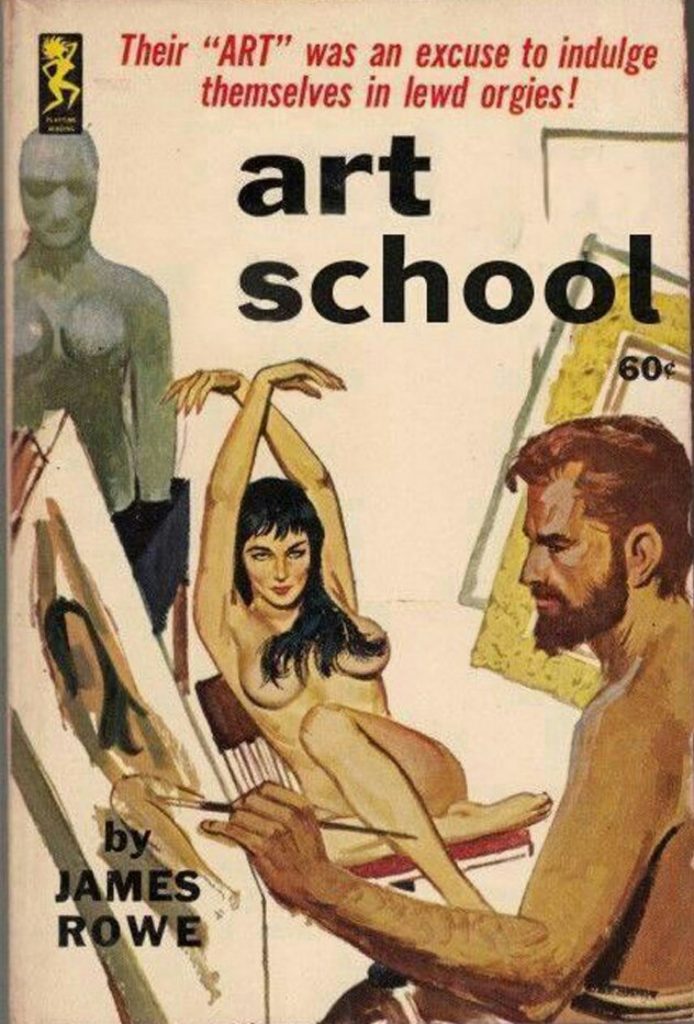
I didn’t get lucky until I was 18 or so, and so the very first time that my teenage eyes feasted upon a live, buck-naked woman (and a ginger at that, if memory serves) was in a summer sketching class at the Silvermine Art Center, a short drive from our home in woodsy Wilton, Connecticut. I was 16, and you can imagine the internal combustion factor.