Well-Founded British Skepticism

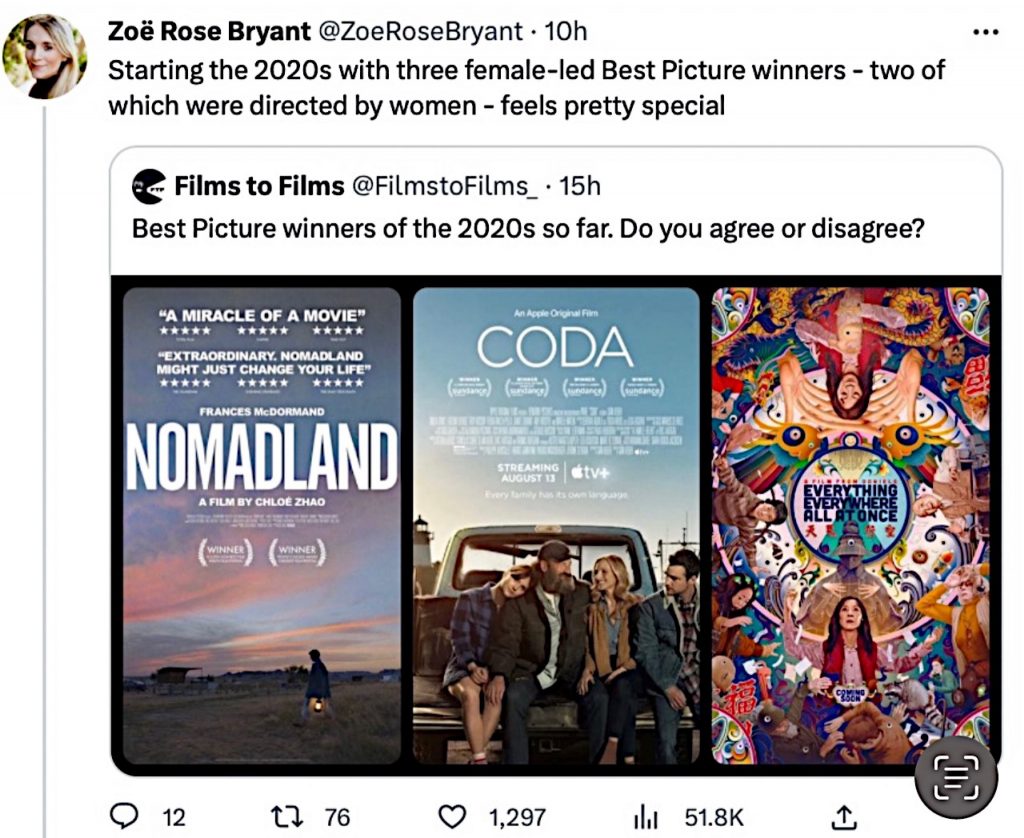
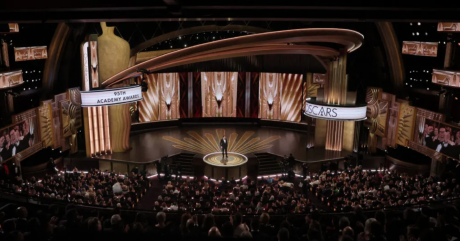
Everything Everywhere Shouldn’t Have Been Anywhere Near Best Picture. But What Else To Expect From Oh-So-woke Oscars?“, by The Daily Mail‘s Brian Viner (3.14.23):

“Not that there’s much of an overlap between the aging Academy members and those who understand TikTok, but maybe this is where those emperor’s new clothes come in: nobody over 50 wanted to declare themselves completely mystified by this self-indulgent exercise in cinematic whimsy from writer-directors Daniel Kwan and Daniel Scheinert, and so they all voted for it.”

Problem solved!

“What Hollywood folk really understand is business. They know how lucrative the Far East market has become, hence the growing number of films with Chinese settings, characters and narratives. Even the animation studio Pixar jumped on that bandwagon with last year’s Turning Red, a film that follows a 13-year-old Chinese-Canadian girl who turns into a giant red panda.

“And they understand box-office numbers. Following a discreet launch last year at the South By Southwest film festival in Austin, Texas (a far cry from the mighty festivals of Cannes and Venice), EEAAO was given a limited theatrical release in the U.S., and in Britain almost didn’t make it into cinemas at all.

“But it quickly became a cult hit and then a genuine commercial hit, as [younger] audiences appeared to warm to its wackiness. With an estimated budget of less than $25 million (£21 million), it has so far grossed well over $100 million (£82 million) worldwide, with more box-office and home-streaming dollars certain to flood in following its Oscars success.

“For me that raises the mystery of who those appreciative audiences are. Several of my most cine-literate friends were left cold by EEAAO. One fell sound asleep and woke up only when it was all over, as if in firm defiance of the sensory bombardment that kicks in after the first 20 minutes or so. Another walked out thoroughly bemused after 45 minutes; only the third time in more than 50 years that he has ever left a cinema before the final credits. Even my son, very much part of that TikTok demographic, found it ‘challenging’ and ‘too much’.

“But [some] who work in the film industry love it unconditionally, at least if we are to believe in the Oscars. The thing is, though, I don’t.

“No film in the 95 years of the Academy Awards has ever won all four of the main acting prizes and only three have won three out of four: A Streetcar Named Desire in 1951, Network 25 years later, and now, remarkably, EEAAO. But it’s only remarkable because, quite clearly, this film does not belong in such illustrious company.
Read more

Kael in Beatty Land

THR‘s Borys Kit is reporting that Quentin Tarantino‘s next and allegedly final film will be called The Movie Critic, and will be set in late 1970s Los Angeles with a female lead at its center.

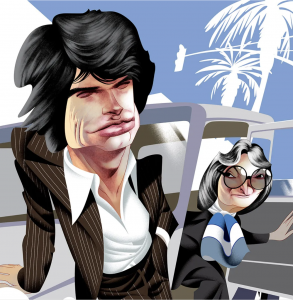
This suggests that the story could be about Pauline Kael‘s decision, urged by Warren Beatty, to leave her New Yorker critic gig for a misbegotten sabbatical as a Paramount creative exec.

Kael wound up fiercely butting heads with Paramount’s vice-president of production Don Simpson, among others, and returned to her Manhattan berth in ’80. Vanity Fair‘s Lili Anolik wrote an excellent article about this episode in early 2017.

Kit: “The timing of that Paramount job seems to coincide with the setting of the script, and [Tarantino] is known to have a deep respect for Kael, making the odds of her being the subject of the film more likely.”

HE to Tarantino: If The Movie Critic will indeed tell Kael’s story, great. I’m presuming you’ll be fictionalizing it to some extent to allow for sex and violence add-ons, but I’m sure you’ll work that out.

Special plea: Please don’t cast an actress who physically resembles Kael, not because she was unattractive but because she was only 4’11” tall. That’s an alienating height for either gender; almost dwarf-like. (Even the tiny Truman Capote was 5’3″.) Please cast an actress who’s at least 5’4″ or higher.

Or go against the grain and hire a giraffe. Someone, you know, who’s Uma Thurman‘s height (i.e., 5’11”). Thurman, in fact, would be a good choice as she’s nearly 53, which is close to Kael’s age when she took the Paramount gig (i.e., 59).

“Geronimo, Mike”

John Cromwell‘s Dead Reckoning (’47) is a second-rate Humphrey Bogart noir in which Lizabeth Scott (24 or 25 at the time) plays a femme fatale from hell. Her character is alternately called “Coral” or “Mike”, but her venality is such that she’s never quite human.

Screenwriters Steve Fisher and Oliver H.P. Garrett provide some agreeably snappy dialogue, but the plot is impossible — anti-logical, convoluted, never touches bottom. The closing death scene, however, is rather good. Her head wrapped in bandages, Scott has been fatally wounded in a car crash and is only minutes from death. A former WWII parachuter, Bogart sidles up bedside and gently talks her through the death process.

“It’s like going out the jump door. Just let go, Mike…don’t fight it. Remember all the guys who’ve done it before you. You’ll have plenty of company, Mike. High-class company. Geronimo, Mike.”

What About The Poor Bike?

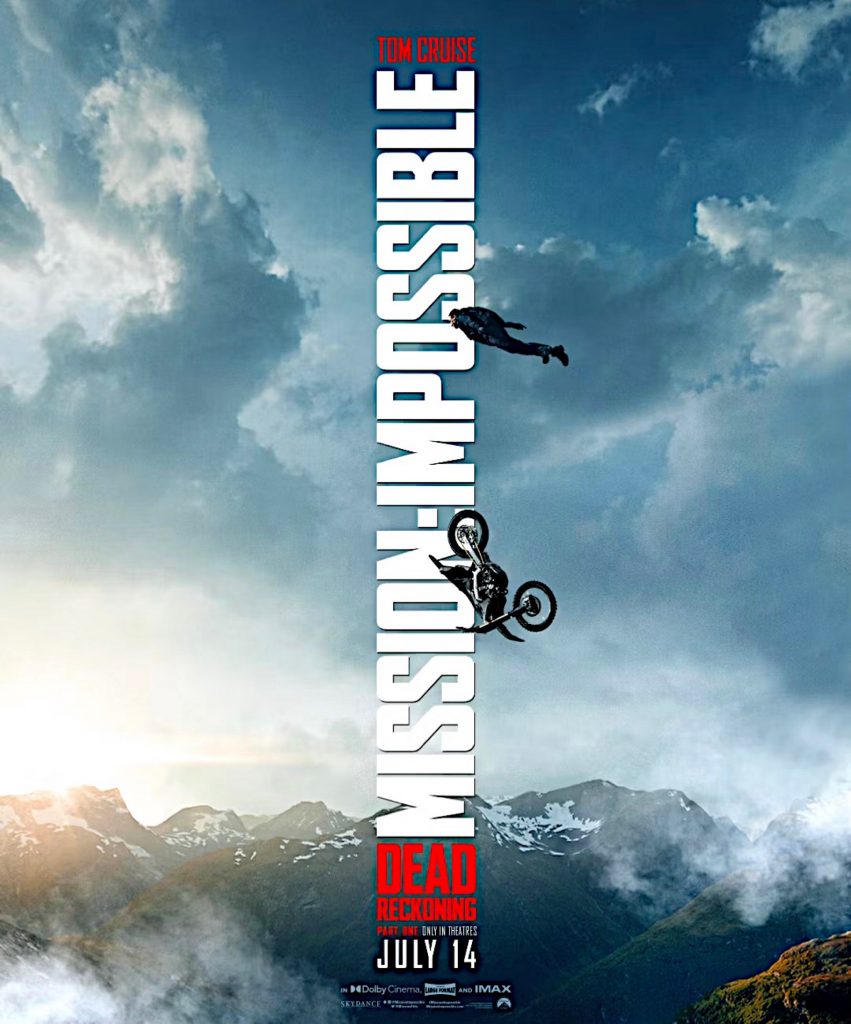
Tom Cruise is fine but the bike is doomed…totally doomed to fall 1700 or 1800 feet and crash on the rocks below…smashed, shattered and mangled to death…forever ruined…a terrible way to die.

“Memoriam” B-List

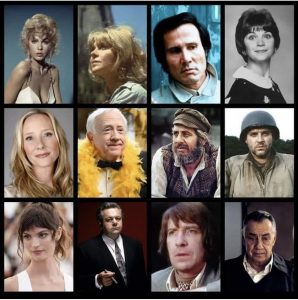
The grossest omissions from the Oscar telecast’s “death reel” were, hands down, Paul Sorvino, Anne Heche, Jean-Louis Trintignant, Tom Sizemore, Stella Stevens and Philip Baker Hall (6).

Also dead but officially unrecognized: Robert Blake, Topol, Charlbi Dean, Fred Ward, Melinda Dillon, Tony Sirico, Clu Gulager, Mike Hodges, Hugh Hudson, LQ Jones, Bo Hopkins, Robert Morse, Roger E. Mosley, James Olson, Andrew Prine, Henry Silva, Joseph Turkel, Leon Vitali, David Warner, Cindy Williams, Leslie Jordan, Peter Brook. (22).

28 snubs in all.

No offense but Barbara Walters doesn’t count.

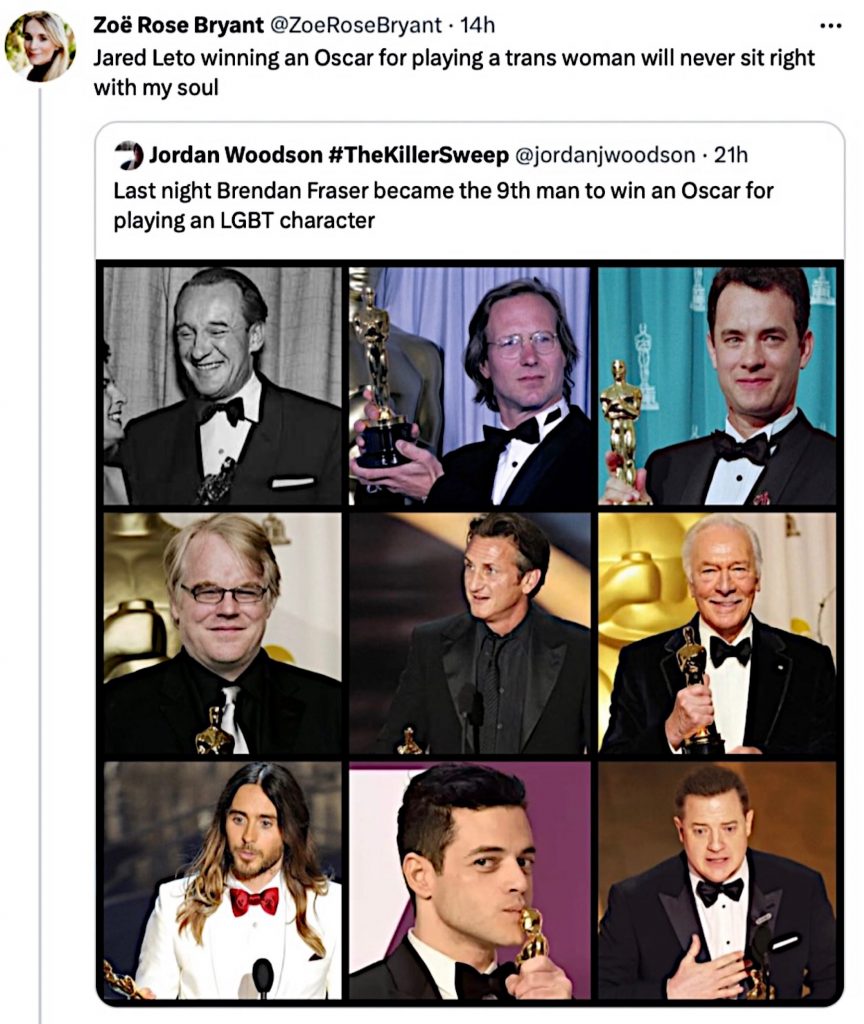
HE to Bryant: Addison DeWitt Was Straight

Addison DeWitt to Eve Harrington near the end of All About Eve (’50): “That I should want you at all suddenly strikes me as the height of improbability. But that, in itself, is probably the reason. You’re an improbable person, Eve, and so am I. We have that in common. Our contempt for humanity, an inability to love and be loved, insatiable ambition, and talent. We deserve each other.”

In short, not only was DeWitt straight but he ended up putting the high hard one to Anne Baxter‘s Eve Harrington on a nightly basis, and sometimes twice on Sundays

Get Outta My Life

According to a 3.13.23 review by Variety‘s Owen Gleiberman

(1) “John Wick: Chapter 4 is 2 hours and 49 minutes long, but it has a story that, if it were told more briskly, could fit into an 83-minute potboiler that you might have seen in a grindhouse in 1977.”

HE reaction: Immediate hard pass. Cartoonish idiot-wind ultra-violence is tolerable if you’re an idiot yourself, but only if the film runs, say, 110 minutes max. 169 minutes is outrageous.

(2) “Chapter 4 feels like the first John Wick movie that wants to be a Clint Eastwood spaghetti Western. It’s like Sergio Leone crossed with John Woo as seen in Times Square.”

HE reaction: I haven’t liked Times Square since the ’70s, I’ve always regarded Woo films with annoyance, and I’ve always thought Leone and his relentless fecking close-ups were stylistically pretentious.

(3) “Keanu Reeves‘ Wick will challenge the Marquis de Gramont, a fascist preppie played by the baby-faced Bill Skarsgard, to a duel to the death, which will take place at sunrise in front of the Sacre Coeur Basilica in Paris.”

HE reaction: Sacre Couer is too touristy. Every jerkwater American tourist group goes there. The fact that director Chad Stahelski chose this location tells you everything about the guy. You might want to have your swimming pool cleaned by a guy named Stahelski, but if you were a movie star would you want to be directed by one?

(4) “Is Chapter 4 too long? You bet it is. At moments, it’s like the action film as liturgical church service.”

HE reaction: Later.

(5) “One delectable action sequence is set in the middle of the speeding centrifugal traffic that surrounds the Arc de Triomphe, one is shot thrillingly from an overhead doll’s-house view, and then there’s the spectacular climax, which unfolds on the Rue Foyatier in Montmartre, the 222-step stairway that leads to the Basilica. With Wick spinning into action (and, at one point, rolling down the entire flight), it becomes an exhilarating stairway to hell, one that winds up delivering the beefy-bod, greasy-haired Wick to the gratifying karmic destination he has spent this series earning.”

HE reaction: Ditto.

Read more

Oscar Poker: Alien Occupation

Herein the latest Oscar Poker. Recorded yesterday (3.13).

This melancholy, too, shall pass. (Or will it?) Until two nights ago the Soderbergh Oscars (April’21) were the absolute worst from an atmospheric or theological perspective. But from this perspective the Everything Everywhere All At Once Oscars, though “joyous and celebrative” within their own realm, seemed like the gloomiest of all time.

All Quiet on the Western Front and The Whale aside, it’s not just the quality of the winners but the quality of the Academy voters. No wise perspective or aesthetic backbone to speak of, carried aloft by waves of social-media whimsy, etc.

Paul Schrader, the oracle of wisdom, had this to say under the title OSCARS SO NOT HOLLYWOOD:

“Diversifying membership [and] recalibrating how votes are counted…these changes have transformed the Hollywood Oscars to the International Oscars. I rather like the provincial origins of the Oscars: Hollywood coming together to celebrate its own. Most filmmaking nations — Britain, France, Germany — have their national awards; the festivals have their awards. Why must Hollywood be Colpo Grosso?

Barry Diller is right. If the Oscars are to save themselves they must return to their origins. Infra-industry celebrations.”

Again, the link.