HE to All Rapier-Tongued 17 Year-Olds

A quote attributed to Ben Affleck in Rebecca Keegan’s 3.16 THR interview mentions his 17 year-old daughter, Violet: “I like the fact that she has this silver rapier tongue. [Then again] she lives her life largely in opposition to the work her parents have spent their lives dedicated to, where she’ll say things like, ‘I’m not sure film is really…do you think it’s a genuine art form?”

HE to Violet: “Movies have been, at best, a haphazard art form, which is to say one that occasionally detours into art or at least an attempt at same. A half-assed, now-and-then art form. Or at least during awards season until Everything Everywhere All At Once, the equivalent of a cinematic hydrogen bomb or mass cyanide capsule, came along.

“But on the audience side of the equation, the occasional communal appreciation of movies and least a semblance of a belief that movies can at least potentially deliver some kind of artful reflection of what it’s like to live and struggle on this planet…that communal tradition is pretty much over, and it’s been killed by your generation (GenZ) along with the Millennials.

“People have been communally watching proscenium-arch plays since the Greek and Roman eras, and feature films since 1915 or thereabouts — call it a century and change. And then you guys arrived and settled in and pretty much killed the whole togetherness aspect. Not altogether but, you know, mostly.

“Now it’s mainly about streaming content in your living rooms or on your Macbooks and iPads, but not really ‘watching’ because you’re constantly texting and multi-tasking and checking out TikTok videos whenever your attention wanders.

“So to answer your question, film used to satisfy the measurement of being an occasional art form until you guys dropped in. Commercial movie theatres used to be regarded in some quarters as churches…no longer! Now they’ve pretty much become gladiator arenas. People used to sit there for 115 minutes or longer and actually pay attention for the most part…no longer for the most part!

“Nowadays the only way to savor really good films in a theatrical environment with people who ‘get’ it and love the worshipful aspect is to attend an upscale film festival (Cannes, Telluride, Toronto, Berlin, Sundance). Have you ever attended one of these? Maybe you should think about doing this. Can’t hurt.”

(Obviously the same laments, scoldings and heartbreaks apply also to Gen Alpha, born between 2010 and 2025.)
“Take, Assimilate, Make Anew”

The first person to say these four words to me (in person, I mean) was Paul Schrader. It was during an American Gigolo interview held in the vicinity of the old Paramount building. (Now the Int’l Trump hotel & tower.) I forget the context but they’ve never left me, most likely because I’ve come to understand over the years that this is how creation often happens, or most often happens.

Yes, I’m aware that Paul McCartney has passed this anecdote along for many years. I’m also aware that Jethro Tull‘s “Bouree” was also influenced by (i.e., ripped off from) Johann Sebastian Bach)

Son of He Who Equivocates (i.e., Smooches Ass)

Originally posted on 1.27.20: On 1.14.20 author Stephen King stood up like a man and told the truth about the proper evaluation of excellence and award-worthiness in the realm of motion pictures. What was this brave and fearless statement? Simply that he “would never consider diversity in matters of art. Only quality. It seems to me that to do otherwise would be wrong.”

Well, the wokester Khmer Rouge sure disabused King of that idiotic opinion, you bet!

They jumped all over his ass on Twitter, and before you could say “oh, no, wait…holy shit!” King was on his knees, grovelling and mewing like a kitten and saying he was so sorry sorry sorry sorry sorry sorry sorry sorry. “Please, wokesters…don’t cancel me for being an older white guy…pleeeease!”

Have white Academy members voted according to certain biases and blind spots over the years? No shit, Sherlock. I will never forgive those who voted to give the Best Picture Oscar to The Artist, The King’s Speech and Chicago, and that’s regardless of their ancestry, pigmentation or income levels.

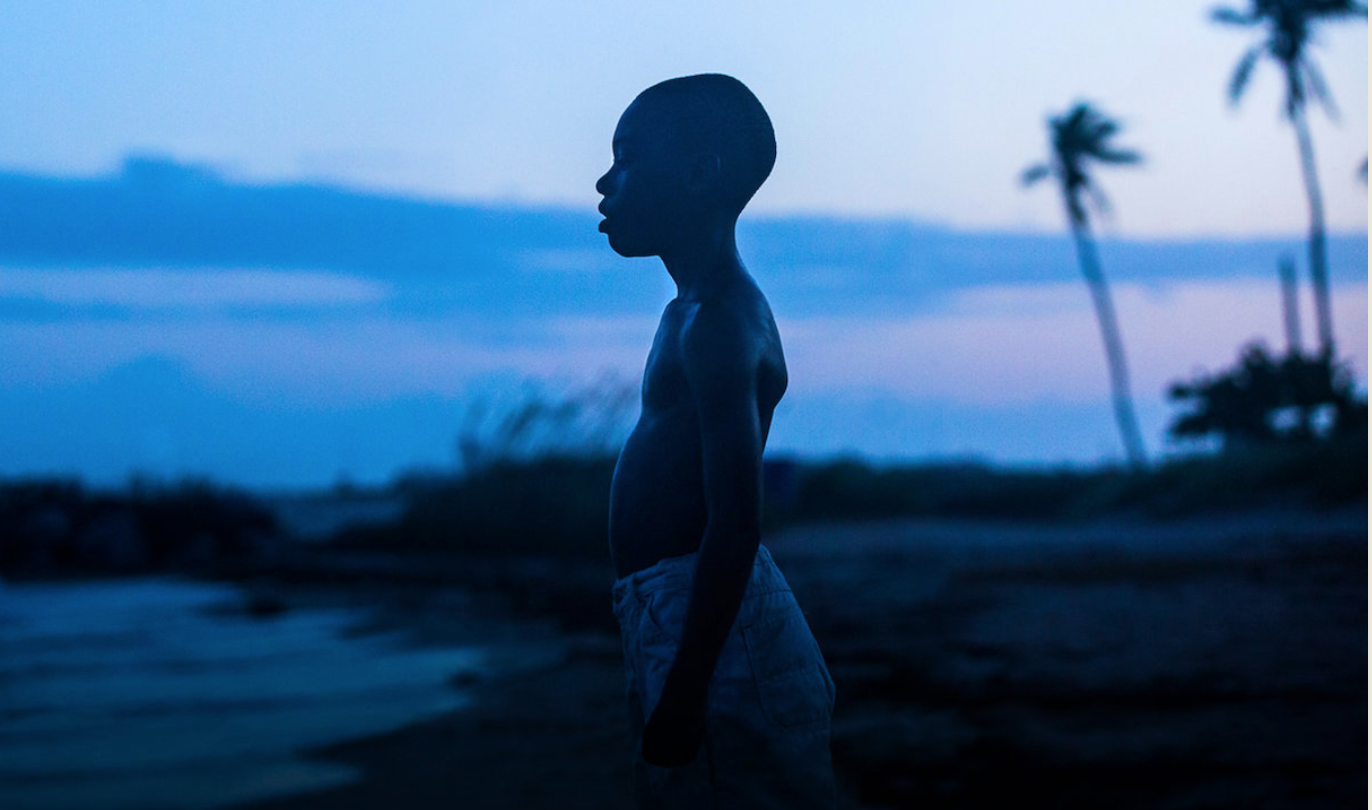
Then again should every older-white-guy Academy member who voted to give the Best Picture Oscar to Moonlight be congratulated for showing an absence of these biases and blind spots? Well, not necessarily because in that case a lot of whiteys wanted to counter-balance the #OscarsSoWhite thing, and figured a Moonlight win would partially get them off the hook.

But in a neutrally just and fair world nobody should vote for anything because of guilt or out of some kind of subconscious need to make political amends. They should vote for a Best Picture contender or nominee because it happens to be, by the yardstick of the Movie Godz, an excellent film. Period.

As in the case of Steve McQueen‘s 12 Years A Slave, which I instantly recognized as a world-class effort when I saw it in Telluride on 8.30.13. Or in the case of those who lazily or carelessly voted for Argo or the History Channel-ish Lincoln instead of the far more vital and envelope-pushing Zero Dark Thirty or Silver Linings Playbook.

King spoke truth to Twitter power when he said that “only quality” should matter — a statement King now says he “mistakenly thought was noncontroversial.” For his sins he was taken out to the Twitter woodshed and lashed with a strap of leather. He’s still carrying a few crimson welts, still bent over a bit.

With the memory of that punishment in his mind, King doubled-down today with another mea culpa — a Washington Post opinion piece titled “The Oscars Are Still Rigged In Favor of White People.”

Which they are. Changes have obviously been instituted (i.e., “the New Academy Kidz”) but the proportion of white vs. POC Academy members remains unfair and disproportionate, especially if you compare actual numbers and percentage charts in the matter of the Hollywood workforce. Or so I gather.

But as unfair and lopsided as things still are (no one’s disputing the statistics or denying that the playing field has to be further levelled), this shouldn’t enable or give license to Academy members to vote for a slightly-less-good film because it was made by the right people and/or the right reasons, or vote for a slightly-less-riveting performance because the right actor performed it. When the choices are put before you, you’re obliged to vote for the best.

I know it’s a terrible thing to say in the present context, but King was more accurate than not the first time.

Annoying Repost

Exactly as posted on 11.25.21 under the title “Moonlight Clarity“:

Sometimes in the science of Oscarology it takes a few years to understand the political reasons (for all Oscar triumphs are political) behind this or that winner snagging a trophy.

Take the Moonlight win, for example. Thanks to Spike Lee’s refreshing frankness, we can now safely assume that the deciding factor behind Barry Jenkins’ film beating La La Land was about Academy members being able to tell themselves that #OscarsSoWhite had been squarely faced and responsibly negated.

But in the days following the 2.26.17 Oscar telecast, many were saying “of course!of course Moonlight was obviously better than La La Land!…on top of which it was wrong for a white guy to love jazz.”

I didn’t feel that way, but the mob was on a roll.

Putting Moonlight To Bed,” posted on 3.4.17: “This is several days old and yesterday’s news, but a 2.28 Hollywood Reporter piece by Stephen Galloway that derided the echo chamber of Oscar punditry and the failure of the know-it-alls to foresee Moonlight‘s Best Picture win (“Why the Pundits Were Wrong With the La La Land Prediction“) was wrong in two respects.

“One, whoda thunk it? Even now I find it perplexing that Moonlight won. A finely rendered, movingly captured story of small-scale hurt and healing, it’s just not drillbitty or spellbinding enough. I wasn’t the least bit jarred, much less lifted out of my seat, when I first saw it at Telluride. Moonlight is simply a tale of emotional isolation, bruising and outreach and a world-shattering handjob on the beach…Jesus, calm down.

“As I was shuffling out of the Chuck Jones I kept saying to myself “That‘s a masterpiece?” (Peter Sellars, sitting in front of me, had insisted it was before the screening started.) If there was ever a Best Picture contender that screamed ‘affection and accolades but no Oscar cigar,’ it was Moonlight. And the Oscar pundits knew that. Everyone did.

“So I don’t know what happened — I really don’t get it.**

“I’ve already made my point about Moonlight in the Ozarks. It’s just a head-scratcher. And two, Galloway’s contention that only pipsqueaks with zero followings were predicting or calling for a Moonlight win is wrong.

“As I noted just after the Oscars, esteemed Toronto Star critic Pete Howell and Rotten TomatoesMatt Atchity were predicting a Moonlight win on the Gurus of Gold and Gold Derby charts. As I also noted, Awards Daily‘s Sasha Stone hopped aboard the Moonlight train at the very last millisecond, although she stuck to La La Land for her Gurus of Gold ballot. These are facts, and Galloway’s dismissing Howell and Atchity was an unfair oversight.”

** It wasn’t safe to say that Moonlight ‘s win was about Academy members covering their ass until Lee said this on 6.21.17. After that it was olly-olly-in-come-free.

Read more

David Jo Endures

Along with ex-girlfriend Sophie Black, who matured into a respected poet, I co-produced two Save The Whales benefit rock concerts in Wilton, Connecticut. Both were held on a 52-acre property owned by Sophie’s parents, David and Linda Cabot Black. The first happened over the July 4th weekend in ’76; the second (for which Sophie and I were interviewed for a 6.26.77 N.Y. Times piece) happened a year later.

And I was proud and gratified to book the David Johansen band for the ’77 show, as I’d been a fan of the New York Dolls; ditto “Not That Much” and “Funky But Chic.” A couple of months prior we’d chatted in some downtown Manhattan bar, and I liked his charm, aura, self-deprecating humor, etc. I’ve been a fan ever since.

This is one of several reasons I’m looking forward to Martin Scorsese and David Tedeschi‘s Personality Crisis: One Night Only, a Showtime doc about Johansen that will debut on Friday, 4.14.

Read more

Robotic Nemiroff vs. Classic Movie Godz…Zounds!!

Nemiroff: “This is what they should do going forward….just keep it simple and keep it about cinema.”

Cinema? With the exception of All Quiet on the Western Front and The Whale, the ’23 Oscars were almost entirely about identity politics and voters wanting to blend in with the EEAAO wave because it felt safer to do that. Because they didn’t want to labelled (or even self-labelled) as fuddy-duds.

At the 43:00 mark, Sneider says that EEAAO is no classic like Network while Nemiroff (easily one of the scariest pundits counters that it is one of the greatest films of all time.

Sneider (43:07): “I think there will be a little EEAAO backlash in the coming months, simply because it won so many awards. If it had won three awards like CODA or Green Book…but it won seven above-the-line Oscars. I think that’s too many. Is it on the level of a Network? No — this isn’t an all-time, classic timeless movie…c’mon.”

Nemiroff: “Yes, it is!”

Sneider: “No, it’s not.”

Nemiroff: “Yes, it is! Without a doubt! It’s probably gonna [be taught] in film school classes in the future. What is not to love about this film?”

2023 Best Picture Locks & Likelies

Likeliest, Well-Fortified, Semi-Inevitable (7)

Chris Nolan‘s Oppenheimer (Universal, 7.21)
Alexander Payne‘s The Holdovers (Focus Features, 11.10.23)
Greta Gerwig‘s Barbie (Warner Bros., 7.21)
Ridley Scott‘s Napoleon (Apple)
Martin Scorsese‘s Killers of the Flower Moon (Apple / Paramount)
Bradley Cooper‘s Maestro (Netflix)
Michael Mann‘s Ferrari (STX)

Semi-Likely (4)

Celine Song‘s Past Lives (A24)
Ben Affleck‘s Air (Amazon, 4.5)
Matt Johnson‘s BlackBerry (IFC Films, 5.12)
Emerald Fennell‘s Saltburn (Amazon/UA releasing)

And The Rest…(10)

David Fincher‘s The Killer (Netflix)
Wes Anderson‘s The Wonderful Story of Henry Sugar (Netflix)
Sofia Coppola‘s Priscilla (A24)
Blitz Bazawule‘s The Color Purple (Warner Bros., 12.20)
Todd HaynesMay December
Yorgos LanthimosPoor Things (Searchlight)
Ari Aster‘s Beau Is Afraid(A24, 4.21)
Sean Durkin‘s The Iron Claw (A24)
Yorgos LanthimosAnd (Searchlight — anthology film)
Jonathan Glazer‘s The Zone of Interest.

Conclusion: It’s not my natural inclination to define or classify films according to the cultural heritage or ethnicity of their creators — in my eyes good cinema is good cinema. But it does seem to appear that 2023 will gradually become known as The Year of the Resurgence of Older White Male Filmmakers. We all understand that older white males are bad (i.e., inheritors of an evil legacy) and deserving of cultural belittling and dismissal and perhaps even punishment, but Club Diverse can’t win each and every year.

Martin Scorsese, 80
Chris Nolan, 52
Alexander Payne, 62
Ridley Scott, 85
Ben Affleck, 51
Matt Johnson, 36
Bradley Cooper, 49
Michael Mann, 80

To ethnically round out the Best Picture roster, Blitz Bazawule‘s The Color Purple will almost certainly have to be factored in.

Celine Song‘s Past Lives, which premiered at Sundance ’23, could emerge as a strong contender. I don’t see Greta Gerwig‘s Barbie as an awards-level effort but let’s wait and see.

Keep in mind that anyone can guess or strategize their head off but no one knows what’s coming. Not really. The deeply loathed Everything Everywhere All At Once was NOWHERE on anybody’s predictions list this time last year.

Kevin Costner‘s Horizon trilogy won’t start shooting until April (i.e., next month ) so it seems unlikely to become a ’23 release.

I Went There Again

Could Spike Jonze’s Adaptation (’02), which stars a balding, overweight, Uriah Heep-like Nicolas Cage as a bizarrely fictionalized version of screenwriter Charlie Kaufman, be made today? I saw it again a few nights ago (4K Bluray), and yeah, it’s possible it could be made today, sure. But some characters would have to be un-whited as the film, shockingly and almost incomprehensibly, doesn’t have a single African American or Asian American face….eeeeeeee!!!! And Ron Livingston‘s Marty Bowen, Kaufman’s agent, wouldn’t be allowed to say that he fucked this or that girl in the ass.

22 years ago I reviewed Kaufman’s Adaptation script and called it ‘one of the most inventive and out-there scripts I’ve ever read.’ The main character, I explained, “is Kaufman himself, and that’s a big whoa right there. A screenplay about a screenwriter trying to write the screenplay? But it’s much more than that.

The ‘subject’ of Adaptation is an actual, one-time orchid-worshipper named John LaRoche (Chris Cooper), whose attempted theft of rare flora from a Florida state preserve eight years ago resulted in his being prosecuted by the state and, from that, a New Yorker profile of LaRoche and then a book called “The Orchid Thief” (Ballantine), by staff writer Susan Orlean (so named in the film and played by Meryl Streep).

Adaptation is primarily about Kaufman’s struggle to adapt “The Orchid Thief” into script form, but it’s also about LaRoche and Orlean and the importance of nurturing a devotion in life to something perfect and beautiful. It’s about the striving of mortals to merge themselves with the sublime — Kaufman in his way, LaRoche and Orlean in theirs. Like the screenplay, the movie is half about Kaufman’s situation and half about LaRoche and Orlean’s. But it begins and ends inside Kaufman’s head.

Read more

Crime Spree: Kael and Beatty as Bonnie and Clyde

From Lili Anolik‘s “Warren Beatty, Pauline Kael, and an Epic Hollywood Mistake,” posted on 2.7.17 and really well written, my God:

“Didn’t that spate of Hollywood movies from 1967 to 1979, from Bonnie and Clyde to, say, Apocalypse Now, feel like a crime spree? As if the American New Wavers were pulling a fast one?

“The spree couldn’t last, of course. Sooner or later lawmen, i.e., studio men, would catch up. Or, worse, audiences wouldn’t. Times had changed.

“Kael understood this. In 1978’s ‘Fear of Movies,’ she wrote: ‘Now that the war has ended …[people have] lost the hope that things are going to be better…So they go to the movies to be lulled.’ But I’m not quite sure Beatty, who was considerably younger and had been knocked around far less, did. The chaos of the 60s and early-to-mid-70s — Vietnam, Watergate — made for an opening, though it was closing quick. Kael prophesied the end of Pauline and Warren when she wrote of the ‘new cultural Puritanism,’ as surely as Bonnie prophesied the end of Bonnie and Clyde when she wrote of the ‘sub-gun’s rat-a-tat-tat.’ (Did Kael foresee, too, the medium’s end? That the VHS revolution was just around the corner? That the 70s would be the last decade in which movies were truly a tribal experience?)

“Maybe Kael went to Hollywood, at least in part, to thwart this prophecy. Beatty had eyes for Kael, and Kael for Beatty, but they weren’t able to relate in a direct way. They’d need a go-between, a C. W. Moss.

James Toback, who’d just made Fingers, a genuinely alarming movie about a concert pianist-cum-debt collector, would do nicely in that role since he excited them both. Writer George Malko recalls seeing Fingers with Kael: ‘She lifted up out of her seat, and even as she was settling back down, she was breathing fast.’ Toback, on screening Fingers for Beatty: ‘Warren stood after it was over and walked around in circles for a good two or three minutes.’ So Toback, quite literally, got Kael panting and Beatty erect.

“And Kael and Beatty used Toback to work each other up. Kael had socked it to Beatty for Heaven Can Wait, accused him of going commercial, selling out. It wasn’t only a review, it was a taunt. And a dare. Beatty double-dog-dared her back with an offer to produce. Kael and Beatty had been leading anti-Establishment figures for a decade-plus, which meant that they’d become the Establishment.

“By getting behind Toback, an artist, yes, but also a pickup artist, the protégé of composer Aaron Copland and orgy buddy of football player Jim Brown, they would prove that the spark hadn’t gone out of their rebel spirits, that they were still subversive, undaunted, young.

“Viewed from that angle, the crazy scheme starts to seem not so crazy after all, or possibly just crazy enough to work. Of course it was neither. It was the look Bonnie and Clyde exchanged — passionate, agonized, doomed — before the hail of bullets.”

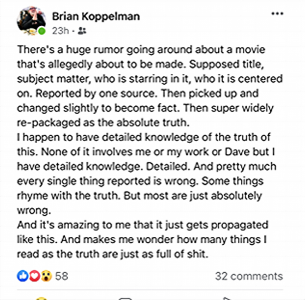
Knowledgable Hotshot Dismissing QT Kael Rumor

Brian Kopppelman has been around and is seemingly well positioned as far as sussing out the straight dope is concerned. Wiki page: “Co-creator, showrunner and exec producer of Showtime’s Billions and Super Pumped: The Battle for Uber…co-writer of Ocean’s Thirteen and Rounders, producer (The Illusionist, The Lucky Ones), director (Solitary Man, the ESPN documentary This Is What They Want).

The ball is in Borys Kit’s court.

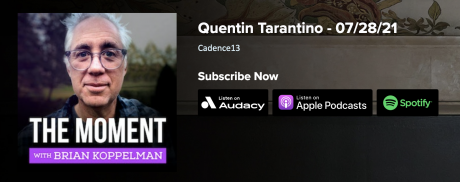
Here a podcast that Koppelman did with Tarantino, posted on 7.18.21:

Happy Larry’s Bliss-Out

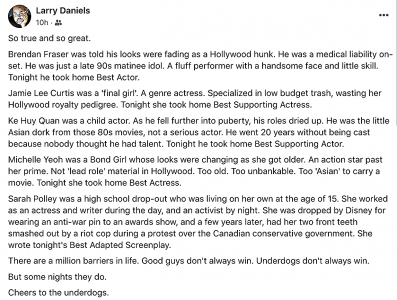
HE to Happy Larry: Your observations are “inspiring” in a certain light. Life will sometimes surprise. Unsung or less-than-stellar talents sometimes luck into unexpected rewards. And as truly grotesque as The Whale was and is in certain respects, Brendan Fraser‘s fat-suit performance was as respectable and even touching as this sort of thing gets. (Especially the white-light death scene.)

But Everything Everywhere All At Once will forever be regarded as an irksome (do I hear infuriating?) curio…a film that even the director’s own mother didn’t get and couldn’t understand the adulation for.

Did you honestly come out of that film full of “holy moley eureka” enthusiasm for Ke Huy Quan‘s performance? He was more or less fine (said his lines with urgency and proficiency, hit his marks) but he won because of (a) the comeback narrative + (b) the Asian identity pride thing + (c) because he brought big emotion to his Golden Globes acceptance speech.

Jamie Lee Curtis‘s IRS bitch performance was broad and coarse and rather absurd, like a character out of The Wizard of Oz….I felt intensely irritated by her acting (and her clownish makeup) start to finish.

Michelle Yeoh‘s athleticism and commitment to the dismayed, stressed-out character she played was also fine but again, her Oscar was about (a) Asian representation and (b) breaking the glass ceiling =plus (c) Cate Blanchett already has two Oscars.

Do you honestly think that EEAAO will be watched and re-watched by future film enthusiasts? That it will be cited by future film historians as a ground-breaker or seminal influencer? There’s a community of film Catholics who are sadly burdened with a sense of taste, and among this fraternity EEAAO is not just disliked but deeply loathed. In my humble judgment it is one of the absolute worst films to ever take the Best Picture Oscar….hands down, no question. The Movie Godz have taken note and are actually fuming as we speak.