Strange Architecture

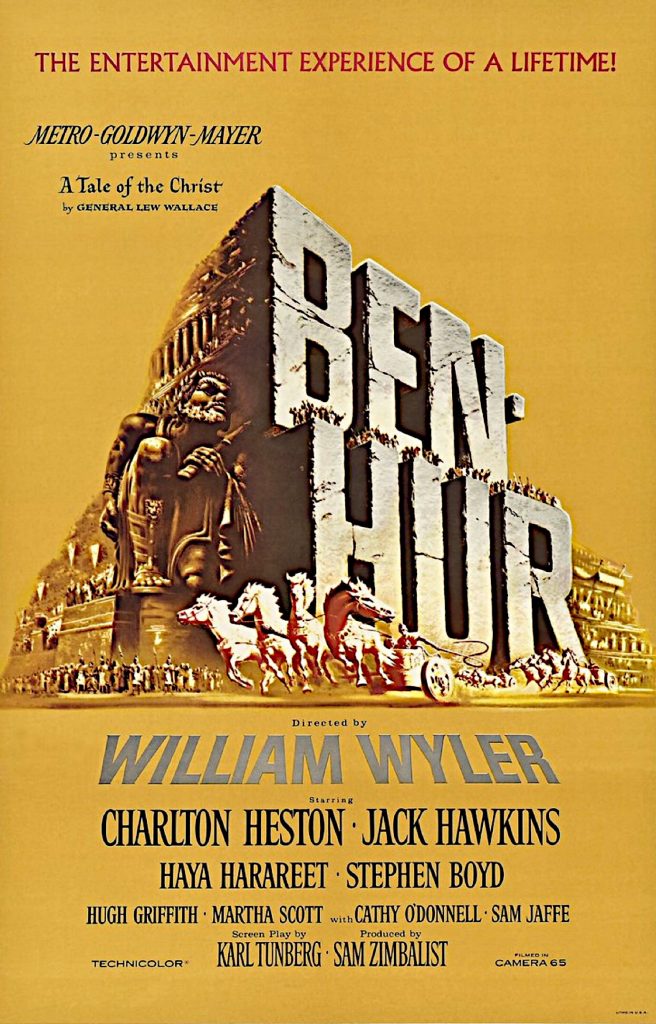
I know the ruins of Rome’s ancient Circus Maximus quite well. This is where all the chariot races happened, of course, and where, according to the script of Ben-Hur, Charlton Heston rode to victory several times while he was still bunking at Jack Hawkins’ palazzo, prior to returning to Judea.

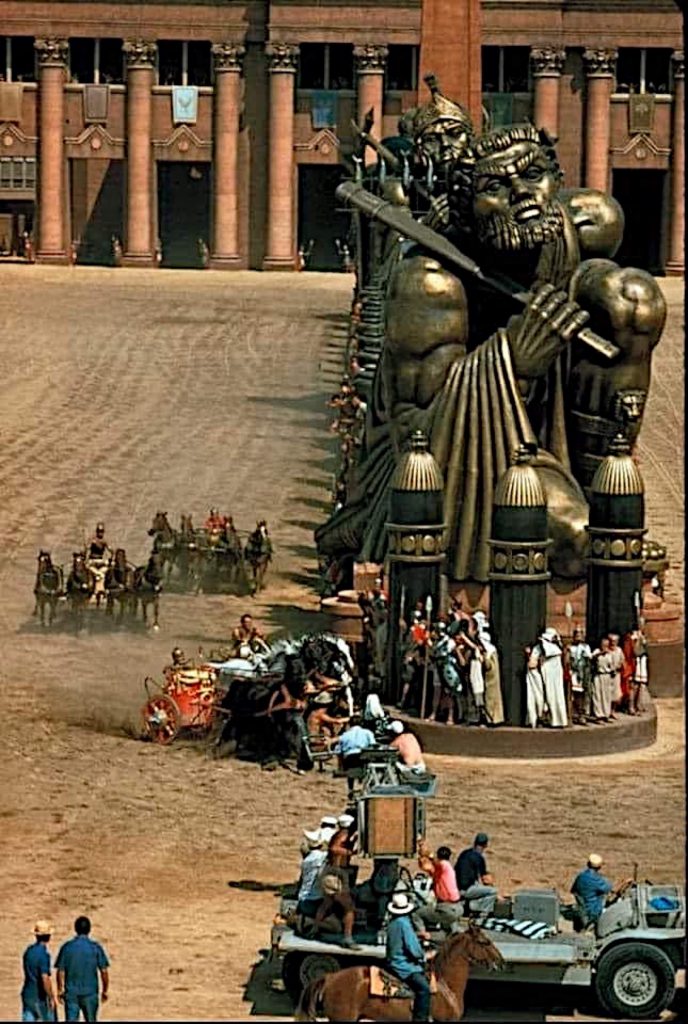
The great Circus Maximus differed from Jerusalem’s chariot-race stadium (where Heston competed and won with Stephen Boyd being dragged and stomped to death) in one highly significant way. The large oval Jerusalem racetrack had a huge centerpiece structure, ornamented by huge bronze sculptures of four kneeling warriors.

The Roman stadium, by all accounts, had no centerpiece or middle island, or at least none that obstructed views of the races.

And that’s the logic problem with the Jerusalem stadium, to wit: most of the spectators, or those sitting on either side of the massive center structure, can’t see the other side of the racetrack. And that includes Frank Thring’s Pontius Pilate and other elite Roman royals who attended the Judah Ben-Hur-vs.-Messala race on that fateful day. They were only able to see one half of the damn track, which of course makes no sense from any perspective, including that of the stadium architect.

What was the BenHur production designer thinking? I’ll tell you what he was thinking. He was thinking two things: (1) The huuge center island with the four huge kneeling guys looks cool, and (2) to hell with architectural logic.

Teenaged Gunslinger

Ricky Nelson‘s performance in Rio Bravo isn’t half bad. He more or less holds his own. I just have problems with that smooth, casually unbothered, almost feminine sounding voice of his.

Nelson sounds like a Hollywood kid who’s game to play the part of a semi-fabled gunslinger and cowhand (a variation upon John Ireland’s Cherry Valance), but unable to do much more than behave cool and slinky as he goes through the motions. He’s playing himself in a hall-of-mirrors situation. An 18 year-old kid with pretty eyes, a guy who’s been playing himself on a TV series since he was eight or nine (and is therefore highly experienced after a fashion) getting to play himself in old-west garb. No change or switch-off…same basic deal.

So Nelson makes it through the film unscathed and certainly doesn’t get in the way, but there’s no forgetting that he’s essentially bringing his usual Adventures of Ozzie and Harriet game with a little buckaroo sauce, and that he’s no Clift or Dean or Brando.

You know what really gets me when I watch him play “Colorado”? Nelson’s tragic death at age 45.

What Films, If Any, Have Accomplished This?

There’s a passage in Tom Wolfe’s “The Me Decade and Third Great Awakening“, which I happened to re-read a couple of days ago, that put the hook in. It says that Ingmar Bergman‘s Scenes From A Marriage (’73 — recently remade for HBO with Oscar Isaac and Jessica Chastain) “is one of those rare works of art, like Ernest Hemingway’s The Sun Also Rises, that not only succeed in capturing a certain mental atmosphere in fictional form…but also turn around and help radiate it throughout real life.”

Hundreds of fictional films have captured a certain social atmosphere or way or looking at life, of course. It could be argued, in fact, that this is what defines a great film — the capturing of some aspect of real actual life that millions recognize as being genuine in some poetic or distilled, boiled-down way. But how many times has the public reception to this kind of film turned around and regenerated and become a current in and of itself?

My first thought when this question came to mind was William Wyler‘s The Best Years of Our Lives (’46). Or John Badham‘s Saturday Night Fever, although I’m not sure how many people really wanted to live the life of John Travolta‘s Tony Manero. Or Robert Redford‘s Ordinary People. I’m actually not sure which films meet this standard — still kicking this one around.

The Wolfe passage in question:

A key drama of our own day is Ingmar Bergman’s Scenes From a Marriage. In it we see a husband and wife who have good jobs and a well-furnished home but who are unable to “communicate”—to cite one of the signature words of the Me Decade. Then they begin to communicate, and there upon their marriage breaks up and they start divorce proceedings. For the rest of the picture they communicate endlessly, with great candor, but the “relationship” — another signature word — remains doomed. Ironically, the lesson that people seem to draw from this movie has to do with “the need to communicate.”

Scenes From a Marriage is one of those rare works of art, like The Sun Also Rises, that not only succeed in capturing a certain mental atmosphere in fictional form … but also turn around and help radiate it throughout real life. I personally know of two instances in which couples, after years of marriage, went to see Scenes From a Marriage and came home convinced of the “need to communicate.” The discussions began with one of the two saying. Let’s try to be completely candid for once. You tell me exactly what you don’t like about me, and I’ll do the same for you. At this, the starting point, the whole notion is exciting. We’re going to talk about Me! (And I can take it.) I’m going to find out what he (or she) really thinks about me! (Of course, I have my faults, but they’re minor, or else exciting.)

She says. “Go ahead. What don’t you like about me?”

They’re both under the Bergman spell. Nevertheless, a certain sixth sense tells him that they’re on dangerous ground. So he decides to pick something that doesn’t seem too terrible.

“Well,” he says, “one thing that bothers me is that when we meet people for the first time, you never know what to say. Or else you get nervous and start babbling away, and it’s all so banal, it makes me look bad.”

Read more

Honest, Almost Soothing Johansen Doc

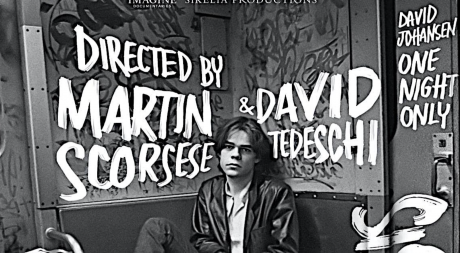
Last night I watched Martin Scorsese and David Tedeschi‘s Personality Crisis: One Night Only, and I came out of it knowing and caring a bit…okay, a lot more about David Johansen than I had before I sat down.

It’s basically standard documentary portraiture, of course, but primarily a relaxed, low-key lounge concert film, shot in the Carlyle bar in January 2020.

The doc is augmented with recent interview footage (apparently shot in Johansen’s home by his stepdaughter Leah Hennessey, daughter of wife Leah Hennessey) plus some performance footage from the good old days (New York Dolls, ’70s solo career, Buster Poindexter in the ’80s and ’90s).

And the thing that stuck in my head, frankly, is the made-plain fact that Johansen is a free-floating existentialist dancer-singer-performer who’s more or less cool with the fact that he’s not stinking rich. He and his family are living with a certain amount of style, comfort and swagger, but the difference between David Jo’s lifestyle and that of, let’s say, Mick Jagger is apparently considerable or at least noteworthy. (There’s a moment during the Carlyle show when he repeats a famous line from Ira Levin‘s Deathtrap — “Nothing recedes like success”.) I also loved it when Johansen tells his stepdaughter about never having had a grand master plan for his life, and that he’s always considered his journey (Johansen is 73) in five-year increments.

Posted on 3.16.23: Along with ex-girlfriend Sophie Black, who matured into a respected poet, I co-produced two Save The Whales benefit rock concerts in Wilton, Connecticut. Both were held on a 52-acre property owned by Sophie’s parents, David and Linda Cabot Black. The first happened over the July 4th weekend in ’76; the second (for which Sophie and I were interviewed for a 6.26.77 N.Y. Times piece) happened a year later.

And I was proud and gratified to book the David Johansen band for the ’77 show, as I’d been a fan of the New York Dolls; ditto “Not That Much” and “Funky But Chic.”

Back to right now: A couple of months prior to the ’76 concert Johansen and I chatted in some downtown Manhattan bar, and I really liked his charm, aura, self-deprecating humor, etc. Plus I learned that night that Johansen loves (or loved) to play-act and pretend to be someone else. DJ made bank on play-acting when Buster Poindexter came along in the ’80s, but when I spoke to him that night he was speaking with a working-class British accent. Pretending to be, in a manner of speaking, some Jagger-like rocker from East London or something. It was well known at the time that Johansen was a lifelong New Yorker (raised in Staten Island), and so I was flat-out thrilled and fascinated that he was performing for me — an audience of one. Johansen was dishy in a Jagger-ish way back then, and the accent fit right in. I’ll never forget that moment as long as I live.

The Scorsese-Tedeschi doc is worth the price and the time.

Read more

I Don’t Believe That 1080p or 4K Cinema

…would be significantly bumped or noticably uprezzed if I were to miraculously buy a Sony Bravia XR Z9J LED 8K UHD 85-incher, which is what I would do if money was no object. It would make me feel “better”, yes, and would make a “difference,” yes, but not in a way that would wondrously enhance the image quality of the films (21st and 20th Century (1920-2000) films that I watch on a daily basis.

The Sony OLED 4K 65-incher that I now watch is pretty damn good if I do say so myself. Big, fat, dazzling 8K TVs have been out and about for roughly four years (I saw my first one at Stockholm Arlanda airport in May 2019), and even if I didn’t give a damn about money I’m not sure I would buy one of these suckers. I’m not a sports-watcher and I hate CG-driven fantasy crap. I’m just not persuaded that David Fincher‘s Zodiac or Ingmar Bergman‘s The Silence (’63) would look significantly better on an 8K.

Read more