“Mermaid” Blues

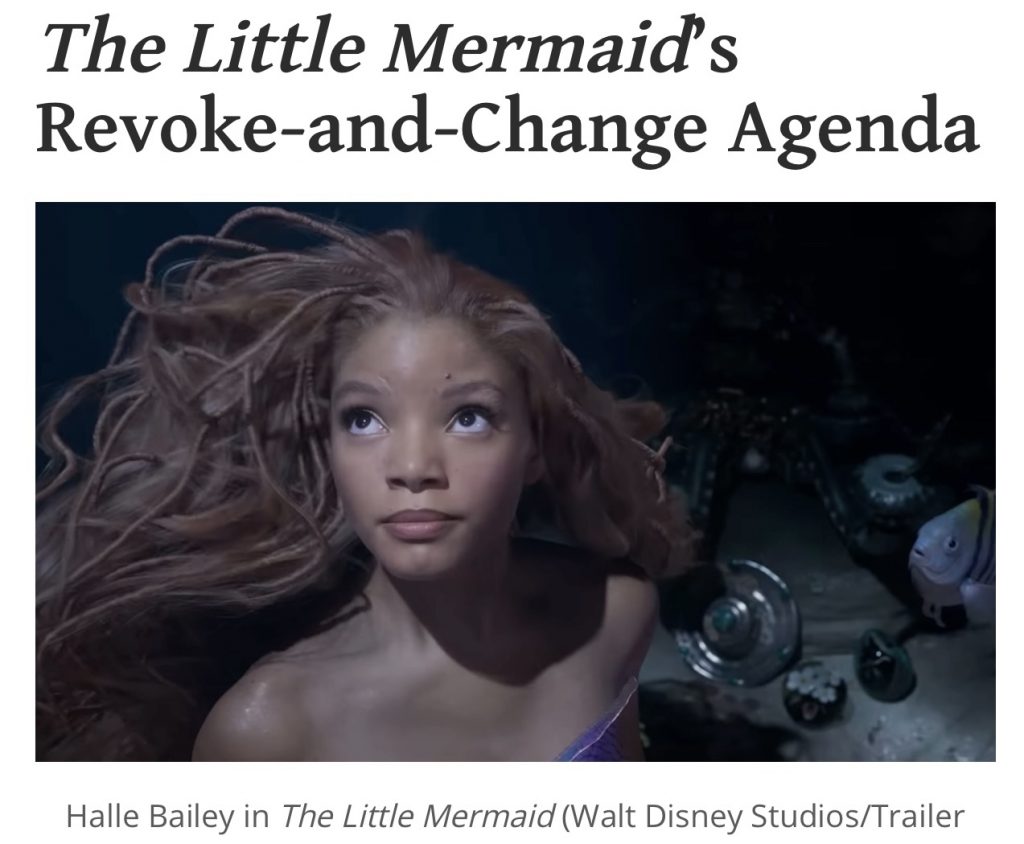
If and when I get around to seeing The Little Mermaid (no way would I forsake my precious Paris time by seeing it here), I’ll probably feel underwhelmed. I’ve hated nearly every Rob Marshall film ever made (I found Nine half-tolerable), and he’s not going to change and neither am I, and this is just a liveaction rehash anyway.

I’m a genuine fan of the 1989 animated original (83 minutes!), and so sight unseen I despise Marshall’s version, which tells roughly the same story, for adding 52 minutes of bloat.

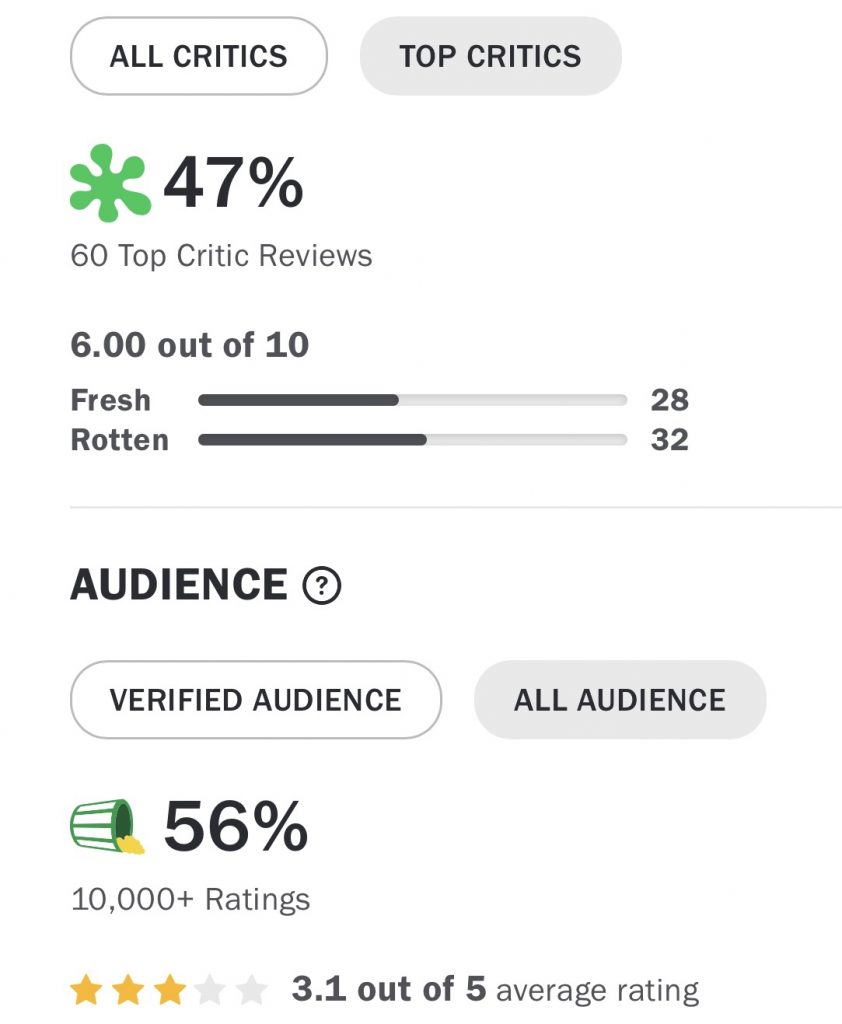
Are there some hinterland trollers out there who are saying ixnay because of Halle Bailey’s casting as Ariel (i.e., standard Disney-fied diversity)? Yeah, I guess, presumably. But who believes that the shitty Rotten Tomatoes ratings (top critics at 47% and ticket-buyers at 56% if you count all of them) are driven by this?

The obviously gifted Bailey seems fairly cool and appealing, but I see no genetic evidence of her being the daughter of Javier Bardem’s King Triton, a pale-faced Spaniard by way of the deep blue sea. Why didn’t they make this aspect work? They easily could have. Not a huge deal but a deal.

Read more

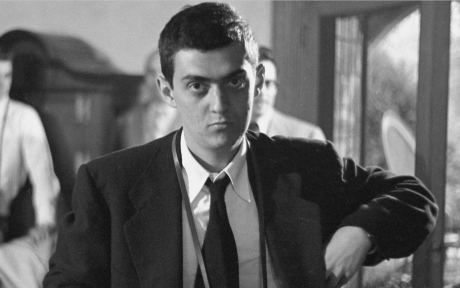
Kubrick’s Affinity for Lenny Bruce-Style Urban Living

From Michael Herr‘s “Evolution of the Term ‘Hipster’, Pt. III” (excerpt posted eight years ago by Brecht Anderson):

“He haunted the Museum of Modern Art and the few foreign-film revival houses, the very underground Cinema 16 and the triple-feature houses along 42nd Street…he was already careless, even reckless in his appearance, mixing his plaids in wild shirt, jacket, and necktie combinations never seen on the street before, disreputable trousers, way-out accidental hairdos… (Even…in the late 50s, when he was working in Hollywood, the insouciance of his attire was remarked upon by many producers and actors, who thought that he dressed like a beatnik.) He was jazz-mad and went to the clubs, and a Yankees fan so he went to the ball games, all of this in New York in the late ’40s and early ’50s — a smart, spacey, wide-awake kid like that, it’s no wonder he was such a hipster — a ’40s-bred, ’50s-minted, tough-minded, existential, highly evolved classic hipster. His view and his temperament were much closer to Lenny Bruce‘s than to any other director’s, and this was not merely an aspect of his. He had lots of modes and aspects, but Stanley was a hipster all the time.”

Parisian Calm

It’s Sunday evening (6:15 pm), the sun won’t slip into dusk for another three hours (during the warm months night doesn’t really begin in Paris until 10 pm), and for the first time in nearly two weeks I’m finally feeling relaxed and settled down. Breathing easy.

A couple of hours ago I took my first late-afternoon nap since…I don’t know, May 10th or something. It’s amazing what a decent snooze can do for your disposition. The whole city feels casual and chill. Everyone is sharing the same dreamy mood. Blue sky, gentle sunshine, not too hot.

After nearly two weeks of mostly Cannes-generated stress, deadline pressures, way too little sleep (i.e., the snore bear), waiting in line after line for the next Salle Debussy film and regarding the usual suspects askance, feelings of serenity are finally within. Not for long but at least tonight feels right.

Alas, it all starts again late tomorrow afternoon with my 7:15 pm flight to Newark. God protect me from being seated next to a Jabba.

Real Incomes vs. Movie Fantasies

In Todd Haynes May December, which I saw in Cannes a few days ago, Julianne Moore is Gracie Atherton, a 60ish native of Savannah (actually Tybee Island, a bucolic waterfront community 25 minutes to the east). She services the affluent locals with a dessert-baking business, and is living fairly flush or at least comfortably.

Gracie owns (rents?) an elegant multi-bedroom home, and apparently three nearly grown kids (a lad and — I think — two lassies), and they’re all in college or about to attend same. Not to mention their 36-year-old father, Joe Yoo (Charles Melton), whom Gracie married after seducing him at age 13 when they were both working in a pet store.

Like the real-life (and now deceased) Mary Kay Letourneau, Gracie’s misdeed led to a prison term for statutory rape, but that was 23 years ago and life has since settled down. Joe presumably handles the delivery of the cakes, pies and pastries.

As I explained on 5.21, May December is about a famous actress, Elizabeth Berry (Natalie Portman), visiting the Tybee homestead in order to research a forthcoming Gracie portrayal in a film about her once-turbulent life.

I was undergoing some turbulence of my own due to a nagging question: how is Gracie affording all this (pricey abode, college tuition)?

Maybe there was a line about inherited wealth that I missed, but if Gracie comes from a rich family why was she working in a pet store in her 30s?

And how much, really, could she be earning from making fancy birthday cakes and whatnot? Gracie is presumably catering to elites but even if she’s charging double Savannah pastry chefs earn less than $20 per hour, according to Google.

Did she raise money for the house through crowd-funding? Did she get into Bitcoin? Did she write a successful book about her thing with Joe? These questions may have been answered in the film, and okay, it’s quite possible I might have missed some info due to zoning out from boredom.

I only know that (a) wealthy filmmakers tend to write or otherwise create characters whose lives tend to reflect their own comfort levels, and (b) too much financial ease or abundance is alienating from a Joe Popcorn perspective.

Previously noted: Letourneau and Fualaau insisted from the get-go that their relationship was consensual; ditto Gracie and Joe in May December. After serving her prison term Letourneau married Fualaau and, like their screen counterparts, had kids with him.

Congrats to Cannes Winners

HE salutes and respects the Cannes jury’s selection of winners. It was a strong festival and I’m glad to have been part of it on a certain level.

I’m pleased that The Pot au Feu’s Tran Anh Hung won the Best Director trophy, although a grander tribute should have come his way.

My brilliant failure to see Justine Triet’s Anatomy of a Fall, the Palme d’Or winner, as well as Ali Kaurismaki’s Fallen Leaves, which took the Jury Prize, embarassingly speaks for itself, but then I’ve managed many such flubs for years.

My respectful but less than fully enthused reaction to Jonathan Glazer’s The Zone of Interest, which won the Grand Prix, also contributes to a vague sense of lethargy that I’m currently feeling. Ditto my complete lack of enthusiasm for Hirokazu Koreeda’s Monster.

Let’s just let it go. It’s over. Congrats to all the winners, etc. No gain in raining on anyone’s parade.

Read more

Repeating QT’s “Patriot Games” Complaint

From Kyle Buchanan’s 5.25 report about Thursday’s “Rendezvous with Quentin Tarantino”: “Asked if he had ever watched a film where the violence wasn’t justified, Tarantino at first appeared so stumped that the audience chuckled.

“Eventually, he cited Patriot Games, the 1992 Harrison Ford thriller. Tarantino had found the motivations of the villain [i.e., Sean Bean‘s “Sean Miller”] so relatable, he said, that he rebelled when the character took a late swerve into psychopathic violence.

“‘Just the fact that the villain was this much understandable, that was too much as far as the filmmakers were concerned,” QT said. “So they had to make him crazy. That’s what I got morally offended by.'”

Tarantino’s Patriot Games riff is actually 29 years old. He first articulated his feelings in a chat he had with Dennis Hopper on 3.17.94.

“I keep using the movie Patriot Games as an example of uptight American action movies: It’s supposed to be a revenge movie, all right, and as far as I’m concerned, if you’re going to make a revenge movie, you’ve got to let the hero get revenge. There’s a purity in that. You can moralize after the fact all you want, but people paid seven dollars to see it. So you set it up and the lead guy gets screwed over. And then, you want to see him kill the bad guys with his bare hands, if possible. They’ve got to pay for their sins.

“Now, if you want to like deal with morality after that, that’s fine, but you’ve got to give me what I paid for. If you’re going to invite me to a dance, you’ve gotta let me dance.

“But the thing that is very unique, I mean, that is very indicative of American films, in Patriot Games, is the fact that the bad guy actually had a legitimate reason to want revenge against Harrison Ford, [who had] caused the death of his brother. So he actually had a legitimate reason to create a vendetta against him. But the studio was so scared that we would even identify with the bad guy that much to the point of understanding his actions that it turned him into a psychopath. I never thought that he was a psychopath, and it took legitimacy away from what he was doing. Then he bothers Harrison Ford so much that now Harrison Ford wants revenge. So you’ve got these two guys who both want revenge, which is an interesting place to be.

“But then they get into this stupid fight on this boat, and they do the thing that my friends and I despised the most: Harrison Ford hits the guy and he falls on an anchor and it kills him. And it’s like you can hear a committee thinking about this and saying, ‘Well, he killed him with his own hands, but he didn’t really mean to kill him, you know, so he can go back to his family, and his daughter, and his wife and still be an okay guy. He caused the death but it was kind of accidental.”

“And as far as I’m concerned, the minute you kill your bad guy by having him fall on something, you should go to movie jail… all right? You’ve broken the law of good cinema. So I think that that is a pretty good analogy for where some of these new, relentlessly violent movies are coming from.”

Possible Remedy for Dargis’s “Black Flies” Disdain?

In a 5.25 assessment of the Cannes Film Festival (“At a Particularly Strong Cannes Film Festival, Women’s Desires Pull Focus“), N.Y. Times critic and gender celebrationist Manohla Dargis totally dismisses Jean-Stéphane Sauvaire’s Black Flies, calling it “ridiculous.”

Black Flies, which I approved of in a 5.19 review, is based upon Shannon Burke‘s same-titled 2008 book, an account of his own rough-and-tumble experience as a NY Fire Department paramedic.

So this Tye Sheridan-Sean Penn film is what it is, but in Dargis’s view it isn’t underwhelming or overly generic or bludgeoning. No, it’s worthy of ridicule!

HE to Dargis: Does Martin Scorsese‘s Bringing Out The Dead also qualify in this regard?

In the same article Dargis swoons over Todd HaynesMay December, which I found strained, clumsy and, at times, borderline infuriating.

One of May December‘s forehead-slappers is a scene in which Julianne Moore‘s Gracie Atherton, a somewhat neurotic and brittle 60something who runs a dessert-cooking business out of her Savannah home, suffers a near-hysterical meltdown because a wealthy client has cancelled a birthday cake order.

Right away you’re asking yourself “if Gracie shrieks and wails over a cancelled cake order, how would she react if, God forbid, a pet was killed or if something horrible happened to one of her children?”

Concepts of proportion and restraint don’t seem to exist in Haynes’ creative realm.

Then it hit me — a Black Flies reshoot that, once integrated, might persuade Dargis to not call it “ridiculous.”

HE to Dargis: What if the Black Flies producers add Julianne Moore to the film and give her a glorified cameo? Have Sean Penn and Tye Sheridan visit her spacious Cobble Hill apartment, having heard from a concerned neighbor that she’s shrieking and wailing and possibly in major distress. They arrive only to realize that Moore is experiencing an emotional breakdown due to a client having cancelled a birthday cake order. The client has promised to pay for the cake but Moore is nonetheless heartbroken and bawling her eyes out.

Whaddaya think, Manohla? Would this scene, if added, help to rescue Black Flies?