Treat Williams Is Gone

Poor Treat Willams was killed earlier today in Dorset, Vermont. A motorcycle accident did him in, or more precisely a careless driver. He was 71.

Born and raised in Rowayton, Connecticut, Williams worked steadily as an actor and sometime director from the mid ’70s onward — 75 films in all.

His biggest, most acclaimed performance was as Det. Danny Ciello in Sidney Lumet‘s Prince of the City (’81). Alas, it didn’t launch him. Williams’ second biggest role was George Berger in Milos Forman‘s Hair (’79), and his third biggest was Xander Drax in Paramount’s The Phantom (’96).

Other noteworthy Williams performances happened in 1941 (’79), Once Upon A Time In America (’84), Dead Heat (’88), Things to Do in Denver When You’re Dead (’95) and Deep Rising (’98).

What was Everwood again?

Drunken Journalist Sullies Reputation“, posted on 3.30.20:

I was sharing a boozy thought with Treat Williams around 1 am. It was the fall of ’82 or thereabouts, and we were sitting at a table of rowdy actors at Cafe Central, which was the hip bar at the time. John Heard and Cher were also at the table, and I heard the next day that they went home together.

The problem was that I’d had one or two too many and was slurring my words. Not making much sense. “What?” Williams asked, a bit irritated. I blurted it out again, whatever my Jack Daniels-soaked brain had managed to formulate and discharge. “I don’t getcha,” he said, and that was it.

Detective Stern: What did you say your name was?
Daniel Ciello: Ciello.
Detective Stern: Are you the Detective Ciello?
Daniel Ciello: I’m Detective Ciello.
Detective Stern: I don’t think I have anything to learn from you.

I regard Prince of the City more affectionately than all the other sublime New York Sidney Lumet films (including Dog Day Afternoon and Find Me Guilty) because it titanically reeks of coarse and odorous five-borough atmosphere in each and every frame. On top of which it may be the most deeply conflicted “moral drama” ever made — it doesn’t finally know what it’s trying to say exactly, but oh the damnable guilt! Guilt so mucky and tortured and ambiguous mixed with loyalty among corrupt and criminal friends, and lathered with lies and confessions and magnificent New York cop-and-mafioso patter….layer upon layer of brag, bullshit, innuendo and terrible truth.

It’s also a movie that taught me one of the most valuable life lessons I’ve ever taken to heart: choose your friends carefully but once you’ve done that, stick by them forever — never rat, never flip, and never trust a prosecutor.

Based on a true story and set in the ’70s, it’s about a narcotics cop (Williams’Ciello) who wants to unburden himself of guilt about his reckless dishonest ways, so he decides to go undercover for the feds to uncover police corruption. At first the danger of the job excites him and he gets away with it, but eventually the feds squeeze him into ratting out his partners and friends, and before you know it the guy’s freaking and then imploding, and then on the brink of suicide.

The blue-chip cast includes Jerry Orbach (his “Gus Levy” is flat-out the best performance he’s ever given), Lindsay Crouse, Bob Balaban, Richard Foronjy, Don Billett, Kenny Marino, Carmine Caridi, Tony Page, Norman Parker, Paul Roebling, James Tolkan, Steve Inwood, Ron Maccone, Ron Karabatsos, Tony DiBenedetto, Robert Christian, Cosmo Allegretti, Michael Beckett — every character and performance is absolutely and thoroughly “New York authentic.”

It runs 167 minutes and 80% of it is about prosecutors and cops and mafiosos, sitting and pacing inside government offices talking about evidence and guilt and indictments. All wearing white shirts and ties, toughing it out and stating their cases, sipping coffee out of cheap styrofoam cups as they try to out-bluster and out-truth-talk each other.

Roger Ebert wrote nearly 26 years ago that “this is a movie that literally hinges on the issue of perjury. And Sidney Lumet and his co-writer, Jay Presson Allen, have a great deal of respect for the legal questions involved. There is a sustained scene in this movie that is one of the most spellbinding I can imagine, and it consists entirely of government lawyers debating whether a given situation justifies a charge of perjury. Rarely are ethical issues discussed in such detail in a movie, and hardly ever so effectively.”

Prince of the City acquainted me with a Thomas de Quincy passage that I’ve never forgotten: “If once a man indulges himself in murder, very soon he comes to think little of robbing; and from robbing he comes next to drinking and Sabbath-breaking, and from that to incivility and procrastination.”
Read more

Intimate But Selective Portrait

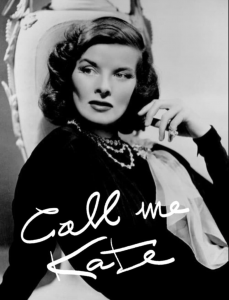
I finally caught up with Lorna Tucker‘s Call Me Kate (Netflix, 5.12), a 96-minute doc about Katharine Hepburn, the raven-haired, freckle-faced powerhouse actress who defied everyone and every expectation to become her own persona and “brand”, way before the concept of independent, big-studio-defying actresses had really taken root.

We all know the basics — a 62-year career, 40-plus films (The Philadelphia Story, The Lion in Winter, Bringing Up Baby, The African Queen, Summertime), brilliant performer, four Oscars, etc. A very tough and willful lady, a flinty Connecticut attitude, deeply passionate, family advantages from the get-go, very exacting and particular, certainly no pushover.

“I would have been a terrible mother because I’m basically a very selfish human being,” etc.

The film is basically about previously unseen home movies, first-hand recollections from family members, random footage, audio tapes, letters, etc.

Hepburn was almost certainly bisexual or primarily gay and who cares? Was the decades-long “romance” with Spencer Tracy even physical? I found it odd that her mid 1930s “affair” with John Ford (which probably wasn’t sexual) isn’t mentioned at all. No mention of a lot of things. No Love Affair, Grace Quiqley., etc.

Tucker could have easily made a six-part miniseries out of all the available material. But by the conclusion a strong affinity and affection for Hepburn has been instilled. Highly recommended.

Deeply Proud of Mr. Anderson

LETTER FROM HE to WES ANDERSON, SENT AT 4:55 PM EASTERN:

Wes,

When filmmakers and actors have lately (i.e., since 2017) been accused of unsavory off-screen behaviors, it’s become the fashion for colleagues to throw them under the bus and run for tall grass.  Sadly, deplorably.

ExampleTimothee Chalamet‘s chickenshit response following accusations of Woody Allen‘s long-refuted issues with Mia and Dylan after starring in Allen’s A Rainy Day in New York.

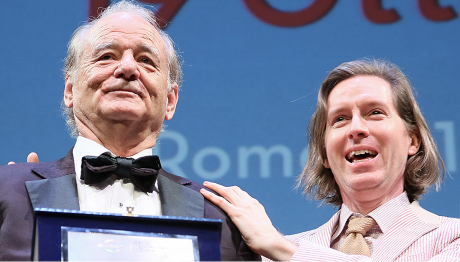
I therefore genuinely admire your reply to questions about allegations of questionable behavior on the part of Bill Murray during the filming of Aziz Ansari‘s Being Mortal. Hats off, crisp salute.

Jeff

Excerpt from 6.12 IndieWire piece by Samantha Bergeson, titled “Wes Anderson Is Standing by Bill Murray Amid Sexual Misconduct Claims Against The Actor“:

Asteroid City filmmaker and frequent Murray collaborator Anderson told IndieWire’s Eric Kohn that the allegations against Murray will in no way impact their working relationship:

“My experience with Bill is so extensive. Bill was such a great supporter of me from the very beginning. I don’t want to speak about somebody else’s experience, but he’s really part of my family. You know, he’s my daughter’s godfather. In fact, he actually baptized her. He’s the one who splashed the water.”

Travails of a “Size Queen”

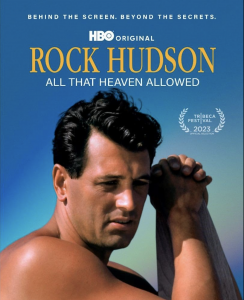
From Peter Debruge’s 6.11 Variety review of Steven Kijak’s Rock Hudson: All That Heaven Allowed: “During his lifetime, Rock Hudson was a model for American masculinity. That changed after his death, when the strapping, straight-acting (but occasionally sensitive) hunk from Winnetka became the poster boy for Hollywood homophobia: a closeted star who’d been forced to play a role his entire career that wasn’t true to himself, on screen and off.

Rock Hudson: All That Heaven Allowed treats that compromise as a tragedy, leaning on the fact Hudson died of AIDS to underscore the injustice, but Stephen Kijak’s documentary does him a disservice, reducing Hudson’s career — in exactly the way he went so far out of his way to avoid — to the dimension of his sexuality.

“Built around interviews with a handful of former lovers and friends, Kijak spills private details from Hudson’s personal life, ranging from whom he shagged to how he arranged such trysts in the first place.

“A secretly recorded phone call reveals Hudson to be a ‘size queen,’ audibly excited by the prospect of meeting a tall, well-endowed stranger. The whopper — which underscores the kind of salacious gossip Kijak gravitates toward in the film — comes from Joe Carberry, who recalls, ‘Rock had a sizable dick, but he tried to put that thing up my ass, and I couldn’t do it.'”

Always Look On The Bright Side of Life

A new expression entered my vocabulary yesterday — “hate-eating.” That’s when you’ve ordered something you really don’t like but you eat it anyway because it would be too much toil and trouble to send it back. That was me yesterday, sitting inside the Spicy Moon cafe and eating the worst-tasting vegetable dumplings I’ve ever had in my life. I wrote yesterday that they tasted like “hot mashed-up Brussels sprouts and filled with a kind of seaweed green gloop.”

HE commenter Zoey Rose: “Seriously Jeff, look for the things you enjoy [and] not the things you hate. Time on this planet is winding down so why not find pleasures in life instead of being the epitome of the cliched old fart complaining about kids,” blah blah.

HE to Zoey Rose: “Speak for yourself regarding the ‘winding down’ of time. Nothing’s winding down on this end, I can tell you. And what do you know of the future, by the way? About as much as anyone else does, which isn’t much except for generalities.”

If there’s one serving of advice I have consistently rejected and in fact despised all my life, it’s “invest in love rather than disdain,” “glass half full rather than half-empty,” “always look on the bright side,” etc.

Do you think Mark Twain or George Orwell or Paul Morrissey ever bought into that happy-faced crap?

I’ve always looked at things as they are or seem to be, and free of vibes of forced smiley-face happiness or rose-colored glasses or any of that jazz. Life is not Disneyland.

Yesterday’s world of the streets of the Lower East Side — warmer than warm, in some ways bland, shade-less, somewhat sticky and certainly dreary — was what it fucking was. It was certainly no cultural blessing to be there, I can tell you. The architecture mostly lacked intrigue and character, certainly compared to the nabes of Paris, Rome, Prague, Bern, Barcelona, Cefalu, San Francisco, etc.

Manhattan has always been a must-to-avoid on summer days. Stay the hell out of town until after Labor Day. They’ve all said that for decades. Nothing cranky about it — just the way it is.

I wrote about the Lower East Side yesterday with exactly the same spirit and attitude with which I wrote about Buenos Aires 18 years ago, in March 2005.

Posted on 2.3.22: “Sometime in 2009 or ’10 I was seated next to Morrissey at a Peggy Siegal luncheon in some plush Manhattan eatery. I recognized him right away, but even if I hadn’t I would’ve felt instantly at home with the sardonic attitude and the seen-it-all, slightly pained facial expressions. I love guys like this. They’ve lived long enough and have met enough people of consequence to know that much of what constitutes modern life (even in a first-class town like New York City) is distasteful or disappointing or phony. And yet they soldier on with their squinty smiles and witty asides.”

Moderate, Reasonable Sounding Defendant

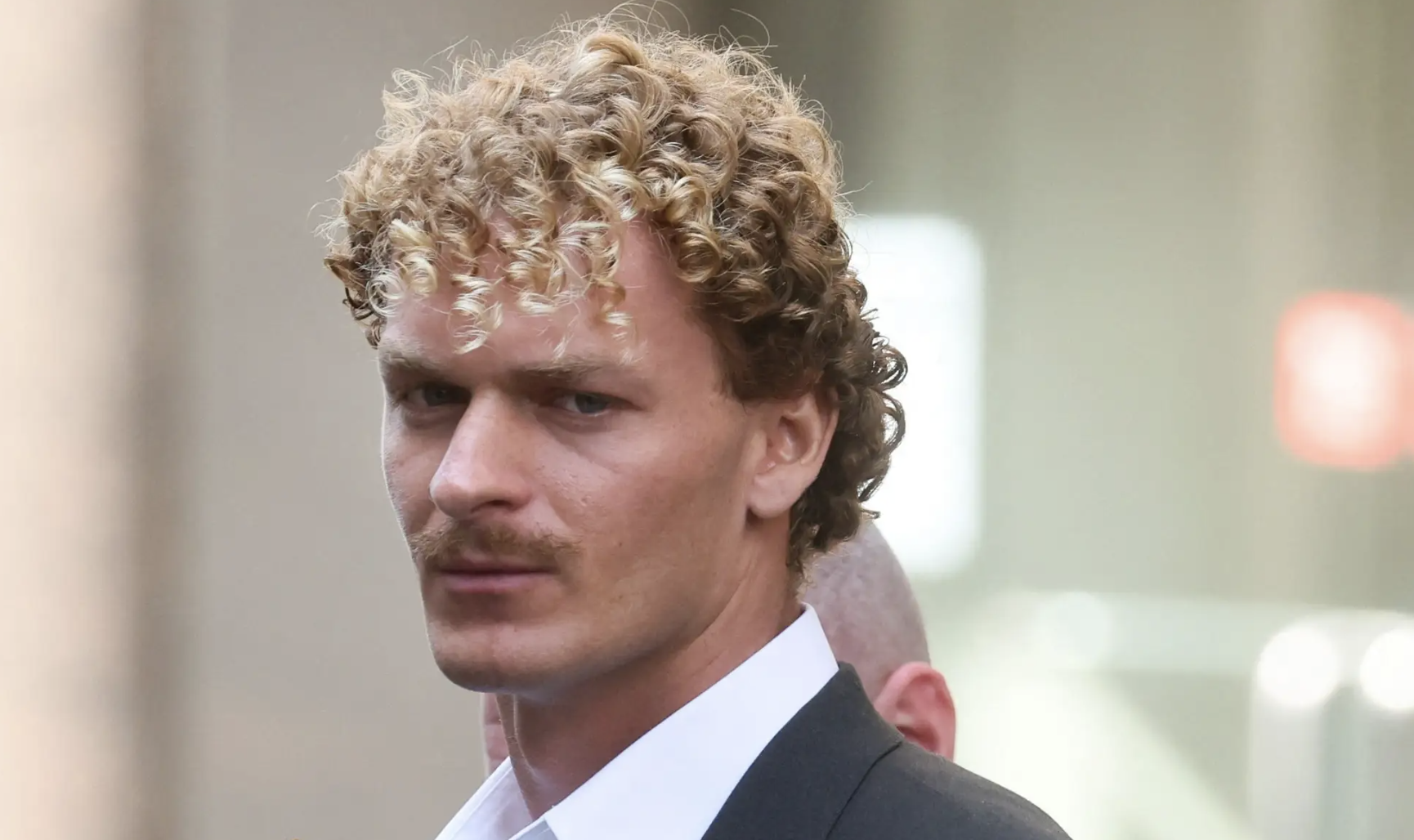
F train choker Daniel Penny didn’t exactly act heroically on 5.1.23, but he did, I think, act bravely and selflessly in deciding to restrain the belligerent Jordan Neely. What’s in dispute is whether or not the amount of force he used was needlessly excessive.

All along I’ve felt that Penny should have shown more caution in trying to restrain Neely. I don’t think he intended to kill this allegedly threatening, mentally unstable guy. I think the situation just got away from Penny, and before he knew it (five minutes — three minutes captured on video) Neely was dead.

It’s very easy to make Monday morning armchair judgments, and it’s a different thing altogether when you’re in a tough situation in the heat of the moment. Neely was, by all accounts, sounding and acting like a dangerous asshole, and if I had been in that subway car a voice is telling me I wouldn’t have had any objection to Penny holding him down.

There are people, of course, who will accuse me of coming from a racist place — me and and others holding a similar opinion. I don’t agree, of course. If you start shit by scaring people and acting like a dangerous asshole, you’re obviously asking for trouble. What happened wasn’t entirely Neely’s fault but it was mostly his.

That said, Penny should have shown more caution as Neely didn’t deserve to die. Then again it’s very easy to say whatever from the comfort of a home or an office.