Hunter Biden is a rotten egg — nobody disputes this. Throw him to the lions if need be, but end this stupid-ass inquisition.

Hunter Biden is a rotten egg — nobody disputes this. Throw him to the lions if need be, but end this stupid-ass inquisition.
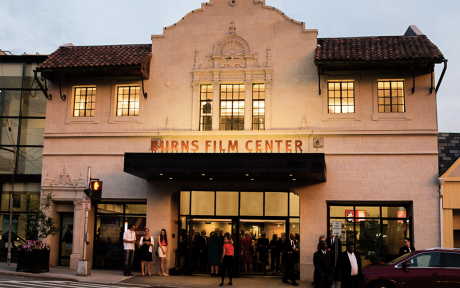
As much as I admire and enjoy the Jacob Burns Film Center — a truly first-rate, well-curated theatre for serious film buffs — I don’t like the 45 minute drive to Pleasantville, and that’s how long it takes from Wilton. A scenic journey for the most part, but those constantly swerving country roads plus the stressful Saw Mill River Parkway X 2 = 90 minutes plus a third of a tank of gas plus everything else.
I can always see the same films (and earlier) in Manhattan. The train is simpler and easier plus I can file stories as I go.
The Bedford Playhouse is only a half-hour drive, but the films are rarely choice and artified — they play the same popcorn fare that you can find at any multiplex.
As long as we’re acknowledging major anniversaries, Errol Morris‘s The Fog of War is now 20 years old. It won the Best Documentary Feature Oscar as well as the Spirit Award for Best Doc Feature. In my book it’s Morris’s best film, easily.
The Fog of War actually premiered on 5.21.03 (Cannes) but was screened in this country for the first time at the ’03 Telluride Film Festival.
I’m mentioning it because I’ve been thinking about great film scores, and for the last 20 years I’ve lietened over and over to Phillip Glass‘s original techno score. My favorite track, which arrives at the 1:08:13 mark on the YouTube soundtrack video, is titled “No Second Chance.”
Robert McNamara died on 7.6.09 at the age of 93.
Mark Benjamin and Marc Levin‘s The Last Party was a 96-minute doc about Robert Downey, Jr. surveying the political-cultural landscape of 1992. It opened on 8.27.93 — almost exactly 30 years ago — when Downey was 28.
The film wasn’t about ravenous Wall Street hustlers but that’s what this clip examines. One immediately thinks, of course, of Stratton-Oakmont and the real-life Wolf of Wall Street guys (Jordan Belfort, Danny Porush, Brian Blake) who were riding high at the time. Stratton-Oakmont closed in ’96.
The Wall Street section of the film begins around the 33-minute mark.
“The more one looks into the origins of the [2009 financial] disaster, the clearer it becomes that the key wrong turn — the turn that made crisis inevitable — took place in the early 1980s, during the Reagan years. For Reagan ushered in an era in which a small minority grew vastly rich while working families saw only meager gains. He also broke with longstanding rules of fiscal prudence.” — from Paul Krugman‘s “Reagan Did It,” posted in the N.Y. Times on 5.31.09.
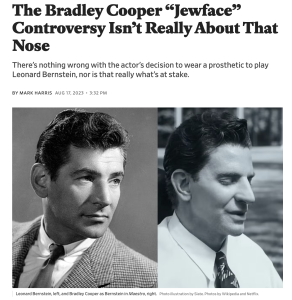
With the Venice Film Festival’s Maestro premiere only two weeks away (9.2) and the overblown Schnozzgate finally starting to fade, I thought I’d drop this decades-old video of Leonard Bernstein speaking admiringly and, of course, knowledgably about the Beatles’ musical innovations.
Lenny focuses almost entirely on Revolver. 95% of then-current pop music was crap, he said, but 5% of it was sublime.
I wonder what Bernstein thought of the Left Banke‘s “Pretty Ballerina“?
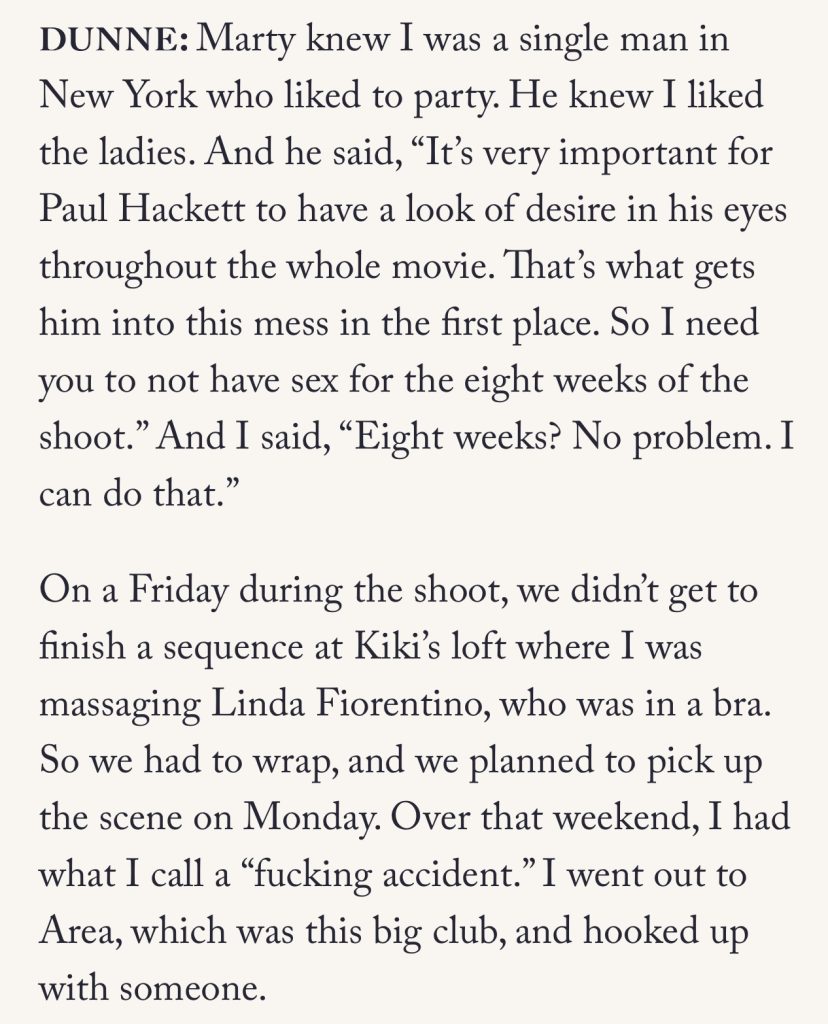
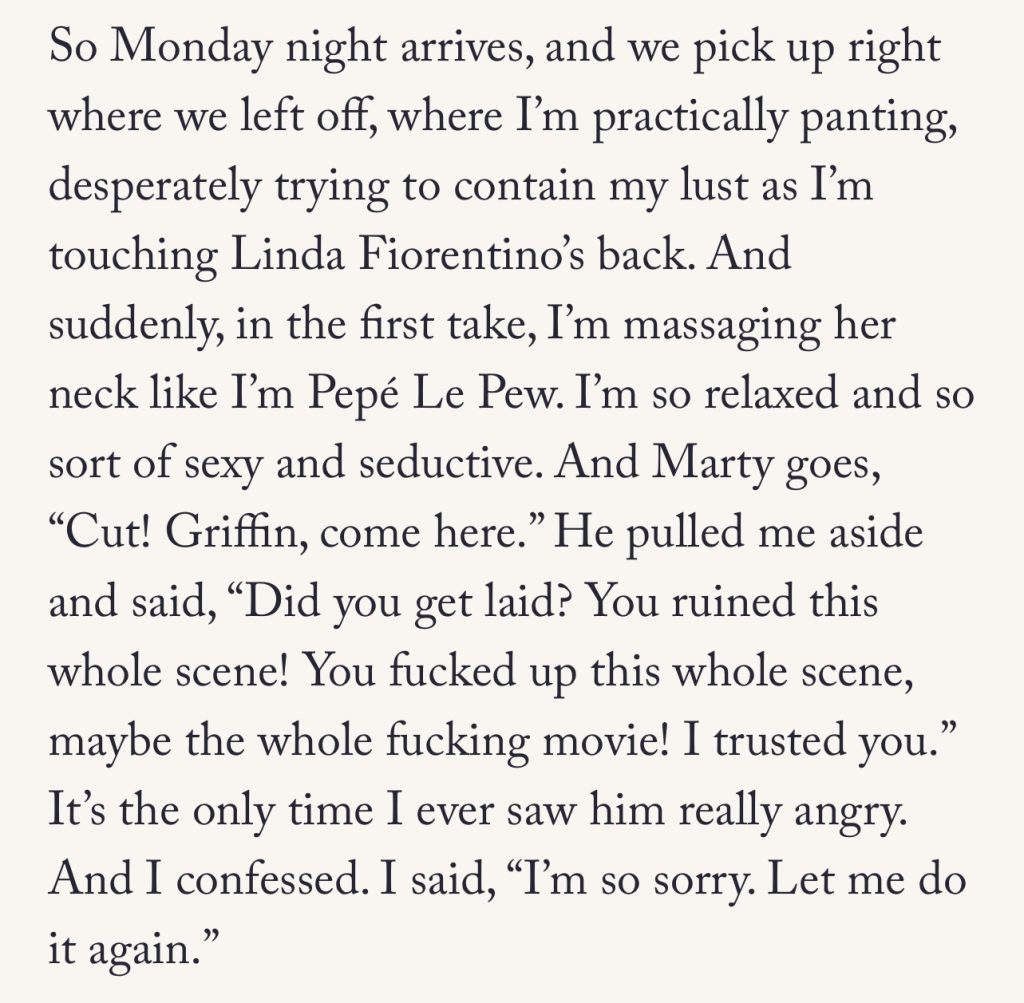
Sex (especially great sex) can make strong men feel weaker or less driven, or at least persuade them to ease up to some degree. Among creative types post-coital drainage always slows your rivers down to a trickle. Okay, I don’t know how true this actually is, but it’s a well-established myth — i.e., “There goes another novel.”
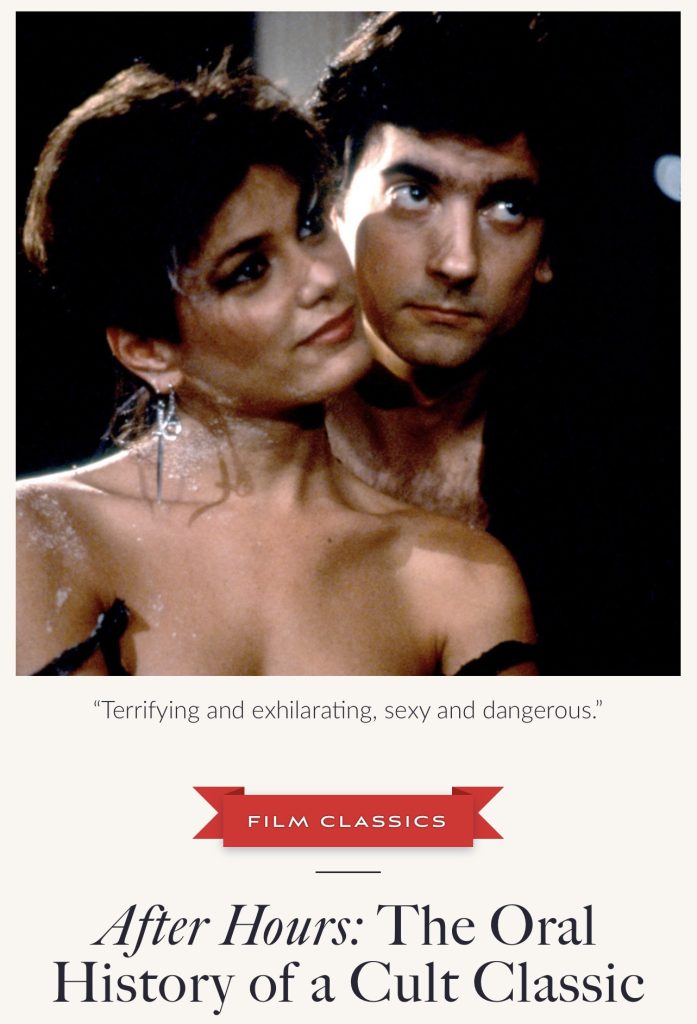
From Jake Malooley’s “After Hours: The Oral History of a Cult Classic” — Air Mail, 8.22.23:
On Friday afternoon Jeff and Sasha faced the music…uhm, the issues of the moment. Bradley Cooper’s Leonard Bernstein schnozz. Rachel Zegler’s woke Snow White flick. The sad finances behind the “Blind Side” situation. “The Pot au Feu” (aka “The Taste of Things”) and other Telluride forecastings.
Again the link.
In the thread for yesterday’s “Speaking of Blind Sides,” Seasonal Aflac Disorder mentioned that the young Steven Spielberg was a film nerd “so you’d expect he’d be listening to film scores as a young man.”
To which I replied that I, too, was listening to film scores as a lad — Elmer Bernstein, Miklos Rosza, Maurice Jarre, Max Steiner, Franz Waxman. Bronislau Kaper, Dimitri Tiomkin, Bernard Herrmann, Hugo Friedhofer. Except I never bought a compilation album of Freidhofer’s best film music, and I dearly love his scores for One-Eyed Jacks, The Best Years of Our Lives, The Young Lions, Hondo, Vera Cruz, Soldier of Fortune, The Harder They Fall, The Sun Also Rises, An Affair to Remember, etc.
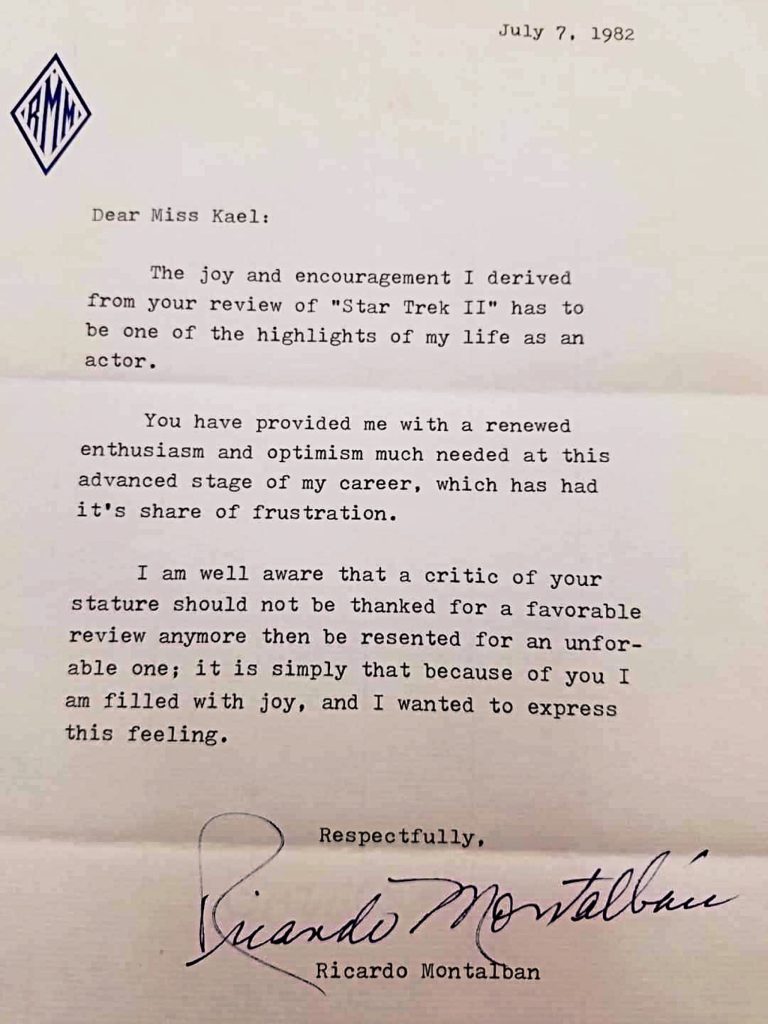
English was, of course, a second language for the Mexican-born Ricardo Montalban (1920-2009) so no demerits for the “it’s” possessive or the misspelled “than”. What mattered was that he meant it.
Excerpt from Pauline Kael’s review of Star Trek: The Wrath of Khan (‘82):
“[Ricardo] Montalban’s performance doesn’t show a trace of Fantasy Island. It’s all panache; if he isn’t wearing feathers in his hair you see them there anyway. You know how you always want to laugh at the flourishes that punctuate the end of a flamenco dance, and the dancers don’t let you? Montalban does. His bravado is grandly comic.” — Star Trek II: The Wrath of Khan, 1982
Two…no, three observations abut the bizarre persistence of the Bradley Cooper-Leonard Bernstein-Maestro nose thing, which really didn’t warrant much attention in the first place.
One, the Maestro makeup team obviously wanted to create a strong resemblance between Bradley Cooper and Leonard Berstein, which partly meant creating a correctly proportioned Bernstein prosthetic nose. They just wanted the resemblance factor to stand out in the right way, and that’s all — nothing more. I find it astonishing that anyone would ascribe any ulterior motives of any kind.
Two, it is beyond bizarre that the Maestro makeup team nonetheless got the nose wrong. It’s close to the Bernstein original but a bit too extreme — almost Pinocchio-like from side angles.
And three, what possessed Mark Harris to want to write such a long Slate piece (11 heavyweight paragraphs) about this kerfuffle?