I’m sorry but I watch this seven-minute, 45-second clip at least once a year.
Uncensored version:

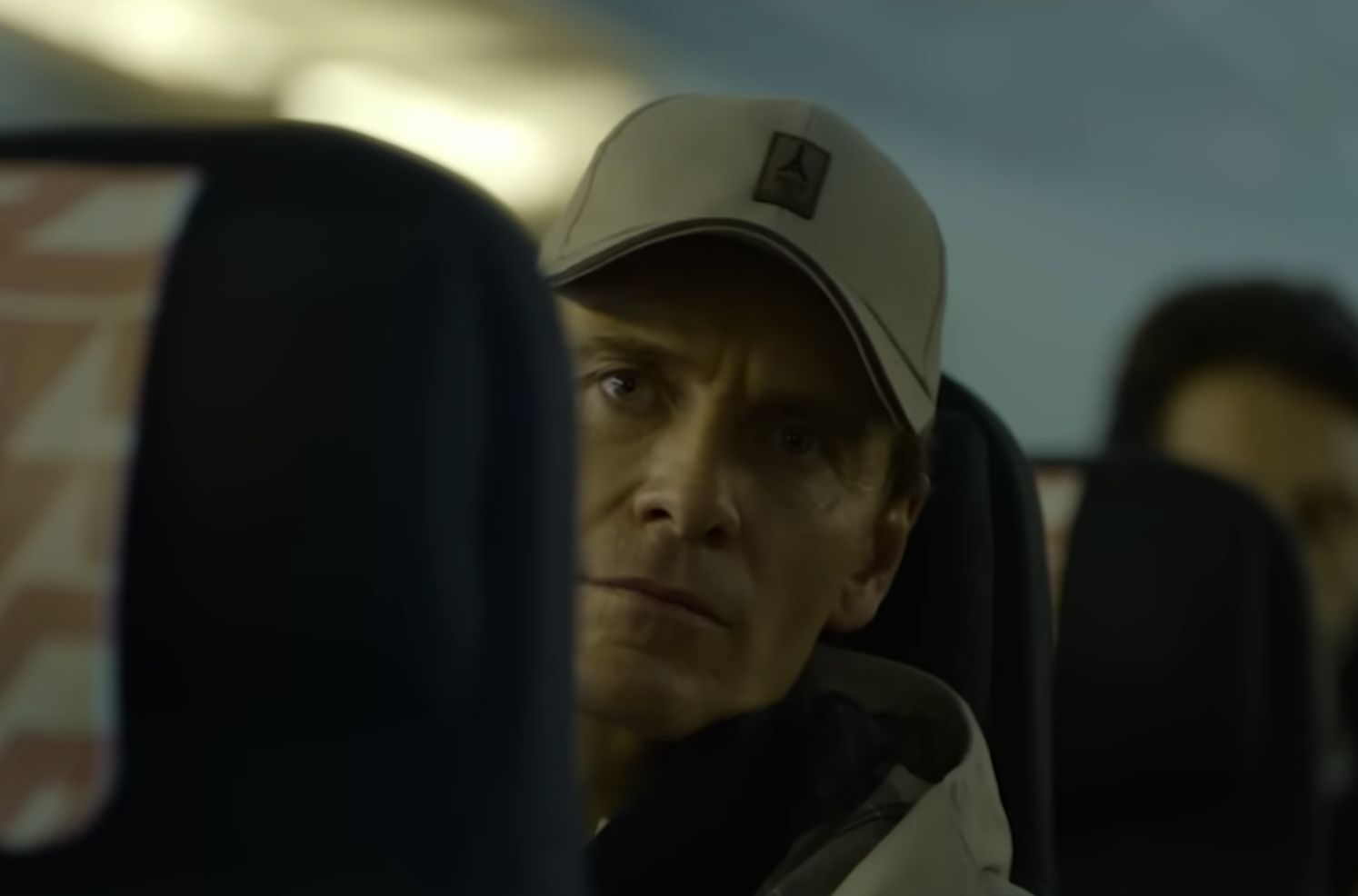
“The driving idea of The Killer is that Michael Fassbender’s hit man, with his cool finesse, his six storage spaces filled with things like weapons and license plates, his professional punctiliousness combined with a serial killer’s attitude (the opening-credits montage of the various methods of killing he employs almost feels like it could be the creepy fanfare to Se7en 2), has tried to make himself into a human murder machine, someone who turns homicide into a system, who has squashed any tremor of feeling in himself.
“Yet the reason he has to work so hard to do this is that, beneath it all, he does have feelings. That’s what lends his actions their moody existential thrust. At least that’s the idea.
“But watching the heroes of thrillers act with brutal efficiency (and a total lack of empathy for their victims) is not exactly novel. It’s there in every Jason Statham movie, in the Bond films, you name it.
“The Killer is trying to be something different, something more ‘real,’ as if Fassbender were playing not just another genre character but an actual hitman. That’s why he has to use a pulse monitor to make sure his heartbeat is down to 72 before he pulls the trigger. It’s why he’s hooked on the Smiths, with their languid romantic anti-romanticism. As catchy a motif as that is, you may start to think: If he’s such a real person, doesn’t he ever listen to music that’s not the Smiths?
“In The Killer, [director] David Fincher is hooked on his own obsession with technique, his mystique of filmmaking-as-virtuoso-procedure. It’s not that he’s anything less than great at it, but he may think there’s more shading, more revelation in how he has staged The Killer than there actually is.” — from Owen Gleiberman’s 9.3 review.
WARNING: CONTAINS A POOR THINGS SPOILER OR TWO:
Telluride friendo (after reading my brief Poor Things review): “You seriously thought this movie was better than Lanthimos’s The Favourite? Yeah, I guess Poor Things is ‘wild’ but in its undeniably interesting and audacious way I found it to be an ungainly, overlong didactic art thing.
“It’s like Barbie directed by the Marquis de Sade.
“Emma Stone is excellent, but she’s playing the only interesting character (apart from Dafoe’s scarred freak). Mark Ruffalo seems interesting at first, but grows duller as the movie goes on. He becomes one more oppressive male in a movie that’s programmatically full of them.
“How can you object to Barbie being an anti-male jeremiad and not object to this one?”
HE to friendo: “Every festival film, it seems, is misandrist except for Alexander Payne’s The Holdovers. Filmmakers are generally not allowed to not hate white guys. Then again Scarface Dafoe and his loyal assistant weren’t depicted as ugly diseased males. In any event I felt that the mad nutso Terry Gilliam paintbrush aspect overwhelmed my reservations about anti-male portraiture. Oh, and I wasn’t knocked out by The Favorite.”
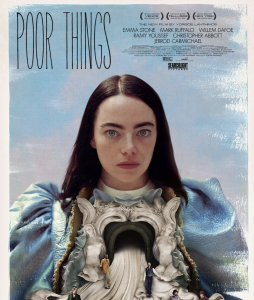
Telluride friendo: “Poor Things is visually entrancing, no doubt, but once Stone’s character gets out into the world (and becomes a less and less interesting character as she grows more intelligent and just becomes…a normal Englishwoman!), the storytelling becomes very basic and kind of stilted. It’a a drag that Ruffalo’s character turns out to be such a run-of-the-mill asshole. How much better it would have been had there really been something to their relationship, or to Stone’s relationship to anyone else in the film.
“I had no moral objection to Stone’s descent into prostitution, but what’s the point? You’re right that Dafoe and his assistant weren’t depicted as ugly diseased males, but by the end of the movie, every other male in the film is. That’s the whole point. That’s why that shot of her husband [redacted] is such a money shot. It’s sealing the deal on the movie’s misandry.
“My real objection isn’t that I found it so offensive — it’s that it’s so thin. The movie is the fairy tale as (woke) allegory, and I really wish that it could’ve been more of a greater fairy tale and less allegory. After a while, I was almost bored by it. Seemed like it would never end. This is not a movie that needed to be 140 fucking minutes.
“But I guess the machine has already decided that it’s this year’s woke/eccentric/Off-Hollywood Best Picture winner…”
HE to friendo: “It did become less interesting when Stone became a professional woman of diminished virtue. And yes, it does feel increasingly thin. And yes, it’s lamentable that Ruffalo’s louche wastrel character is written as such a vain and pathetic figure.
“My absolute favorite sequence was the dance number that Stone and Ruffalo perform.”
Telluride friendo: “That was a great scene, but not as great as Jenny Ortega‘s dance sequence in the streaming series Wednesday.
“What I don’t get is how this film — thinner as it goes along, Barbie by a Greek postmodern Tim Burton, a perverse Terry Gilliam-esque takedown of the patriarchy — is being hailed as the new Citizen Kane. I guess we’ve living in a post-Jeanne Dielman-as-greatest-film-of-all-time universe.”
I’ve suddenly decided to re-watch Roger Corman‘s Premature Burial (’62), in which a mid-50ish Ray Milland played Guy Carrell, a cataleptic, death-obsessed British aristocrat. (Milland was at least 15 years too old for the part.) My chief recollection is a dream sequence in which Carrell, having seemingly but not actually died, awakes inside his burial vault and finds that none of the escape mechanisms work.
Poor Milland — in ’54 he had played the elegant ex-tennis star Tony Wendice in Hitchcock’s Dial M For Murder, but eight years later under Corman he was staring into a silver chalice filled with maggots.
From “‘The House Is the Monster’: Roger Corman’s Poe Cycle,” posted on 8.25.23.
Bill Maher: “When you get a little older and you’ve mutilated your body…you- maybe that’ll be a decision your happy with or maybe it won’t but there’s no going back.” pic.twitter.com/9sJuMTBVxB
— 〽️ARS (@UpperhandMars) September 3, 2023
In the immediate wake of Everything Everywhere All At Once winning seven Oscars out of eleven nominations, I was consumed by the deepest and darkest depression of my Hollywood journalism career.
I knew this had happened because of the New Academy Kidz — recently consecrated Academy members who are resolute about making identity and wokesterism the defining criteria — as well as the degraded intellectual property values among the SAG/AFTRA membership. I kept telling myself that the NAK were serious — they really think that EEAAO had expressed something about the times in which we’re all living…good fucking God almighty.
A plurality had actually decided that Jamie Lee Curtis‘s louche and clownish performance as an IRS investigator was more deserving of a Best Supporting Actress Oscar than, say, Kerry Condon‘s turn in The Banshees of Inisherin or Hong Chau‘s “Liz” in The Whale. It was culturally embarassing — a confirmation that a large percentage of voting Academy members were in fact little piglets, which is to say completely unburdened by (i.e., unconcerned with) issues of taste, perspective and film knowledge.
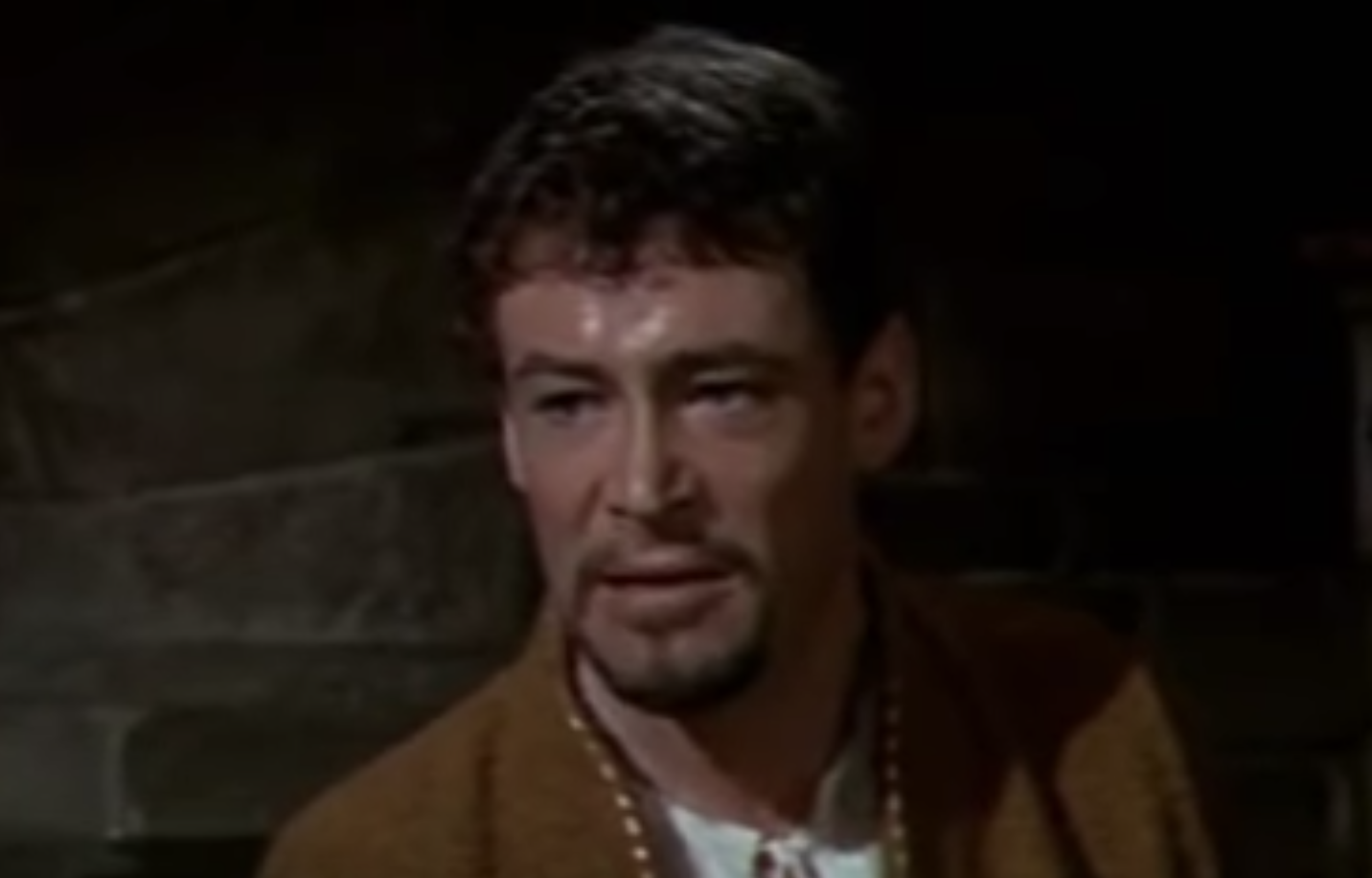
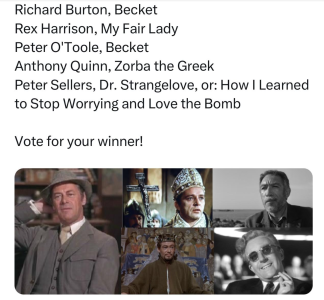
The long-established consensus is that Rex’s Harrison Best Actor Oscar for his My Fair Lady performance was, at the very least, unfortunate, particularly given the calibre of the competition — Peter O’Toole and Richard Burton in Becket, Anthony Quinn in Zorba the Greek, and Peter Sellers‘ trio of performances in Dr. Strangelove, or: How I Learned to Stop Worrying and Love the Bomb.
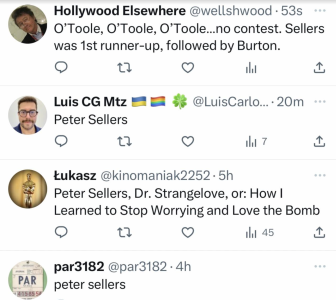
Since Becket hit Bluray in ’08 pretty much everyone began to realize that King Henry II was O’Toole’s peak role and performance, and that he was robbed. Or so it seemed. But according to a Twitter poll I saw this morning, the majority feels it was actually Sellers who was robbed.
My presumption is that everyone has seen Strangelove and relatively few have seen Becket, and there’s not much more to it than that.
Sellers is magnificent in Strangelove, of course, but playing three characters in a single film (if not for an injury he would’ve played four) is essentially a stunt, plus none of his characters really touch bottom, especially given the film’s darkly satiric tone. They were three sketch bits, not full-bodied performances.
And of course, strategy-wise Paramount publicists pushing O’Toole and Burton equally was all but guaranteed to result in a loss for both.