“Ladies, It’s Okay With Me”

Posted within the last 24 hours:

HE-posted on 10.17.20: Wokesters have banished the “f” word as flatly, decisively and eternally as the “n” word and other hateful epithets. I understand that, of course, and I know that the preferred term is “person of size” or, if you will, non-svelte. Many years ago I tried using “calorically challenged” but people looked at me sideways. Their expressions seemed to say “what are you trying to be, some kind of smart-ass?”

Yes, I’ve used the “f” word a few times — Fat Thor, Fatzilla, etc.

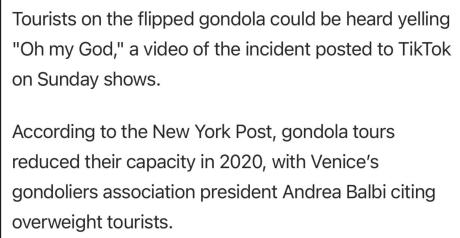
In late May of ’07 I was standing on a small bridge in Venice when I noticed a morbidly obese fellow and his wife reclining in a passing gondola, and the combined weight was such that the gondola was almost taking on water.

“Wow, look at that fat guy,” I muttered to Jett, who was standing next to me. I knew I had misspoken. My voice had echoed slightly. Jett’s immediate response was to touch my forearm and go “sshhhhh.’

I’m not so stupid as to not understand that avoiding the “f” word is advisable. I get it. Of course I do. I’m just trying to get along. I am not a harshly judgmental person as a rule. I simply err on the side of offhanded candor from time to time.

“The Color Purple” is Finished…Over and Out

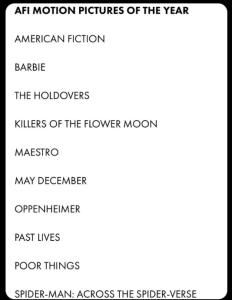
The annual American Film Institute best of the year list is about as stolid and measured and steady as these things get. They never go for outliers, always stay within the safe zone, no surprises, always high-fiving the consensus comfies, etc.

Blowing off Napoleon and Saltburn were easy calls, but you’d think that for diversity and fellowship’s sake they might include The Color Purple. Nope.

No, No, No, No, No

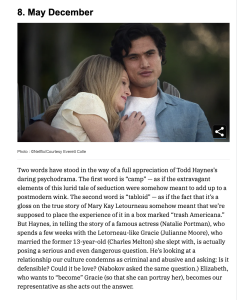
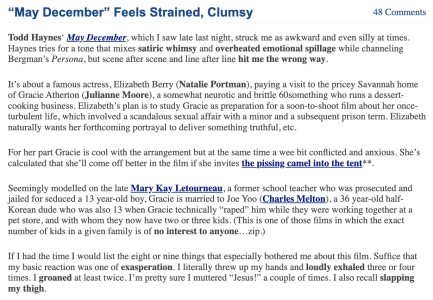
By including May December on his ten-best-of-2023 list, Variety‘s Owen Gleiberman has broken my heart. He’s crushed it like a grape. To think that a smart sharperoo could watch this campy-ass thing and actually drop to his knees.

I used to love Todd Haynes back in the day, but over the last few years he’s taught me…well, not to hate him but to think negatively.

Posted on 5.21.23:

Disproportionate

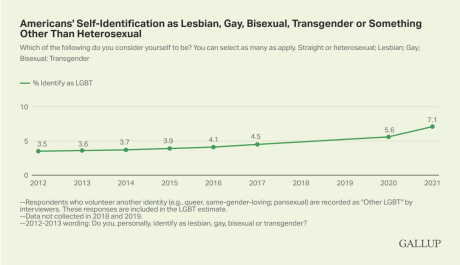
Ten years ago 3.5% of Americans said they identified as LGBTQIA, and today 7.1% are so identifying — a 100% increase, mainly due to Zoomers and Younger Millennials wanting to mingle with the crowd and be trendy.

Boiled down we’re talking one out of nearly 15 people. Which means, of course, that nearly 14 out of 15 Americans identify as straight.

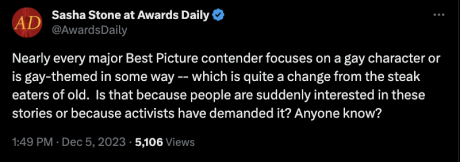
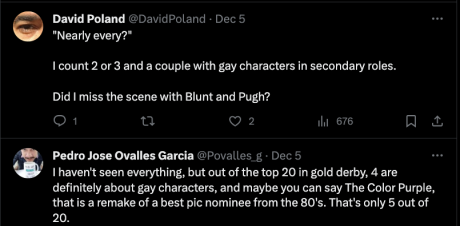
Do this year’s Best Picture contenders represent this approximate gay-to-straight proportion? Of course not. Do they tilt in the direction of gay-themed or gay-seasoned subject matter? No, they do not “tilt” — they lean heavily in this direction. Two-thirds to a third.

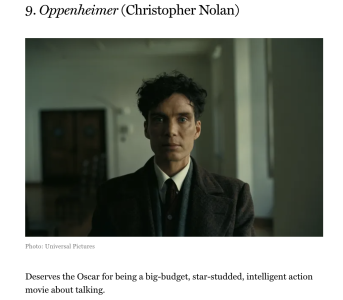
If you accept there are twelve top award contenders (and you really can’t count Napoleon among them), you’ve only got four that are completely, unregenerately, hot-dog-with-a-brewski, Travis Kelce, low-thread-count T-shirt straight with nothing the least bit gay or even gay-flirting among themOppenheimer, The Holdovers, Killers of the Flower Moon and Past Lives. And three of these (Oppie, Holdovers, Killers) are period pieces.

On the other hand eight of the twelve award-season contenders have gay characters or gay sex scenes, or they satirize or belittle straight males.

1. Maestro (famous gay conductor lovingly married to beard wife, with whom he’s sired three children), 2. Barbie (dozens upon dozens of might-as-well-be-gay buff-bod Kens — the only overtly straight males are played by Michael Cera and Will Ferrell and the Matell board members), 3. American Fiction (Sterling K. Brown as Jeffrey Wright‘s gay brother, Clifford Ellison), 4. Poor Things (mostly hetero but with a lesbian oral sex scene in a Paris brothel), 5. Anatomy of a Fall (Sandra Huller admits to having had same-sex affairs outside the bonds of marriage to her late husband), 6. Rustin (charismatic gay civil leader of the ’60s), 7. Nyad (lesbian long-distance swimmer) and 8. The Color Purple (partly about lesbian-tinged relationship relationship between Celie and Shug, based on a book by bisexual author Alice Walker).

Summary: On-screen this season we have eight gay or gay-tinged films vs. four that are flat-out straight. In real life nearly 14 out of 15 folks are non-LGBTQIA.

What does that tell you about where Hollywood is coming from, and to what extent that they’re making films for the vast majority of moviegoers? At least as far as the ’23 award season is concerned? I’ll tell you what it means. It means that within industry culture, it seems safer or cooler to make gayish films or those with a little gay flavoring, It neans that industry culture sees Average Joe straight culture as crude or tedious or troglodyte-ish.
=

Sidenote: You can apparently buy original paperback editions of Matt Bradley‘s “Homo Hill”, a respected, relatively trim account of urban gay life during the JFK era. It first hit the stands on 1.1.63.

Again — Christie Told It Straight and True

If I was told “okay, this is it — who among these four is your immediate, no-going-back choice to take the oath of office tomorrow?…decide right now,” I would say Christie or Haley, no question. Neither has a chance against The Beast, I realize…

Happened Late Last Night

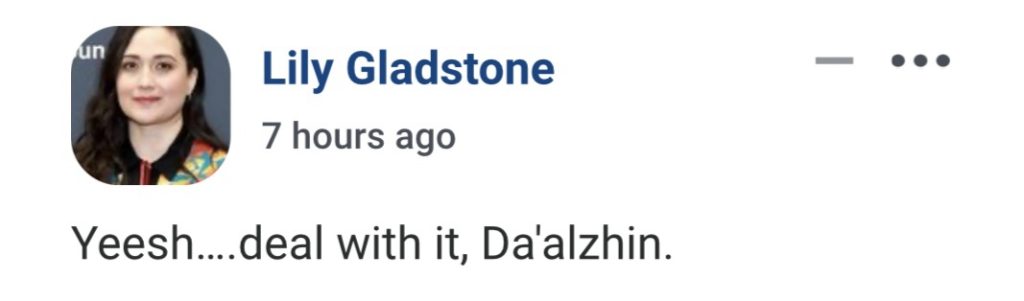
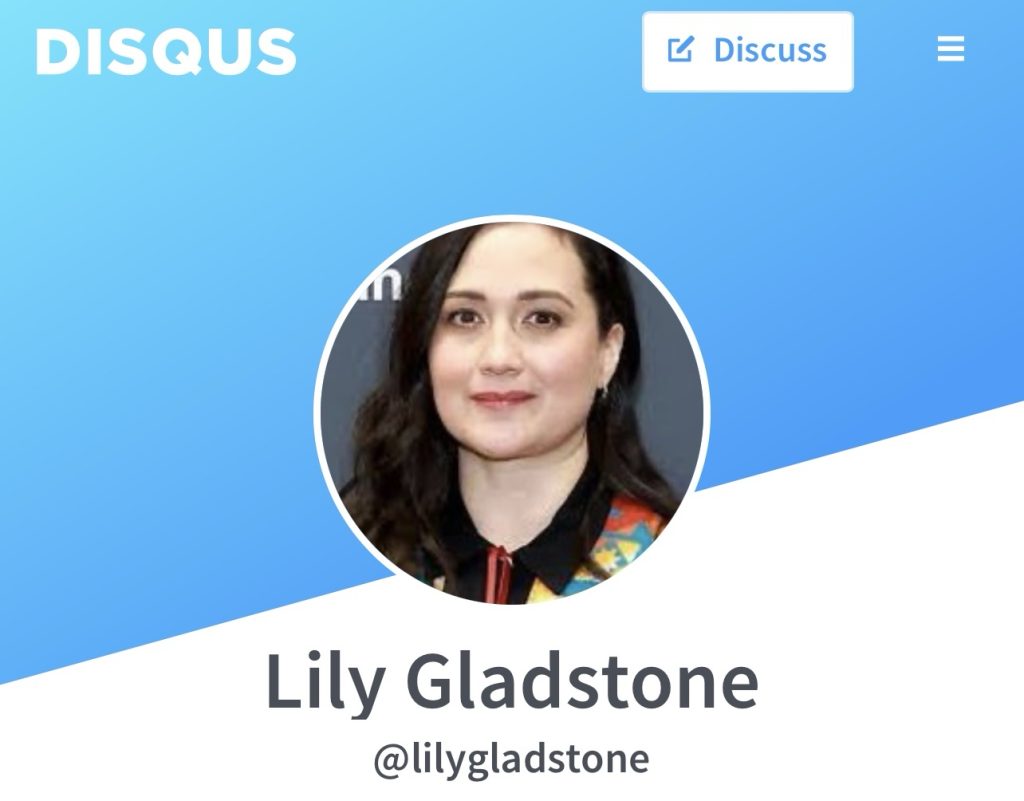
HE isn’t 100% persuaded in terms of the Disqus poster’s identity, but it may the same Lily Gladstone with whom we’re all familiar,

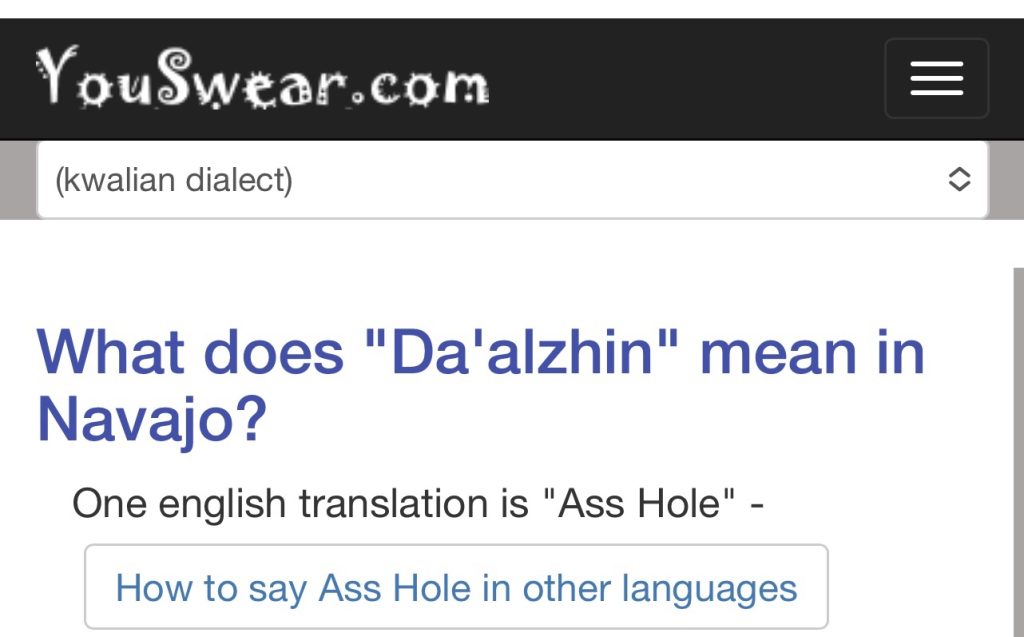
Either way I have two replies — (a) thanks for the recognition and the for the implied limited respect therein, and (b) thanks for expanding my horizons with a Navajo term I wasn’t familiar with — da’alzhin, which means ayehole.

The HE comment in question appeared late last night. It was in response to yesterday afternoon’s “Lily Wins AgainYeesh” riff. I’m mentioning it for posterity’s sake as her Apple handlers will most likely be urging @lilygladstone to delete the post, if (and I say “if”) the authorship is indeed genuine.

HE statement: I don’t have an issue with Lily Gladstone per se — not in the least. She’s fine within the realm of her own talent, and there’s nothing wrong per se with wrapping herself in a Native American identity blanket on the campaign trail.

Gladstone is simply out of her depth in the current Best Actress race compared to Emma Stone and Carey Mulligan’s guns-blazing performances in Poor Things and Maestro, respectively. Her Mollie Burkhart performance in Killers of the Flower Moon, good as it modestly is, is a supporting thing —it simply lacks the necessary scope, depth and intensity that is commonly associated with an award-aspiring lead performance.

Alas, Lily has been running an effective woke identity campaign (a three-pronged one, one could argue), and it’s obviously working with the rank-and-file. Such efforts have been yielding award-season fruit since the Great Awokening kicked in four or five years ago.