Not A Snowball’s Chance in Hell

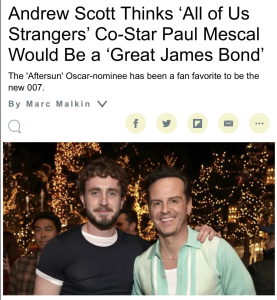
If I could make Paul Mescal completely disappear (not killed but gently, painlessly transformed into a vapor ghost….a wandering spirit)…if I could get rid of this guy by clapping my hands three times, I would clap my hands three times. Otherwise I mean none harm. I think none harm. I want none harm. I’m just imagining his absence.

On top of which Andrew Scott‘s head is too big for his narrow shoulders, and I don’t like the mint-green-and-white vertically striped shirt.

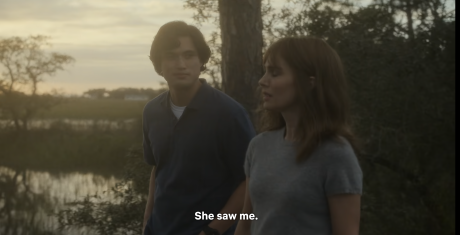
All Of Us Strangers is a classy, earnestly felt, slightly above-average film about…well, about reimagining Taichi Yamada‘s horror-tinged original to suit a gay agenda, and secondarily about affirming one’s identity with long-dead parents. A decent job.

After seeing it in Telluride three and a quarter months ago a new cinematic term had formulated in my head — “beard-stubble sex scenes.”

“Rushmore” At 25. As In Exactly.

Wes Anderson‘s Rushmore, by far his funniest, most dramatically grounded, perfectly composed and most emotionally poignant film, opened commercially on 12.11.98 — a quarter century to the day. It had opened at the New York Film Festival two months earlier, on 10.9.98.

I had just begun writing my Mr. Showbiz column that month, and boy, was I delighted with Rushmore when I saw it out at the Disney lot one night! I was floating when it ended.

Wes, whom I’d known since he hit town with Owen Wilson in ’94, had allowed me to read a copy of the script roughly a year earlier, when I was miserably working at People, and I was pretty happy with it. But the film version represented one of the very few times in my life that a movie turned out to be significantly better than the script. (It usually works the other way around.) When I posted HE’s 150 Greatest American Films list on 7.24.15, I ranked Rushmore as my #8, and I meant it. I still do.

Read more

“May December”Annoyed Me Less

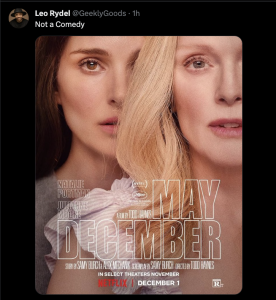
…when I watched it a couple of nights ago on Netflix. I’m still not a fan and still find it annoying, but there’s something to be said for watching a mezzo-mezzo film when you’re well-rested and comfortable and sipping hot chocolate on a nice couch as opposed to watching it jet-lagged at the Salle Debussy when you’re on a tight schedule. I’m leaving it on my “thanks but no thanks” list but I no longer despise it. This happens every so often.

How Would A “Heaven Can Wait” Remake…

…fare with Millennials and Zoomers? Warren Beatty and Buck Henry‘s romantic fantasy is 45 years old, remember. Too fanciful or would it connect? Are middle-aged and younger people still haunted by the idea of having to die someday? Have they ever not been? When’s the last time a movie about a back-from-the-dead character (or one hopscotching in and out of the eternal) really worked?

Variety‘s Owen Gleiberman has described Heaven Can Wait as “a popular comedy — but really, it’s just a fluffy afterlife fantasy with Beatty at his most meticulously abashed.” And he’s mostly right. 93% of Heaven Can Wait is a fluffy escapist comedy. But the last 12 to 15 minutes are killer. It becomes this WHOLE OTHER THING.

The last scene in that LA Colisseum passageway, the one between Beatty and Julie Christie, is one of the most emotionally affecting, spiritually transporting romantic scenes in movie history.

The film fiddles with the idea that our essence as a person — our settled soul, our eternal centerweight — not only persists through the millenia but would somehow be recognizable to a girlfriend or lover if she happened to run into us in another body. Christie fell in love with Beatty’s Leo Farnsworth and wept when he died, and yet somehow she sensed at the very end that there was something curiously familiar about Beatty’s Tom Jarrett, the Rams quarterback.

This scene (the eye contact between Beatty and Christie is magnificent) is the reason Heaven Can Wait made as much money as it did. Produced for $6 million, it wound up earning $98 million — the equivalent of $419 million in 2022 dollars.

The reason it did so well is that final fantasy scene, and the fact that the movie sold audiences on the notion that we’re all just passing through life and passing through this or that body, but that our spiritual core lives on — that we, in a sense, will never really die. And that even after our time on earth is finished, we’ll move up to heaven and hang out with James Mason and Buck Henry and other angels in business suits.

That’s not “fluffy” — that’s about as primal as it gets. We’re all going to die some day, and it’s enormously comforting to not only imagine but temporarily believe that death is not the end, but just a way station into the next realm. Heaven Can Wait sold a gentle little fantasy that made everyone feel awfully damn good.

Don’t Let it Be Forgot

…how grim, gray, slushy and bitingly windy those Boston winters can be. And how much those stirring indoor reflections and realizations can mean in this atmospheric context.

Platt’s Snappy Energy Still Felt

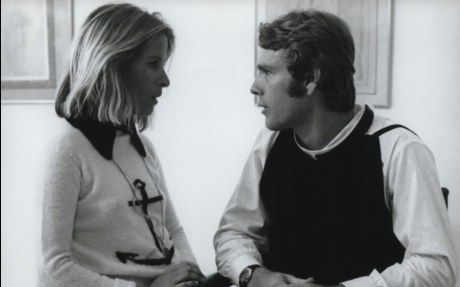
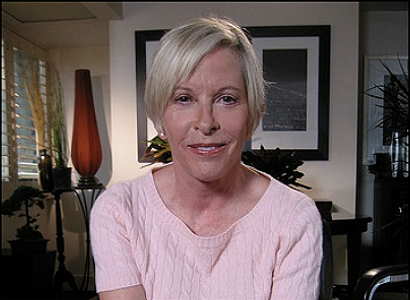
Ryan O’Neal‘s passing returned me to a nice ’90s friendship I had with the late producer Polly Platt, who was married to Peter Bogdanovich between the late 60s and early ’70s, and was a key creative contributor to PB’s Targets, The Last Picture Show, What’s Up Doc and Paper Moon. Talk about your glorious days of early ’70s cinema. Platt, Bogdanovich and O’Neal were joined at the hip for two or three years back then (along with several other hip industry hots). Now all three arw gazing down upon the planet, like Keir Dullea at the end of 2001.

Dearest Polly Platt,” posted on 7.27.11: “The death of Polly Platt from Lou Gehrig’s Disease (a truly horrible way to go) was announced today. I knew and liked Platt, and I’m truly sorry that’s she gone. She was a whip-sharp, very perceptive producer and production designer who flourished in the late ’60s, ’70s, ’80s and ’90s. In her prime she was a master at working this town. She knew everyone and everything. Her mind was incandescent. One of the sharpest, shrewdest and most nakedly honest X-factor creatives I’ve ever known.
I had a pretty good relationship with her in the ’90s when I wrote for Entertainment Weekly, People and the L.A. Times. She helped me with various “this is what really happened” stories from time to time, especially when she worked for James L. Brooks and produced I’ll Do Anything and Bottle Rocket.

She offered friendship, political support and wise counsel to Wes Anderson, Owen Wilson and Luke Wilson during the making of Bottle Rocket. The odd thing is that Platt told me she didn’t think that their movie, now regarded as a seminal ’90s film, had turned out all that well. She thought it should or could have been something else, I guess.

Platt started in the late ’60s as a production designer, and then segued into producing (and exec producing) in the mid ’80s with Broadcast News, Say Anything, The War of the Roses, the afore-mentioned I’ll Do Anything and Bottle Rocket, and The Evening Star. She did the production design on The Witches of Eastwick, Terms of Endearment, The Man with Two Brains, Young Doctors in Love, A Star Is Born (’76), The Bad News Bears, The Thief Who Came to Dinner, and four early movies with ex-husband Peter BogdanovichTargets, The Last Picture Show, What’s Up Doc and Paper Moon. She was Bogdanovich’s greatest creative counselor and political ally, Cybill Shepherd notwithstanding.

Honestly? I got a little pissed at Polly in ’94 when I FAXed her a letter about how she and Brooks and Columbia should consider releasing both cuts of I’ll Do Anything — the allegedly disastrous musical version that nobody ever saw plus the non-musical version that went into theatres. Platt showed that letter to Pat Kingsley, the tough, combative publicist who was repping Brooks (or the film) at the time. I was told that Kingsley took that letter to an Entertainment Weekly editor and said, “Look how Jeffrey Wells, who’s reporting on our film, is crossing lines by suggesting changes in our film…he’s not respecting journalistic boundaries.”

That was easily the most sickening move I’d ever suffered at the hands of an adversarial publicist. I wrote that letter out of passion for the musical form and respect for what Brooks had tried to do. And Kingsley tried to beat me with it, and Platt gave her the stick. I didn’t speak to Polly for about a year after that.

I sucked it in and made up with Polly a year later, and she helped a lot — a whole lot — with an L.A. Times Syndicate story that I wrote about Bottle Rocket in ’96.

Polly was a great lady to know and shoot the shit with. I’m sorry it ended for her after a mere 72 years.

Glazer Shock

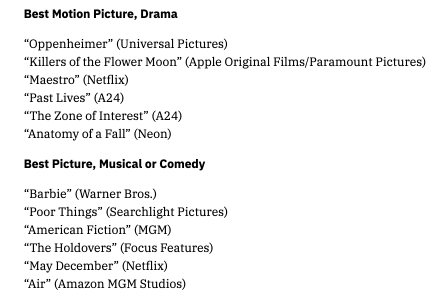
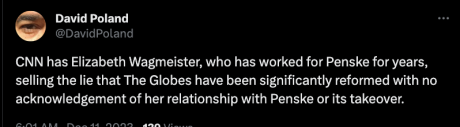
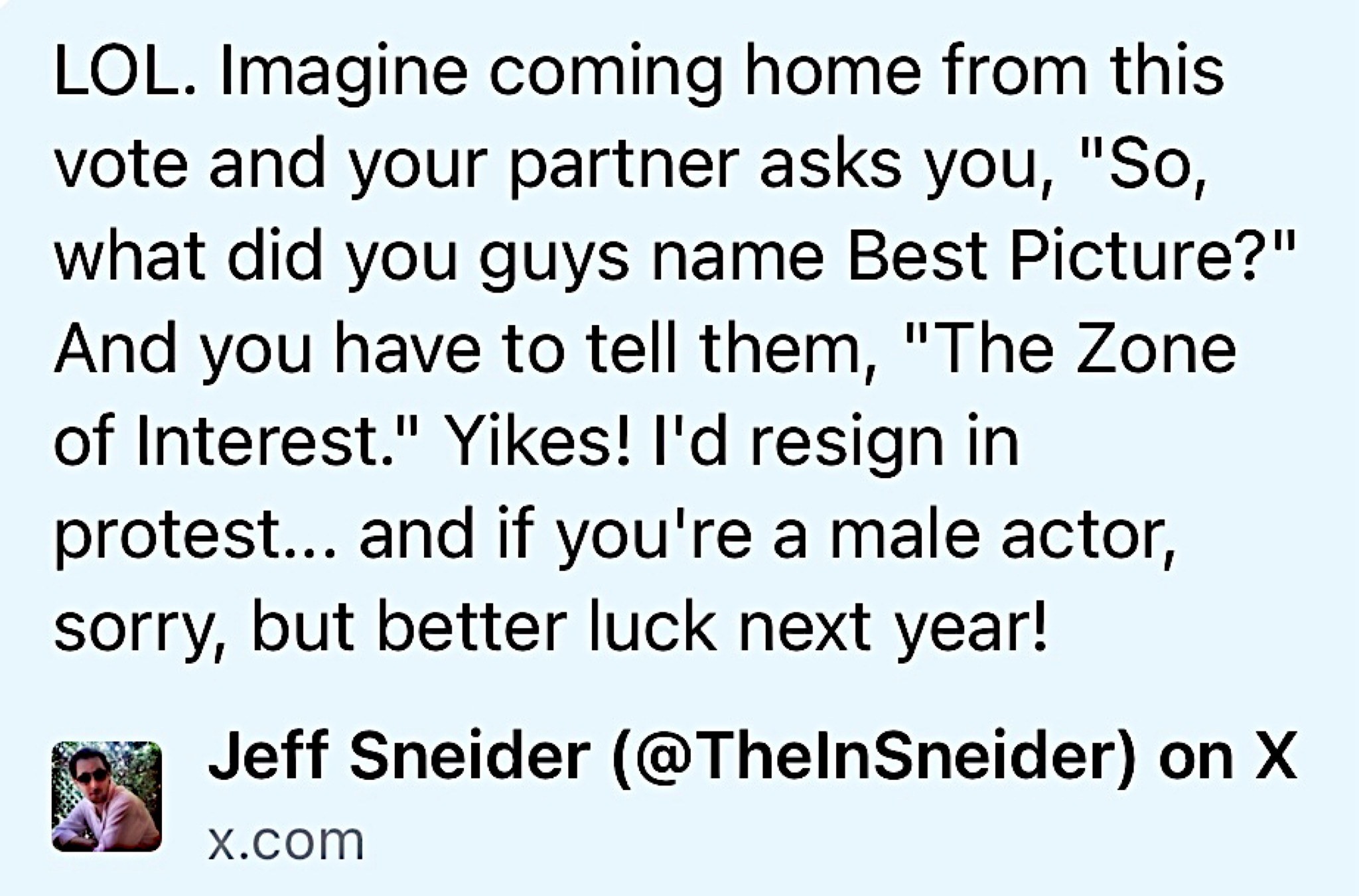
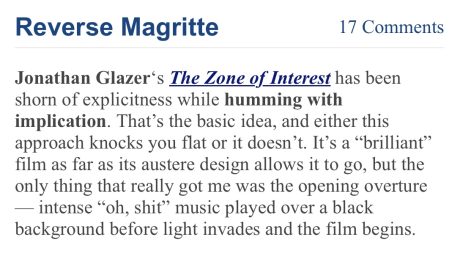
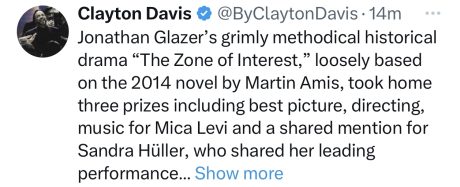
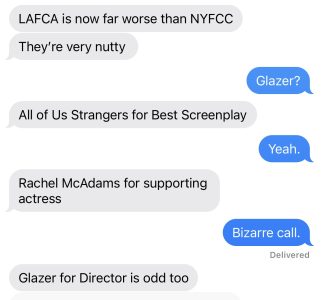
It seems to HE that LAFCA giving its top two trophies — Best Picture and Director — to The Zone of Interest and director-screenplay adapter Jonathan Glazer — was primarily a political-cultural gesture of support for Israel in its current Gaza conflict against Hamas.

And because of this timely symbolic stance three unmistakably superior or at least more exciting and inventive films, obviously lacking in terms of Zone’s moral astringence but (this is hardly a failing) with far more robust cinematic material, more sublime and emotionally abundant energy than can be found in Glazer’s necessarily grim and austere concentration-camp arthouse study…these three took the hit.

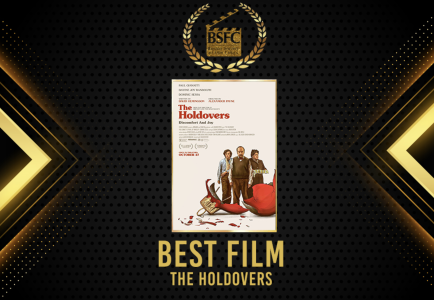
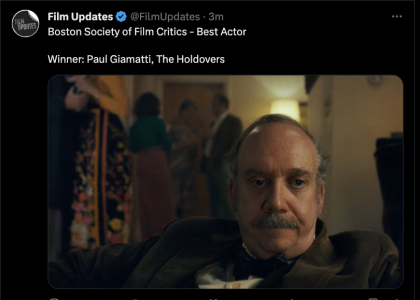
The Holdovers, Maestro and Poor Things, alas, were ceremoniously uncoupled from the main deck and allowed to fall into the sea — victims of an actual war and passed over for the same reason that Zone benefitted — Zone had the important symbolic echo factor and the other three didn’t.

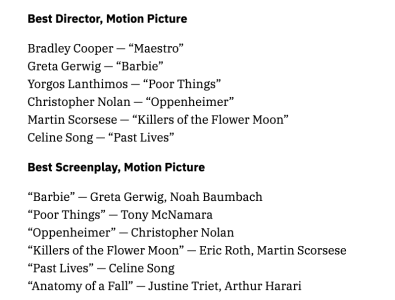
C’mon…Glazer Over Cooper, Lanthimos and Payne?

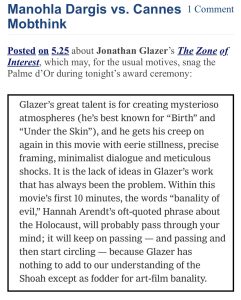
That’s perverse, man….not a fair, forthright, comprehensive call. Glazer’s The Zone of Interest obviously warrants respect for its chilling avoidist-strategy undercurrent, but it’s too dry, too minimalist, almost antiseptic.

LAFCA Best Director: Jonathan Glazer, The Zone of Interest (A24).
Runner-up: Yorgos Lanthimos, Poor Things (Searchlight)