Emma Stone Snags CC’s Best Actress Award!

With Emma “Bella Baxter” Stone having won the Critics Choice Best Actress award for her Poor Things performance, it now seems as if she stands a better-than-reasonable chance of snagging the Best Actress Oscar. Past Critics Choice votes have often been Oscar predictive so maybe. Here’s hoping.

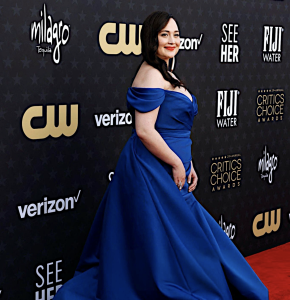
This is even better than when Emma/Bella won the Golden Globe award for Best Actress — Comedy/Musical, because this time she was up against everyone else (Lily Gladstone, Carey Mulligan, Margot Robbie, et. al.) in the same category. It’s absolutely the right choice, of course, unless, like me, you were nursing special feelings for Mulligan’s Felicia Montealegre in Maestro, which led to turbulence and regret.

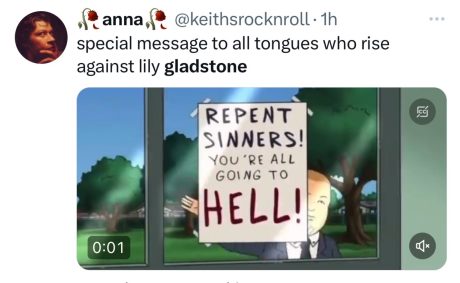
HE is not, shall we say, distressed that certain doubts and concerns about Gladstone’s Molly Burkhart performance were recognized and reflected, at least to some extent. Time and again I’ve said that Lily’s Molly Burkhart performance isn’t an appropriate Best Actress contender, considering that (a) Burkhart isn’t really a lead role and that (b) Martin Scorsese and Eric Roth‘s Killers of the Flower Moon script didn’t really give her any Best Actress-level scenes.

Not to mention the generally recognized view that quality of performance should always matter more than issues of identity.

Hearty congrats also to The HoldoversPaul Giamatti for having won the Best Actor award.

Happy days are suddenly upon us!
Oscar Poker Engulfed By Shadow of Critics Choice Awards

Herewith the latest Oscar Poker (Sunday, 1.14.24), recorded hours before the Critics Choice Awards at Santa Monica’s Barker Hangar.

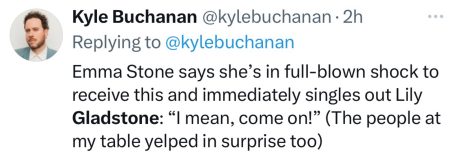
One question: Is there a chance that Emma Stone will overtake Lily Gladstone when the Critics Choice Best Actress award is announced this evening? Yeah, doubt it.

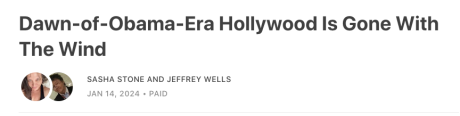
Diane English’s The Women, an ensemble farce about wealthy, ambitious ladies of privilege and particularity, was released in 2008 (i.e., over 15 years ago), and it truly represents a world that no longer exists. Sasha explains how it all changed while Jeff (who watched this remake of George Cukor’s 1939 original last night) patiently takes it all in.

Many of us recall when Roman Polanski won the Best Director Oscar for The Pianist in early ‘03, but a relative few recall the standing ovation (Scorsese, Nicholson, Nic Cage) that greeted this significant win. Today’s reactions are almost solely from the pitchforkers. With Polanski’s WWII-era drama about to be re-released next month, the torch-carrying villagers still want his head.

Again, the link.

Critics Choice bada-bing: All hail the Best Supporting Actress triumph of The HoldoversDa’Vine Joy Randolph, and all hail the defeat of May December‘s Charles Melton by Oppenheimer‘s Robert Downey, Jr., who gave a great Salieri performance.

Safe Space “Mean Girls”

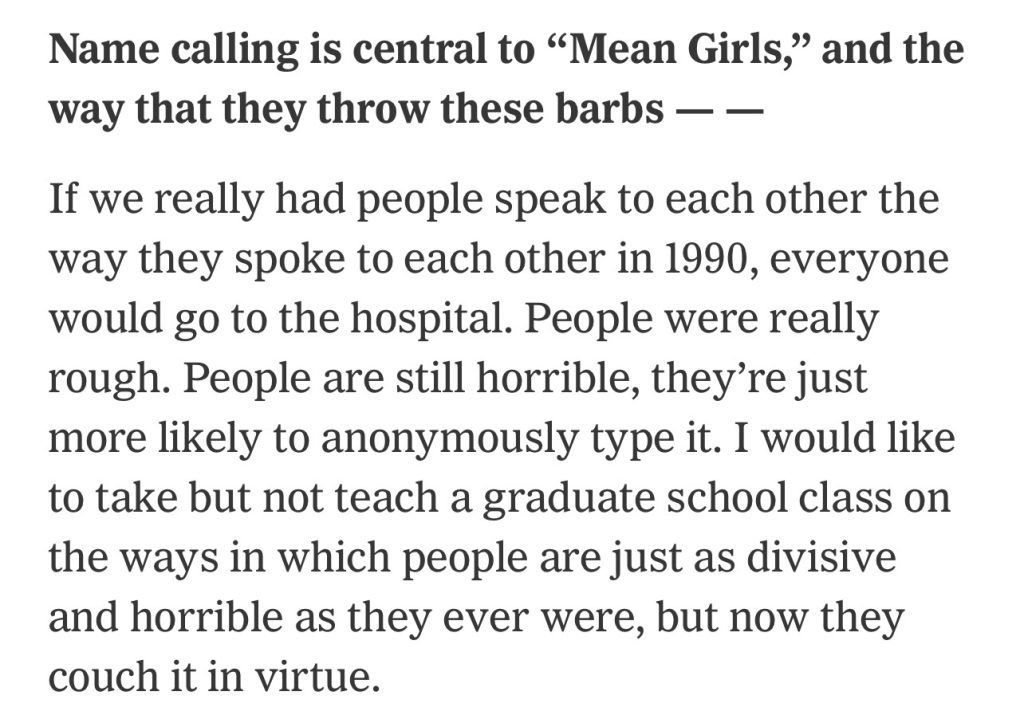
“This isn’t your mother’s Mean Girls”, a marketing phrase for the sametitled remake that opened a couple of days ago, may have sounded to some like a taunt or a brag.

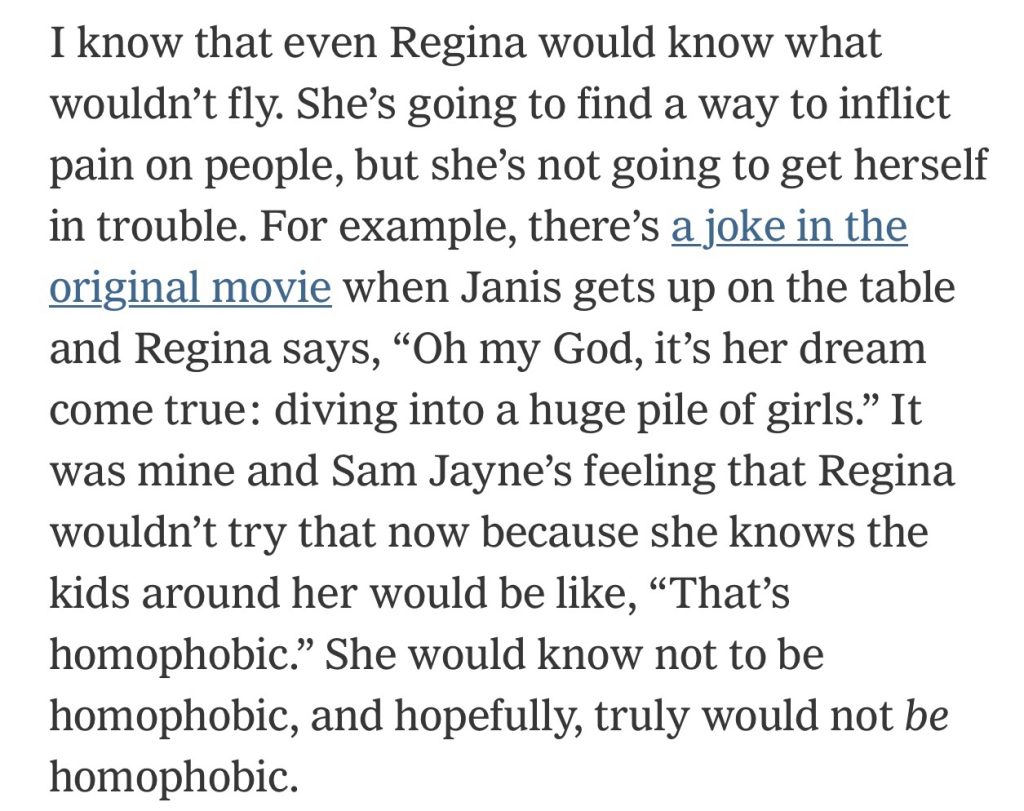
But according to screenwriter Tina Fey in a 1.10 N.Y. Times interview piece by Ashley Spencer, it was sorta kinda meant to reassure.

Having written the 2004 version as well as the newbie, Fey didn’t want her present-tense high-school bitches to violate current standards — no fatphobic or homophobic humor, for example.

Mean Girls is a critical bust on RT and Metacritic70% and 59%, respectively. And yet the somewhat-less-discriminating Joe and Jane Popcorn went for it over the last two nights — an estimated $31.5M weekend tally.

I re-watched the 2004 original a few weeks ago. For the usual HE reasons I decided to bypass the current version.

Deep Meditative Dives

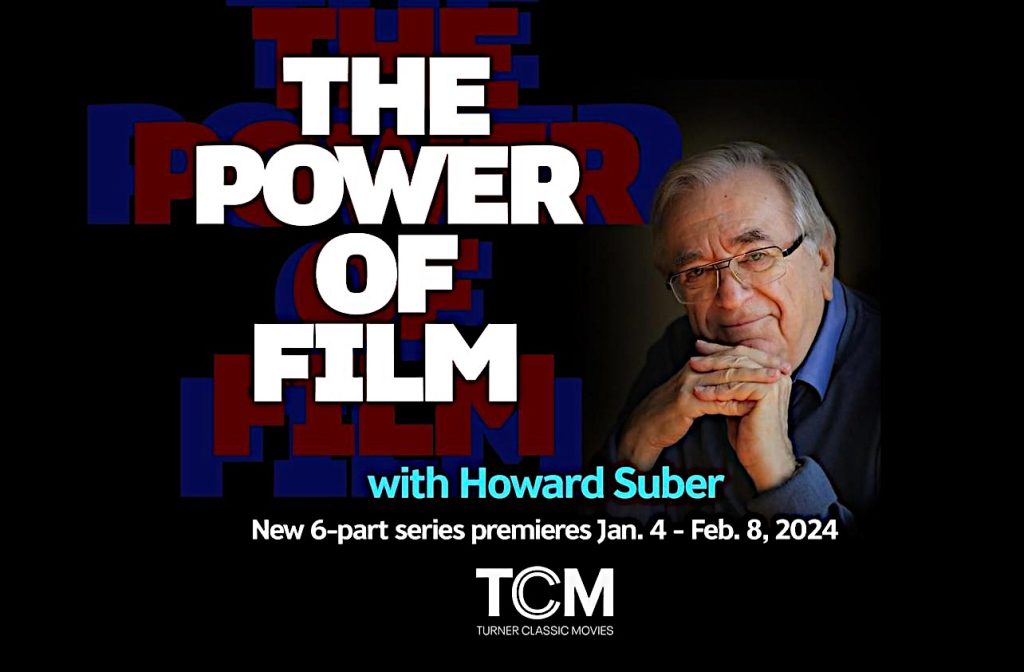
I didn’t feel merely seized by episode #2 of Howard Suber’s The Power of Film series (TCM, 1.4 through 2.8). I felt transformed, understood, opened up.

The episode is called “Trapped”, and it’s about more, I would say, than just cinematic instruction. It’s about me and my whole damn life…the whole journey and then some.

There are four key optionals, Suber says, that define characters who have mattered the most to audiences over the decades — destiny, fate, courage, defiance.

Fate is what you are — what you’re born with and will be with you until you die — whereas destiny is a choice that you need to act upon. It’s seizing life and refusing to be victimized or marginalized.

Not “changing the world” but changing your relationship to the world that you’re dealing with.

Society wants the bad guys dispensed with, but the heroic vanquisher, it often seems, must be exiled, isolated and made into a scapegoat. But we will remember him or her forever. And to live in the memory is one of the greatest powers of all.

We’re all trapped. Trapped by bad jobs, by our families, by our ethnicity, trapped by indecision and by cowardice, trapped in our schools, trapped in bad relationships, trapped by our friendships.

“Trapped”, Suber says, could be the title of nearly all memorable films. Because people go to these films to have a persistent question answered — “how do I get out of this?”

Movies say over and over you can escape the traps and fulfill your destiny — but what you have to do is act.

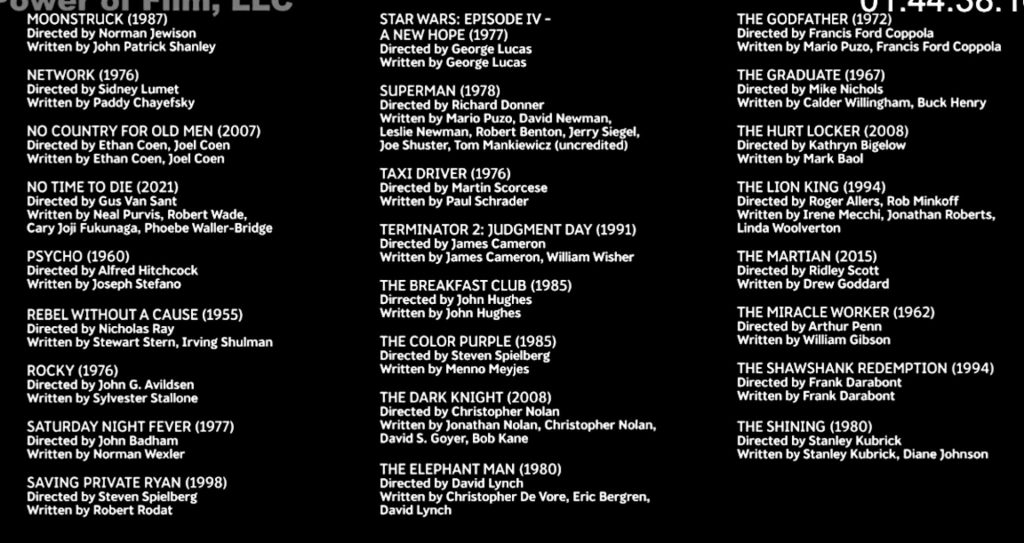
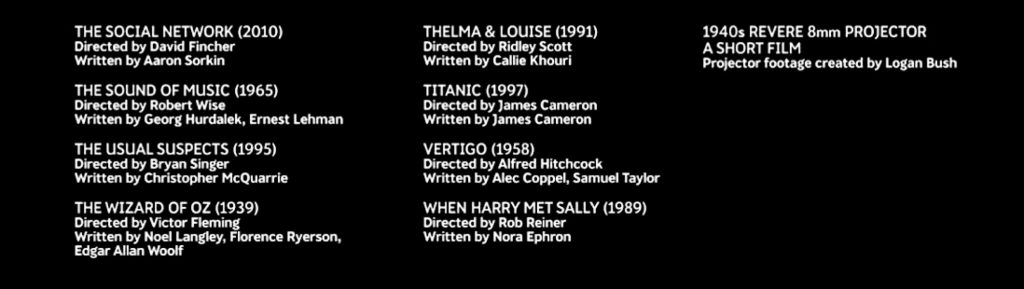
Here’s a credit-crawl rundown of clips used in this episode:

There are six Power of Film episodes — two down and four to go (“Character Relationships”, “Heroes and Villains”, “The Power of Paradox”, “Love and Meaning”).