AMC Kidman Spot Rewrite

We come to this place out of habit. Some of us, at least. To lament what we no longer have. To contemplate the grim milieu…a once-stirring art form that obviously has no interest or faith in the soul of things.

We used to come to movie theatres for magic. Once upon a time.

Back when movies were much better in general…craftier, sturdier, richer, less “sensitive”, less instructive, nervier, more explorational.

Movies that were more into quality for its own sake, and less about…it’s depressing to even describe , much less endure.

The better movies used to be about how life actually felt for people living it day by day…hah!

Movie theatres once had an aura of worship…some of us actually saw them as churches…hah!
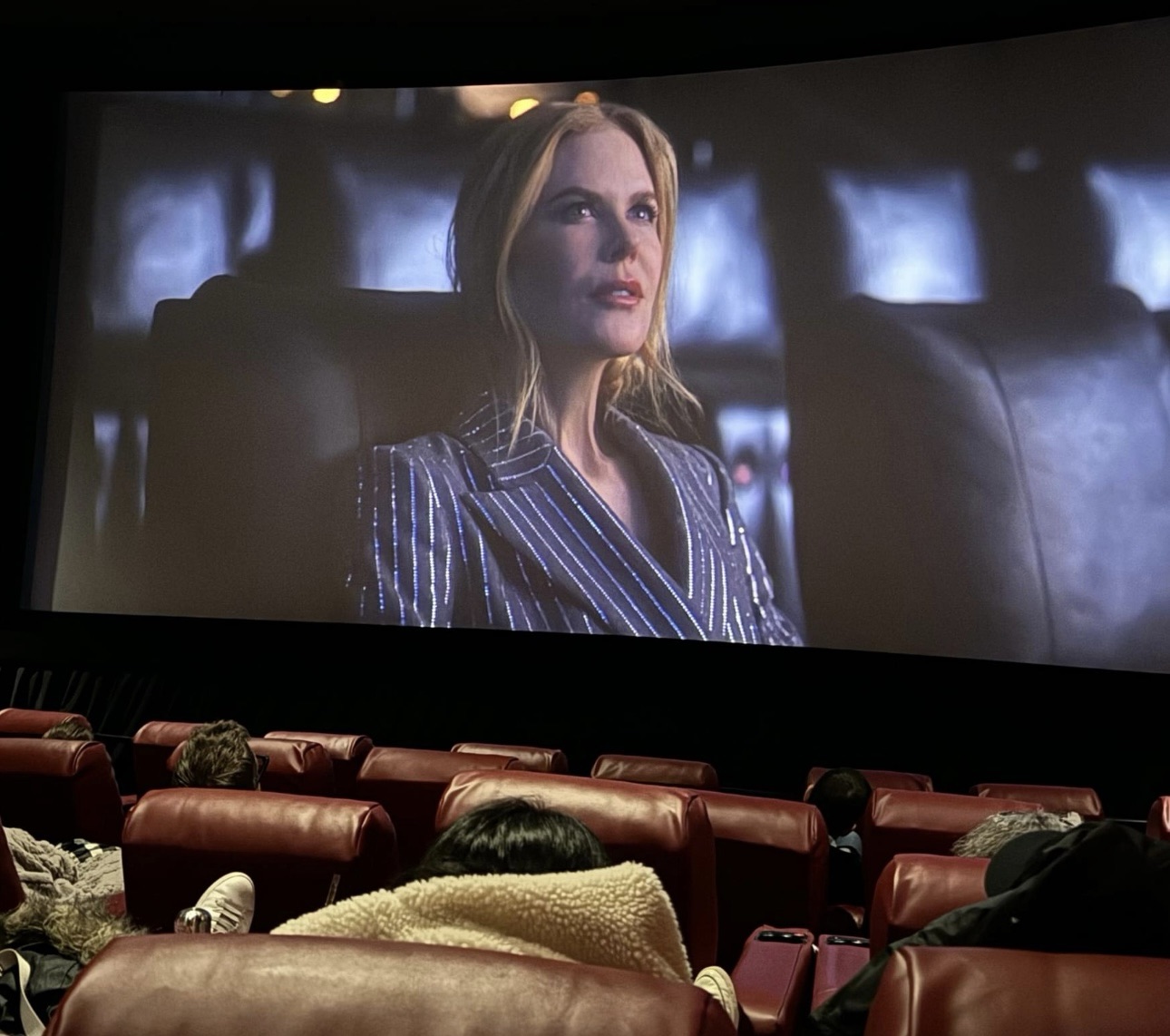
We used to come to theaters to laugh, to cry, to care. Because we need that, all of us.

We need that easy-to-describe feeling we all get when the lights begin to dim.

That feeling is…hello?…simply called irrational anticipation.

We’ve heard on social media that the film we’re about to watch is a problem of some kind, as most films are these days.

But against all reason we want to believe in ecstasy, or least in luminous possibility…that it might be a kin of The Godfather or The Verdict or A Separation, or maybe another Anora.

If there’s one thing that 95% of movies mostly don’t do these days, it’s taking us somewhere we’ve never been before.

The person who wrote that “movies today do more than entertain, but make us feel somehow reborn”? That person needs to be taken out behind the stables and horse-whipped.

Empty dazzling images on a sizable screen.
Sound that we can feel in our ribs….fine.

“Somehow heartbreak feels good in a place likе this”? Once in a blue moon, if at all. Please.

“Our heroes feel like thе best part of us, and stories feel perfect and powerful”? Bullshit.
Read more

Why Wasn’t “September 5” Included in AFI’s Top Ten?

Earlier today the American Film institute released a Ten Best Movies of the Year roster (i.e., Motion Pictures of the Year).

The ten include Anora (yay!), The Brutalist (booo!), A Complete Unknown (yay!), Conclave (yay!), Dune: Part II (approvable), Emilia Perez (highly ambitious trans-identity piece…entirely decent but calm down), Nickel Boys (stylistically audacious), A Real Pain (Yay!), Sing Sing (more of a documentary than a narrative) and Wicked (aggressively impactful).

What’s missing? Tim Fehlbaum and Scott Feinberg‘s September 5. Why is it missing? Sasha Stone posted the following speculation five weeks ago (i.e., late October):

“The problem with [September 5] right now is obvious. Much of Hollywood, or at least the loud half, is anti-Israel now. They believe our government is involved in genocide. They are angry enough that Jonathan Glazer devoted his whole Oscar acceptance speech to this subject last year. On the other hand, there are probably lots of Oscar voters who feel differently but who aren’t comfortable speaking out. So that’s a problem. The other problem is that the Oscars are ruled by actors and generally like movies with lots of stars in them.

The other reason (unmentioned by Sasha) is that while September 5 is sturdy, gripping and highly watchable, it doesn’t blow your socks off.

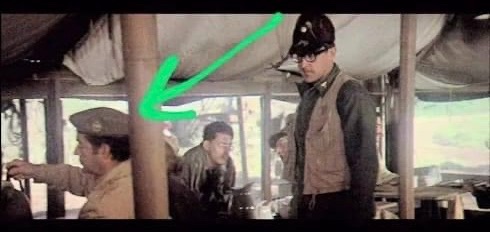
For A Day’s Work, Stallone Pocketed Around $30

Elliot Gould about working on Robert Altman‘s M.A.S.H. (’70), quoted on mash.fandom.com: “Sometimes Bob would get flustered. We were fighting the clock and he [was facing the pressure of having] to do it a certain way by a certain time otherwise you got into golden hours.

“And I remember this scene in M.A.S.H. — it was actually a scene that Sylvester Stallone, whom I’ve only met a couple of times, appears in…Stallone has said he doesn’t admit that he was ever an extra in any movie but he admits that he was an extra in M.A.S.H. And when I told that to Bob he said, “No, I don’t accept that Sylvester Stallone was in my movie…I don’t accept it.”

A 1.2.70 N.Y. Times story by Bernie Weinraub (“For Film Extras, Variety Is Certain, Stardom Isn’t“) reports that movie extras were “paid a daily minimum of $29.15.”

Altman once claimed that M.A.S.H was the first major studio film to use the word “fuck” in its dialogue.[ The word is spoken during the football game near the end of the film by Walt “Painless Pole” Waldowski when he says to an opposing football player, “All right, bud, your fucking head is coming right off!”

Son of “The Stink of L.A. in Your Bones”

Yesterday Jett called and said, “You’ll never guess where I am….Koreatown! And it” — Los Angeles, he meant — “smells exactly like it always did. It all came back the second I stepped out of the Uber.”

There are three different geographical aroma pockets in that haunted, infected, worn-down, architecurally underwhelming city.

(1) The stink of congested mid-city nabes and boulevards, which is what most of it smells like. (“Once the stink of L.A. gets into your bones” is one of Charles Bukowski‘s greatest lines.) (2) The mostly delightful fragrance of the affluent canyons and hills and hiking trails. And (3) the beachy areas, which is to say a mixture of sea air, grassy soft-soil cliffs, fast food wrappers, road tar and gasoline vapors.

You just need to occasionally take a moment and sample as much of it as possible. A few minutes of olfactory meditation.

I recall walking down an open-air ramp out of a DC-10 at LAX in the late spring of ’81, and leaning my head slightly back and taking a few sniffs and saying to myself, “This definitely doesn’t smell like New York.” You could taste the jet exhaust and melting tar and carbon dioxide, of course, but also the faint scent of dirt and sand and marshy grasses and the nearby Pacific Ocean, and the flowery fragrance of Jacaranda trees or something in that realm, and the faint smell of tacos or hot dogs or something like that.

That was 43 years ago, of course. That kind of aroma salad is gone from the LAX area for good now. Dead and gone.

But there are a few scent pockets here and there. You just have to get out of your car to really inhale them. Which no one ever does, of course.

The problem with so much of Los Angeles today, of course, is that too much of it is covered in asphalt and steel and plastic and concrete shopping malls and massive apartment buildings, and it doesn’t smell like anything exciting or promising…certainly nothing you’d want to stick around for.

I used to talk to Robert Towne about how Los Angeles used to smell in the 1940s, particularly after reading his screenplay of The Two Jakes (which is much better than the film) for some great descriptions of the fragrances that were fairly commonplace. Or talk to anyone who remembers what it smelled like from time to time in the ’70s even (despite the town being covered in horrible smog back then) or the early ’80s.

Paris is probably the greatest aroma town I’ve ever sunk into. A feast wherever you go. The Seine at night, outdoor markets (especially in the pre-dawn hours), the aroma of sauces and pasta dishes coming from cafes, warm breads, scooter and bus exhaust, strong cigarettes, strong coffee, fruit stands, gelato shops, etc.

Cannes is a heavenly aroma town during the annual May festival with the briney sea air, especially at night. Tuscany, Rome, the Amalfi Coast, etc I could go on and on.