Paul Schrader, “American Gigolo” Chat…45 Years Ago

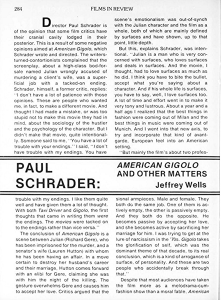
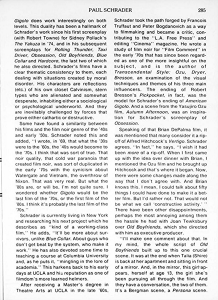
Sometime in late ’79 I did a sit-down with a youngish Paul Schrader, director-writer of the yet-to-open American Gigolo (Paramount, 2.1.80). It happened in some kind of office or cafe space right next to the old Paramount building, adjacent to Columbus Circle.

We kicked it around for 45 or 50 minutes. A week or so later I transcribed the discussion on my humming IBM Selectric in my West Village apartment. The final, pared-down version didn’t appear in the glossy, compact pages of Films in Review until sometime in the late winter or early spring.

Not Feeling The Discomfort

Justin Baldoni and Blake Lively were obviously feeling relaxed and settled into each other’s romantic vibes or whatever.

All I know is that I’m tired of their lawsuits. (Everyone is.) And that if I was a big-shot film financier, I would never want to work with either of them. Ever.

Feiffer Ascends

Legendary cartoonist, satirist, screenwriter and children’s book author Jules Feiffer (Carnal Knowledge, Little Murders) has passed at age 95 — five days short of his 96th birthday.

Born in early ’29, it took him a long while to find his own voice and style but he had things well in hand by his early 30s, which is when most creators tend to find their strength.

Carnal Knowledge (’71) was “the best collaborative work I’ve ever done with anybody,” Feiffer has said a few times.

For me Donald Sutherland‘s marriage ceremony sermon from Little Murders (also ’71, adapted from Feiffer’s play) is the absolute greatest.

The exceptionally bright and incisive Feiffer kept the engine humming for many decades and never seemed to slow down, but the fact is that while he began to gain creative power in the late ’50s and the Kennedy era, he peaked in the counter-cultural ’60s and ’70s, or during his 30s ands 40s…go ahead and complain all you want but that’s how it shook out. He peaked during the LBJ, Nixon, Ford and Carter administrations.

Stanley Kubrick to Jules Feiffer: “The comic themes you weave are very close to my heart … I must express unqualified admiration for the scenic structure of your “strips” and the eminently speakable and funny dialog … I should be most interested in furthering our contact with an eye toward doing a film along the moods and themes you have so brilliantly accomplished.”

In ‘66, Two Distinguished Heads on a Stick

Inspired by my “Oh, My Beloved” riff about Donald Trump summoning the spirit of Laurence Olivier’s “Mahdi”, I watched the generally tolerable, flirting-with-mediocre, Ultra Panavision 70 Khartoum last night.

Basil Dearden’s 1966 film ends with Olivier reacting with anguished disapproval when his triumphant followers, exuberant after the fall of Khartoum and the death of Charlton Heston’s General George “Chinese” Gordon, arrive at his tent with Gordon’s head on a tall pole.

Brief footage of Heston’s head was reportedly shot and included in the film, but an extremely negative audience response reportedly led Khartoum producers to axe the footage in favor of a quick fade-to-black.

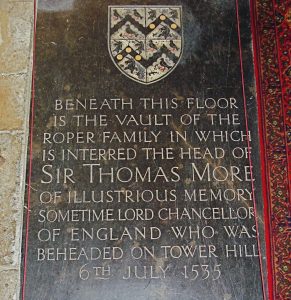
It struck me this morning that the head-on-a-spike fate of Thomas More’s (i.e., Paul Scofield’s) severed eyes, ears, mouth, nose and throat in A Man For All Seasons was also a thing that year.

At no other time and in no other films was the fate of a lead character’s head a topic of interest, but it happened twice in ‘66.

Fred Zinnemann’s film ends with narration that says More’s head sat atop a spike on London bridge before his daughter retrieved and buried it. It would have been vulgar for Zinnemann to show a replica of Scofield’s head in any context, of course, but…well, nuff said.

Khartoum premiered on 6.6.66; AMFAS opened on 12.12.66.
HE to Academy: Stop Digging Yourselves Into Woke Hole

Average Joes and Janes hate you for ushering in an age of progressive ideology in movies (now rapidly drawing to a close, thank God)…a social-cultural spasm that destroyed the mystique of transportational cinema, which had sporadically been in relatively good health until ‘17 or thereabouts.

So given this lingering loathing and a belief that H’wood is a crawling hive of woke wackazoids, do you really want to re-enforce that notion by giving the Best Picture Oscar to a mostly mediocre trans musical in order to send a “blow it out your ass” message to Donald Trump? Do you really want to dig into that hole all the deeper?

Remember when ideology wasn’t the Academy’s ne plus ultra…remember when certain movies and performances delivered profoundly or at least assuredly on their own terms (i.e., Gene Hackman’s bravura inhabiting of a racist New York detective in The French Connection, a performance that would be shouted down today by the wokeys)…do you want to continue living in that woke ditch or do you want to move on?

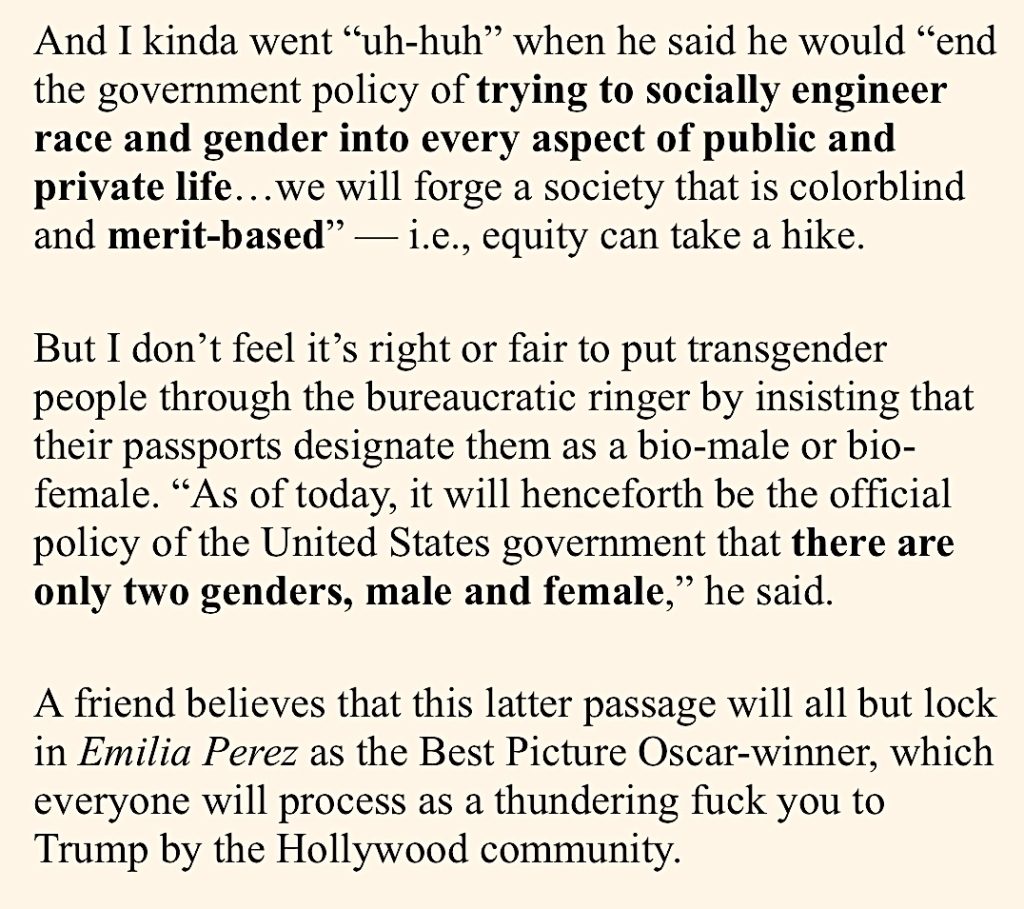
I’m bringing this up because yesterday the HE community didn’t say jack squat about the final paragraph in “Oh, My Beloved,” my response to Donald Trump’s holy-roller inaugural address.