Not Bad “Havana”

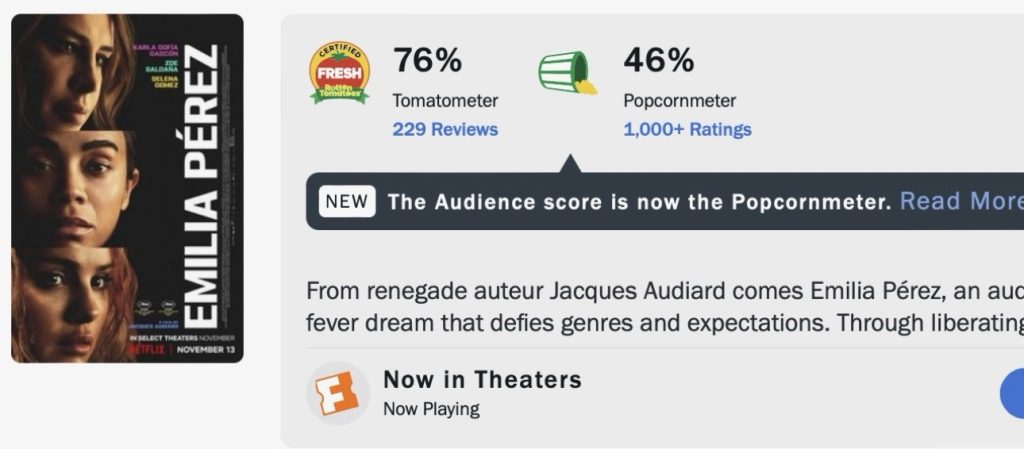
Friendo: “Regarding your recent list of the best movies released in 1990, where the hell is Havana? Havana, Jeff! Robert Redford, Sydney Pollack, David Rayfiel!”

HE to friendo: “In my eyes, Havana is a solid, respectable, midrange redemption tale — a flawed character (Redford’s Jack Weil) puts aside selfish tendencies and winds up doing a selfless, noble thing for a woman he loves (Lena Olin‘s Bobby Durán) but can’t have. It left an agreeable taste in my mouth. I loved Rayfiel’s dialogue, shared with Judith Rascoe.

“But over the last 35 years I’ve never rented or streamed Havana, and that means something. My criteria was ‘which 1990 films are still really living in my head 35 years later?’ I remember it with earnest, moderate affection, but not a lot of fervor. It’s a romantic film, obviously, but afflicted with a tone of resignation.”

Too Much To Take In

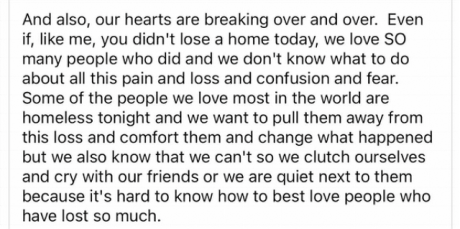
The last time I felt this shattered and emotionally affected by the word “gone” was over a half-century ago when ABC’s Jim McKay reported that every last Israeli athlete hostage had been killed. The Palisades fire deaths have been relatively minimal, thank fortune, but this time the word “gone” refers to the Hiroshima-level destruction of an entire town…thousands of blackened homes, destroyed lives. This was written Thursday (I think) by Holly Korbonski.

What Happened to Poor Michael Schlesinger

The first rule of obit etiquette is to never reveal what may have caused the demise of a recently dear and departed. But as I liked and greatly respected Michael Schlesinger, who occasionally shared comments on HE, I asked the other day what had happened.

“Mike had been laid up in the hospital for a while,” a colleague explained. “He checked in feeling weak overall, was admitted, given a room, and then just kept feeling weak. They couldn’t tell him why for quite some time.

“Eventually they diagnosed a cardiac condition. But then it was also discovered he had cancer, and that’s what finally took him out. It’s double awful that he had such a physically painful death, and that he went out without really understanding what had happened to him.

“He was an unfailingly standup guy who did a lot of wonderful work. For years he waved the flag of Budd Boetticher, even as generations of idiot Sony executives asked ‘Budd WHO?’ Eventually he got heard, and the Criterion Budd box is a testament to his perseverance.

“Last night I put on the Criterion Bluray of It’s a Mad Mad Mad Mad World and played his wonderful commentary, just to hear his voice.”

Misheard “Soul Man” Lyrics

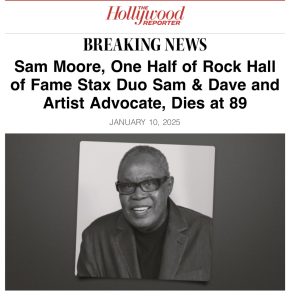
This is exactly how the words have always sounded to me…and how they sounded to me five minutes ago when I listened to Sam and Dave’s r&b classic.

“Comin’ to ya on a death road / Good lovin’ I got a ton-load / and when you get it, you got somethin’ / So don’t worry ‘cause I’m comin’

“I’m a soul man / I’m a soul man / I’m a soul man / I’m a soul man.

“Got what I got the hard way / And I’ll make ya nervous each and every day / So huh-honey, don’t you fret / ‘Cause you ain’t seen nothin’ yet.“

Listen To This Guy Anytime

Even in the company of Tucker Carlson.

0:00: How Close Are We to Nuclear War?
12:08: Why Don’t We Know All the Details of 9/11?
25:23: The Nuclear War Chain Reaction
33:29: Warcrimes in Serbia?
37:05: Why Hollywood Exiled Oliver Stone
40:33: The Economic War Between the US and Russia
50:11: Is There Hope for Hollywood?
57:37: The Rapid Advance of Nuclear Weapon Technology
1:12:02: The Shadowy Acts of NATO
1:17:07: The Origins of War Profiteering
1:26:01: How the Democrat Party Became the Party of War
1:32:50: How History Is Rewritten

Rewatchable Ensemble….Over and Over

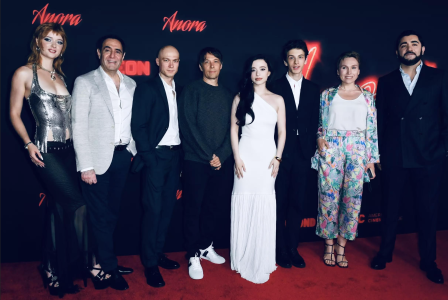
My absolute favorite Best Supporting Actor performance — hands down, no question — is Karren Karagulian‘s Toros in Anora. His signature line, spoken in the 24-hour diner just before they learn that Mark Eydelshteyn‘s Vanya is in a private room at HQ, is “I’m so fucked…sooo fucked!”

Yura Borisov gave my favorite male supporting performance that is actually in serious contention.

I’ll always think of Vache Tovmasyan‘s Garnick as the vanilla vomit guy…sorry.

Forman’s “Amadeus” Didn’t Get It….The Shorter Version, I Mean

On 2.25 WHE will release a 4K Bluray of Milos Forman‘s Amadeus (’84).

The Amazon page says the 4K runs 158 minutes, or three minutes shorter than the version that played in theatres 40 years ago.

On 9.24.02 Forman introduced an R-rated version with nearly 20 minutes of restored footage — a so-called Director’s Cut. Since that time or 22 years ago, the Director’s Cut has been the only available version of the film, as the producers modified the original film negative to include the additional footage.

The new 4K is the first time this century that the original theatrical cut has been available on home video. The longer Forman cut will also be included in the 4K package.

The Tom Hulce Factor,” posted on 11.27.23:

“As much as I respect Milos Forman‘s Amadeus (’84), I haven’t had the slightest desire to rewatch it over the last 40 years. This is due to my profound, never-forgotten loathing for Tom Hulce‘s performance as Wolfgang Amadeus Mozart. Not to mention that awful white lion’s-mane wig that he wore.

But if I could somehow re-experience my viewing of the B’way stage version with Ian McKellen and Peter Firth, I would do so repeatedly.

From “Respect for Milos Forman,” posted on 4.4.18: “Sometime in ’81 I saw Peter Shaffer‘s Amadeus at the Broadhurst, and revelled in Ian McKellen and Peter Firth‘s performance as Salieri and Mozart. It was such a huge, radiant high that I had difficulty adjusting to Milos Forman’s film version, which opened in September ’84.

“It was a handsome, well-crafted thing and a Best Picture Oscar champ, of course, and like everyone else I…well, appreciated F. Murray Abraham‘s Salieri. But Forman’s film just didn’t have that same snap and pizazz, and I hated Thomas Hulce‘s giggly-geek performance as Mozart and flat-out despised Elizabeth Berridge‘s bridge-and-tunnel performance as Constanze Mozart (i.e., she called her husband “Wolfie”).

Amadeus is a good film but the play was much better.”

Wanted A Cooler, Shapelier Cowboy Hat…Failed

I have a black, beat-up Dennis Hopper-on-drugs cowboy hat, but I wanted a classic cowboy hat with nice trim lines…the kind that Hopper wore in The American Friend…the kind that country music stars wear when they perform…the kind of hat that Ringo Starr wears on the cover of “Look Up.”

My mistake was buying an El Cheapo Chinese cowboy hat, which arrived yesterday. The basic problem is that it’s not a cowboy hat, or certainly not my idea of one. The brim isn’t wide enough. It ain’t buckaroo…looks like a modified panama. The Chinese burned me. Tied a tin can to my tail. Humiliating.

For Mostly Unfair Reasons, Bass Will Pay

Is it possible that Los Angeles Mayor Karen Bass won’t be ousted over the various apocalyptic fires of the last few days? If at least 15 percent of eligible voters sign a recall petition within a proscribed period, she’s toast.

The facts don’t matter — the fire hydrants running dry is her fault and that’s that. Plus she was off making whoopee in Ghana during the first 36 hours of the fire…forget it, she’s done.

Governor Gavin Newsom can’t run for re-election in ’26 (term limits) but if he runs for president in ’28 (which he should do, I think) he’ll have to explain the failure of the Los Angeles water system to combat the inferno.

Like I said, the facts don’t matter. But yesterday morning laist’s Kevin Tidmark explained what went wrong. It boils down to the fact that the water system wasn’t built to handle a catastrophic fire of this size, and after about 15 or 20 hours of constant, massive drainage from fire hoses spraying at full force, water pressure in the uphill regions simply gave out.

Here’s some of what Tidmark wrote:

“LADWP’s explanation for the shortage comes down to three nearby water tanks, each with a storage capacity of about a million gallons. These tanks help maintain enough pressure for water to travel in uphill areas through pipes to homes and fire hydrants — but the pressure had decreased due to heavy water use, and officials knew the tanks couldn’t keep up the drain forever.

“’We pushed the system to the extreme,’ LADWP CEO Janisse Quiñones said in a news conference. ‘Four times the normal demand was seen for 15 hours straight, which lowered our water pressure.”

“According to LADWP, the tanks’ water supply needed to be replenished in order to provide enough pressure for the water to flow through fire hydrants uphill. But officials said as firefighters drew more and more water from the trunk line, or main supply, they used water that would have refilled the tanks, eventually depleting them.

“That decreased the water pressure, which is needed for fire hydrants to work in higher elevations.

“'[Please] understand there’s water on the trunk line, [but] it just cannot get up the hill because we cannot fill the tanks fast enough,’ Quiñones said.”


Apocalypse Now

“Easterners commonly complain that there is no ‘weather’ at all in Southern California, that the days and the seasons slip by relentlessly, numbingly bland. That is quite misleading.

“In fact the climate is characterized by infrequent but violent extremes: two periods of torrential subtropical rains which continue for weeks and wash out the hills and send subdivisions sliding toward the sea; about twenty scattered days a year of the Santa Ana, which, with its incendiary dryness, invariably means fire.

“At the first prediction of a Santa Ana, the Forest Service flies men and equipment from northern California into the southern forests, and the Los Angeles Fire Department cancels its ordinary non-firefighting routines.

“The Santa Ana caused Malibu to burn as it did in 1956, and Bel Air in 1961, and Santa Barbara in 1964. In the winter of 1966-67 eleven men were killed fighting a Santa Ana fire that spread through the San Gabriel Mountains.

“It is hard for people who have not lived in Los Angeles to realize how radically the Santa Ana figures in the local imagination. The city burning is Los Angeles’s deepest image of itself. Nathaniel West perceived that, in ‘The Day of the Locust’, and at the time of the 1965 Watts riots what struck the imagination most indelibly were the fires. For days one could drive the Harbor Freeway and see the city on fire, just as we had always known it would be in the end.

“Los Angeles weather is the weather of catastrophe, of apocalypse, and, just as the reliably long and bitter winters of New England determine the way life is lived there, so the violence and the unpredictability of the Santa Ana affect the entire quality of life in Los Angeles, accentuate its impermanence, its unreliability. The winds shows us how close to the edge we are.” — Joan Didion essay on the Santa Ana winds from “Slouching Toward Bethlehem