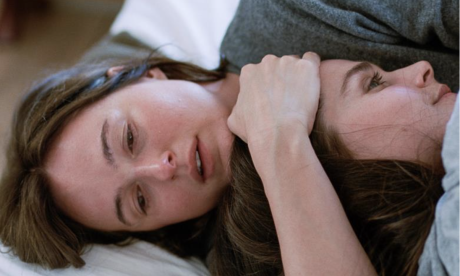
Apart from an unfortunate, vaguely annoying decision to tell yet another story about a brutish toxic male raping a woman — certainly the reigning or default narrative of present-day feminist cinema — Eva Victor’s Sorry, Baby (A24, 6.27) is really, REALLY good.
In terms of being lulled and led along into a lesbian way of thinking to the point of feeling vaguely charmed and kind of fascinated, Sorry, Baby operates in a manner that’s more or less equivalent to Luca Guadagnino’s Queer, and that, for me, is quite an achievement.
I caught this Quinzaine headliner around 8:20 pm.
Not only are Victor’s writing and direction top-tier, but her performance as lead protagonist Agnes, a brilliant literature professor who is mostly gay or certainly bi (i.e., not averse to hetero coupling when candidates like the soft and vaguely squishy Lucas Hedges come along) is about as captivating as such a performance could be.
Victor’s dialogue leaks out in the manner of someone exceptionally bright and introspective and given to thinking out loud — confessional and candid in a cautious and hesitant way, but not overly so. It feels straight and true at every turn.
Sorry, Baby is infused with guarded but self-accepting attitudes that are basically lezzy, for sure, but it’s a quietly realistic small-town social drama that wins you over early on, and then keeps earning more and more points.
I knew it had won raves after debuting at last January’s Sundance Film Festival, but I went into tonight’s screening with doubts and trepidations. But they evaporated fairly quickly.
It also delivers excellent supporting perfs from Naomi Ackie (Agnes’s totally gay, male-loathing lover during the first half), John Carroll Lynch, Kelly McCormack, Louis Cancelmi (a Scorsese guy playing the evil animal rapist), Hettienne Park as a whipsmart civil servant in a jury-selection scene, etc.
Produced by Adele Romanski and Barry Jenkins, this is definitely a goodie.
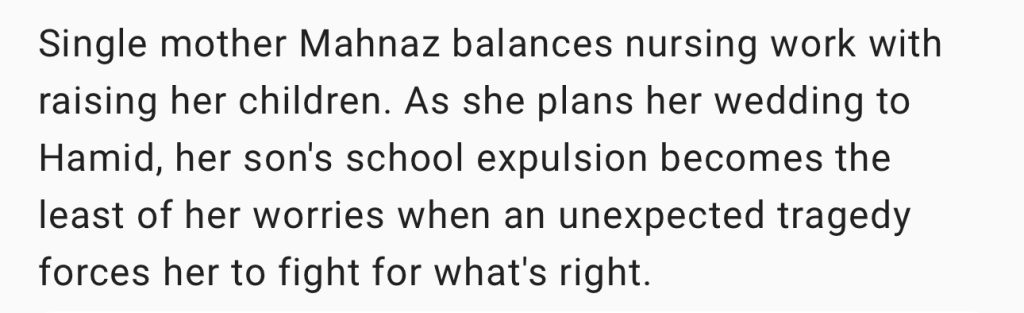
I’m very sorry but WomanandChild, which I struggled through earlier today, is mediocre and overly strident, certainly on the part of lead actress / protagonist ParinazIzadyar. I simply didn’t believe it. Just because it’s an Iranian film doesn’t assure quality. A family-squabbling drama, WomanandChild is way below the level of, say, Asghar Farhadi’s ASeparation, to name but one example.
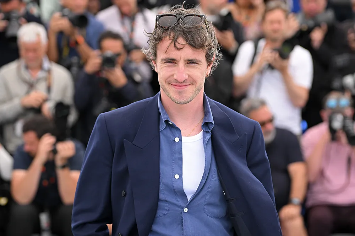
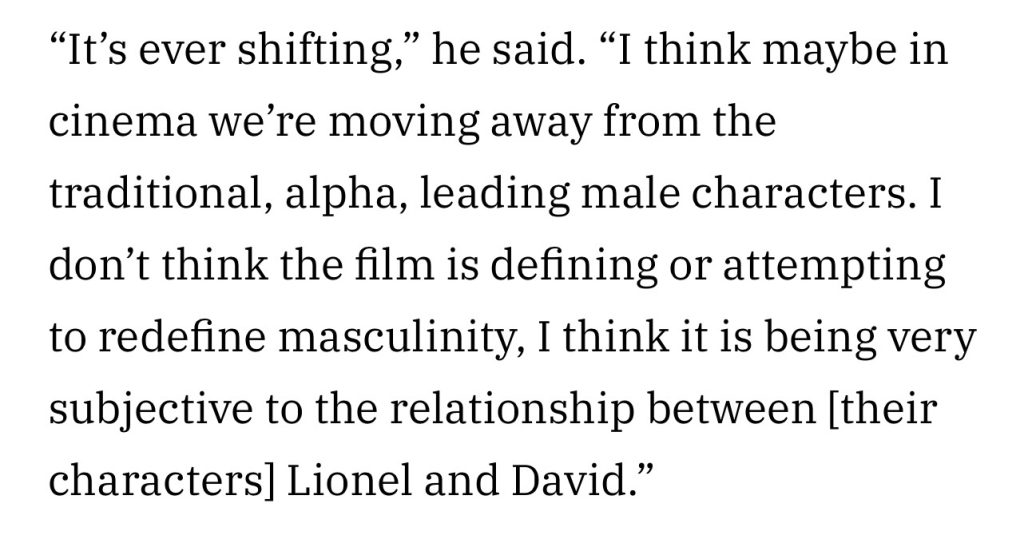
Paul Mescal, one of HE’s least favored actors (not in the least due to his sure-to-be-ruinous casting as Paul McCartney), scores again with this press conference declaration. If Mescal is starring, you can be sure that the film in question will be open to squishy, sensitive and vulnerable.
And no, it’s not “lazy” to compare TheHistoryofSound to Brokeback Mountain. Both films are mining very similar turf.
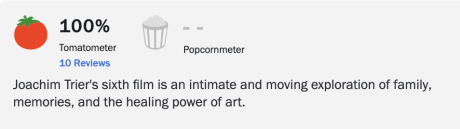
I saw Joachim Trier’s SentimentalValue last night at 10:30 pm, exiting around 12:40 am. I was afraid it might not live up to expectations, but no worries — I began to feel not only stirred and satisfied but deeply moved and delighted by the half-hour mark, and then it just got better and better.
For my money this is surely the Palme d’Or winner. I wanted to see it again this morning at 8:30 am. Yes, it’s that good, that affecting, that headstrong and explorational. A 15-minute-long standing ovation at the Grand Lumiere, and all the snippy, snooty Cannes critics are jumping onboard.
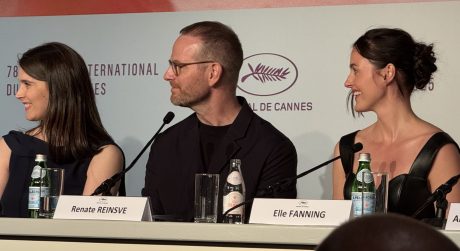
But what matters, finally, is what HE thinks and feel deep down, and that, basically, is “yes, yes…this is what excellent, emotionally riveting family dramas do…especially with brilliant actors like Renata Reinsve (truly amazing…she really kills) and Stellan Skarsgård, Inga Ibsdotter Lilleaas and Elle Fanning topping the ensemble cast”
But I was really too whipped to tap anything out when I returned to the pad at 1:15 am. I managed a grand total of 4.5 hours of sleep, and am now at a Salles Bunuel screening of Eugene Jarecki‘s The Six Billion Dollar Man…beginning in a few.
Sentimental Value (why do I keep calling it Sentimental Gesture in my head?) is a complex, expertly jiggered, beautifully acted Ingmar Bergman-esque family drama that feels at times like Woody Allen‘s Hannah and Her Sisters but with less comic snap…it’s more of a fundamentally anxious, sad, sometimes very dark but humanist dramedy (a flicking comic edge, a Netflix putdown or two). A film that’s completely receptive and open to all the unsettled cross-current stuff that defines any shattered, high-achieving family, and this one in particular.
Emotional uncertainty and relationship upheavals are in plentiful supply.
Set in Oslo, it’s basically about an estranged relationship between Skarsgard’s Gustav Berg, a blunt-spoken, film-director father who hates watching plays, and his two adult daughters — Reinsve’s Nora Berg, a prominent stage and TV actress who’s a bundle of nerves, anxiety and looming depression, and Lilleaas’s Agnes, Nora’s younger sister who’s not in “the business.”
Gustav’s career has been slumping but now he’s returning to filmmaking with a purportedly excellent script that’s partly based on his mother’s life (although he denies this), and he wants Nora to star in it. She refuses over communication and trust issues, and so Gustav hires Fanning’s Rachel Kemp, a big-time American actress, to play Nora’s role.
I could sense right away that Kemp would eventually drop out and that Nora would overcome her anger and step into the role at the last minute. And I knew the film would explore every angle and crevasse before this happens.
‘
And it really digs down and goes to town within a super-attuned family dynamic…steadfast love, familial warmth, sudden tears, extra-marital intrigue, stage fright, film industry satire, thoughts of suicide…nothing in the way of soothing or settled-down comfort until the very end, and even then…but it’s wonderful.
I have to attend the Sentimental Value press conference at 12:45 pm…breathing down my neck.
I wasn’t exactly afraid of any chowing-down scenes, but I knew I’d be a wee bit antsy about anything too graphic. I mainly wanted The History of Sound to be as good as Luca Guadagnino‘s Queer, but I knew this would be a tall order.
I emerged from a Debussy press screening of The History of Sound about an hour ago, and my initial reaction, much to my surprise, was “where’s the vitality…the primal passion?”
I’m not saying I wanted to see Mescal lick up more cum droplets (as he did in All Of Us Strangers), but there hasn’t been a more earnestly delicate, suppressive, bordering-on-bloodless film about erotic entanglement since David Lean‘s A Passage to India (’84) and before that Alfred Hitchcock‘s Marnie(’64).
Come to think of it, Marnie at least has that one scene when Sean Connery rips off Tippi Hedren‘s bathrobe, leaving her buck naked.
A History of Sound delivers a welcomely non-graphic sex scene early on, but that’s all she wrote.
The History of Sound is a gay romance made for older straight guys like me, I suppose, but even I was thinking “Jesus, I never thought I’d complain about this thing being too tasteful and hemmed in.”
Variety‘s Owen Gleiberman has called it “listless and spiritually inexpressive…Brokeback Mountain on sedatives.”
The heart of the film is when lovers Lionel (Mescal) and David (O’Connor) go hiking around rural Maine in boots and backpacks and carrying a wax cylinder sound-recording device, the idea being to record rural types singing folk tunes.
Except this happens in the winter months, and if you’ve ever been to Maine between December and late April…well, c’mon! Not to mention the lack of bathtubs or showers on such a trek, which means smelly feet and gunky crotch aromas after a few days. Who the hell would do such a thing? During the summer maybe…
O’Connor’s role is smaller than Mescal’s but the former exerts more feeling somehow…more command. Mescal’s Lionel is supposed to be a native Kentuckian, but he doesn’t sound or look country-ish. (Imagine if he’d played Lionel in the manner of Gary Cooper‘s Alvin York, who hailed from Tennessee around the same time.)
Mescal is basically playing a master of emotional constipation who doesn’t behave in a manner that suggests “1920s gay guy”…he’s very, very committed to keeping it all buttoned inside…the relationship with O’Connor’s David is highly charged and drilled, and yet they part company and Lionel moves to Italy and then England to teach music.
And then, while in England, Lionel flirts with the idea of being in love with with Emma Canning‘s Clarissa, a to-the-manor-born British lass who seems to love him unconditionally, only to blow their relationship off in order to return to Maine and possibly hook up with David again.
Which is totally nuts, of course. There was no percentage in living an openly gay life in the 1920s, so the smart move for Lionel would have been to marry wealthy Clarissa and, in the manner of Heath Ledger‘s camping trips with Jake Gyllenhaal in Brokeback Mountain, visit O’Connor for annual vacations and whatnot.
Or, put more concisely, “What the fuck is going on?”
If only Caught Stealing (Sony, 8.29) had been a Cannes competition title!
Wikipedia describes Aronofsky’s ’90s-era film as “an American black comedy crime thriller”. Screenplay by Charlie Huston, based on his book. Austin Butler (playing his first decent role since Luhrmann’s Elvis biopic), Matt Smith, Zoë Kravitz, Regina King, Vincent D’Onofrio and Benito A Martínez Ocasio.
Last night’s buzz was that Jafar Panahi‘s It Was Just an Accident, a gripping situational about rage, revenge and governmental persecution, is the likeliest Palme d’Or winner. Yesterday the Panahi film earned a 3.1 score from critics polled for Screen International’s Cannes grid, placing it in a tied-for-first-place position (Two Prosecutors also has a 3.1). I therefore watched it this morning with my hopes up and yaddah yaddah.
Within 45 minutes I knew Accident had been greatly over-rated. Critics are tumbling over political factors, and more specifically because Panahi’s years-long persecution at the hands of the Iranian government clearly inspired the narrative
“The Panahi is definitely better than okay,” I texted a colleague, “and is certainly a sobering meditation about the after-effects of state terror. But without dismissing or minimizing the traumatic effects of Panahi having been pushed around, threatened, travel-restricted, house-arrested and jailed for seven months, Accident struck me as emotionally overwrought and infuriating in some respects (no investigative specifics, no attempted research or double-checking).
“Yes, catharsis comes at the end but why wasn’t this more of a Costa-Gavras film? Why wasn’t this State of Siege?
“I’m sorry but it’s been WAY over-hyped. No one will protest if the Cannes jury gives Accident the Palme d’Or, but with the exception of a haunting sound effect (a squeaky prosthetic leg) that the film ends with — a peep-peep that sinks in and stays with you — it certainly doesn’t go ring-a-ding-ding in terms of narrative scalpel-wielding or in purely cinematic terms.”
Friendo: “Of course it’s overrated! Panahi is a good, impassioned filmmaker, but not as interesting as his persecuted artist rep would indicate. He’s basically been getting the kid-gloves treatment from those whose admiration is largely about wanting to sympathize with and support his difficult political plight, which has been going on for a quarter-century.”
My Accident problem boils down to this: Vahid (Vahid Mobasseri), an unshaven, impulsive schlubbo who endured governmental torture some years ago, is 95% certain that a lean, bearded fellow who hobbles around on a prosthetic limb is Eghbal (aka “Pegleg”), the guy who tortured him. Yahid is so persuaded because Eghbal’s prosthetic makes a slight squeaking sound, which is burned into Vahid like a cattle brand.
The problem is that 5% of doubt which disturbs Vahid — he isn’t entirely sure that he recognizes Eghbal’s face. The anger is all in his eardrums.
Vahid assaults Eghbal, ties him up and throws him into his van. Then he starts digging a hole in some desert region and is about to bury him alive….what?
Friendly with four locals who were also tortured and terrorized around the same time, Vahid drives the captive Eghbal around to ask this quartet — bookseller Salar, pissed-off laborer Hamid, wedding photographer Shiva, a bride and groom named Goli and Ali — to take a look and confirm (or deny) that the dude in the van is the one who brought such terror and misery into their lives.
Should they waste Eghbal, and if they do how will they cope with the karma of it all?
An answer about whether or not Eghbal is guilty arrives near the conclusion, but why don’t Vahid and friends simply conduct a forensic on his background? Why not hold him in a garage or cellar somewhere as they ask around and burrow into his life like the State of Siege revolutionaries knew all about Yves Montand? Why not clarify the situation by assembling some kind of half-assed dossier?
What these five bruised souls mainly do is scream and beat on Eghbal and stamp around and call him a motherfucker, etc. I understand their rage and lust for revenge, but it’s not very interesting to sit through.
I kept saying to myself “is this just going to be about psychic eruptions and spilling-over anger? Is the whole film going to behave on this level?” I was intrigued and absorbed as far as it went, but Accident ain’t no champion of the Croisette. It’s just a pretty good film about the after-effects of state terror. Y’all need to calm down.
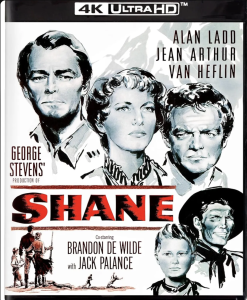
He smiled, rather, like some kind of bloodless predator or demonic reptile.
And Jean Arthur never looked this well-tended, this cool and composed…like an elegantly coiffed player from Robert Wise‘s Executive Suite (’54)…like an Eisenhower-era Barbara Stanwyck or Nina Foch.
We all know the French are seemingly attached to smoking, but even in Paris there’s a lot less of it than, say, 20 or 30 years ago. It’s nonetheless striking how many festivalgoers this year are lighting up all over the place. Are they chipping because they’re here and it’s community party time so what the hell? Mainly young people because they think themselves bulletproof, but dudes of all ages, it seems.
Posted on 11.30.08: “You have to smoke in movies like you don’t give a damn, like you don’t need it, like you don’t care one way or the other if you have any on you, like your Zen-ness is rooted in your soul and not in the way you look when you light up, you desperate asshole.
“Once an actor looks as if he anxiously wants or needs a smoke to stabilize or enhance his currency with an audience, he’s a dead man. Once an actor pulls out a cigarette in order to have something to do during a scene (and you can always spot actors who do this), the man has permanently surrendered his cool. He’s finished, discredited.”
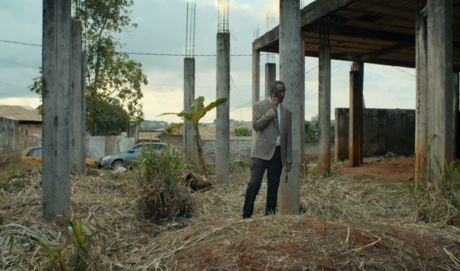
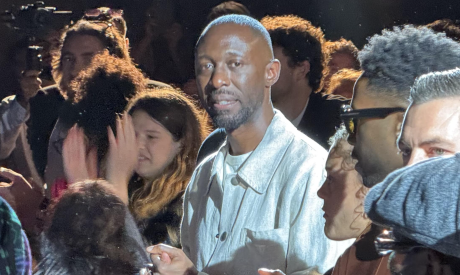
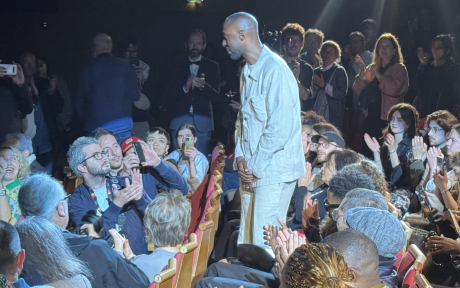
Thomas Ngojil‘s Untamable (Quinzaine des Realisateurs / Director’s Fortnight) is aces. Ngojil directs and stars in a solid, tight, straightforward ensemble drama about Billong, a strictly moral, highly intelligent and demanding detective who not only plays it rough, tough and judgmental on the job, but also at home with his wife and five or six kids.
It’s basically a character study with a murder investigation (a fellow investigator shot in the back) driving the narrative.
I dropped the ball in attempting to reserve my press seat for Scarlett Johansson‘s Eleanor the Great. Woke up a bit late (7:15 am), jumped in the shower before initiating the process…too late.
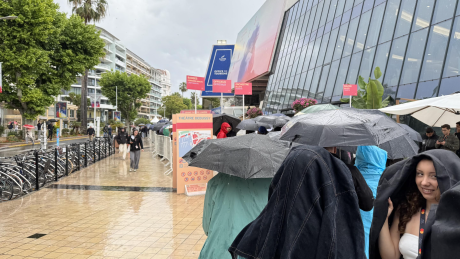
My only recourse during this afternoon’s rainstorm was to wait in the last-minute, badge-only line. Better luck next time.
And then, determined to be the mouse who doesn’t quit, I Ubered over to Cannes La Bocca to try and finally see Spike Lee‘s Highest 2 Lowest. Shut down again.
Notice how the woman looking for a free ticket does an Auda Abu Tayi at the 13-second mark, and then flashes a look of alarm with a kind of plea. “In this, a festival about world cinema in which everyone is snapping pics and videos of everyone else, I am a private person engaged in a private enterprise of sorts…please.”
I shot the video because I felt moved by her aloneness along with the rain, the umbrella and the red sign, which she was holding upside down at first. She flipped it around when a kindly passerby tipped her.