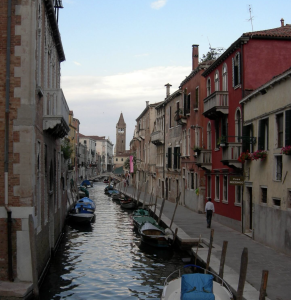
Recently arrived Venice Film Festival advice from a veteran journo…
“The festival adds two special vaporetto lines — Line 20 and Line MC — that you can use to get from the city to the Lido Casino. They will give you a card when you collect your press badge. This festival card allows you to ride free on these two lines during the entire festival. But ONLY on these two lines, not on any others — those you’ll still need to pay for.
Line 20 – https://lovevenice.net/vaporetto-routes-timetables/vaporetto-water-bus-line-20/
Line MC – https://actv.avmspa.it/sites/default/files/avm/navigazione/Actv_nav_linea_MC.pdf
“Because these lines only run during the 2 weeks of the festival, it’s hard to find specific info on them now. They only update in August. But they will show up on Google Maps. Line 20 runs regularly all day between the main island and the Lido. These are the only two lines that drop off at the festival location directly behind the Casino.
“All of the others drop off at the Lido S.M.E. station, which is a full 20-minute walk to the screening area plus you have to go through security when you get to the festival grounds, etc.
“From the Lido, Line MC goes to a station called Zattere, which is actually near where you guys live in Dorsoduro. However, Line MC only runs at night — from 6:30 pm until 1 am. It also runs during the day sometimes but not in the morning. And that schedule won’t be out until August.
“Secondly, Line 20 (which is the main line that runs all day) ONLY goes from San Zaccaria (at San Marco) to the Lido Casino and back. So if you want to catch this in the morning every day you have to get over to the San Zaccaria station, which is a good 30-minute walk from your Dorsoduro apartment. That or you’ll have to pay for another vaporetto line to get there.”
Update: I’ve just bought a one-week vaporetto pass, and I’ll probably get another one for the second week. All I’ll need to do to avoid the long walk is to jump on Line #1 at Ca Rezzonico. Line #1 goes from Ca Rezzonico to San Zaccaria every morning, and frequently…easy.
“The first screening usually starts at 8:30 am every day. Sometimes at 8:15 and sometimes at 8:45. The boat takes 20 minutes. The last morning boat you can take leaves at 7:45 am. If you catch the next one at 8:15 am you won’t make it to the screening on time. The first boats — 7:15, 7:30, 7:45 am — are ALWAYS full during the festival, and there is always a huge line of people, including students, just trying to catch the boats so they can get a good spot from which to stare at the red carpet all day.
“We’ve had fights with these gawkers and lookie lous because we can’t wait in the line and need to get to our screenings. There is also a very early boat at 6:45 am, but only one.
“I recommend to everyone coming to the Venice Film Festival to stay somewhere within a 10-15 minute walk to the San Zaccaria station. This way you won’t have to pay any extra money for extra vaporetto boats or won’t get caught in the wasted time going to/from your apartment all the way to the Lido island where the festival takes place. Everything happens there and there’s no other easy way to get there.
“After the morning rush it’s very, very easy to catch a boat any time of the day on Line 20. It’s just that early morning chaos and those giant queues that give us headaches every year.”
Last night I re-watched my Criterion Bluray of Albert Brooks‘ Lost in America, and I wish I could say I had a good time. Alas, the viewing didn’t quite work because this 1985 film is too well remembered. I knew all the dialogue before it was spoken, verbatim:
“I chose an orange tile, burnt orange”…”And by the way our hairpiece secret is off”…”I can’t hear ya”…”I heard you say that, schmucks come see Wayne Newton…I like Wayne Newton….that makes me a schmuck?”…”Santy Claus took care of everything”….”You couldn’t change your life on 100,000 dollars?”
Not to mention the opening Rex Reed-on-The Larry King Show riff about suggestive sexuality in King Vidor‘s The Fountainhead (’49).
You can’t “enjoy” a film when you know each and every line. You’re wasting your time.
Plus it was vaguely depressing to consider the fact that Brooks, one of the smartest and sharpest 20th Century funny guys and film directors in Hollywood history, never made anything better than Lost in America, and I really, really wanted to revel in what might have happened in its wake.
In her 4.18.85 review, Pauine Kael announced that “Brooks is on to something: satirizing the upper middle class from within, he shows the nagging terror along with the complacency.
“If he could pit [his ad agency character, David Howard] against a few other people as driven and talkative as he is — if a David had to fight for screen time and space with people every bit as competitive — there’s no telling what comedy heights Brooks could scale.”
As it turned out Brooks’ best-ever performances were as Howard and Broadcast News‘ Aaron Altman — a mid ’80s one-two punch that he never repeated or even came close to approximating again. At the end of the day Brooks-the-director had four peak achievements over a 15-year period — Modern Romance (’81), Lost in America, Defending Your Life (’91) and Mother (’96).
“Coddled” was originally published in The New Yorker on 4.18.85; later reprinted in Kael’s “State of the Art” [1985, E. P. Dutton]:
“As David, the L.A. advertising whiz who’s the protagonist of Lost in America, Albert Brooks is only a slightly exaggerated specimen of a large number of rising young businessmen and professional men — the insecure successes, the swollen-headed worriers. He’s the baby that we see inside those prosperous individuals.
“David has a bland moon-face surrounded by an aureole of tight, dark curls; it’s as if he wore his brains on the outside. He looks soft but he isn’t fat — just too well fed. If he were a contented man — say, a musician in a symphony orchestra who picked up extra income from the recording companies — he might be a likable dumpling. But David is an obsessive careerist who agonizes over every detail of his life.
“On the night before he expects to be made senior vice-president of an ad agency [he’s been with for several years], he lies awake wondering whether he and his wife, Linda (Julie Hagerty), the personnel director of a department store, have done the right thing in putting down a deposit on a four-hundred-and-fifty-thousand-dollar house.
“David still harbors the dream of dropping out– of taking to the road, like the heroes of EasyRider. He’s torturing himself with anxieties, and he keeps waking the exhausted Linda to tell her his misgivings and be comforted by her reassurances.
“David has gotten himself so keyed up for the vice-presidency and has put so much energy into worry about whether he’s picking the right house, the right Mercedes, and the right boat to go with the big job, that when he’s finally in the boss’s office and is offered a different kind of promotion (a big new account that involves a transfer to New York) he doesn’t have the flexibility to deal with it.
“And so he becomes unhinged; he’s like an outraged infant. He howls, he rants. If he can’t have the title he wants, he doesn’t want anything. His explosion comes in waves: he quiets down for a second or two, and then his nasal whine starts up again.
“By the time the scene is over, David has insulted the boss and been fired from his hundred-thousand-dollar-a-year job, and is in a state of shock that’s also a state of exaltation, of triumph. He rushes over to his wife’s store, demands that she quit, too, and wants to celebrate this moment of liberation by having sex right this minute on her desk in her glass-encased office.
“Lost in America is a satirical comedy about upper-middle-class infantilism and obnoxiousness — everything that David incarnates.
“Brooks, who directed the film and co-wrote the script (with Monica Johnson, who also worked on his two earlier projects, the 1979 Real Life and the 1981 Modern Romance), has developed a cool, balanced attitude toward himself as performer. The self-absorbed, ingrown David is quite different from the character that Brooks has played in other directors’ movies. Brooks was Cybill Shepherd‘s officious political co-worker in TaxiDriver; he was the unromantic bridegroom who collapsed on his wedding night in PrivateBenjamin; he was the driver in the prologue to TwilightZone – TheMovie; and he was close to inspired as the symphony conductor’s manager in the 1984 UnfaithfullyYours.
“Brooks is a remarkable comic actor — remarkable enough, perhaps, to delude people into thinking he’s just playing himself in Lost in America. It’s true that the camera often seems to be staring at David, revealing his innermost weakness. (He’s always sorry for himself.) And Brooks may have conceived this character because he saw the possibilities for this kind of maddening twerp in himself, but David is a fully created obsessive fool. He’s a highly verbal jerk who half knows he’s behaving like a jerk but can’t stop himself — he’s a self-conscious, pesky toddler at loose in the world.
“But though he’s tiresome to everybody in the movie he isn’t tiresome to us. David’s lines have been sharpened to a fatuous fine edge — he keeps us laughing at him. And Lost in America doesn’t dawdle; it makes its comic points and moves on.
“Hagerty is an ideal choice for David’s mate: you listen to her Linda and you know why she puts up with him. Her little-girl breathiness tells you. And the dim stress and panic of her gaze sugges that somewhere in the past she has been frightened and David is the Teddy bear she clutches. (These two are endlessly apologizing to each other; they do it so automatically they might be apologizing in their sleep.)
“Linda is bleakly pretty; she’s gaunt and hollow-eyed and wispy — she seems to be disappearing. David’s aggressiveness and his near-loony dependence on her don’t faze her. Life fazes her. She’s bored to depression by being cooped up in her office in the department store; she’s depressed by her whole conformist existence. But she’s too timid and worn down to come right out and express her resentment.
And yet curly-headed David, who’s crazy about Linda — kissing her and complimenting her ritually (if nothing else it occupies his mind) — never guesses at her feelings. When these two sell off their property, buy a luxury motor home, and, with the security of a nest egg of roughly a hundred and forty-five thousand, set out to find themselves and get in touch with the real America, the picture has the promising overtones of a Preston Sturges comedy.
“The movie makes a honey of a transition — a cut from the farewell party that David and Linda’s friends give them to a shot of David looking minuscule behind the wheel of the disproportionately large motor home as they leave L.A. The best visual joke in the picture is simply the recurring image of these two people who think themselves dropouts and Easy Riders as they move across the country encased in their thirty-foot Winnebago.
“Along the way, Brooks has a couple of sustained showpiece scenes where he plays off someone who can’t quite believe that this guy is actually saying what he’s saying. After the meek Linda blows their nest egg at the Desert Inn Casino, in Las Vegas, David goes to see the pit boss (well played by Garry Marshall, the director of TheFlamingoKid) and, using his advertising-man skills–and here he’s flexible–tries to persuade this smart, tough fellow to give back the money.
“The most ingenious of David’s gambits is that returning Linda’s losses can be good for business — that the occasion can thus be publicized as a casino with heart, one that periodically plays Santa Claus to losers. Spritzing one proposal after another, as if he’d been hired to prepare a campaign, David beams at the pit boss, he cajoles him; he doesn’t grovel, but you know he would if he thought it would have any effect. And his adversary is amused by the agility of David’s thought processes. (In a Preston Sturges comedy, the pit boss might have gone loco and actually adopted the Christmas-casino idea.)
“David also has an interview scene with an employment agent (Art Frankel) in a desolate small town in Arizona; when David tells the agent how much he was earning, the old guy is infatuated with the numbers and can’t resist tweaking him by repeating the amount over and over.
“David and Linda’s experiences in the real America turn out to be a two-week vacation, and the movie has a nice, quick wrap-up. In terms of David’s character, the end says all that needs to be said. And probably there’s no way for Brooks to develop the plot any further, because he sees David as hopeless–as upper-middle-class in every soft fibre of his anxious, coddled being.
“But the movie needs another turnaround, because although the ending is right for David, it isn’t right for Linda. Once she’s away from her hated job, she becomes prettier and more bouncy. She is perhaps even too adorable at times, but not glaringly. (Hagerty may look like the old-fashioned girl that suitors would bring nosegays to, but she’s a gifted, sexy comedienne.) Linda’s losing the money seems to free the movie, to open it, and she herself relaxes a bit. David becomes more compulsive than ever. His worst terror has been realized, and his mind never shuts down. He tries to hold his anger in, but when he’s looking out over Hoover Dam he can’t help yelling about the money, and once again the joke is in the disproportion between him and the physical setting.
“David keeps going over what has happened. He picks at it; he bleeds. But Linda, having done the unthinkable, is able for the first time to laugh at him. And there’s the suggestion that her blowing the money wasn’t a totally subconscious protest: in her tiny, touching voice, she maneuvered David away from his plan that they go to the Silver Bell Chapel to renew their marriage vows, and got him to take her to the Desert Inn. Afterward, her only explanation to David is ‘I held things in for so long I felt like I was going to burst.’ By talking her into quitting her job, David has unloosed something in her that Brooks and his co-writer don’t quite know what to do with.
“The movie is so good that it needs to flower; it’s like a Sturges idea that runs dry. But it’s still a nifty, original comedy.”
And how many of these films did Yahoo Entertainment’s Kelsey Weekman write about as she went along? Anyone can watch films on the Côte d’Azur in mid-May, but you also have to man up and journalistically explore cinematic meaning while plumbing the very depths of your soul.
Weekman isn’t so much a proverbial suffering scribe as an on-camera personality who does breezy lah-lah videos. (Light on the soul-plumbing.) She did, however, file a few video reports in Cannes so no harm nor foul.
My own modest tally of 22 films over 11 days paled alongside Tomris Laffly’s Herculean ordeal of catching 40 films within the same time frame, but how many of those 40 did Laffly-the-screening-slayer bang out 500-word reviews of? Screenings plus timely filings are what separate the men from the boys and the women from the girls.
Plus what about catching Directors Fortnight films deep in the bowels of the J.W. Marriott, Kelsey?
And you and your husband (what’s his story?) blew out of town before Joachim Trier’s SentimentalValue, easily the best of the festival, began to be shown? And you missed (or had no interest in) Richard Linklater’s NouvelleVague? And you liked the grimly agonizing SoundofFalling? Good God in heaven…why?