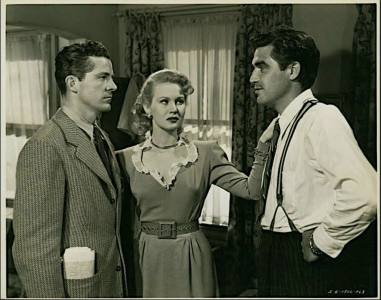
Every film maven knows tall, dark and reptilian Steve Cochran, who played Virginia Mayo’s extra-marital boyfriend in William Wyler‘s The Best Years of Our Lives (‘46) as well as Mayo’s extra-marital gangster lover (“Big Ed”) in Raoul Walsh‘s White Heat (‘49).
Known for playing casual attitude bad guys on-screen, Cochran’s inside-the-industry rep was that of an insatiable party hound…booze, broads, fast cars, private planes and inevitably “scoring” with his female costars. The town gradually formed an opinion that Cochran was much more into cooze and trim than than investing in the basics of a solid film career (devotion to acting, playing his political cards right, trying to be cast in prestige projects). In the late ’40s and ’50s Cochran was almost the Bob Crane of his time.
Fewer know about Cochran’s abrupt and curious death aboard his sailing yacht Rogue. It happened in mid-June of ‘65, somewhere off the coast of southern Mexico or perhaps Guatemala, when Cochran was 48. If you know the story of his sudden demise and especially the grisly aftermath, it’s hard not to imagine someone (perhaps Michel Franco?) making a dark twisted film about it. The Cochran saga could be a perfect vehicle for a feminist director making a standard-issue “all men are pigs” movie.
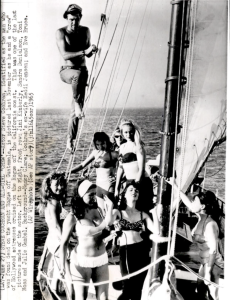
There’s something simultaneously chilling, existentially creepy and almost perversely “funny” about Cochran, who, in his late ’40s and ’50s heyday, surely dipped his wick as much as Errol Flynn or Charlie Chaplin or George Roundy or any other hardcore poon hound…there’s something simultaneously wicked and darkly funny (in a pathetic, lampoonish sort of way) about Cochran hiring three young Mexican girls to accompany him on a cruise to Guatemala in order to (heh-heh) research a film (Captain O’Flynn), and the ship being hit by a heavy storm and one of the masts being damaged, and the Cochran suddenly falling ill with an infected lung and wham, he’s dead two days later.
But the three girls don’t know how to sail and the Rogue is a long way from the coast, and so they’re stuck with Cochran’s stinky, decaying corpse — getting smellier and smellier as it bloats and turns black — for ten days until a fishing ship happens by.
The poor women had no choice but to tough it out. If they’d thrown Cochran’s body overboard and let the fish eat him, the authorities would’ve accused them of murder.
Here’s a pretty good Cochran piece by SFGate‘s Andrew Chamings, dated 10.24.22: