Johansson On Cusp of Her “Substance” Period

Critical Drinker, posted on 7.2.25: “You know, it’s actually an interesting pattern of behavior in these 40something actresses who all mysteriously get tired of the male gaze just as the male gaze is about to get tired of them.

“Please tell us more, 40-year-old Scarlet Johansson, about how you resented all those high-profile roles that literally made your career and kept it afloat for the past two decades, or how uncomfortable you were with all those multi-million dollar paychecks. Truly, it must have been a real nightmare for you. I don’t know how you coped.

“Not to impugn her acting ability or anything, but do you really think Johansson would have had the career she’s had if she looked [schlumpy]? It all kind of strikes me as the Hollywood equivalent of the old ‘you can’t fire me, I quit’ argument, trying to get ahead of something that’s inevitably going to happen anyway by reframing it as some brave self-sacrificing decision on your own part.

“It’s not like all those juicy, high-profile roles are now being offered to younger and hotter actresses, and you’re kind of yesterday’s news now. I’m choosing to take on more mature and interesting parts, Johansson is saying, because I’m more than just eye-candy for sweaty teenage boys nowadays.

“I kind of agree with Johansson, at least in principle here. I agree that it’s bad for any actor to be typecast and pigeonholed into certain roles when they want to broaden their creative range.

“But what can I say? It’s Hollywood, baby. It’s an industry based around pattern recognition and branding, selling actors like they’re commodities. And it’s not a uniquely female problem in the slightest.

“Take Hugh Grant, for example. That guy had to labor away for most of his career, playing foppish, bumbling British guys in tedious romantic comedies because that’s what people knew him for. And it’s only now in his 60s that he’s finally able to branch out into more challenging roles.

Matthew McConaughey suffered from the same problem, trapped in romcom purgatory for more than a decade before escaping into more mature roles in his 40s and 50s. Or how about all those action stars from the 80s and 90s who tried and failed to transition into other genres only to fade out completely in the 2000s when they aged out of their roles.

“The sad reality is that most actors end up being known for something that ends up defining the course of their careers. Whether it’s charm and good looks, a flair for comedy, big muscles, or just being really attractive. I guess it’s not a good or a bad thing. It’s just the way the world works.

“The Scarlett Johansson from 10 or 15 years ago understood this perfectly well because she reaped the rewards of being beautiful and getting lots of opportunities that other less attractive actresses probably got passed over for.

“Do you think all those young aspiring stars felt badly for you, Scarlett? Or do you think they ended up staring long and hard at their own reflections, cursing the fact that in the great genetic lottery, you just so happened to have better luck than them? Do you think they feel badly for you now as you approach the end of this particular phase of a career that they never even got a chance to experience?”

HE: The term male gaze was popularized by feminist film theorist Laura Mulvey in her 1975 essay “Visual Pleasure and Narrative Cinema”. The basic idea is that men have been objectifying women for their physical appearance since…uhm, prehistoric times.

And this, perversely, has led to an artistic tradition where males get pleasure from looking at females who take on passive roles blah blah. In the world of Mulvey’s “male gaze”, society is still teaching young girls that they need to look desirable in order to get attention from boys while also teaching young boys that it’s okay to view women as sex objects.

The irony is that Scarlett Johansson is on the brink of gradually not being male-gazed any more. It happens to every actress, every woman sooner or later. And to every dude. Everyone,

No Elbowing Aside Classic “Cleopatra” Doc

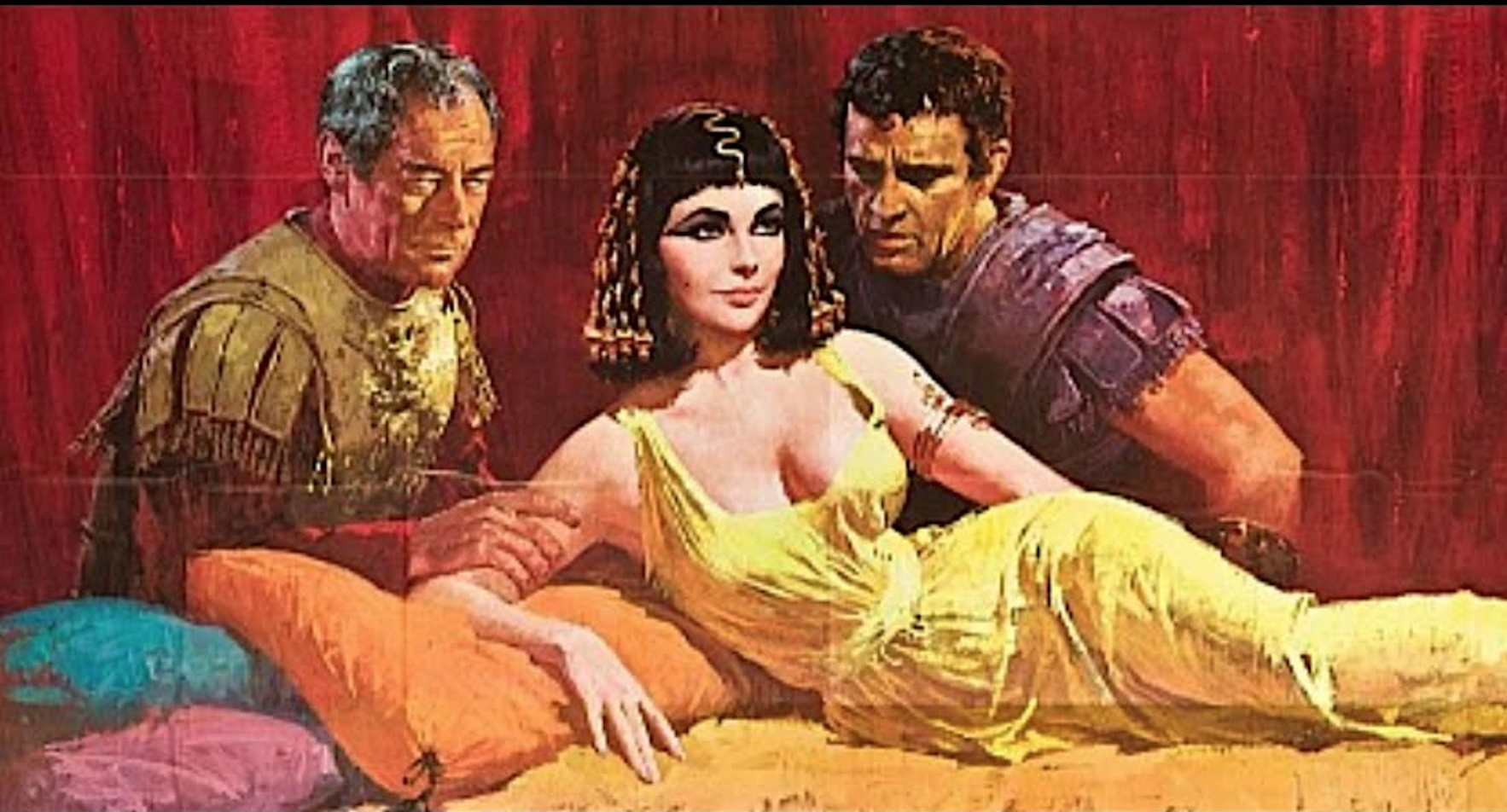
A six-episode “Plot Thickens” podcast about the extremely troubled, super-costly making of Cleopatra (’63), will begin on July 17. TCM’s Ben Mankiewicz, the grand-nephew of Cleopatra director-writer Joseph L. Mankiewicz (and grandson of Herman J. Mankiewicz), will serve as series host.

But of course, the most alluring way to sink into this saga is Kevin Burns and Brent Zacky‘s Cleopatra: The Film That Changed Hollywood.

Released in 2001, the two-hour doc is included in the Cleopatra Bluray package. It’s also on YouTube.

I’ve said two or three times in this space that the Burns-Zacky doc is far more absorbing, entertaining and dramatic than Cleopatra itself (which is actually a moderately good film, certainly in terms of the highly eloquent and literate script and fortified with the most sumptuous production values ever).

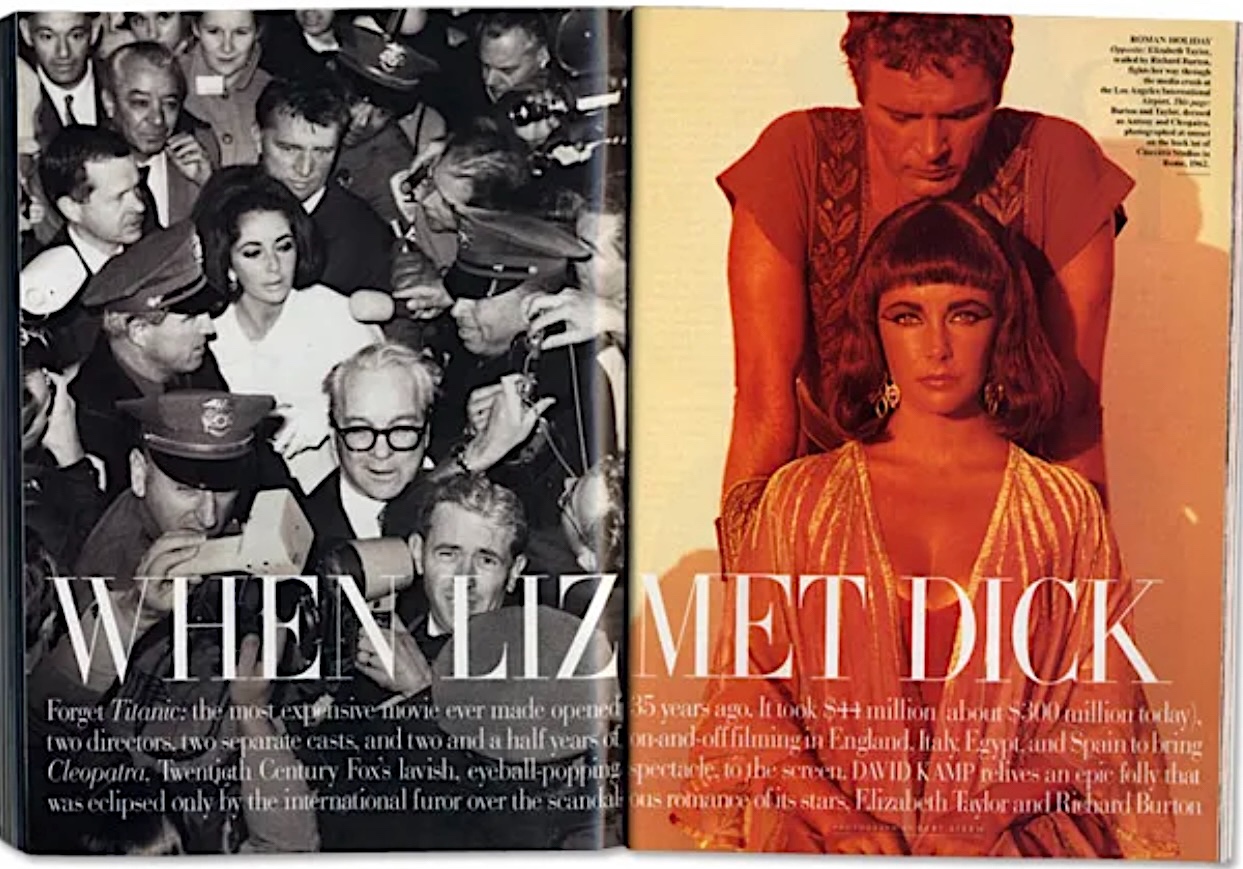
And if you can’t handle a two-hour commitment, at least read David Kamp’s April 1998 Vanity Fair piece about the whole clumsy, flamboyant, drawn-out adventure (“When Liz Met Dick“).

The Burns-Zacky is such a wise, tasty and fascinating consideration of…well, the basic stew of things within the Hollywood film-making community and culture of 60-plus years ago. A scenario for all kinds of folly and hubris and large-scale delusion and boredom and indulgence and tenacious uphill determination. It’s about what happens when an ambitious, extremely large-scale film isn’t wisely prepared or planned for. It’s about how a never-ending spigot of studio spending will inspire a torrent of waste, connivance and corruption among the best people.

Who were the “bad guys”? One was definitely 20th Century Fox chief Spyros Skouras, who sank over $7 million into the first attempt to shoot the film in England (directed by Rouben Mamoulian, and costarring the constantly bed-ridden Elizabeth Taylor plus Peter Finch and Stephen Boyd).

It was this initial wasteful investment that put the studio into a hole, and which led to the second, much more costly version that was shot in Italy (directed by Mankiewicz and costarring Taylor, Rex Harrison and Richard Burton. It wound up costing $44 million, which roughly translates into $462,887,333 in 2025 dollars.

Taylor ended up getting paid around $7 million, which works out to $73 million in our present-day economy.

Read more

Shawn Levy’s Clint Eastwood Book Is…?

My fascination with Clint Eastwood boils down to two…make that three things. One, how he kicked his directing chops up a couple of notches in the early ’90s and became a seriously formidable director. Two, his affinity for jazzy piano playing. And three, an alleged quote of his that I heard 15 or so years ago, and which I’ve repeated a few times over the years:

“Show me a beautiful, fascinating and worldly woman whom any man would be delighted to know” — in the Biblical sense, I presume he meant — “and I’ll show you a guy who’s tired of fucking her.”

That sounds initially like a brusque or insensitive observation, but the basic thought is one of fatigue and resignation. He was saying that longterm relationships are hard.

I don’t know anything about longterm relationships, much less keeping the fires going in the midst of one. My first marriage lasted four years (’87 to ’91). My second lasted the same**. My other relationships (including the People magazine affair with the married journalist) have all lasted two or three years so what do I know?

I know that keeping the coals hot isn’t easy. A dude has to reach deeper and deeper within and give it up Delbert McLinton-style, and if he holds back and retreats into his inner man-cave for some selfish reason he’ll gradually lose her. Because you have to give it up even when you don’t feel like it. And sometimes that’s difficult.

HE to Shawn Levy, author of “Clint: The Man and the Movies“, which streeted yesteday (7.1.25):

“How ya livin’? I’m still longing to own copies of your coffee-table books about the Sinatra Rat Pack and Rome in the golden age of the ‘50s and ‘60s. I’ve just decided (15 seconds ago!) to go the Wilton library route, but libraries don’t tend to own glammy large-format books of this sort.

“The early reviews of your Clint book (which I haven’t read yet) seem to indicate that it’s as full, thorough and well-measured as Patrick McGilligan’s “Clint: The Life and Legend”, which published in ‘02.

“If I were you I’d say ‘you’ve got it wrong…my Clint book delves much deeper into the crevasses of Clint’s storied, if peculiar and guarded, life and is far richer and more flavorful’ but what do I know?

I will continue to share my all-time favorite Clint anecdote, whether it’s true or not (when truth becomes legend, print the legend), but please tell me, privately or publicly (whatever), that while researching your book you were told that Clint did in fact say this on occasion. I’ve chatted with Clint a few times and interviewed him once for a Los Angeles magazine piece in ‘95, but you’ll be breaking my heart if you tell me this quote is fictitious or mis-attributed.”

** Then again four years isn’t nothing — it’s 48 months.

Go, Elon!

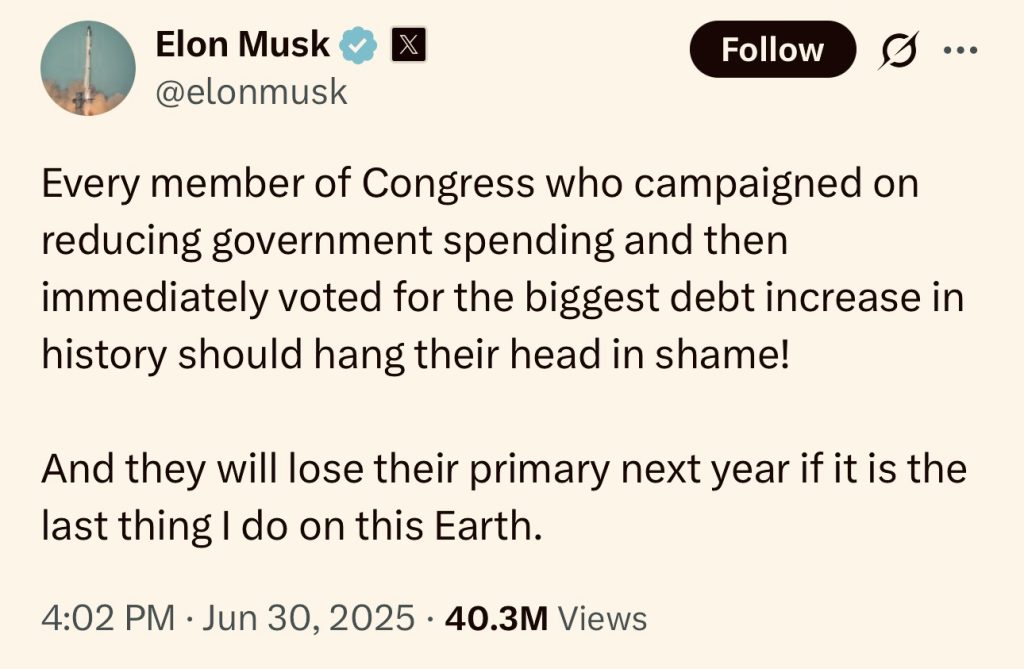
I confess to not having read the fine print within Trump’s “Big Beautiful” bill — a Poor-Screwing, Medicaid-Gutting, Tax-Slashing, Debt-Increasing Enactment which the Senate has passed but has yet to clear the House — but Elon Musk’s five-alarm, total-war resistance is theatrically striking to say the least…very emotional and absolutist.

If You’ve Never Read Mark Harris’s Seminal 2008 Book

…called “Pictures at a Revolution: Five Movies and the Birth of The New Hollywood“, Harris’s short Criterion essay, “Spotlight on New Hollywood“, recorded in 2024, will give you a little taste.

It’s very satisfying and soothing to liaten to Harris explain what happened within the U.S film industry between 1966 or thereabouts (the beginning) and the debut of Star Wars in May 1977 (beginning of the end). “Spotlight on New Hollywood” is one of the supplements that compliment the Criterion Channel’s HD streaming of The Graduate.

I watched it late last night…no embed code but very nice. It lasts around 15 minutes. Here it is…watch it.

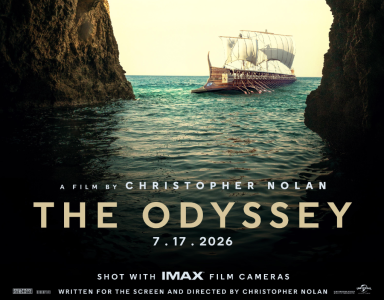
“Odyssey” Trailer Debuts Tomorrow

Chris Nolan‘s Odyssey teaser-trailer (reportedly lasting 70 seconds) is playing in front of Universal’s Jurassic World Rebirth, which opens tomorrow (Wednesday, 7.2) in theatres nationwide.


Why do hardcore movie fanatics never look like…oh, like James Garner looked in the mid ’60s or something? Or at least like Don Gordon, who played “Delgetti” in Bullitt? Why do they always look like nerds? Or nerds on cheeseburger diets? Like guys who haven’t a prayer in hell of getting “lucky”? Identify one YouTube movie guy who appears to be in shape.

>

More Thoughtless, High-Concept Edgar Wright Bullshit

Poor Glen Powell can’t land a quality-calibre role to save his life. That or he likes starring in this kind of popcorn crap.

One thing’s for sure: With Edgar Wright directing, The Running Man (Paramount, 11.7) couldn’t get much cheaper or more thoughtless.

Powell plays the Arnold Schwarzenegger role, of course…a featured slot on “The Running Man”, a highly-rated game show in which contestants are chased by killers all over the map, the idea being to escape a jail term and win money. (That was the deal, at least, in the 1987 original.)

Bellowing TV emcee in red-sequin jacket: “This is America, goddamit, and we don’t put up with no bullshit!”

Come again?

HE clarification: This is America, goddamit, and we not only put up with bullshit 24/7, we revel in it…it’s our spiritual mother’s milk.

The 38-year-old Schwarzenegger version is “set in a dystopian United States between 2017 and 2019, featuring a television show where convicted criminal ‘runners’ must escape death at the hands of professional killers.” Loosely based on Stephen King‘s “The Running Man”, published in ’82 and written under the pseudonym of Richard Bachman.

There’s no greater shoveller of empty, thoughtless, glossy bullshit-for-glossy-bullshit’s sake than Wright. Whatever social or psychological undercurrents the King book may have had back in ’82, Wright (who cowrote the script with Michael Bacall) will erase them in this November release. For Wright is a 16-year-old in the body of a 51-year-old director.

Read more

Instant Bull’s Eye Impact

One presumes that the decision to use Faces‘”Ooh La La” (’73) for the new Sentimental Value trailer came from director Joachim Trier.

This is a masterstroke as (1) “Ooh La La” instantly Anglicizes or Americanizes this Oslo-produced family drama, and thus relaxes any resistance that Academy members might harbor about Value being a fitting Best Picture contender, (b) it recalls Wes Anderson‘s brilliant Rushmore (’98), which was the last film to use “Ooh La La” on its soundtrack, and (c) it alludes to personal growth, self-knowledge and finding wisdom, which Sentimental Value is fully concerned with. A perfect song for a perfect trailer.

Neon’s trailer says Sentimental Value will open stateside in November…nothing more specific than that. Obviously a prime Oscar consideration platform.

Friendo: “Looks great. Why can’t Hollywood make movies like this? Because they mostly don’t see personal relationships out there — they only see gender and skin-color power dynamics.”

Sentimental Value opens in France on 8.20.25, in its home country of Norway on 9.12.25, and in Sweden on 10.3.25.