Who Is Today’s Burl Ives…If Anyone?

In the ’50s Burl Ives was a formidable heavyweight in more ways than one — a major go-to when the studios needed a fat, older, charismatic presence…someone who could deliver real-deal feelings, planted authority and no-bullshit attitudes. East of Eden, The Big Country, Cat on a Hit Tin Roof, Desire Under the Elms, Wind Across the Everglades, Our Man in Havana, etc.

Who, if anyone, is the reigning fat formidable of 2025? Brendan Gleeson?

Read more

Armani Departure

The great and legendary Giorgio Armani has passed at age 91.

Either you understood and embraced the Armani men’s clothing aesthetic of the late ’70s, ’80s and early ’90s, or you didn’t. And if you didn’t you were pretty much out of it.

In the mid ’90s I interviewed Armani (or a rep who claimed to be him) for my weekly L.A. Times Syndicate Hollywood column, the topic being Oscar fashion. I had faxed an interview request to his Milan office, and and to my surprise somebody said “sure.”

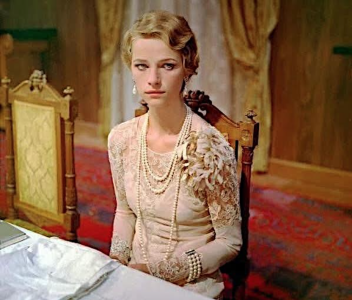
When I think of the Armani heyday, this is what comes to mind:

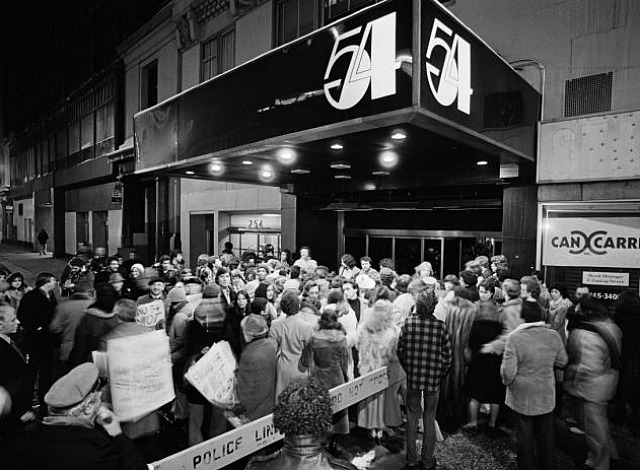
The ironclad rule about gaining entrance to the original Studio 54 (i.e., Schrager-Rubell, April ’77 to the ’80 shutdown over tax evasion) was that you had to not only look good but dress well. That meant Giorgio Armani small-collared shirts if possible and certainly not being a bridge-and-tunnel guinea with polyester garb and Tony Manero hair stylings.

As I watched Matt Tyrnauer‘s Studio 54 I was waiting for someone to just say it, to just say that Saturday Night Fever borough types weren’t even considered because they just didn’t get it, mainly because of their dress sense but also because their plebian attitudes and mindsets were just as hopeless.

It finally happens at the half-hour mark. One of the door guys (possibly Marc Benecke) says “no, the bridge-and-tunnel people never got in“…never.” I can’t tell you how comforting it was to hear that again after so many years.

Another thing: Bob Calacello or somebody mentions how Studio 54 happened in a glorious period in American culture that was post-birth control and pre-AIDS. The film explains how liberal sexual attitudes were particularly celebrated by urban gay culture, which was just starting to sample freedoms that today are more or less taken for granted. Guys couldn’t hold hands on the street but they certainly could once they got inside Studio 54.

But one thing you can’t say in today’s climate (and which Tyrnauer’s film doesn’t even mention in passing) is that the ’70s were also a glorious nookie era for heterosexual guys. It was probably the most impulsive, heavily sensual, Caligula-like period (especially with the liberal use of quaaludes) to happen in straight-person circles since…you tell me. The days of Imperial Rome?

This kind of thing is now a verboten topic, of course, with the 2018 narrative mainly being about how guys need to forget “impulsive” and turn it down and be extra super careful in approaching women in any context. But things were quite different back in the Jimmy Carter era. I’m not expressing any particular nostalgia for those days, but the new Calvinism of 2018 couldn’t be farther away from what the social-sexual norms were 40 years ago. Just saying.

Schnabel’s Surreal Calamity Trip

I didn’t hate Julian Schnabel‘s In The Hand of Dante, which I caught a night or two ago, or at least I didn’t hate it altogether. But it did make me groan here and there, and it instilled anguished feelings…spasms of revulsion and disgust and disorientation. I literally said out loud “oh, God…oh, no…oh, Jesus” during a ridiculous mass-murder scene.

And I felt heartbroken that poor Oscar Isaac had committed to playing the dual lead role (a fictional wise-guy version of Tosches as well as the real, actual Dante Alighieri), and I felt so sickened by Gerard Butler‘s coarse, poseur-level performance as Louie, the hit man, that — BIG-ASS SPOILER WARNING! — I was overjoyed when Louie finally got plugged. “Good!” I said to myself, “and please burn in hell.”

Something is very wrong when a film by a director you’ve respected and admired for the better part of 30 years (Basquiat, Before Night Falls, The Diving Bell and the Butterfly and At Eternity’s Gate are Schnabel’s best)…something is very, very wrong when his latest initially excites and delights and fills you with hope and even wonder, and then, in the space of less than 20 or 25 minutes, makes you feel like you’ve dropped some really bad acid.

No, I haven’t read Nick Tosches’ same-titled source novel, but I know Tosche’s hipster prose style pretty well (I’m a huge fan of “Hellfire” and “Dino: Living High In the Dirty Business of Dreams“) and…how to put this?…as I watched Schnabel’s film I was saying to myself “This is wrong, man…the crude, porno-violent pistol murders are way over the top…this isn’t the Tosches I know or want to know.”

Tosches’ 2002 novel was co-adapted by Schnabel and wife Louise Kugelberg, and this fact alone is somber testimony, you bet…proof, even, that fortifying a marriage by working on a movie script together is not, in and of itself, a good idea, for the lurching between delirious madman poetry and black-and-white bullets slamming into craniums and chest cavities is my idea of godawful.

I guess I’m now obliged to finally read Tosches’ 2002 book, a trippy, semi-fictional dream saga with the same title, but how could Tosches have written such a thing? There’s no question that Schnabel and Kugelberg have desecrated Tosches’ legacy here.

I can only tell you that walkouts began early on in the Sala Darsena, and that I was cringing and flinching and almost writhing in agony.

Butler is now 55 and way overweight, and the ridiculous “Louie” smokes like a mentally-deranged chimney. Butler reminded me a bit of Orson Welles‘ Hank Quinlan in Touch of Evil (’58), not in terms of Welles’ obesity (Butler is merely bloated by way of a pig diet) but in terms of his character’s perversity…theatrical, random-ass, sub-mental, dumb-fuck cruelty.

Born and raised in Scotland, Butler’s natural accent is soft and gentle and charming, but of course he’s been speaking with a fake, tough-guy patois all these years…what a shame.

HE to friendo a couple of hours after Dante ended: “Tosches’ semi-fictional book of the same title can’t be as vulgarly, bruisingly violent as the film is, not to mention gven to such wildly florid trip=outs and generally lost in its own psychedelic fantasy scenario. It starts well but within the first half-hour there’s a noticable absence of taste and discretion. It’s occasionally just plain awful. Okay, Martin Scorsese’s bushy-bearded cameo is a hoot, and Al Pacino has a good scene with a very young Tosches early on. But the shootings are so plentiful and thoughtless and grotesque…beyond repulsive.”

“Worst Film Ever Made By Anyone Ever”?

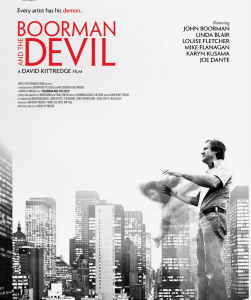
Tomorrow’s most highly anticipated viewing is David Kittredge‘s Boorman and the Devil, which screens at the Sala Corrinto at 9 am. The reputation of John Boorman‘s The Exorcist II: The Heretic was so bad in ’77 that I not only ducked it theatrically, but have avoided even the various video versions. I haven’t even streamed it in recent years.

Basically because I’m so invested in the excellence of William Friedkin’s original Exorcist that I don’t want the aura tainted in any way, shape or form. But now I’m into it, and will be at tomorrow morning’s screening with bells on.

David Kittredge statement: “When I first saw The Exorcist as a teenager, it bewitched me — both as fan of 1970s films as well as a horror fan. Next to it on the shelf of my video store was its 1977 sequel, Exorcist II: the Heretic. I knew it had a bad reputation — but I saw it was directed by John Boorman, who I knew had made a number of critically acclaimed movies (which I hadn’t seen yet) so I quickly rented it.

“Exorcist II: The Heretic was mesmerizing to me. It didn’t play like a conventional horror movie; nothing felt conventional about it at all. It was a sequel that was nothing like the original — it was visually stunning, colourful, kinetic, overflowing with ideas and images. It felt like it came from another world.

“Over subsequent years I became obsessed with this film. And when I got the opportunity to connect with director John Boorman about it, I embarked on a seven year journey to tell the story of how he made one of the most audacious, big-budget creative swings in Hollywood history, and then endured a critical and commercial cataclysm. It’s a story about how Hollywood once took huge bets on auteur filmmakers, and how that era ended. And it’s the story of one of the most hypnotic, subversive and misunderstood studio films in Hollywood history.”

Read more

“Dynamite” For The Nervous System

Remember the good old JFK days when it took a little while to attack the Soviet Union with nuclear weapons? If a rogue order to bomb the Russkis had been given by an unstable SAC base commander in the early ’60s, say, nuclear bombs would then be delivered by Air Force guys flying big-ass B-52s, and with “one geographical factor in common — they are all two hours from their targets inside Russia.”

President Merkin Muffley has two hours to try and stop this bonkers attack and thereby prevent the Doomsday Machine from going off? Man, that’s a really luxurious time frame to work with, certainly compared to the lousy 25 minutes that top-level strategists and officials (White House, government, military) have in Kathryn Bigelow‘s A House of Dynamite (Netflix, 10.10).

A bum 25 minutes to, like, do something about a North Korean or Chinese or possibly even a Russian nuclear missile heading toward the great city of Chicago? C’mon! Some people need 25 minutes just to take a dump and then wash their hands, brush their teeth and spray the bathroom with Febreze.

First of all, isn’t 25 minutes a bit much, as in not enough breathing room? Wouldn’t it be dramatically preferable if the missile’s travel time took 40 minutes instead? More time to think, consider options, fire back at Pyongyang, freak out, call loved ones, generate an immediate warning to Chicago-area smartphones, etc.

A 6.22.18 Business Insider report estimated that a nuke travelling from Pyongyang to Chicago might take 39 minutes and 30 seconds. Has that Armageddon clock really been cut by 50% over the last seven years?

The fact that Dynamite lasts 112 minutes may suggest to some that the essential suspense kicks in for only 25 or so, once, or roughly one-fifth of the running time….wrong.

Bigelow and screenwriter Noah Oppenheim‘s strategy is to wade into three versions of the same 20-minute countdown — different locales, different key characters, all wearing the usual clenched, super-grim expressions.

Now that I’m re-running the film in my head, I’m not precisely recalling how those three 25-minute sections add up to 112. I’d really like to watch it again with a stopwatch.

If Bigelow went with three 40-minute sequences, more situational stuff could happen. Little things, big things, eccentric whatevers. 20 minutes is just too crammed, man. Especially for the people of Chicago.

Unless I missed something (and it’s quite possible that I did), none of the Dynamite decision-makers give serious thought to the idea of instant-messaging the entire Chicago populace (not to mention the people of Illinois, Wisconsin and Indiana) and saying something like “hey, guys…not much time for anything, but you need to immediately find some local school with old-fashioned classrooms so you can can all put your heads under the desks…seriously, you have 25 minutes to confess your sins or fuck your boyfriend or girlfriend one last time or go to church and pray to the one and only God or order your favorite spicy hot dog or Subway ssalami andwich or tell your kids that you adore them or, you know, pop an Oxy or inject yourself with Vietnamese heroin.”

One of the basic Dynamite messages, by the way, is that this country’s “iron dome” defense system doesn’t work all that well, especially when the task is “htting a bullet with a bullet.”

Fair question #1: “Yeah, okay, it’s a tough nut to crack but if you can’t lick this technological challenge, then what good are you, Jimmy Dick?”

Fair question #2: If you were Oppenheim and creating A House of Dynamite on your Macbook Pro, would your instinct be to show Chicago being melted to death and/or blown into little shards with a super-gigantic mushroom cloud reaching so many miles high that even Cary Grant‘s Roger Thornill could see it from that Prairie Stop Highway 41 cornfield, which was….what, in southern Illinois or western Indiana?

Or would you figure “naaah, it’s more effective to hold back and prompt the audience to imagine the carnage instead?”

Cheers and congrats to all the Dynamite players, first and foremost Rebecca Ferguson (generally the coolest and most composed), followed by Idris Elba (irked and perplexed U.S. President), Gabriel Basso (second most disciplined), Jared Harris (unstable James Forrestal-like Defense Secretary), Tracy Letts (the General Buck Turgidson of this scenario, only older and without the laughs and no pistol-hot girlfriend), Anthony Ramos (hardcore team leader who vomits when push comes to shove), Moses Ingram, Jonah Hauer-King, Greta Lee (North Korean expert) and the great Jason Clarke

A House of Dynamite is not my idea of a game-changer in any kind of stylistic visual sense. It’s basically just a highly effective throttle-ride, very nicely shot by regular Bigelow dp Barry Ackroyd, and razor-cut like a motherfucker by Kirk Baxter.

What’s the default term? “A super-tense, nail-bitten thriller that Joe and Jane Popcorn will have a high old time with”…something like that But it won’t deliver the same charge on a 65-inch HD screen. It was great seeing it on the huge screen at the Sala Darsena. Everyone should be so lucky or priveleged.

Heartbreaking Hind Rajab Episode Gets Docudrama Treatment

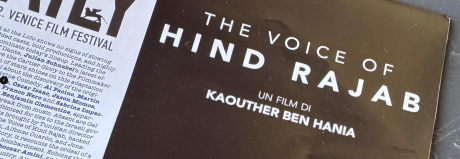
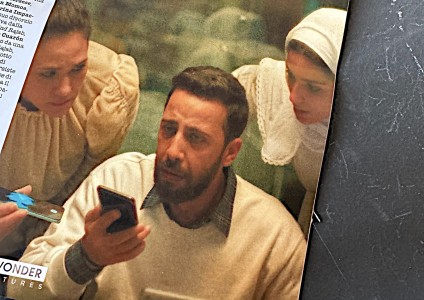
The Voice of Hind Rajab is an emotionally devastating, 89-minute docudrama about the January 2024 slaughter of a family of Palestinian innocents (and the five-year-old Hind Rajab in particular) in northern Gaza, from impassioned director-writer Kaouther Ben Hania.

It screened this morning at 8:30 am, and was met with sustained applause during the closing credits.

I found the film deeply upsetting, but it has to be stated that the focus is solely on the anguish and terror of this poor little girl, and is therefore manipulative by creating a narrative that says “bloodthirsty Israel troops were the bad guys who brought pure evil into this girl’s life”.

But at the same time the film ignores the indisputable fact that Hind Rajab would probably be living today if Hamas had not viciously attacked and murdered 1195 Israelis on 10.7.23, and if Israel hadn’t decided to turn the Gaza Strip into a lifeless moonscape in response.

Rajab was killed by IDF forces during the Israeli invasion of the Gaza Strip, roughly 20 months ago. They also killed six of her family members, plus two paramedics who had attempted her rescue.

Wiki excerpt: “Rajab and her family were fleeing Gaza City when their vehicle was shelled, killing her uncle, aunt and three cousins, with Rajab and another cousin surviving and contacting the Palestine Red Crescent Society (PRCS) to ask for help while noting that they were being attacked by an Israeli tank. The cousin was eventually killed.

“Rajab was left stranded in the vehicle for hours on the phone, as paramedics from PRCS attempted to rescue her. Both Rajab and the paramedics were later also found killed.

“Israel claimed it had no troops present and denied carrying out the attack.

“This was refuted, however, by Washington Post and Sky News investigations, which relied on satellite imagery and visual evidence, concluding that a number of Israeli tanks were indeed present and one had likely fired 335 rounds on the car that Rajab and her family had been in, with tank operators being able to see that the car had civilians including children in it.

“The Forensic Architecture investigation also concluded that an Israeli tank had also likely attacked the ambulance that came for Rajab.”

HE reaction, tapped out a half-hour after the screening ended: “This is an emotionally manipulative drillbit film about the awful ravages of war.

“No God’s-eye view, no bitter irony, no Paths of Glory-like compassion for combatants on either side, and certainly no conveying the basic reasons for the slaughter.

“It’s mainly about the constant milking of our emotions by focusing on a terrified five-year-old girl struggling to survive inside a car with her dead (i.e., ‘sleeping’) family as she speaks to a small group of Palestinian crisis workers trying to arrange for Red Cross workers to rescue her.

“Hind Rajab’s life is at extreme risk, of course, because of (a) Hamas’s suicidal fanaticism and (b) Benjamin Netanyahu’s determination to wipe them all out, down to the last combatant.

“The film is extremely sad and affecting (the audience applauded passionately), but be honest — it shamelessly milks, milks and milks until the cows come home.

“Innocent civilians, after all, have been in the collateral line of fire and savagely murdered throughout history. When has this never not been tragic or horrifying?

“How many terrified little girls died because of the aggressive battle strategies of Julius Caesar, Alexander the Great, Genghis Khan, Napoleon Bonaparte, George Washington, William Tecumseh Sherman, Adolf Hitler, George S. Patton, Omar Bradley and William Westmoreland?

“And how many little German girls died, by the way, from bombs dropped by Lieutenant Colonel James Stewart, who was the flight leader for a massive thousand-plane attack upon Berlin, and who also helped bomb the shit out of Frankfurt, Brunswick, Bremen and Nuremberg?”

News bulletin: War is cruel, merciless and morally repugnant.

Top-Tier, Efficiently Made, Vaguely Underwhelming

There have been no genuine grand slams at the 82nd Venice Film Festival. Not to hear it from press folk, at least.

I recognize that so far the strongest emotional press-screening reaction has been in response to Kaouther ben Hania‘s The Voice of Hind Rajab, which indicates it’s a favorite to win The Golden Lion. And yet its refusal to consider the horrendous Gaza conflict within some kind of realistic social-political context and its insistence upon a strict and narrow emotional focus strongly argues that it’s dishonest and manipulative on a certain level.

I also recognize that Park Chan-wook‘s No Other Choice, which I chose not to see because PCW’s films have always infuriated or at least annoyed me, is probably Hind Rajab‘s closest Golden Lion competitor.

If I was on Alexander Payne‘s jury I would push for Laszlo NemesOrphan (which at least brandishes a certain artistic integrity, despite concluding with one of the coldest and ugliest resolutions I’ve ever considered in a movie theatre), Olivier AssayasThe Wizard of the Kremlin, Francois Ozon‘s The Stranger, or perhape even Noah Baumbach‘s Jay Kelly, if only because it has the best closing line of all the competition flicks.

The across-the=board presumption is that Mona Fastvold‘s The Testament of Ann Lee, a bazonkers musical about 18th Century Shaker fanatics that will smother your soul and cause Average Joe audience members to weep with frustration, will wind up with some kind of Venice Film Festival award. Giving it the coveted Golden Lion would be going overboard, so the most likely end result will probably be a Best Actress Volpi Cup for Amanda Seyfried.

The best out-of-competition films, hands down, have been Luca Guadagnino‘s After The Hunt, Laura Poitras and Mark ObenhausCover-Up and Iain Forsyth and Jane Pollard‘s Broken English.