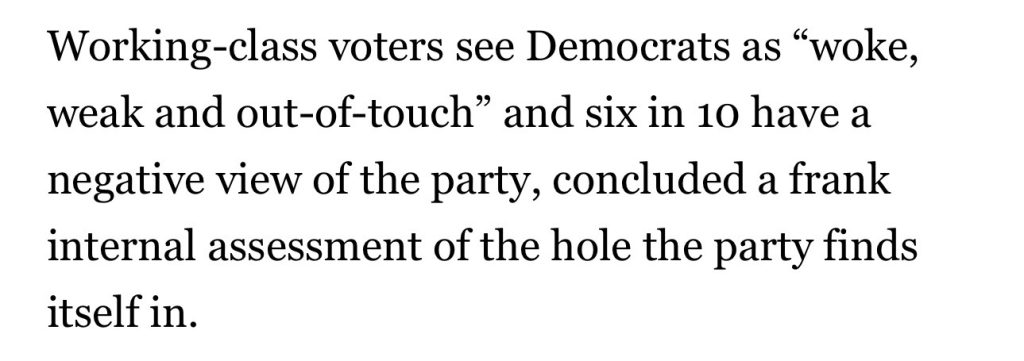
Masterful Glumhouse Drama — Infidelity, Depression, Nothingness — Brilliant Bancroft, Exquisite Pinter Dialogue

Until last night I had ducked Jack Clayton and Harold Pinter‘s The Pumpkin Eater (’64) for decades. I never even thought about giving it a whirl, mainly out of fear that it might smother me in dreary wifey nihilism and perhaps make me feel morose. (It’s based on a novel by Penelope Mortimer.)

But I finally gave in last night, and it’s actually quite exceptional — a sophisticated, finely wrought, moderate-mannered parlor drama about a gradually deteriorating London marriage.

Vaguely similar to David Jones Betrayal‘ (’83), which Pinter also wrote, of course, based on his 1980 play, The Pumpkin Eater has a wry, half-fleeting, matter-of-fact quality. But it also conveys genuine compassion for a woman who’s slowly perishing within.

It’s basically about Peter Finch‘s chilly screenwriter husband — an aloof, constantly disloyal hound who in his heart of hearts needs to be constantly worshipped and massaged and, I’m guessing, blown for good measure — quietly and relentlessly cheating on the poor, wounded, downhearted Anne Bancroft, who allows their many children to basically run their marriage.

This is going to sound shallow but I felt deflated by the fact that Bancroft’s hair is rather gray throughout — only in the very beginning are her locks dark and ravishing in the style of Mrs. Robinson, whom she would play two or three years later. It makes her look drained and faded. Bancroft was only 32 or 33 when the film was shot, and yet Clayton tries to make her look at least 47 or 48, if not older. But her performance is staggering, and it resulted in her second Best Actress Oscar nomination.

Costarring James Mason, Maggie Smith, Cedric Hardwicke, Alan Webb, Richard Johnson and Yootha Joyce. Oswald Morris‘s black-and-white cinematography is generally delicious; ditto Georges Delerue‘s score.

Pauline Kael: “Bancroft’s performance as the (compulsive childbearing) Englishwoman whose nerves are giving out has an unusual tentative, exploratory quality. (It ranks with her more straightforward acting in The Miracle Worker.)

The Pumpkin Eater is a stunning, high-style film — fragmented yet flowing. The murky sexual tensions have a fascination, and there are memorable moments: Bancroft’s crackup in Harrods; glimpses of Mason being prurient and vindictive, and Maggie Smith being a troublemaking ‘other woman.'”
What Immediately Comes To Mind When Diane Ladd Comes Up?

That’s correct — the first hit is Ladd’s Flo Castleberry, a world-weary, sharp-tongued waitress in Martin Scorsese‘s Alice Doesn’t Live Here Any More. The second hit is her performance as the doomed Ida Sessions in Roman Polanski‘s Chinatown.

Chinatown was released in the atmospheric heat of Watergate — 6.20.74. Alice opened almost exactly six months later — 12.9.74.

For The Record

Between 2:35 and 2:41 you can definitely see Janet Leigh‘s Marion Crane catching a subdued breath. Leigh is trying so hard, but her lower neck muscle buckles or expands ever so slightly. No question about it. Once you’ve noticed this, the realism of this scene goes right out the window.

Hideous “Marty” Waltz

Paddy Chayefsky won a Best Adapted Screenplay Oscar for Marty (’55), but it wasn’t adapted from a book or a play or any non-cinematic source. The Delbert Mann-directed Marty was, line for line, Chayefsky’s own live-TV play — same dialogue, barely “adapted”. It was simply filmed on celluloid and slightly “opened up” with two or three exteriors rather than captured on live TV.

Initially posted on 6.2.14: “There’s one thing wrong with Delbert Mann and Paddy Chayefsky‘s Marty, which won 1955’s Best Picture Oscar and launched the career of Ernest Borgnine after he took the Oscar for Best Actor. (Mann also won for Best Director; ditto Chayefsky for Best Adapted Screenplay.)

“The problem is that jaunty Marty theme song, which apparently wasn’t written by score composer Roy Webb but songwriter Harry Warren and arranger George Bassman. The brassy and fanfare-ish waltz is entirely out of synch with the simple, somewhat sad story of a lonely Bronx butcher and his loser friends and a girl he falls in love with.

“The purpose of the song was purely about marketing — the idea was to persuade audiences that Marty wouldn’t be too much of a downer. It succeeded in that goal but the music sure feels like a downer now.”

“They Fucked It Up”

Bill Maher: “Yeah, the R-rated comedy, Naked Gun…”

Michael Rapaport: “They fucked it up. They fucked the R-rated comedy up. I liked the Liam Neeson remake of Naked Gun, but the R-rated comedy went out with cancel culture.”

Maher: “Yeah, but don’t you think there’s a different vibe now?”

Rapaport: “I don’t think it’s different.”

Maher: “All right, woke is not [entirely] dead.”

Rapaport: “It ain’t dead. Every move you make, every step you take…if you screw up they’ll dump on you. All that old-school stuff…Farrelly brothers…awesome but they won’t make ’em.”

Maher: “Very politically incorrect except for the one I so love…I just watched it again…Green Book. The Peter Farrelly film. That’s an adult movie. It won the [Best Picture] Oscar, but the woke shit on it…it was a movie that they should have loved…ten years ago they would have come all over it because it’s about racism and has all the right moves…the black guy is way smarter than the white guy…but it was directed by a white guy so it had to be [trashed].”

Do You Spell Your Daughter’s Name “Callie” or “Kali”?

Last weekend I got into a spirited discussion about the spelling of a young girl’s first name.

When spoken it rhymed with the last name of My Lai murderer William Calley…”CALL-ee”. My first reaction was that it was probably spelled like Callie Khouri, the screenwriter of Thelma and Louise.

No, I was told — the spelling starts with a “k.” Okay, I replied, but the origin of that name would be spelled Kali or Khali— the name of a major Hindu god, “primarily associated with time, death and destruction.”

A third option is that the girl’s mother called her CALL-ee because of a simple fond memory of California…no link to Callie Khouri or Gunga Din or Eduardo Cianelli’s guru.

I did a quick Google search of “Kali” on my phone and tried to present it as validation of that spelling. I was told that the Hindu spelling was immaterial because the young girl in question is black. Huh? She could be violet with pink polka dots, I muttered to myself, and Kali would still be a term of Indian or Hindu origin.

Read more

Mr. Chayefsky, I Presume?

Matthew Miele‘s Paddy Chayefsky: Collector of Words, a highly absorbing 95-minute doc, first surfaced on 7.27.25. I finally sat down and watched it this evening on HBO Max.

Mr. Chayefsky is the only writer to win three Oscars for solo, non-collaborative screenwriting: the adapted Marty (’55), and the written-for-the-screen The Hospital (’71) and Network (’76).

I fell in love with the man when I first saw The Americanization of Emily (’64). Despite Marty‘s vaulted reputation I didn’t actually sit down and watch it until sometime in the ’90s.

Read more

Cleaner Words Have Rarely Been Written or Spoken

What magnificently concise writing…straight to the point, not a single superfluous word or syllable. And yet they’re read by a kind of magical sorcerer…a wonderfully soothing, calming voice from the great Alec Guinness…sublime.

“The young woman known as Alexandra Borisovna Ostrakova is your daughter. You arranged for her illegal departure from Russia by pretending she was a secret agent of the Thirteenth Directorate. You stole public money and misused the resources of your service. And you caused the murders of two men, the first in England and the second in West Germany. I do not ask what you did to the wretched Oleg Kirov.

“Any one of these offenses would be enough to ensure your death at the hands of your rivals in the Collegium.

“There is also the open question of what may be done with your daughter, here, now that her true identity is known. It is possible that she is curable, I am told, with the right treatment here in the West. In the East it is different, as you know. But what will happen once she is deprived of money and proper papers? She will become a perpetual and ailing exile, ferried from one public hospital to another. I do not need to imagine her solitude, or yours. I have seen her.

“When we met in Delhi, I urged you to come to the West. I promised you, within reason, a decent life. If you do that now, if you cooperate in your interrogation, you will be resettled in the usual way, and your daughter’s future in the West will be secure.

By your actions, you have disowned the system that made you. You have placed love above duty. The ground on which you once stood is cut away. You have become a citizen of no man’s land. I send you my greetings.”

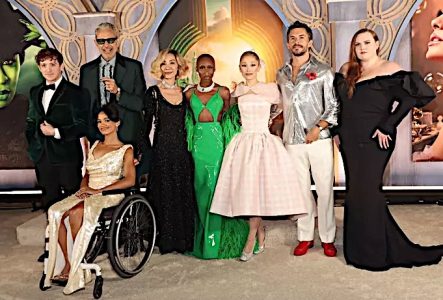
Fat, Black, Asian and Anglo Gay, Cueball Lesbian, Rail-Thin Pop Star, Short Ginger Hetero Dude, Disabled, Middle-Aged Asian…

Jeff Goldblum is the only Wicked: For Good cast member I personally relate to, and his character (the Wizard of Oz) is fairly villainous for the most part.

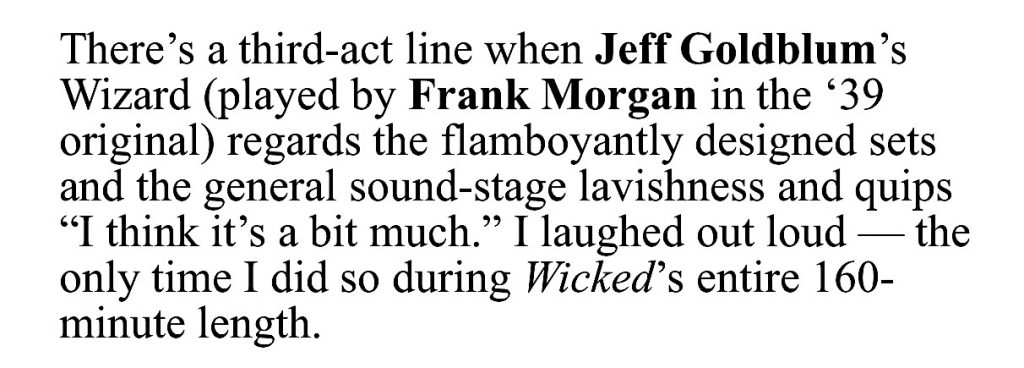
You can’t say Goldblum didn’t have the best line in the original Wicked: “I think it’s a bit much.”

But never let it be said this is not a “safe”, positive-minded, wholesomely diverse cast. They cover the woke waterfront.

What kind of 21st Century ensemble cast do I relate to? Dozens upon dozens. How about the Spotlight guys? The Sentimental Value family? Or the Zero Dark Thirty-ers? Or the Manchester By The Sea pain-bearers? Or the Weapons community? Or Team Irishman? I could go on and on.