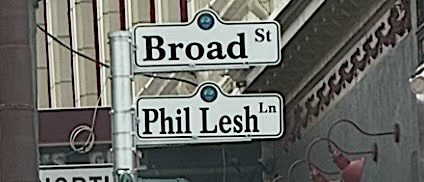
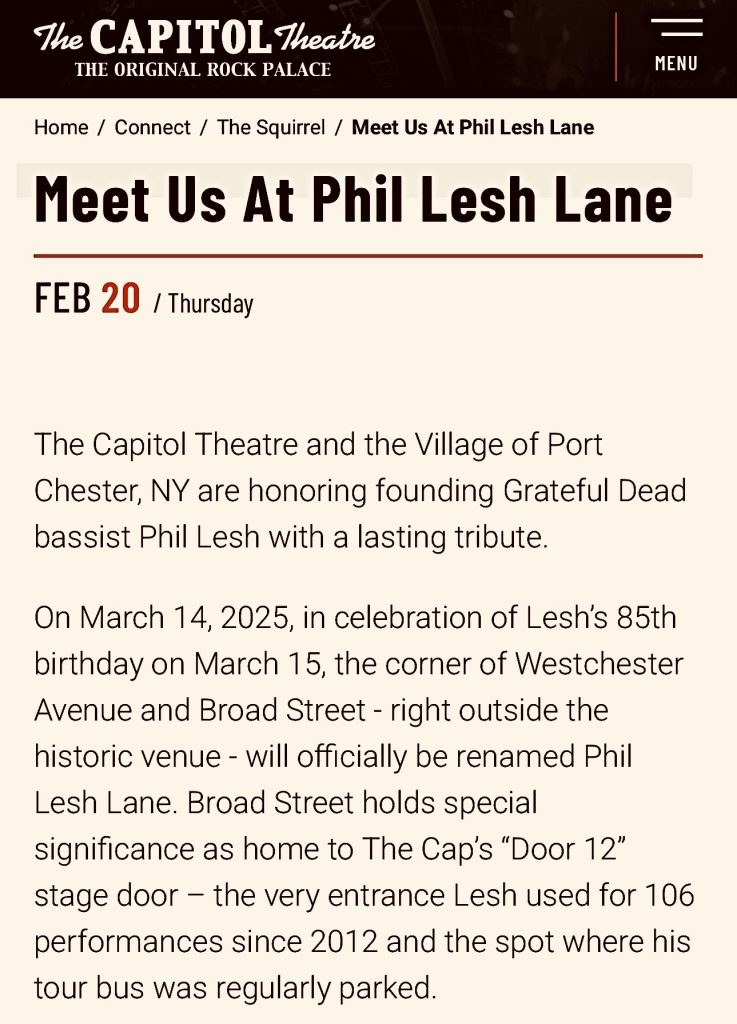
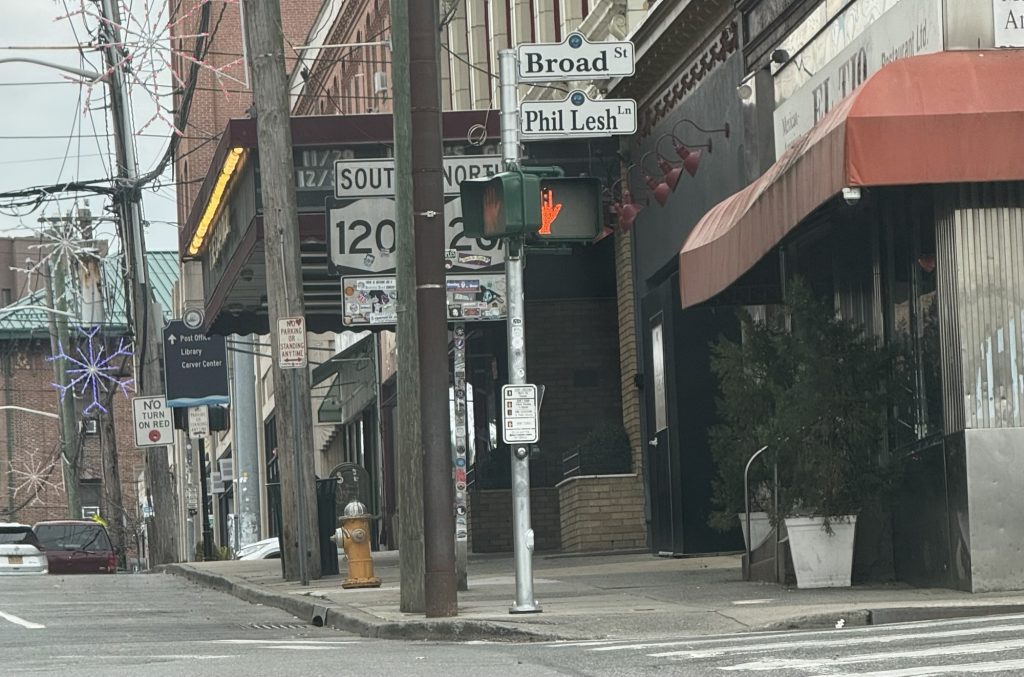
Pic snapped early yesterday afternoon (Tuesday, 11.25) in Port Chester…
My only quibble with Lesh is that Altamont moment in the Maysles brothers’ GimmeShelter (‘71). Santana drummer Mike Shrieve informs the just-arriving Lesh and Grateful Dead cohort Jerry Garcia that some Hell’s Angels have been beating up on audience members. Lesh thoughtfully replies, “Doesn’t seem right, man.”
Kicking and bruising audience members doesn’t “seem” right? Hey, Phil…don’t go out on a limb!
In a just-posted 11.24 interview with IndieWire’s Ryan Lattanzio, Eyes Wide Shut dp and Criterion vandal–beast Larry Smith says that with the exception of the large-widescreen-format Spartacus and 2001: A Space Odyssey, Stanley Kubrick “only shot in one format, [which was] 1.85…that was his preferred aspect ratio.”
From The Killing to Eyes Wide Shutand (once again) Spartacusand2001aside, Kubrick shot every one of his films in 1.37. Some were theatrically cropped to 1.85 (Eyes Wide Shut, FullMetalJacket) or 1.66 (Paths of Glory, Lolita, The Shining, Barry Lyndon. Dr. Strangelove, A Clockwork Orange), but they were all shot in 1.37 (including Full Metal Jacket).
Larry Smith is a bullshitter. He’s a bad, bad guy.
…the Movie Godz, deeply offended, will do what they can to arrange for the winner to “pay off the debt”, so to speak, by condemning him/her to star or costar in…okay, perhaps not a string of mediocre films, but at least one or two.
Ned Beatty to Peter Finch in Network: “And you…will…atone!”
I wish I could say that onecurrentexample is JamieLee Curtis. Her Best Supporting Actress Oscar for her laboriously broad performance as an IRS agent in Everything Everywhere All At Once, a deeplydespisedbullshitgenrehodgepodge that opened three and a half years ago (3.25.22), was an awarding that will live in infamy. I literally shouted “no!…no!” when her win was announced.
Alas, Curtis’s career has been going great guns since she won that Oscar in early ‘23. Praise for her work in TheLastShowgirl, and FreakierFriday even. Not to mention a well-received guest performance as an alcoholic matriarch during TheBear’s second season. Plus her successful children’s books.
But at least she’s costarring in James L. Brooks’ Ella McCay, which is allegedly an embarrassment. (A critic friendo calls it “awful”.) The trailer tells us that Curtis wildly over-acts as Emma Mackey’s mom.
It goes without saying that the careers of Daniel Kwan and Daniel Scheinert, co-creators of EEAAO, will be adversely affected by those damnable ‘23 Oscars. Okay, I don’t know that but these guys ought to suffer. They damn well should. Will they? Who knows?
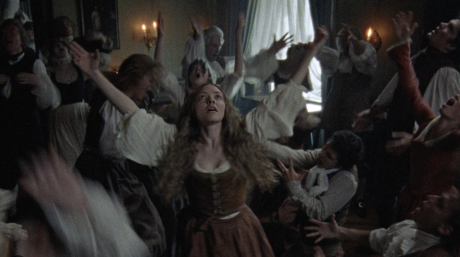
Nearly three months ago I reviewed Mona Fastvold‘s The Testament of Ann Lee from the Venice Film Festival. “It’s certainly striking and, for what it’s worth, a wackazoid original,” I wrote.
“It’s a regimented, pageant-like, nutbag historical musical about Ann Lee, the eccentric Shakers founder who was into ecstatic God-praising and celibacy and fervent denial of sexuality.”
Lee was a devoted, shrewish-looking miserabalist who left northwest England, along with a couple of dozen followers, to re-settle in upstate New York (who’s ever even heard of Niskayuna?) and dedicate themselves to unmatched religious fanaticism.
How do you make a film about radical secularists who were into hymn-singing and general shrieking and, one presumes, pissing off the normies? Credit Fastvold, at least, for giving in to the crazy…for surrendering to Lee’s ecstatic mystical whateverisms, and really going for it willy-nilly.
While shooting near Budapest at the cost of a mere $10 million, Fastvold and her cast (Amanda Seyfried, Thomasin McKenzie, Lewis Pullman, Stacy Martin, Tim Blake Nelson, Christopher Abbott, Matthew Beard) and crew went mad with the Shaker spirit, and you have to respect that.
Congrats to composer Daniel Blumberg and choreographer Celia Rowlson-Hall. The madness clearly engulfed them also, and they’ve created otherworldly asylum vibes.
The movie pulsates with extreme this and that — extreme behavior, extreme denial of life, extreme visual murkiness despite being shot in 70mm, the embrace of puritanical madness. All of the terrible spiritual suppressive stuff that has given old-time Christian religion such a bad name for centuries is abundant.
Plus I couldn’t understand a single word of it, and for whatever reason there were no English subtitles, which every Venice Film Festival entry has brandished so far.
I knew early on that The Testament of Ann Lee would almost certainly give me pain because Fastvold cowrote it with husband Brady Corbet, whose direction of The Brutalist made people like myself writhe in agony last year, and whom I regard as a kind of louche anti-Christ of modern cinema. I knew, in short, that the Corbet influence would be bad news, and boy, was it ever!
HE to industry friendo after last night’s press screening: “Fastvold’s Shaker film is mute nostril agony. A journo pally concurs — ‘Awful’. I noticed five to six walkouts, heard a couple of boos when it ended.”
Friendo to HE: “It sounds like this year’s Women Talking.”
HE to friendo: “It’s much, MUCH worse than Women Talking. Somebody has called it The Brutalist: Folie a Deux.”
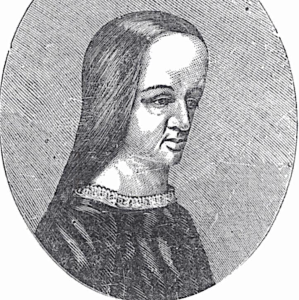
The real Ann Lee, who lived until age 48, was rather ugly, and Seyfried (who turns 40 in December) is, of course, beautiful, so the film’s realism is lacking in this regard.
And as long as hotness is on the table, 35-year-old Stacy Martin, who plays Jane Wardley, a British born co-founder of the Shakers, is way too attractive to play a woman who’s into a no-sex, God-and-only-God lifestyle…one look at Martin and you’re thinking “what is she doing with this bunch?”
Fastvold: “I thought Ann Lee deserved something grandiose and wonderful. How many stories have we seen about male icons on a grand scale, again and again and again? Can we not see one story about a woman like this?”
Seyfried on her Shaker singing: “A lot of it was animal sounds as opposed to melodic sounds.”
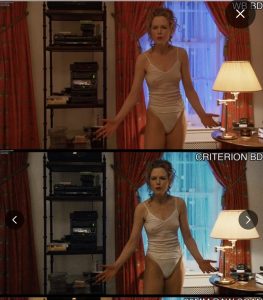
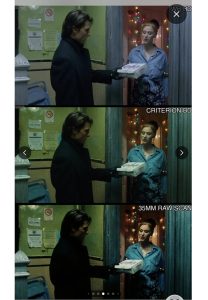
IndieWire‘s Ryan Lattanzio has interviewedLarry Smith, the Eyes Wide Shut dp who more or less orchestrated the outrageous teal distortion of Stanley Kubrick‘s final film.
Lattanzio: “Cinephiles who got an early look at the new 4K transfer took issue on social media with the ‘teal’ color-grading on many of the bedroom and nighttime scenes. Is what we are seeing on the Criterion edition what people saw in theaters on a 35mm film print?”
Smith: “I’m assuming a lot of these people either have the original DVD or they’ve seen it somewhere…normally, people who comment on these are people who know the film really well, so you have to take on board that they do know a little bit about what they’re talking about.”
HE to Smith: “Yeah, I know ‘a little bit’ about what I’m talking about. I saw Eyes Wide Shut once and then a second time when viewings began in the summer of ’99, or so I recall, on the Warner Bros. lot. I’ve also caught it on DVD, Bluray and streaming.
“You and Criterion’s Lee Kline have murdered the original nocturnal-blue, amber-accented window lighting, and you’ve distorted many other blue-and-golden-amber tints in an entire array of stand-out moments.”
Smith: “Or it could be that they’ve seen really bad prints of it in the past, or when they last saw it.”
HE to Smith: “Bullshit — I saw a fresh, scratch-less 35mm print on the WB lot, and while I didn’t care for the grainstorming the colors struck me as more or less perfect. EWS wasn’t supposed to look distorted or, for that matter, un-natural. It was intended to look like a pretty but unreal world of hauntings, suspicions, spooks, pervos, paranoia and tingly undercurrents.”
Smith: “Stanley died before he could color-grade this movie, so the somebody else [who stepped into the breach] probably wasn’t qualified, then you’re going to get the final answer print and the DVD to be not as good as they could or should be.”
HE to Smith: “Bullshit — you’re a vandalizer, a distortionist. Your name will live in infamy.”
Smith: “If people are wedded to [a certain] look of the film over [the last 26 or so years], then that’s what they’re used to, then of course, when they see this version, it’s gonna jump for some people. [But] it should jump in a more enjoyable way. It doesn’t change the plot; it’s just visually, I hope anyway, more interesting to see. Less grain, the highlights are not too bright. We pulled back maybe a couple things here and there that [Stanley] would’ve done anyway for sure.”
Smith tells Latttanzio that with the exception of the large-format Spartacus and 2001: A Space Odyssey, Kubrick “only shot in one format, [which was] 1.85…that was his preferred aspect ratio.”
Complete bullshit, Larry!
Kubrick understood the unfortunate necessity of having to allow for 1.85 projection, but he was a boxy aspect ratio guy all the way. I love the boxy versions of all his major films, and am very much looking forward, by the way, to Criterion’s forthcoming 4K Lolita Bluray, which will presumably be presented in 1.37, as this is how Criterion presented Kubrick’s 1962 film on a CAV laser disc back in the early ’90s.
Larry Smith has no honor in this realm. He’s certainly not truthful. To go by his various statements and distortions and sidesteppings, he sounds to me like a bullshitter, plain and simple.
Give Lattanzio credit for at least raising the teal issue.
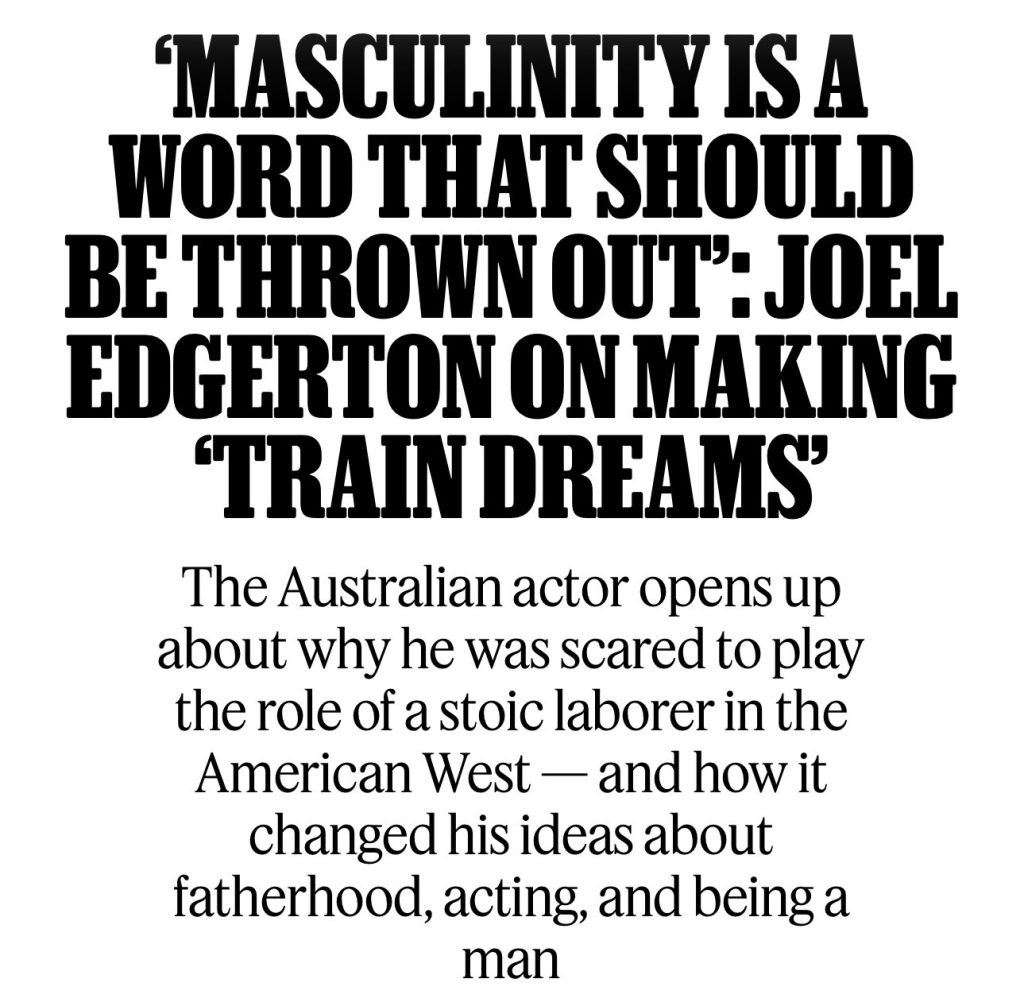
Okay, that’s it — Joel Edgerton has just slit his own throat, Oscar-nomination-wise. He’s finished, and he did it all to himself.
Edgerton simply doesn’t get it. The absence and/or the diluting of strong, confident masculinity is what’s wrong with Hollywood films. This is why Joe and Jane Popcorn despise Hollywood types. Edgerton is lost…he thinks it’s 2020 or ’21 or ’22. Things are different now. The winds have shifted.
Edgerton’s disparaging of masculinity wasn’t that different from what the wimpy, squishy, oh-so-sensitive Paul Mescalsaid during last May’s Cannes Film Festival. “[Notions of masculinity] are ever shifting,” Mescal mewed. “I think maybe in cinema we’re moving away from the traditional, alpha, leading male characters.”
HE to Mescal: “You contemptible little candy-ass…nothing would give me more pleasure than to sharply slap the side of your fecking head, Lee Ermey-syle.”
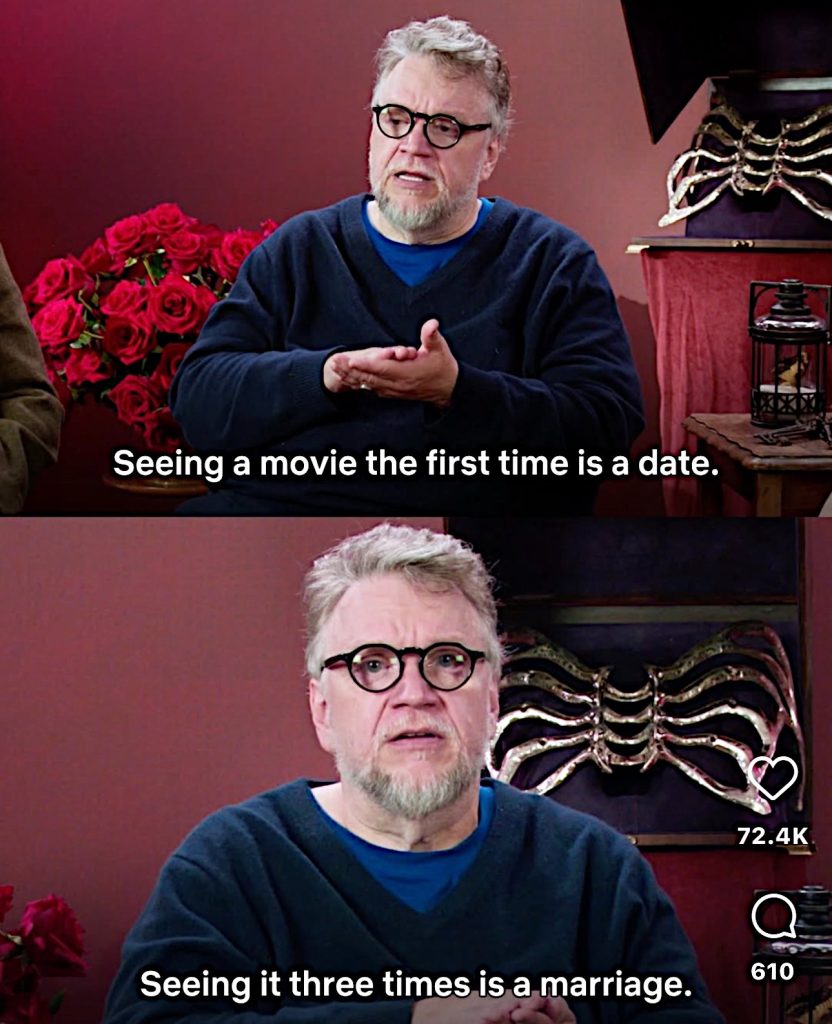
The first viewing of a film is a date. The third viewing of the same film indicates definite interest, hot cinematic “sex” and a potential for going steady. The seventh or eighth viewing means you’re living together and still having good sex, but oh, those first three or four times! The fifteenth viewing means you’re married and locked in the long haul, but the thrill is gone.
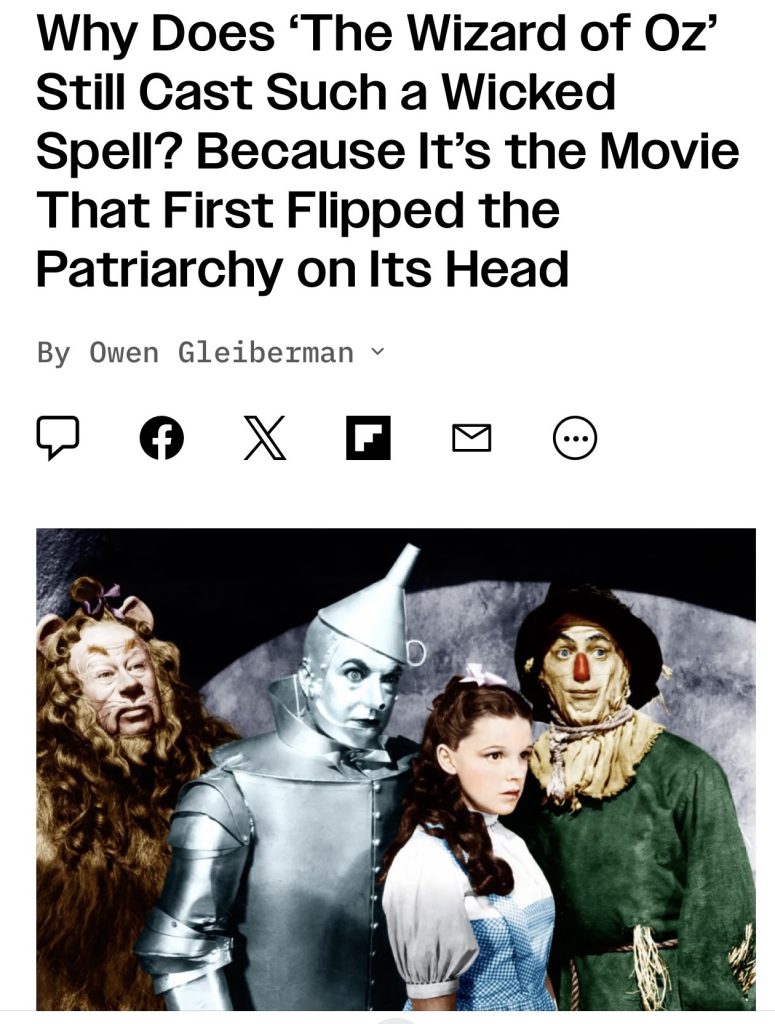
HEtoOwenGleiberman: So much of life and living is propelled by illusion. But for me, Margaret Hamilton’s cackling, green-skinned witch is an absolutely genuine, real-deal figure of campy fun and wicked frolic. Matriarchyschmatriarchy!
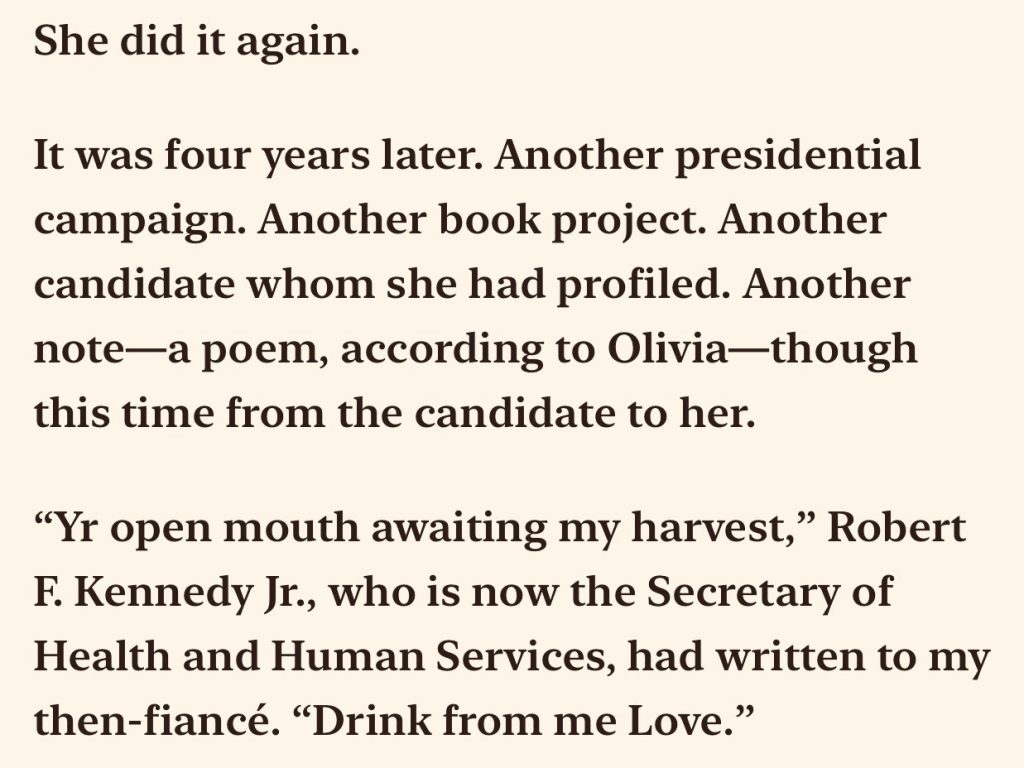
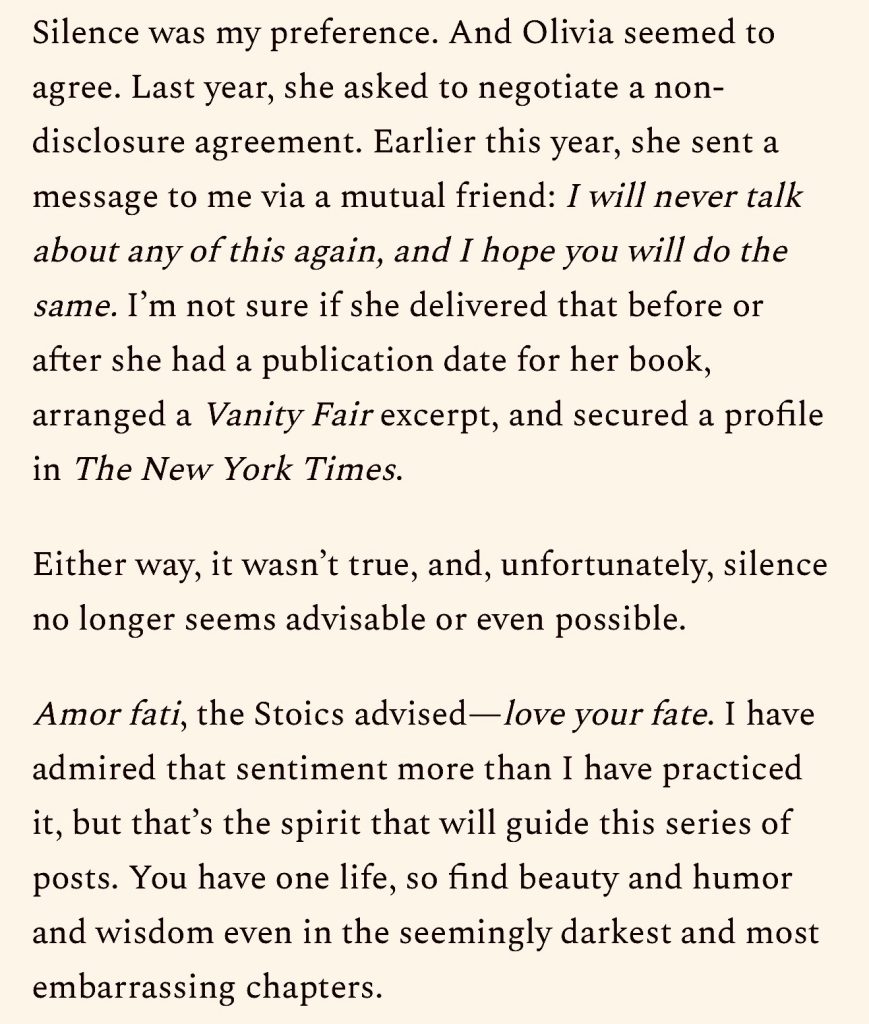
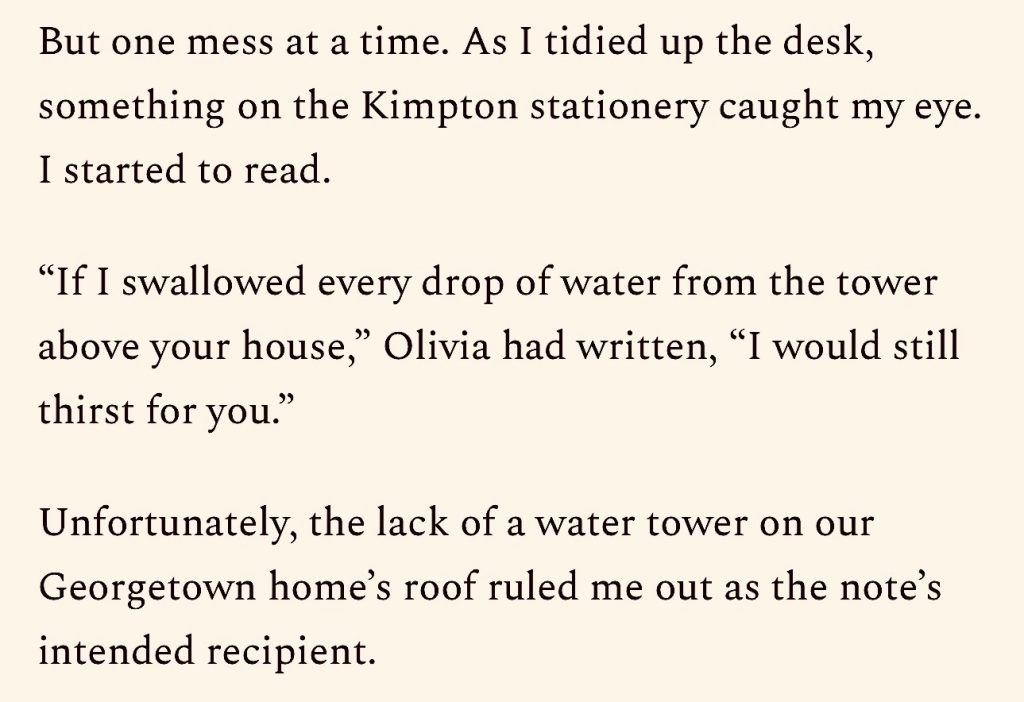
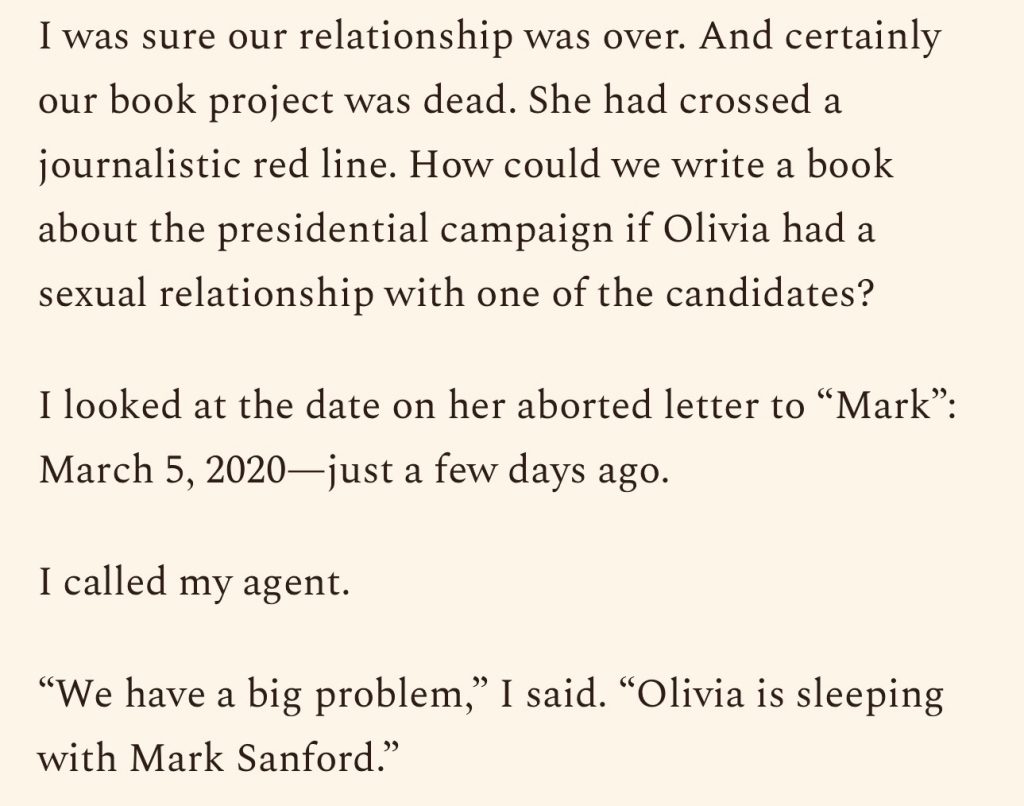
Political journalist Ryan Lizza felt betrayed, naturally, when he discovered five years ago that journalist Olivia Nuzzi, his live-in fiancé at the time, had done the gasping slurpy nasty with former South Carolina governor Mark Sanford, whom she had profiled for New York magazine in late ‘19.
Four years later came Nuzzi’s second affair of sorts — not an actual slippin’ and slidin’ thing, Nuzzi has written, as it was all about sexting — with an older politician, the hoarse-voiced Robert F. Kennedy, Jr. , Trump’s Secretary of Health and Human Services.
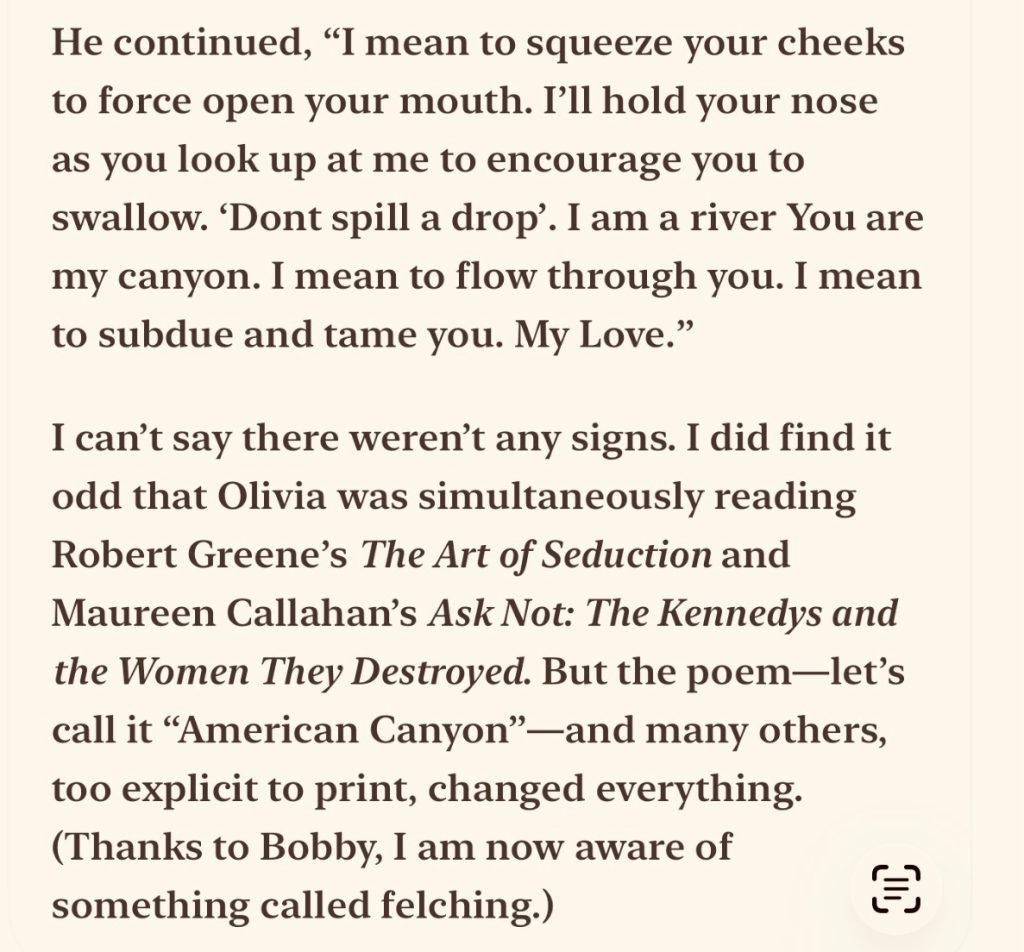
Except in his second Substack piece about Nuzzi’s outre sexual entanglements, Lizza has posted a salacious excerpt from a “poem” that RFK allegedly sent to Nuzzi — one that not only challenges her “American Canto” account of an allegedly non-sexual involvement with RFK (whom she alludes to in the book as “the politician”) but graphically alludes to a pulse-quickening blowjob he may or may not have received from Nuzzi during their 2024 mess-around…hey, I’m just reporting this stuff.
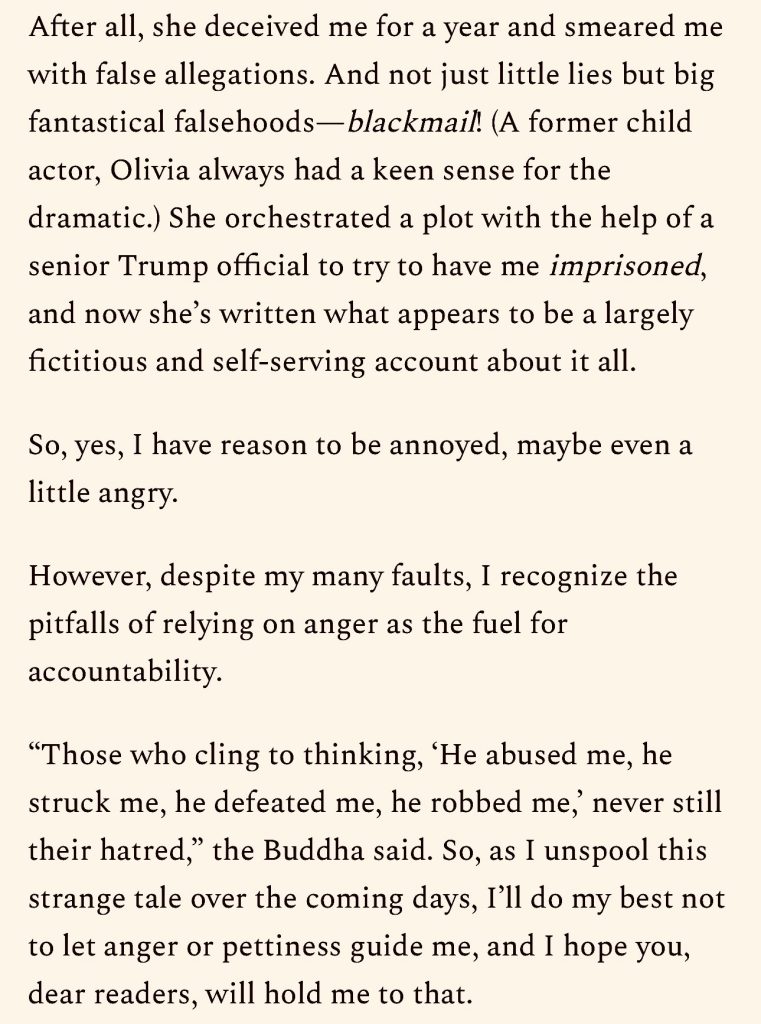
Lizza has described “American Canto” as “a largely fictitious and self-serving account” of her thing with RFK. The honesty factor or lack thereof is between Nuzzi, her publisher and her readers, but it’s icky and rathervicious of Lizza to have posted RFK’s alleged account of…this is really distasteful in more ways than one…the adoring Nuzzi swallowing his “river” without spilling a drop.
Lizza’s (and possibly RFK’s) odious excerpt:
Even if Nuzzi did provide exceptional pleasuring last year to the nation’s current Health and Human Services honcho, Lizza’s attempt to publicly humiliate an ex-girlfriend
reflects poorly upon his own character and temperament. Deciding to post that sliver of a b.j. “poem” was mean and toxic.
A couple of months ago Nuzzi landed a West Coast editor position with Vanity Fair. Will Lizza’s posting RFK’s possibly genuine or possibly fanciful b.j. “poem” lead to VF cutting her loose? I say keep her on.
Nuzzi is obviously a tiny bit wacko, but she’s also a memorable “character” in the tradition of Isadora Duncan or Tallulah Bankhead or MarleneDietrich, and who among us doesn’t enjoy colorful accounts of reckless, go-for-the-gusto living and yaddah-yaddah? Does each and every female political reporter or columnist have to radiate astringent, button-down posturing and no-monkey-business professionalism? The system can’t allow for an occasional free-spirited sensualist, just to liven things up?
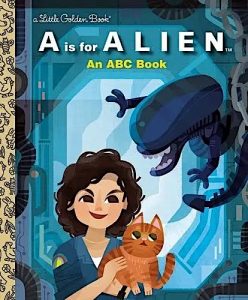
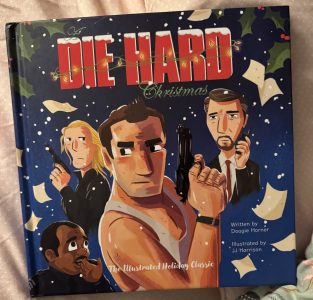
…and they are selling such books (I read them to Sutton last night), why not create children’s books based upon The Wild Bunch and The Towering Inferno? Hell, why not go real-world? Tyke books based upon the 9/11catastrophe, the Kennedyassassination and the Cambodian genocide of the ‘70s, say.
Howard Hawks, Paul Newman and HE are now a power-sharing, chrome-steel triumvirate.
From this point on the guiding light perceptions of HE (all high-quality films feature a late-second-act pivot), Hawks (“three great scenes and no bad ones”) and Newman (Newman’s Law of 15 at the front and back) comprise the core of our movie-assessing philosophy.
Hawks, Newman and HE are hereby resolved to move forward in this moviegoing life based on the clarity and radiance of shared perceptions and accumulated life wisdom (i.e., long is the way and hard that, out of darkness, leads up to light).
Apparently the late, great Paul Newman once passed along a rock-steady cinematic truth — one that rivals Howard Hawks’ declaration that all award-worthy films have “at least three great scenes and no bad ones.”
Newman’sLaw states that all first-rate, award-worthy or at least commercially successful films start and end with a certain gravitational punch or pizazz. They grab the audience during their opening 15 minutes, and then really bring it home during the final 15. If the opening and the closing deliver the right stuff, the film is a keeper.
Like TheWild Bunch, say. Or Dr. Strangelove or OutofthePast or FromHeretoEternity or TheFrenchConnection or TheExorcist or TheBestYearsofOurLives or PathsofGlory or Viva Zapata or…
Think of TheHustler’s opening sequence (Newman and Myron McCormack using subterfuge to take several tavern patrons) and the 15-minute finale (Newman beats JackieGleason, has it out with GeorgeC. Scott over the death of Piper Laurie).
Or Butch CassidyandtheSundanceKid (beginning with Robert Redford being accused of cheating at poker, “hey, kid…how good are ya?”, and closing with that doomed, small-town shoot-out with Mexican militia).
Or TheVerdict (alcoholic Newman enduring the humiliation of ambulance-chasing vs. semi-sober Newman’s big jury sermon + the jury finding for the plaintiff and against St. Catherine’s).
How does Newman’s Law apply to OneBattleAfterAnother? As much as I hate admitting this, Paul Thomas Anderson’s agitprop film does the double bang — a great opening 15 or 20 with the French 75 pulling off an immigration-camp raid, and a great car-chase finale out in the barren rolling hills.
How does Newman’s Law apply to Hamnet? It doesn’t because the effectiveness of Chloe Zhao’s drama is all about the final 15 — the opening 15 don’t really do the drill.
SentimentalValue delivers Newman satisfaction because it more or less begins with Renate Reinsve’s stage-fright breakout, and ends with a sound-stage filming scene that ties it all together.
Name one classic film (critically approved or popular with the mob) that doesn’t deliver the Newman.