
There’s a real art to taking interview transcripts and making regular-guy gab sound like clean, well-shaped, high-end prose…prose that reminds you, no exaggeration, of the lean, elegant, unpretentious simplicity of Ernest Hemingway and the well-honed sentence stylings of Norman Mailer‘s “The Executioner’s Song” (’79), which was described as Hemingwayesque when it first popped in ’79.
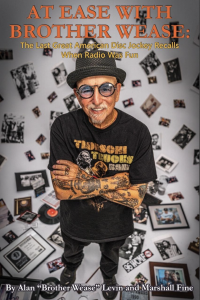
This is what former Gannett film critic, novelist and documentarian Marshall Fine has managed to do, ghost-editing-wise, with an autobiography about Rochester radio legend Alan Levin, better known as Brother Wease. The book is called “At Ease With Brother Wease,” which not only isn’t on Amazon but (wait for it) has no direct-purchase URL. But the word-, sentence- and paragraph-sculpting is just wonderful.
Fine: “I can’t imagine that there’s much of a market for [this book] outside of upstate New York, but Wease has a pretty good story to tell. Essentially about a Rochester ne’er-do-well who volunteered for Vietnam, came back to sell drugs and promote rock concerts, and wound up becoming Rochester’s top-rated morning radio guy for 40 years.”
Here’s an excerpt about a Rochester barroom encounter that happened when Wease was young and full of beans:
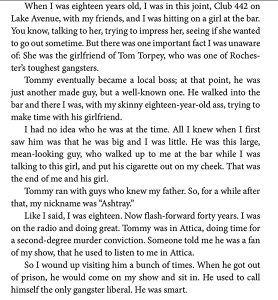
Ash tray!
Here’s another in which Wease looks back upon his inglorious Vietnam years:
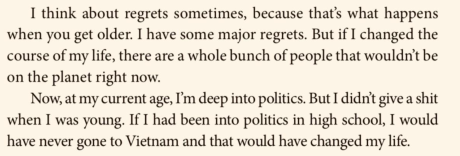
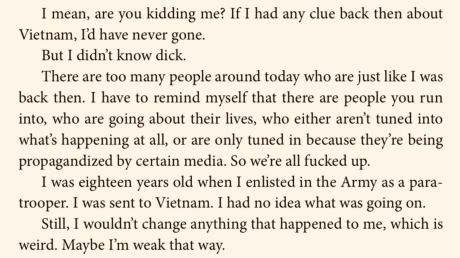
HE commentary: “I didn’t know dick about Vietnam”? Really?
How under-educated and uninquisitive could Wease have been when he was 18 or 19? I knew all about the antiwar political arguments and Ho Chi Minh and the history of the Vietnam struggle, and I was no Vietnam scholar. I just read a lot. What kind of low-rent dumbshit culture did Rochester teens grow up in?
Did young Wease pledge to himself at age 16 or 17 or 18, “I am going to adhere to as much bone-dumb ignorance as I possibly can because that’s how I roll?”
Obviously Wease grew up and expanded his mind and vistas and led a rich, fascinating, colorful life, etc. But what a block of concrete he was in the mid to late ‘60s.
But I really love the plain-spoken Marshall Fine heartland prose. Truly first-rate writing. Hats off.