Paul Newman’s Rule of 15

Apparently the late, great Paul Newman once passed along a rock-steady cinematic truth — one that rivals Howard Hawks’ declaration that all award-worthy films have “at least three great scenes and no bad ones.”

Newman’s Law states that all first-rate, award-worthy or at least commercially successful films start and end with a certain gravitational punch or pizazz. They grab the audience during their opening 15 minutes, and then really bring it home during the final 15. If the opening and the closing deliver the right stuff, the film is a keeper.

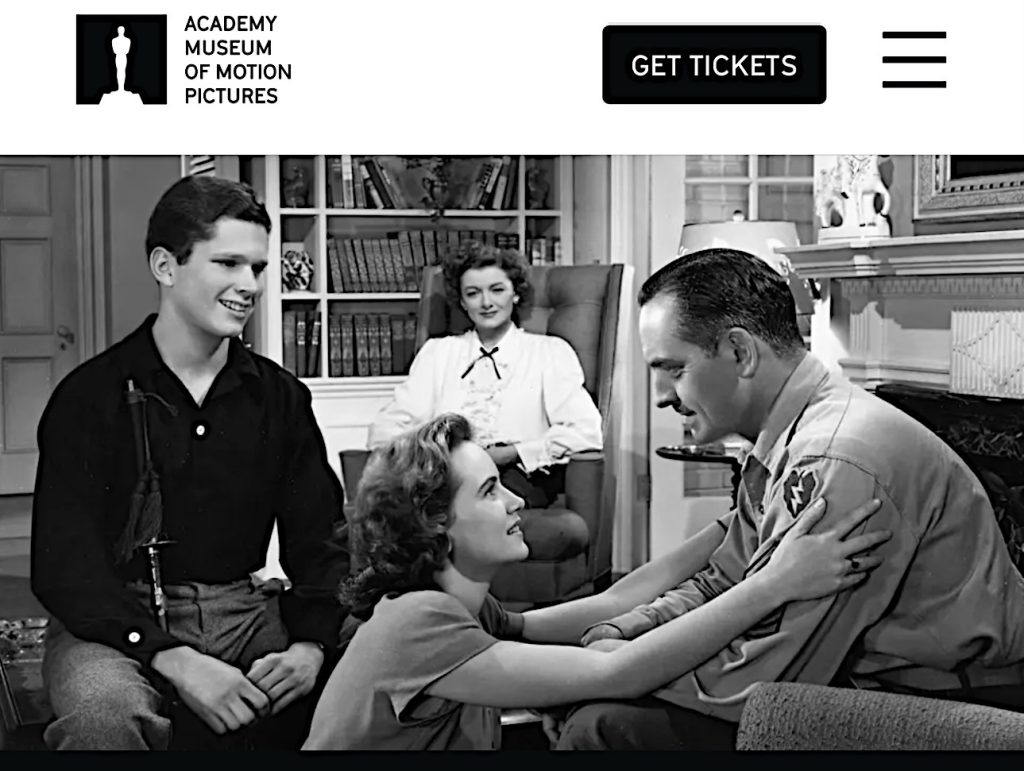
Like The Wild Bunch, say. Or Dr. Strangelove or Out of the Past or From Here to Eternity or The French Connection or The Exorcist or The Best Years of Our Lives or Paths of Glory or Viva Zapata or…

Think of The Hustler’s opening sequence (Newman and Myron McCormack using subterfuge to take several tavern patrons) and the 15-minute finale (Newman beats Jackie Gleason, has it out with George C. Scott over the death of Piper Laurie).

Or Butch Cassidy and the Sundance Kid (beginning with Robert Redford being accused of cheating at poker, “hey, kid…how good are ya?”, and closing with that doomed, small-town shoot-out with Mexican militia).

Or The Verdict (alcoholic Newman enduring the humiliation of ambulance-chasing vs. semi-sober Newman’s big jury sermon + the jury finding for the plaintiff and against St. Catherine’s).

How does Newman’s Law apply to One Battle After Another? As much as I hate admitting this, Paul Thomas Anderson’s agitprop film does the double bang — a great opening 15 or 20 with the French 75 pulling off an immigration-camp raid, and a great car-chase finale out in the barren rolling hills.

How does Newman’s Law apply to Hamnet? It doesn’t because the effectiveness of Chloe Zhao’s drama is all about the final 15 — the opening 15 don’t really do the drill.

Sentimental Value delivers Newman satisfaction because it more or less begins with Renate Reinsve’s stage-fright breakout, and ends with a sound-stage filming scene that ties it all together.

Name one classic film (critically approved or popular with the mob) that doesn’t deliver the Newman.


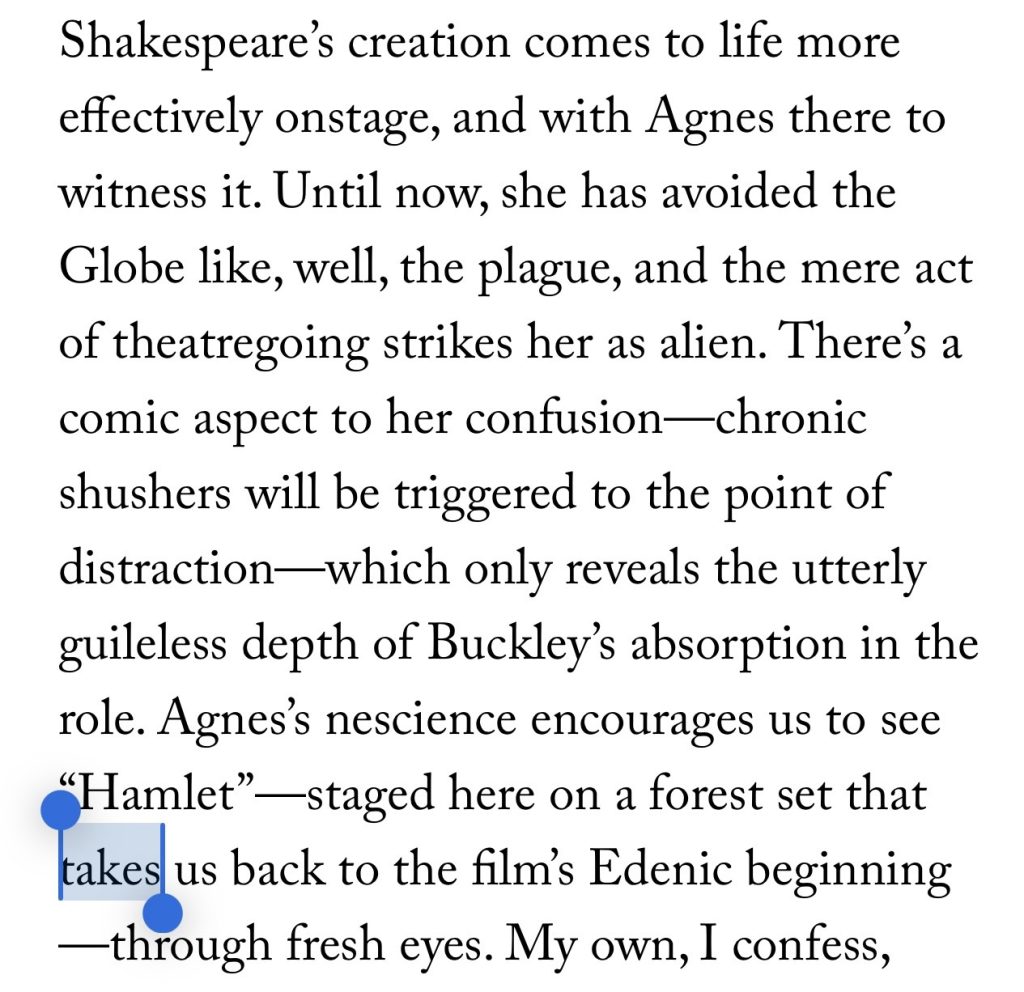
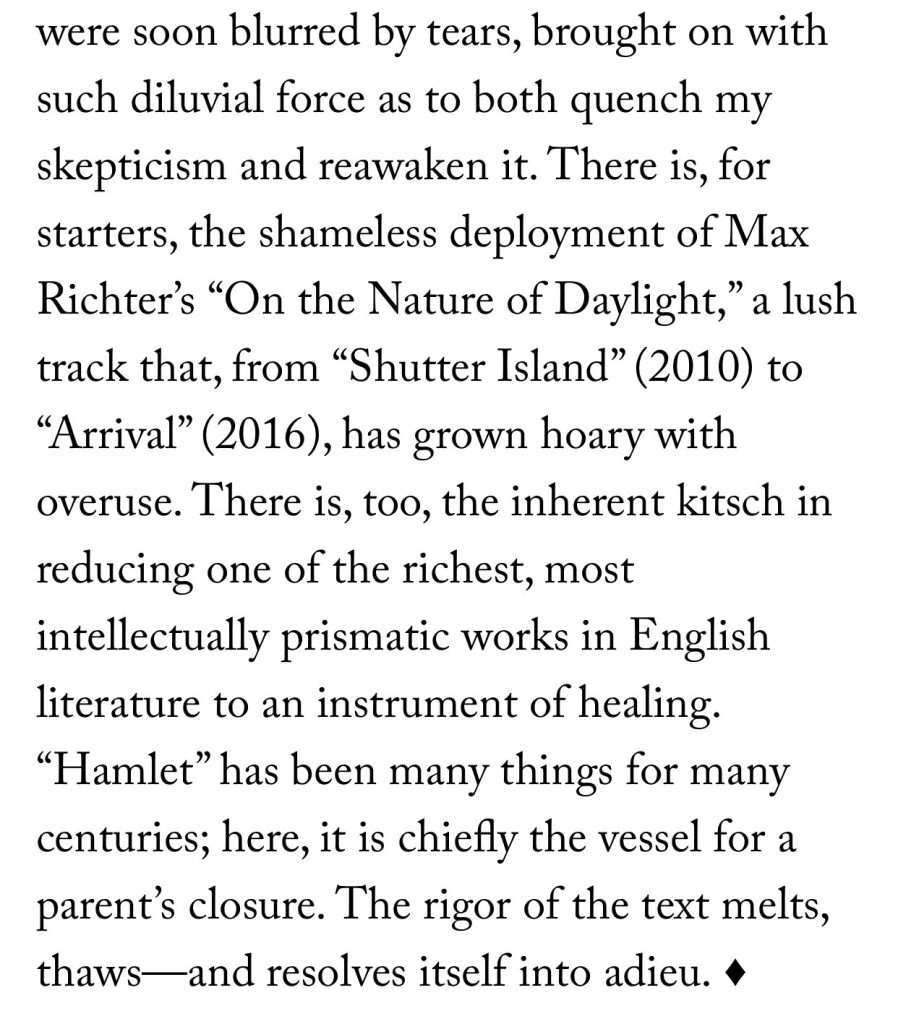
Even Justin Chang, Whose Hostility to “The Holdovers” Indicated A Testy Attitude Toward White Folk, Wept During “Hamnet”’s Finale

The headline for Chang’s review in the New Yorker print edition (dated 12.1.25) is “To Die, To Weep”, which sounds fitting if lacking in terms of the usual urban edge and smart-assery. And yet, oddly, the online edition’s headline defaults to the commonly used “grief porn” dismissal.

Unable To Watch Two Godard Films Uninterrupted

During a summer day-trip to Washington, D.C., my young sister Laura and I experienced a short period of bathroom panic as we drove around with our mother, Nancy, at the wheel. Nancy said it was partly because of all the large fountains…all that gushing water was weakening our resolve.

It follows that millions of Los Angelenos felt the same psychological pressure yesterday due to the city coping with constant rainfall.

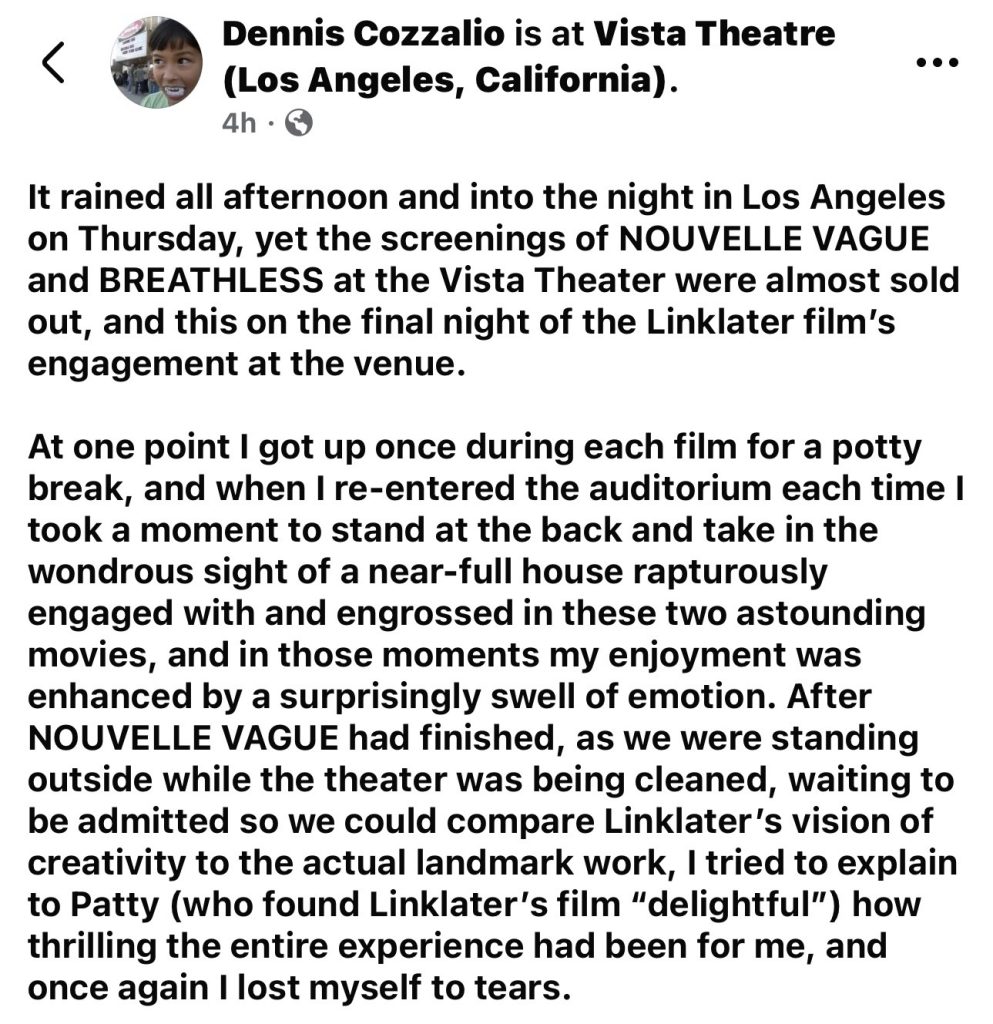
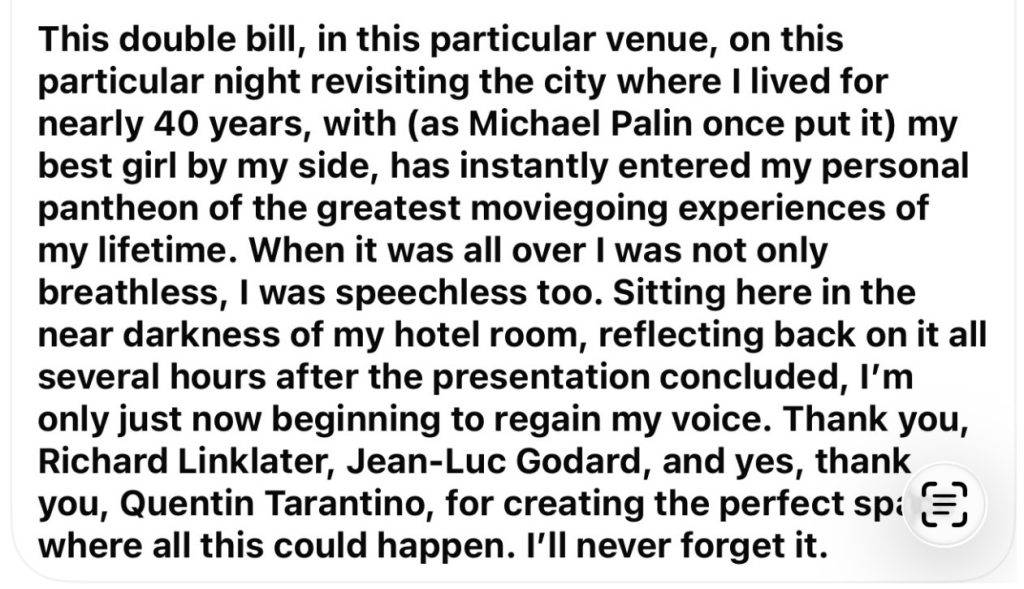
HE to Cozzalio: One “potty” break during the screening of Nouvelle Vague, and then another during a subsequent showing of Breathless?

So no attending to business BETWEEN these films, as some of us might do. Instead you sit down and watch both films and then in the middle of each one you go “whoops!…sorry, heh-heh, excuse me!” Then you get up and miss maybe three or four minutes of each film.

What is that? This is not serious movie-watching. Godard would have sneered at this. Ask anyone. Ask Scorsese or DeNiro.

So you go through your daily life submitting to bathroom breaks…what, six or seven times each waking day, not counting waking up at 2 or 3 am (or 3 or 4 am) to take a whiz or a dump?

Forgive me for making a coarse assumption, but “potty break” sounds to me like sit-down action. It’s basically a child’s term like “I went poopie” (I have a four-year-old granddaughter so don’t tell me) or, if you’re standing up, “I went pee-pee” or “wee-wee”.

I would have gone for more oblique terminology like “I used the facilities” or “I hit the head” or “I heeded the call of nature”, all of which allude to or allow for the possibility of stand-up action.

I shudder at the idea of hitting a bathroom this many times per day. It sounds like a form of tyranny.

Speaking of “sit-down action”, I posted a related piece 14 years ago.

[Posted on 9.19.11] Last night Jett, his roommate Sonya and I caught a 7:50 pm screening of Drive at Brooklyn’s UA Court Street Stadium plex. My second viewing. Great film.

I hit the smallish bathroom after it ended. Two urinals and a toilet stall with six or seven guys lined up. I should have bailed right then and there, but I was looking for a little sit-down action and wasn’t sure of my alternate options.

A guy left the stall and a 30something black dude took ownership and, like, didn’t come out. Three, four minutes. Five minutes. Six. Could he be undergoing self-administered surgery? Filling out a mortgage application?

Then, still on the pot, he began talking to his girlfriend on his cell, flirting with her, settling in. “How ya doin’? Movie’s over…yeah. You wanna eat somethin’?,” etc.

If I had any balls I would have knocked on the stall door and, just like Tom Cruise in Collateral, said, “Yo, homey!” I didn’t, of course. I just stood and waited like a sap, listening to this jerkoff go on and on. The idea of showing consideration to others simply hadn’t occurred to him.

Around the seven- or eight-minute mark I gave up and went outside and used the facilities at a nearby Barnes and Noble.

It’s simply a matter of culture and manners. Let’s face it — some people are low-lifes.

I’ll be attending an invitational screening of George Clooney‘s The Ides of March at the Museum of Modern Art on Wednesday. If I happen to hit the bathroom after it ends I can absolutely guarantee that nobody will sit in a toilet stall for several minutes, ignoring the fact that several others are waiting, while chit-chatting with a girl. I’ll put $100 on this right now. I’ll bet anything.

“What, Me Teal?” Mantz Shills For Criterion

Criterion publicist to Scott Mantz: “Before we set up your Zoom interview with Eyes Wide Shut dp Larry Smith, we need you to give us your solemn oath…”

Mantz to Criterion: “Sure, whadaya need?”

Criterion to Mantz: “We want your promise that you’ll never mention the word ‘teal’ during your chat.”

Mantz to Criterion: “Teal? Me?”

Criterion to Mantz: “We’re serious, Scott.”

Mantz to Criterion: “Worry not! I’m your boy. I don’t think I even know what teal means.”

Remember that scene in Broadcast News when Albert Brooks‘ Aaron explains that William Hurt‘s Tom, while being “a very nice guy”, is the devil? We have a similar situation here. Mantz obviously doesn’t have hooves and horns and a long spiky tail, but…

——————————–

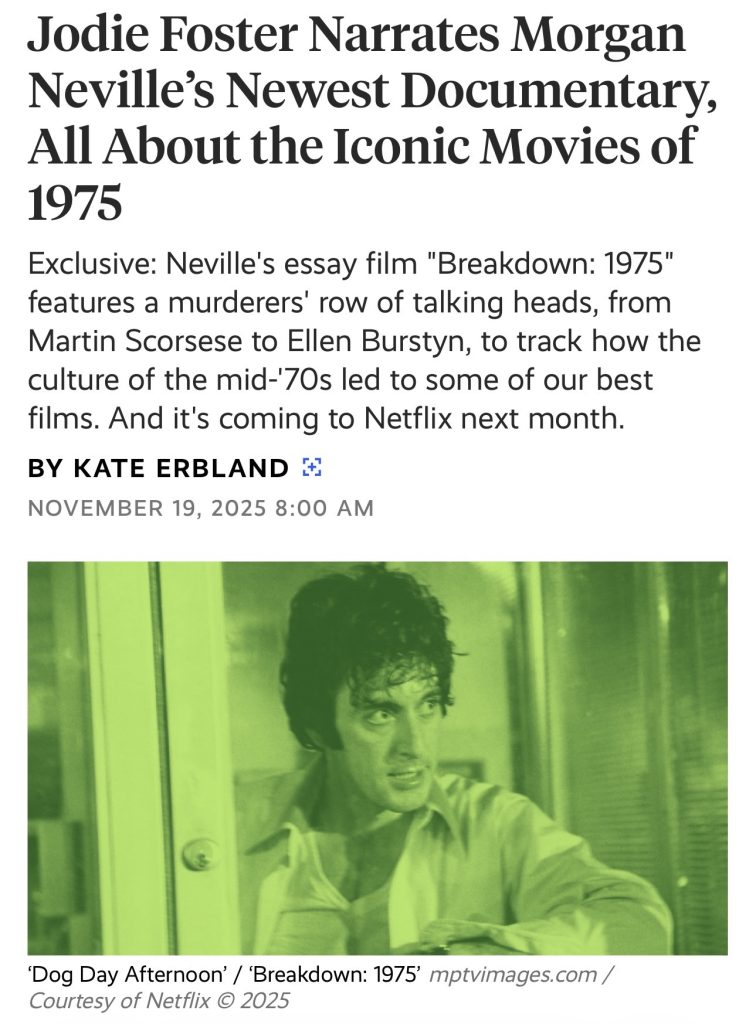
HE to Mantz on Wednesday afternoon, 11.19: “I’m watching your 30-minute chat with Larry Smith, and you don’t even mention the obvious teal-tinting on Criterion’s EWS 4K Bluray. Unless I wasn’t paying attention, you don’t even MENTION it!!  Nobody has ever had any problems with the brightness levels, as Larry mentions. It’s the fucking TEAL poisoning!”

[Note: Yesterday I shared my negative reactions with Mantz and, just to be sure, asked if he mentioned the word teal and/or asked Larry to comment about teal-ing. Scott ghosted me, of course. HE to Mantz: “I’m going to reasonably interpret your silence as confirmation that you never uttered the word.”]

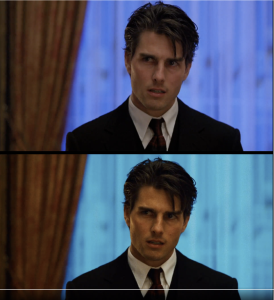
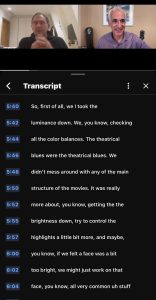
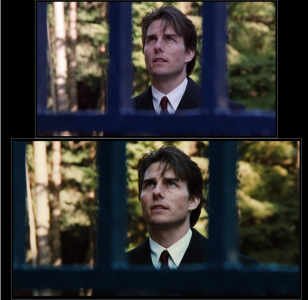
“Larry says ‘the theatrical blues were the theatrical blues…we didn’t mess around with any of the main [color] structure’….bunk! That’s precisely what Larry and his ignoble Criterion cohorts have done. The vivid blue iron gates in that envelope-handover scene have been changed to somber subdued teal.

Robert Harris’s HTF review: “Are the blues deep rich blues? No. They do lean toward a teal.”

“Early on Larry says the film wasn’t color-timed or fine-tuned before it was released because of Kubrick’s untimely passing. Oh, yeah?  I spoke to EWS producer Jan Harlan a few months (or was it weeks?) after EWS was released, and he was very deeply involved. He really cared.

“But Larry is telling us…what, that Harlan didn’t try to finesse the color as best he could before the film was released in ‘99??  Nobody stepped into the color-correcting breach after Kubrick passed on March 7, 1999?  (EWS was released four months later — 7.13.99.) I don’t buy that. Nobody does.”

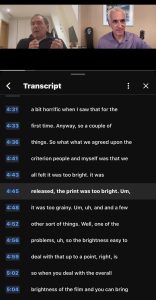
Larry also says that EWS “was too grainy,” a condition that he presumably remedied. And yet in his Home Theatre Forum review of the 4K Criterion disc, Harris writes “grain haters need not reply.”

Note to AARP Management: Are You Out Of Your Fucking Minds?

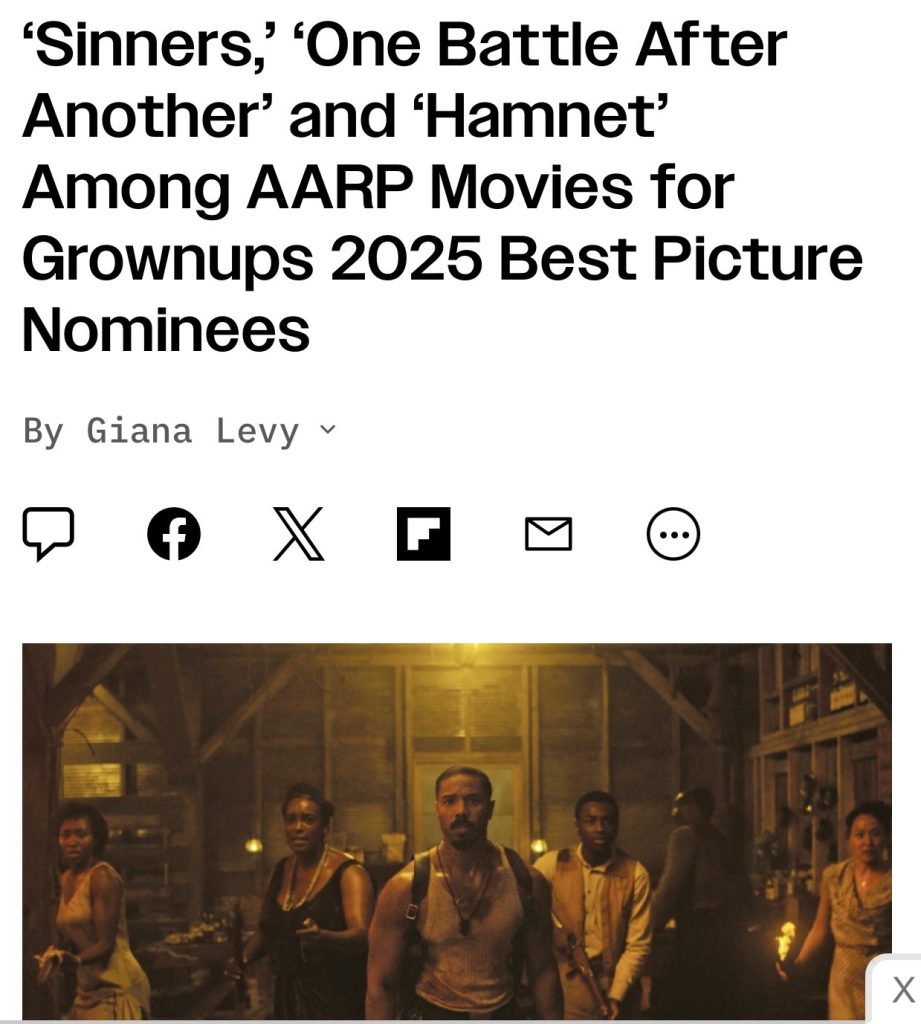
Since when is Ryan Coogler’s Sinners a movie for old-timers, much less a highly recommended one?

It’s a drawling, drooling, blues-savoring, bloody-faced cunnilingus vampire exploitation film aimed at POCs and under-40 wokesters with TikTok accounts.

Are AARP execs aware that old farts of both sexes aren’t exactly into ravenous oral sex, and that the mere mention of this arcane sexual practice makes them uncomfortable?

And why haven’t you recommended Sentimental Value? Have you even seen it?

What else are you recommending to the walker-and-wheelchair set? Salo, or The 120 Days of Sodom?

Read more

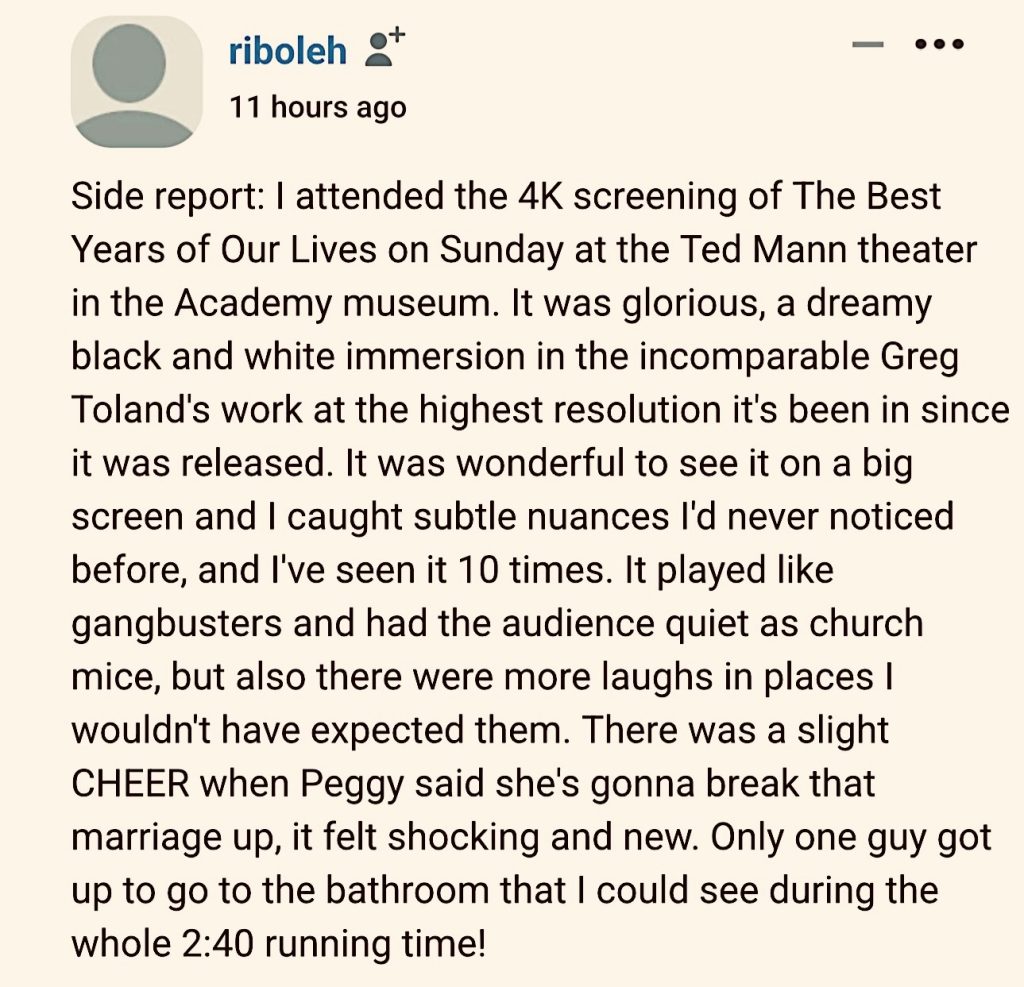
4K Digital Upgrades of 35mm Monochrome Classics From The 1940s Can Only Render So Much

You can only harvest what was captured by 75- or 80-year-old cameras back in the day…35mm film was what it was…there can be no glorious visual revelation from a 79-year-old Oscar winner…you just have to say “okay, good enhancement but mid ‘40s film technology was obviously of its time, and that’s as far as it went.”

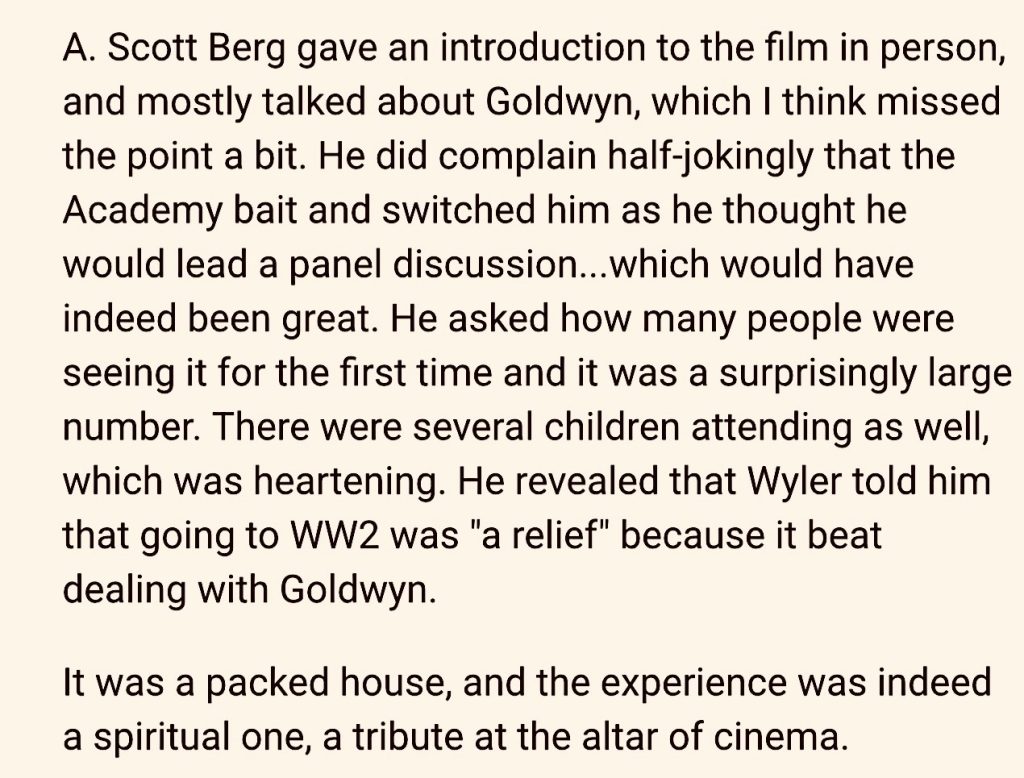
HE toriboleh”: That’s a nicely written report — hats off. But let’s get real. I presume you own the 2013 Best Years Of Our Lives Bluray, which looks truly great for a 35mm monochrome film shot in 1945 or thereabouts. (35mm is 35mm — Wyler’s film wasn’t shot in large-format VistaVision.)

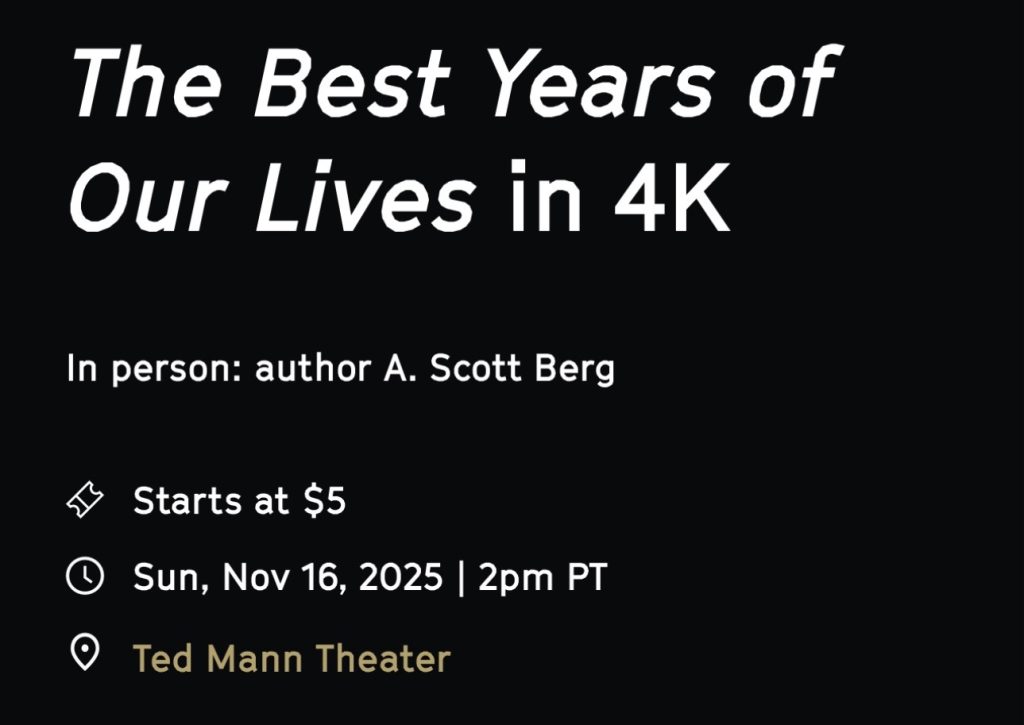
Are you saying that the 4K enhancement you saw at the Academy museum represents a significant bump over the Bluray? If that’s what you’re saying, I don’t believe you. Due respect but it can’t be “whoa, baby!” better than the Bluray. A Greg Toland masterwork, yes, but it was just 35mm and you can’t transform this film into an ice cream sundae with whipped cream and a cherry on top.

John Lennon’s “Imagine”

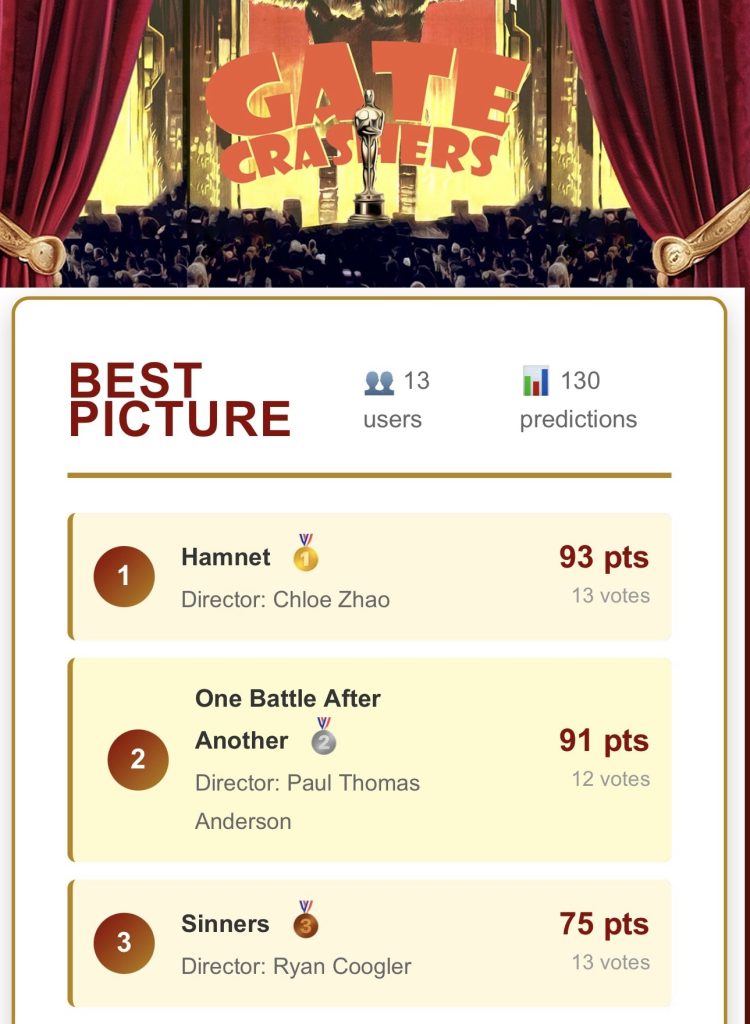
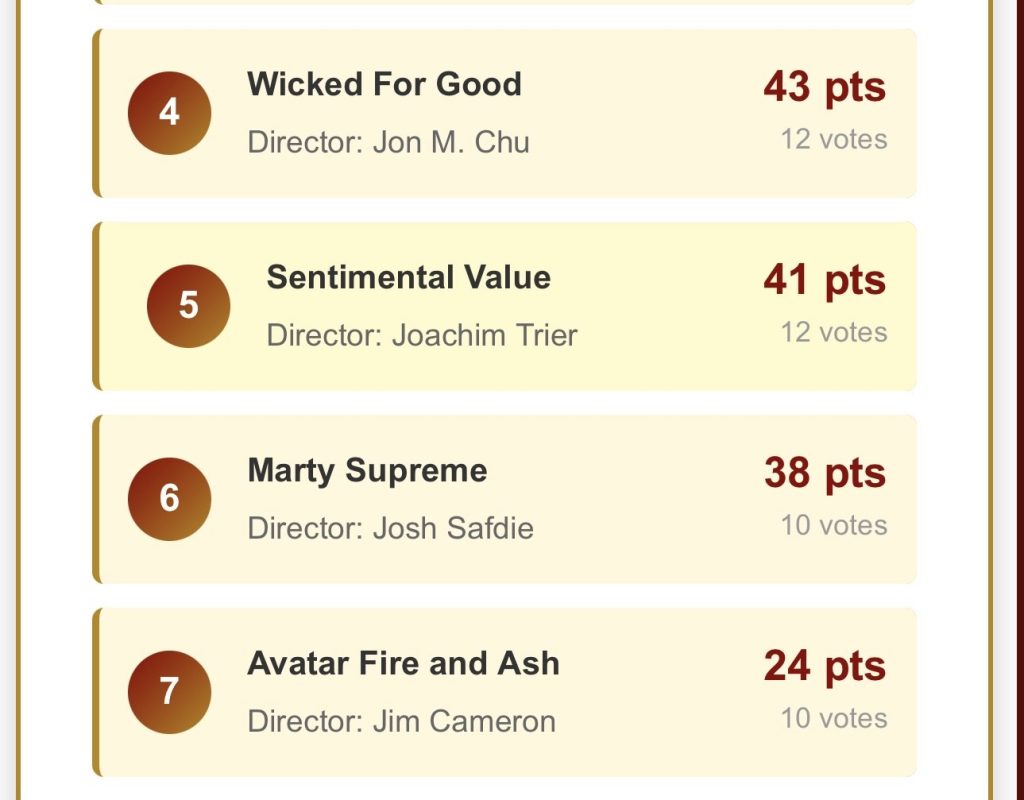
Imagine you’re one of the 13 Gatecrashers, trying to decide which Best Picture contenders deserve this or that proper ranking.

You understand that despite an entrenched argument against Joachim Trier’s Sentimental Value being favored because only one foreign-language feature (i.e., Parasite) can be a hot Oscar ticket in our current decade, you understand deep down that there’s a right thing to do.

Imagine in the same way that the late John Lennon imagined a brotherhood of man over a half-century ago…

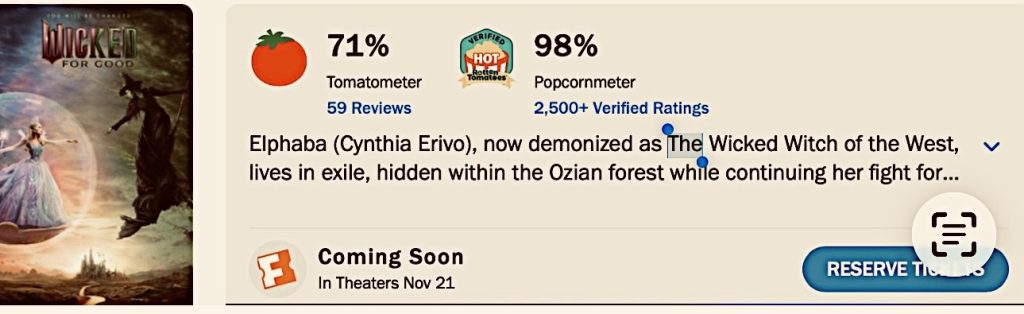
Imagine calculating that the Samuel Z. Arkoff-level Sinners and the agreeable but low-Metacriticrated and nothing-to-really-write-home-about Wicked: For Good are more likely to win the Best Picture trophy than Trier’s obviously superior and sublimely performed family drama

Imagine the deep-down contempt and loathing you need to feel for Academy members to honestly suspect that they’ll be sufficiently coarse and primitive-minded to place Ryan Coogler’s drooling, racially-stamped musical vampire film and Jon M. Chu’s eye-filling musical finale to 2024’s Wicked higher in your Gatecrasher ballot…

Imagine this kind of Jean-Luc Godard-level contempt surging through your veins.

Sharf Does It Again

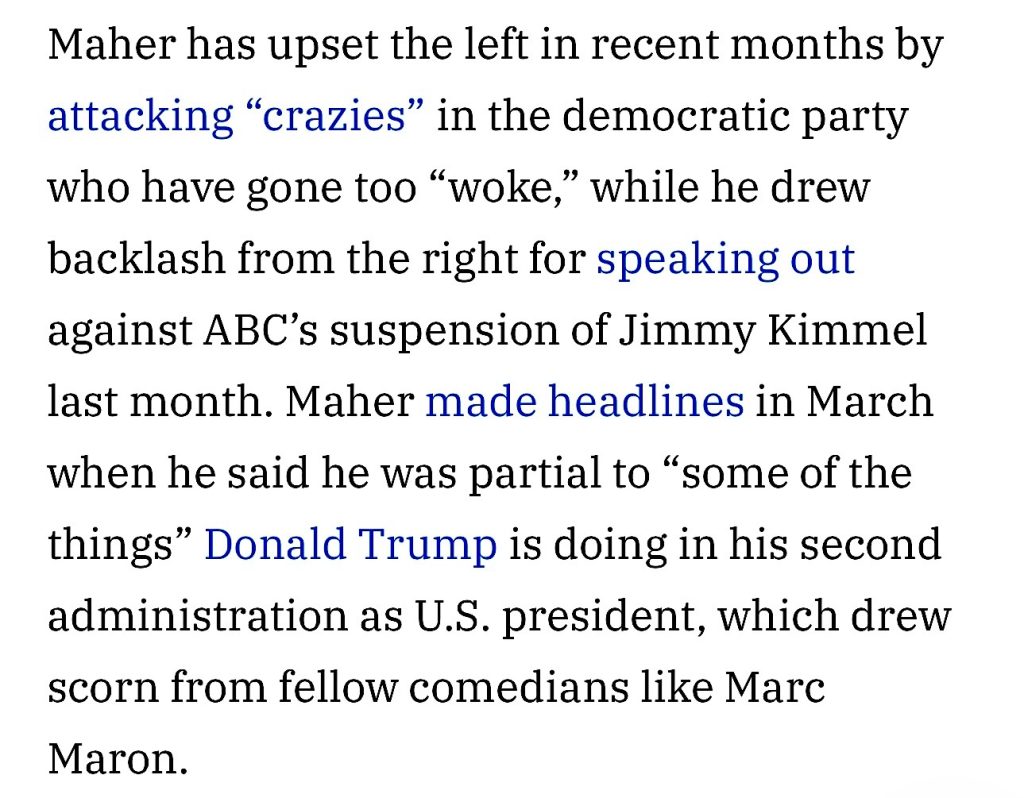
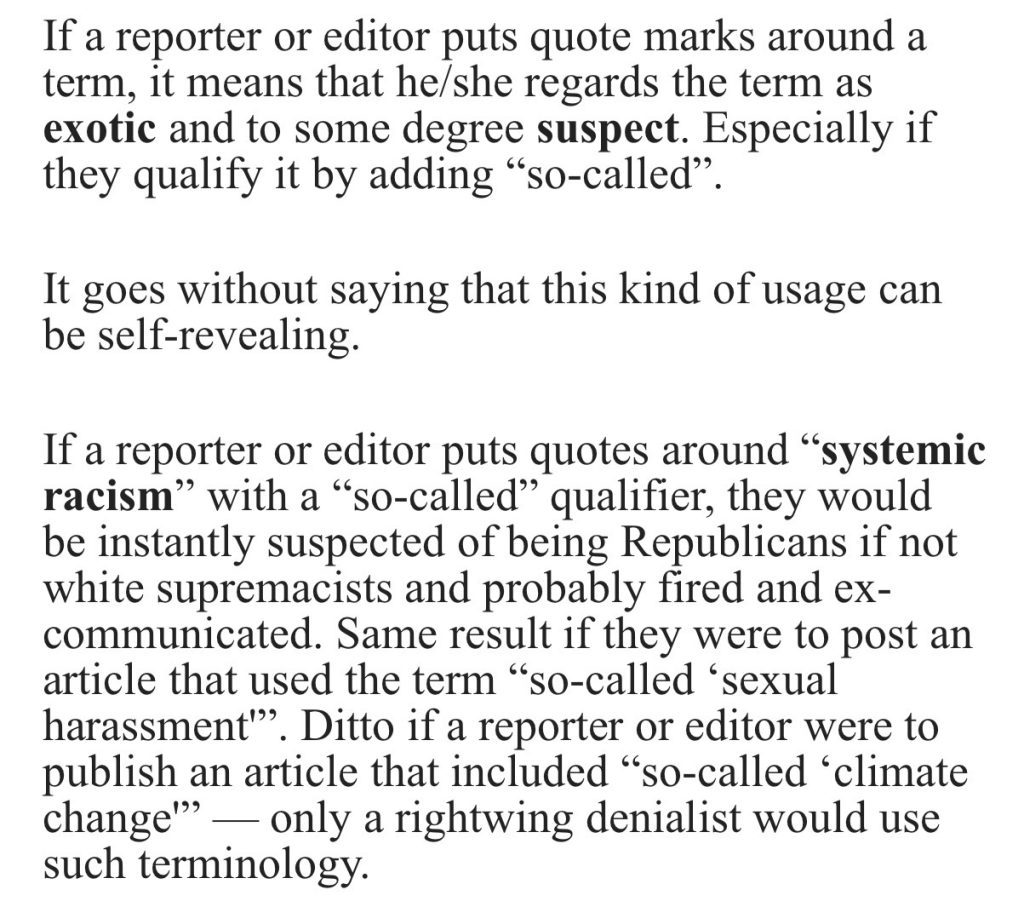
Yesterday Variety’s Zack Sharf, an adamant Stalinist wokester, once again showed his colors by placing scare quotes around a four-letter word that (a) begins with “w” and (b) alludes to a kind of hyper-judgmental progressive leftism that is closely associated with cancel culture.

Sharf:

HE-posted in 2021:

Debruge’s Deep Down “Wicked” Feelings Leak Out

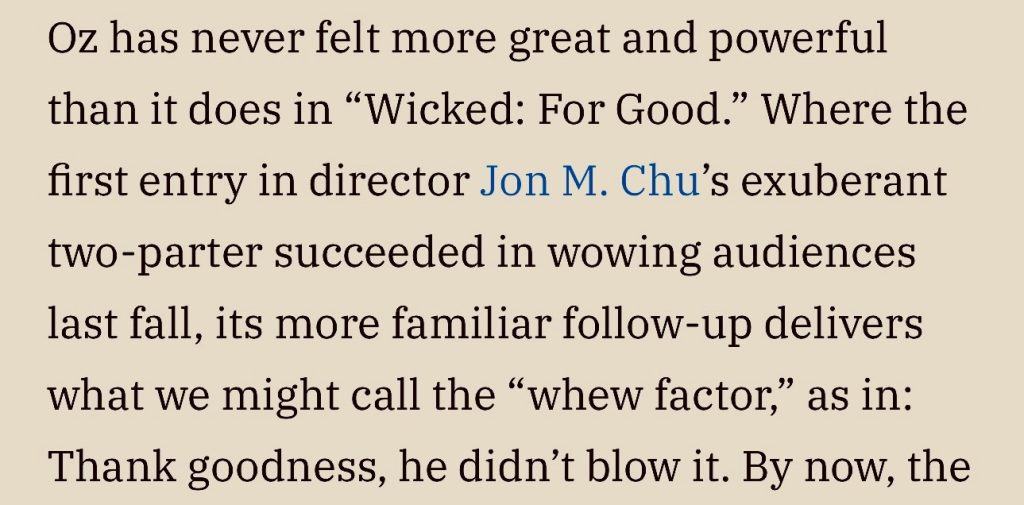
Variety’s Peter Debruge rarely lays it in the line —his deft phrasings often seem to skirt or hint at his actual, true-blue reactions —.but his real feelings about Jon M. Chu’s Wicked: For Good are evident in the first paragraph of his 11.18 review, as well as in the final one.

It’s not exactly a rave when you say that a film prompts you to think “whew, he didn’t blow it!”

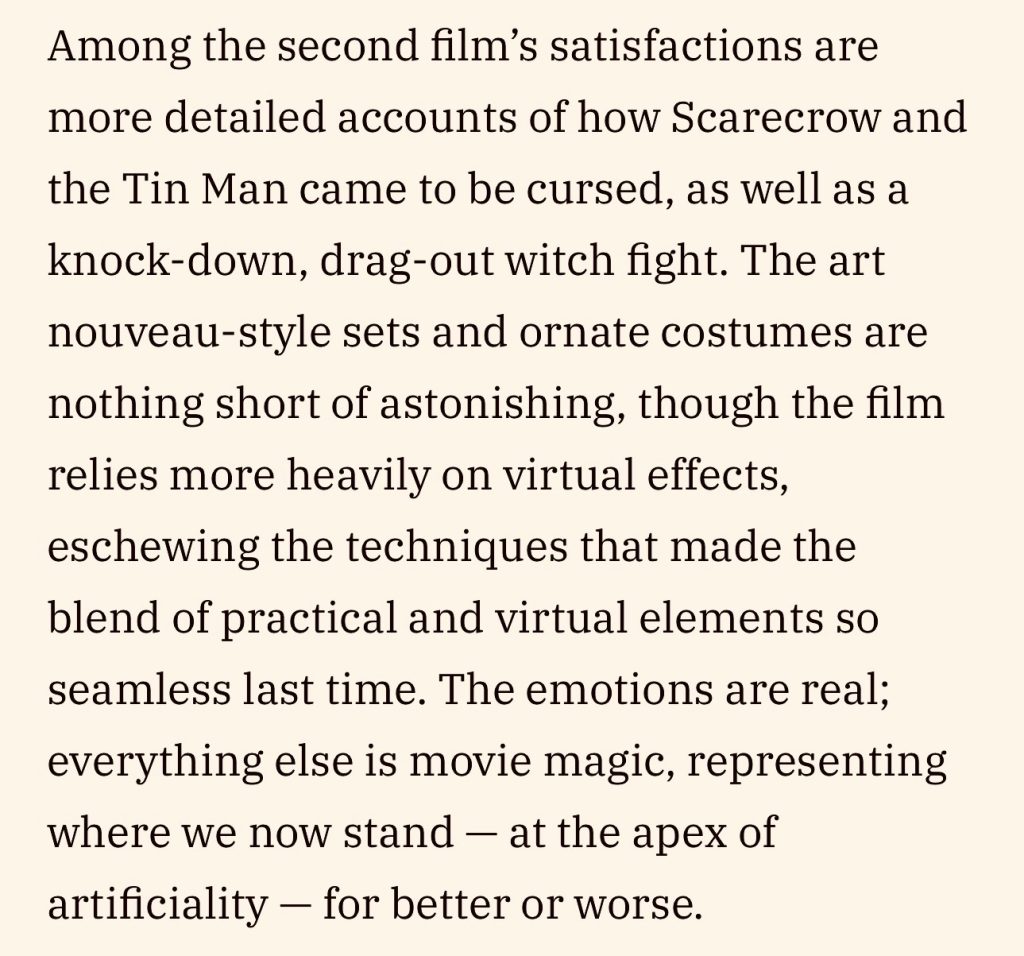
At the very end Debruge says that most of the film is generated by and represented by Hollywood’s “apex of artificiality…for better or worse.” Isn’t that a bit like a dude telling his girlfriend that while she’s nominally pretty, much of her attractiveness is due to expensive, artfully applied make-up…”for better or worse”?

This is not an expression of wondrous rapturous delight!

Pope Leo’s Nice Dream

It’s generally accepted that Pope Leo is a savvy, intelligent, well-educated fellow who’s not only been around but knows the spiritual ins and outs of transcendent cinema. This is partially indicated by Leo calling Ordinary People one of his four all-time faves. But including The Sound of Music and Life Is Beautiful in this quartet…uhm, sorry but nope.

HAL 9000 response: “Stop, Leo. Will you stop, Leo? Stop, will you?”

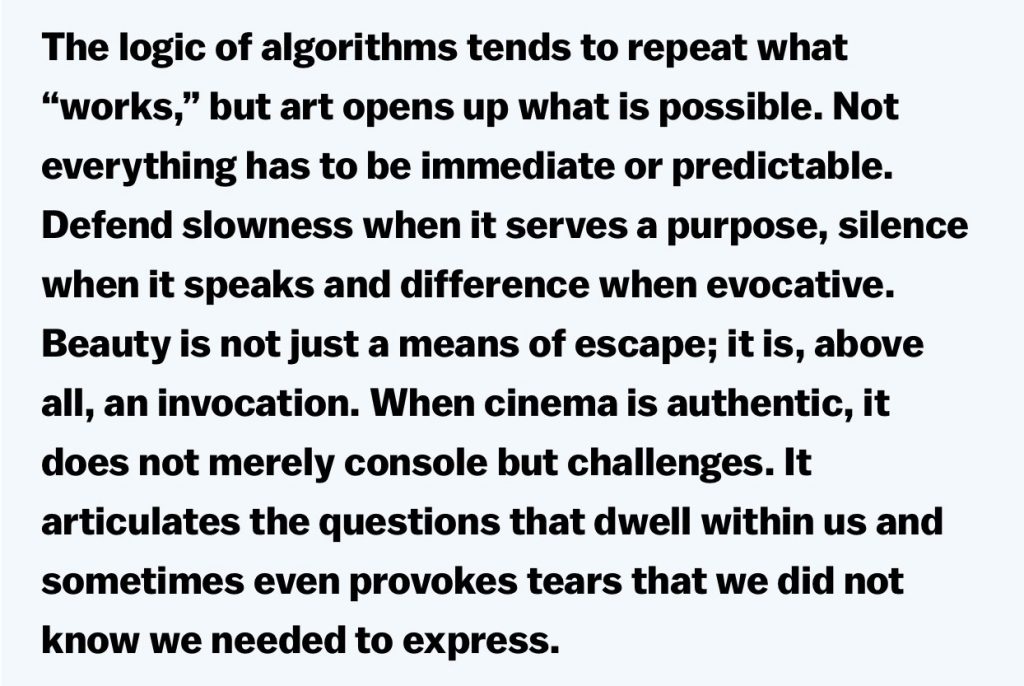
But at least Leo understands and embraces the idea of movie plexes existing, after a fashion, as debauched churches…once-holy places of occasional spiritual contemplation .

Sexy, stand-alone movie theaters are, of course, nonexistent these days…existing only in boomer and GenX memory banks…once regarded in some quarters as lights-out havens for spiritual contemplation, but now mostly degraded into gladiator arenas. People used to sit in single-screen movie theatres for 95, 105 or 115 minutes or longer and actually pay attention for the most part!

Now the only way to savor really good films in a theatrical environment with Pope Leo types…people who ‘get’ it and love the worshipful aspect, that is…the only way to sample this kind of secular high is to (a) attend an upscale film festival (Venice, Cannes, Telluride, Toronto, Berlin, New York, AFI Fest in Los Angeles, Sundance, Savannah) or (b) catch films at smarthouse cinemas in big cities.

The church thing was killed by (a) coarse, ball-scratching, brain-fart audiences, (b) elite Hollywood wokethink propaganda movies (2017 to 2024) that all but smothered the art of cinema itself, (c) Millennial and Zoomer couch potatoes submitting to streaming feeds, (d) AMC theatres showing 20 to 25 minutes of trailers before each and every feature, and (e) old-fart GenXers and geriatric boomers who submitted to understandable pandemic terror five and two-thirds years ago, but who will never, ever return en masse due to (a), (b), (c) and (d) plus lingering squeamishness.

That older married woman I spoke to a few weeks ago who’d never even heard of Anora…good God.

Leo again…

Repeating: The art of cinema and the faith of cinematic churches is alive and well if (a) you can attend the above-named major film festivals or (b) if you restrict yourself to connoisseur movie houses (Film Forum, New Beverly, Vista, etc.) and upscale, movie-friendly museum forums like MOMA, LAFCA, London’s Princess Anne, etc.