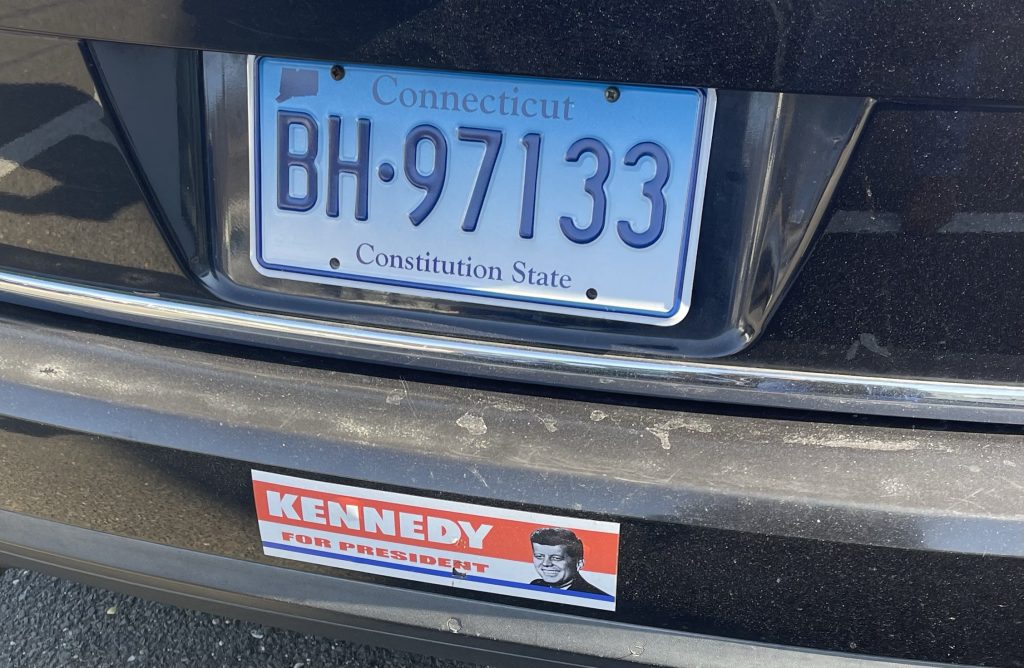
I got my Connecticut plates last October. (Or was it early November?). I told myself I’d put them on in a day or two. It takes two or three minutes but for various strange, complex reasons I kept putting it off. I finally put them on today.

 Jeffrey Wells
 I got my Connecticut plates last October. (Or was it early November?). I told myself I’d put them on in a day or two. It takes two or three minutes but for various strange, complex reasons I kept putting it off. I finally put them on today.
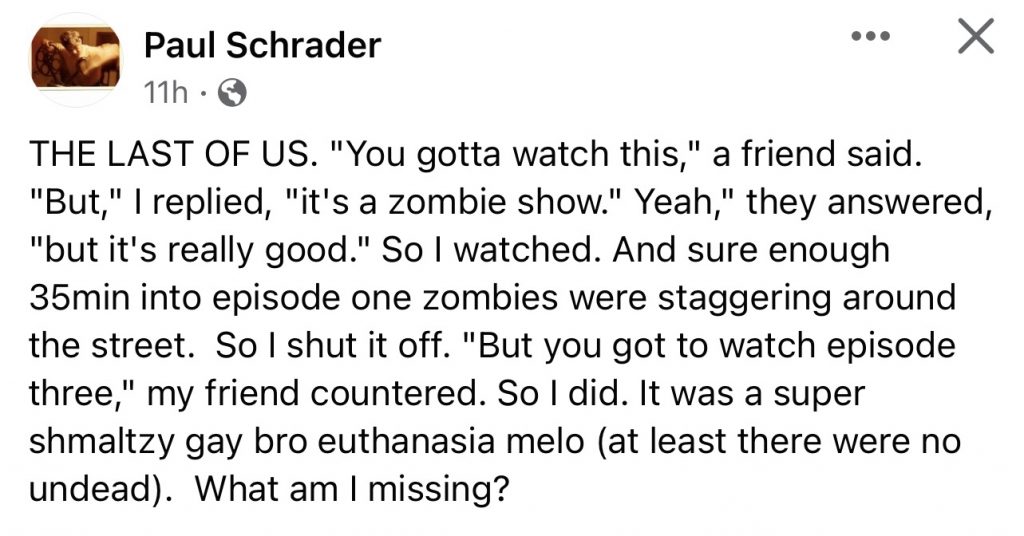
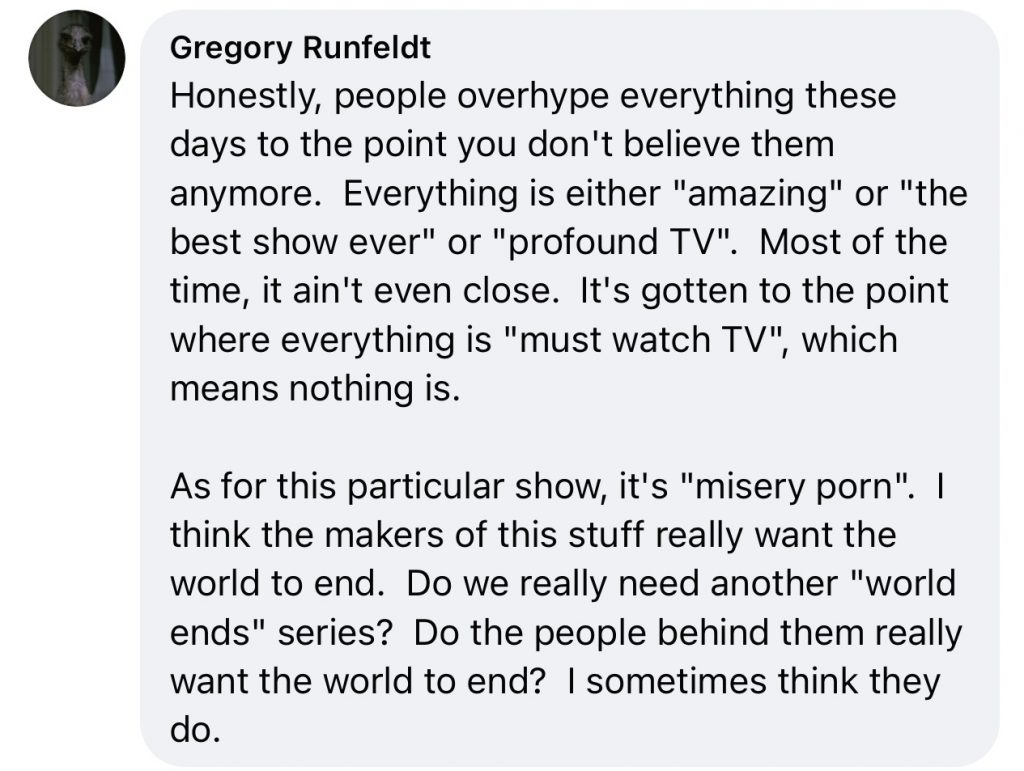
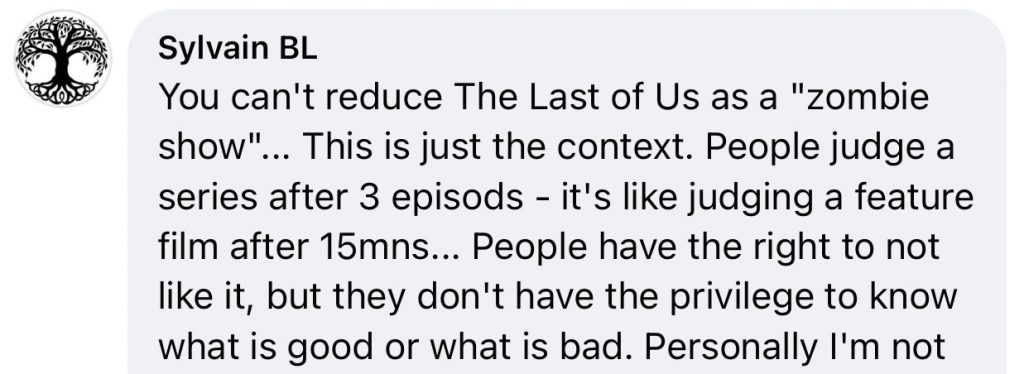
I’m posting this to remind HE’s The Last Of Us fans that there are many, many “meh” responders like me out there, and that a good percentage of us regard the idea of watching a 50ish bear get an offscreen blowjob from a slender, gray-haired 50ish bear with acute discomfort, to put it mildly.
Response to “Sylvain BL”: You’ve said that judging a limited series after watching three episodes is like judging a feature film after watching just 15 minutes’ worth. Well, let me tell you something: If a film is working and grooving and doing it right, I don’t need 15 minutes to comprehend this. I can tell this almost immediately, and certainly within 5 minutes.
Ask anyone who’s done script-reading for an agency or production company — a smart reader can spot a stinker within three or four pages. And if a script is going to be good, you’ll also know it almost immediately. It’s also known, of course, that well-written scripts can go off the rails in the second or third acts, which is why script-readers are unfortunately obliged to read scripts all the way through. But 98% or 99% of the time, if a script blows during the first five pages, it’ll never recover. And if a limited series doesn’t seem to be doing it quite right during the first three episodes, the odds of the series pulling a rabbit out of a hat starting with episode #4 or #5 are very low.

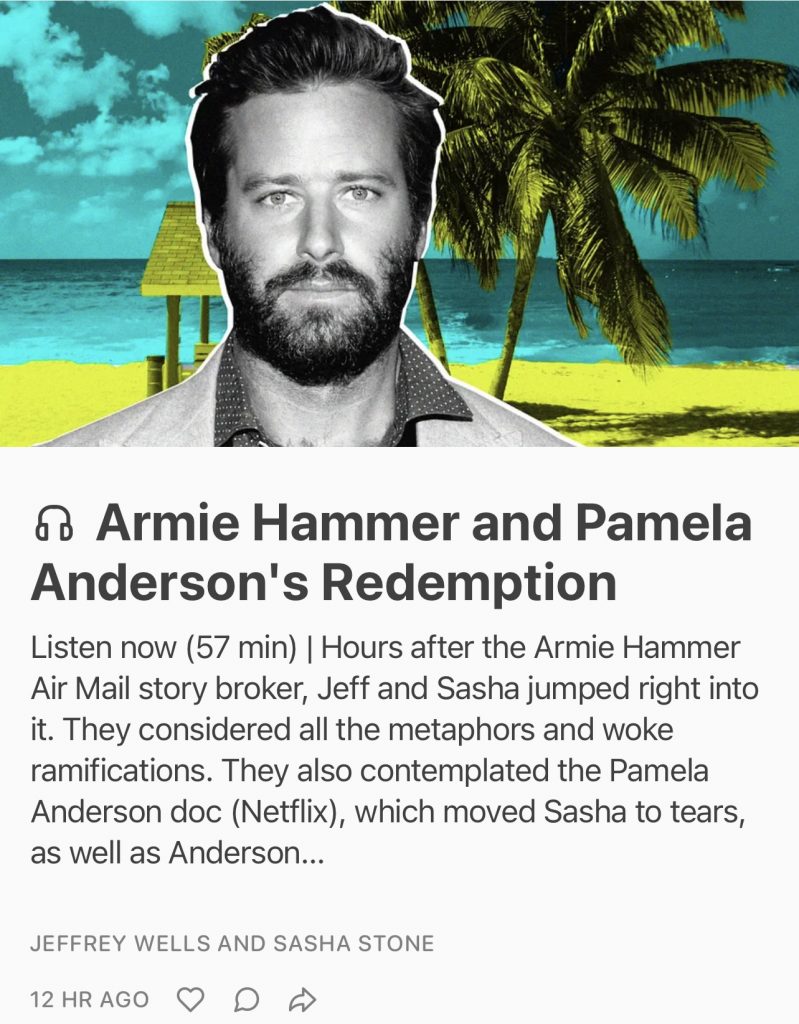
Profuse apologies for my not posting our latest Substack chat earlier today, but don’t let that stop you.
That’s all I’m getting from this feckin’ ad…”Look at us! We’re living the high life! In a bubble!”

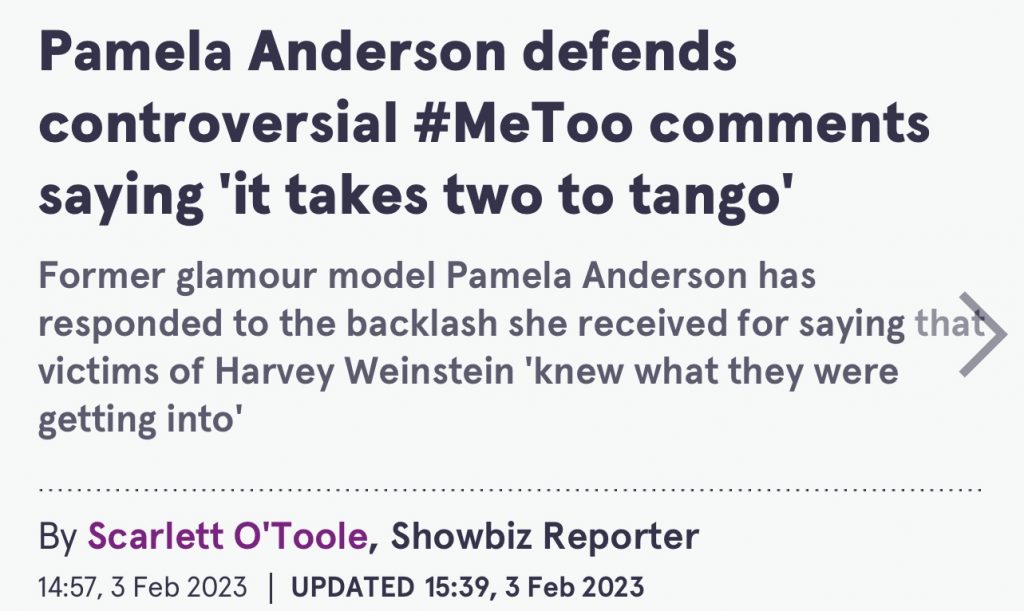
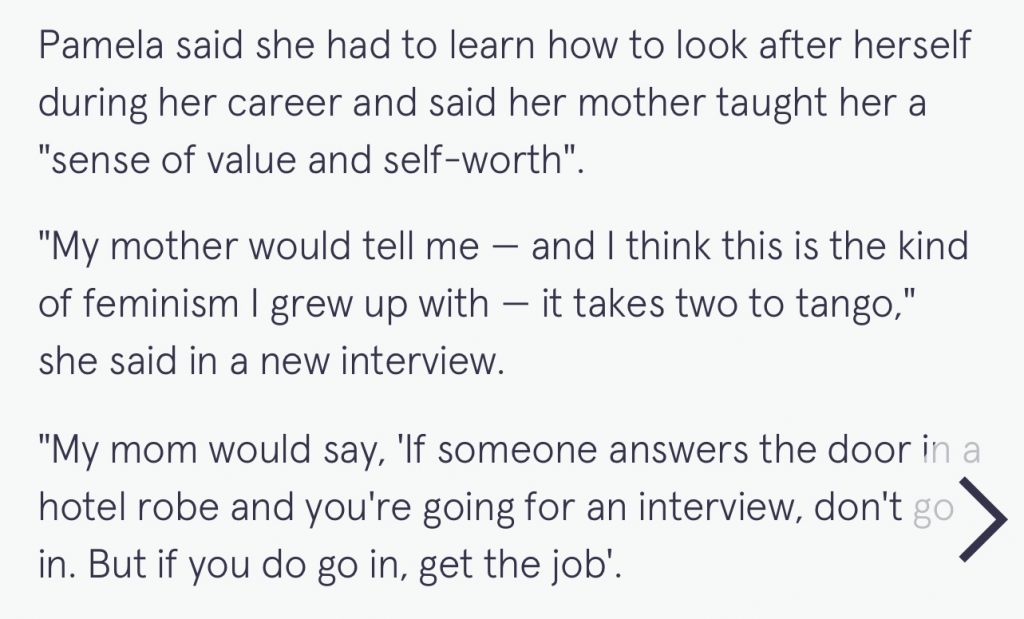
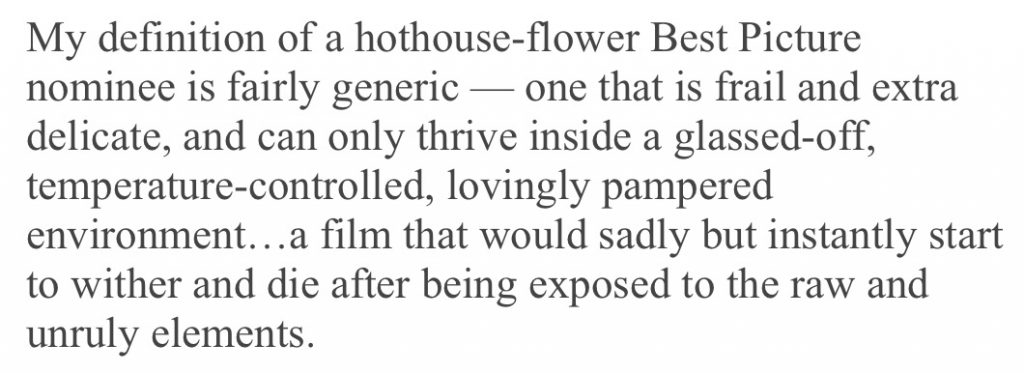
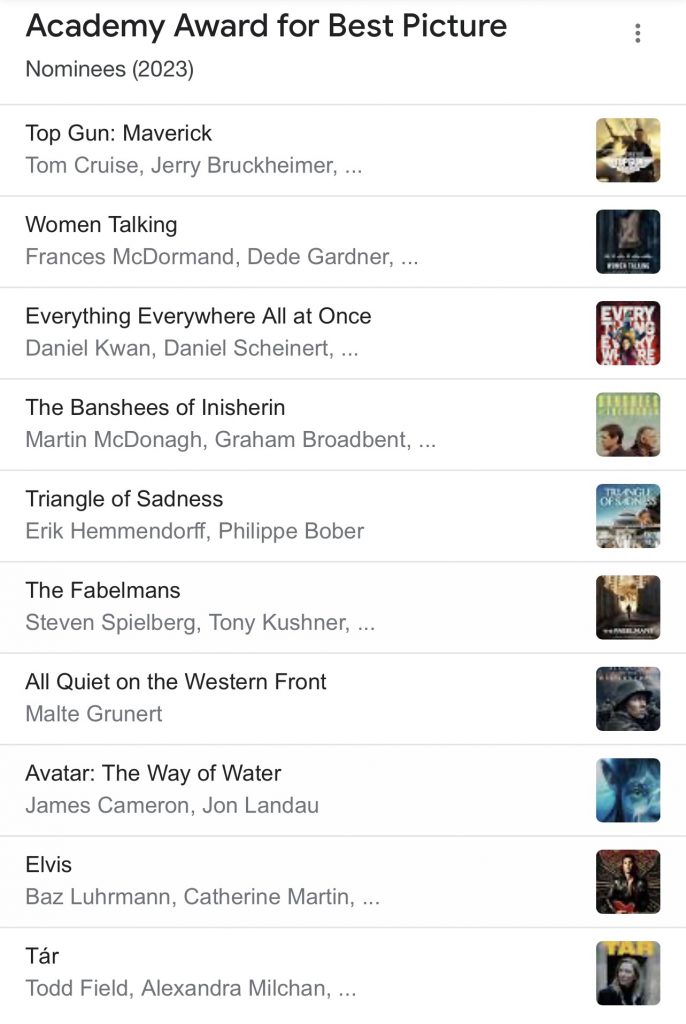
The only hothouse flower among the current Best Picture contenders, arguably, is Sarah Polley’s Women Talking, and we all know that hayloft talkathon never had a snowball’s chance in hell — it was nominated purely for the sake of #MeToo tokenism.
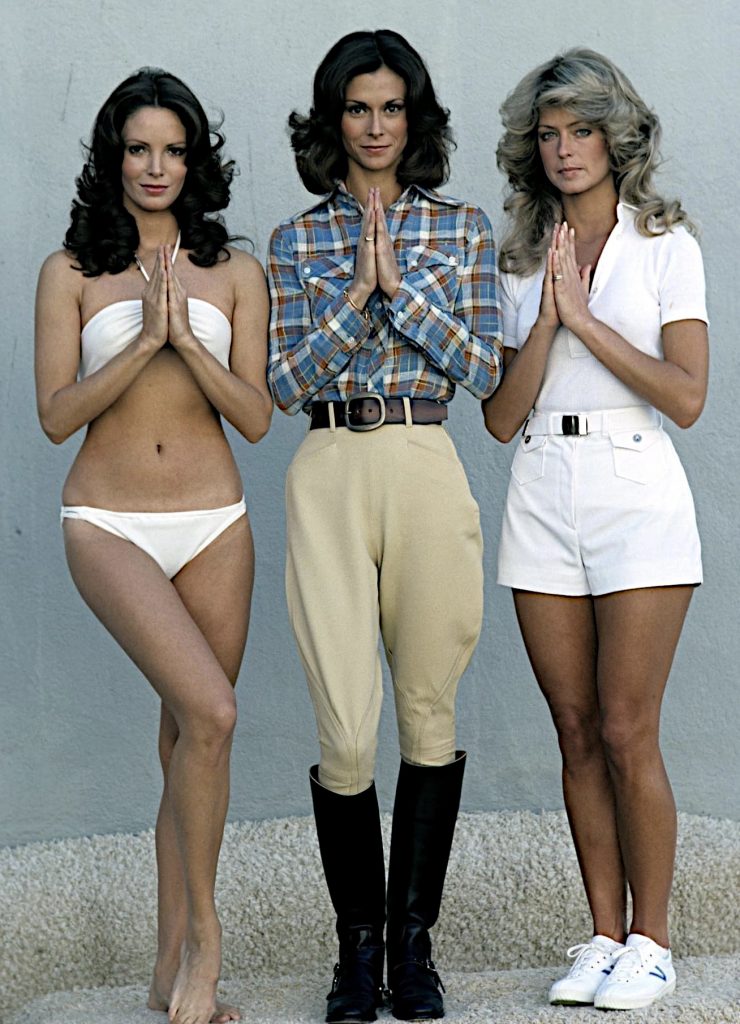
…and the Charlie’s Angels hey-hey peaked 45 years ago so it doesn’t matter to under-40s or anyone else for that matter, but my God, that show was beyond reprehensible in its absolute disregard for even a semblance of realism of any kind, and its general embrace of sterility/puerility. It was Velveeta, and that didn’t stop anything. It ran between ‘76 and ‘81.
If only Aaron Spelling had instead produced Quentin Tarantino’s Fox Force Five. Ironically, I mean. With QT- level dialogue.

Posted on 12.4.19:
I stopped getting high in 1974, and that decision came none too soon. It was time to get real and focused and stop farting around, and try to make movie journalism happen.
It took another five or six years to find my feet in that regard, but that’s writing for you — unless you’re a genius (which I’m not) it can take as much as a decade to become even half-proficient at it.
Robert Altman’s The Long Goodbye, which I’ve seen countless times, opened on 3.7.73. Film-wise the glorious ‘70s were still happening, but it all began to change in 1974, and if there’s one film from that fairly turbulent and convulsive year (Nixon resignation, close to the end of the great ‘70s film era with Jaws and Star Wars right around the bend, not to mention the beginnings of disco and punk) that has genuine staying power, it’s this one — a year ahead of schedule.
Altman was a serious pot-head, of course, and his hot-streak films (late ‘60s to late ‘70s) reflect that proclivity as well as the times — deconstructing, alternating, exploring, goofing off and playing it by ear.
The difference on my end was that in ‘73 I was starting to think about shirking all that and cleaning out all the closets. So I wasn’t really on Altman’s wavelength, and yet I love The Long Goodbye for all the ways that it captured in amber what the early to mid ‘70s felt and sounded and smelled like.
Altman’s primary motivation wasn’t to deride and dismiss Raymond Chandler’s hard-bitten shamus. He merely decided, quite sensibly, to make a private detective film within the realm of ‘74 (counter culture giving way to Me Generation narcissism, Nixon collapse, hash brownies, sinking into cynicism, anti-traditional you-name-it) and that meant, obviously, that the 1940s version of Phillip Marlowe (as interpreted by Humphrey Bogart and Dick Powell) no longer existed and had to be jettisoned.
What took its place was something vaguely stoned and misty — dry mockery and improvisation and a laid-back Zen cat attitude on the part of Elliott Gould. It all added up to “all those hard-boiled, tough-guy cliches no longer apply…maybe they never did…everything is shifting, devolving, being re-defined.”
Altman was always about poking the bear and trying to catch the wind, and he was never into genre stuff. He may have mainly wanted to dig down and deconstruct and have fun, but he also wanted to craft a Marlowe film that would reflect and comment upon what was happening back then — culturally, spiritually, morally.
Altman called The Long Goodbye “ a satire in melancholy.”
Except for the lampooning of gangster tropes by way of those goons who work for Mark Rydell’s Marty Augustine, the satire works. Plus Vilmos Zsigmond’s constantly slow-tracking, circular-arc camera, the 1948 Lincoln Continental, the Malibu security guard with the movie-star impressions, Khoury brand cat food, “Hooray for Hollywood,” etc.
Heavily accented Mexican official: “When did you last speak with the deceased?”
Gould: “The diseased? Yeah, right.”