

Beware of Woke Pretenders

If I were younger and prowling around, I most certainly wouldn’t be a “wokefisher.” If anything I would be a “throw-back-icky-wokesters-into-the-water” type.

I love this 5.14 Forbes article because it reveals that wokeism is a real, desirable thing in the dating-and-mating market. The article basically counsels targeted readers (i.e., mostly progressive women) to beware of fake wokesters in sheep’s clothing.

If this was an article published in Munich’s Völkischer Beobachter in the 1930s, the advice would be “beware, frauleins, of insincere believers in National Socialism…callow young men who shamefully pretend to have read ‘Mein Kampf’ in order to get into your pants.”

Read more

HE to Ashley Reese: You’re Vapid

Let everyone understand that weddings are not occasions from which thoughtful film discussions are launched.

When young, neither Robert De Niro and Al Pacino were conventionally “hot.” They were good-looking (symmetrical features, soulful eyes) as far as it went, but primarily they simply were who they were. They had a certain hot-wired urgency and commitment to the emotional moment, but that’s neither here nor there in terms of hottitude.

Young De Niro was always a bit on the geeky side, especially when he smiled. He was physically beautiful in The Godfather, Part II but less so in 1900 and Taxi Driver.

Pacino’s brown cow eyes (especially in the early to mid ‘70s) made him seem more vulnerable, I suppose. But think again of his Michael Corleone cold-fish expressions in the first two Godfather films. (He transformed into a warm contemplative fish in The Godfather, Part 3.)

Cannes Films I’ve Missed Today…Yay!

This morning I slept through the 6:30 am alarm. Because I’d forgotten to turn on the sound. Which was partly due to last night’s exhaustion. All my fault, of course, but reserving press screening seats has nonetheless become a mad, breathless online Darwinian scramble.

I hate this. It’s on me, of course, but I really hate this. I’ve been attending the Cannes Film Festival for over 30 years (my first was in ‘92). It was never a walk in the park, but now it’s insane. Now if you fail to aggressively sign in and reserve press tickets at the required hour like an Olympic Games Nazi (i.e., before 7 am Paris time), you’re fucked for screenings four days hence…COMPLETE, slacker!!

Not to mention the Cannes press system crashing and this morning’s “page indisponible.”

I found this Covid-inspired system infuriating last year; doubly so this year. I’ll never stop coming to France, but I’ll almost certainly never do Cannes again. Comparatively speaking Telluride is a pleasure cruise. Eff this Côte d’Azur jazz…really.

Length-wise, Ophuls’ “Pity” Has Been Overtaken

Marcel OphulsThe Sorrow and the Pity, a 1969 doc about the Vichy government’s collaboration with Nazi occupiers during World War II, runs 251 minutes. The two-part, Oscar-nominated film was immortalized by two significant mentions in Woody Allen’s Annie Hall (‘77).

Steve McQueen’s Occupied City, a soon-to-be-screened Cannes doc about the Nazi occupation of Amsterdam during World War II, whips Ophuls’ film in terms of running time — 262 minutes. A24 will be releasing it stateside.

Occupied City is based on a 2019 illustrated book “Atlas of An Occupied City: Amsterdam 1940-1945,” written by author and filmmaker Bianca Stigter, who’s been marred to McQueen since…I’m not sure but they’ve been partnered for a good 20 years, give or take. (I think.)

Safe Landing

Orly touchdown around 12:20 pm. The after-dusk air feels October-ish, even chilly. Something called for silence. That plus the usual fatigue. 11 pm now, and every last table…every seat at Sancerre filled with beaming, jovial slap-happies.

Bee-Bee-Beeduhlee-Bee

I’d just come through security and was collecting all my stuff — leather computer bag, jacket, elephant hide wallet, two laptops, shoes, scarf, belt, pocket combs. In my haste I unthinkingly scooped up what I thought was my black iPhone 12 (Max Pro).

Ten minutes later I was sitting near gate 53, and discovered I had two black iPhones in my inside vest pocket. I ran back to security and promptly found the distraught guy (gray-haired, blue T-shirt) whose phone had strangely vanished. “Sorry, man…stupid mistake…sorry,” I told him as I restored his life and sanity. He was euphoric, levitating.

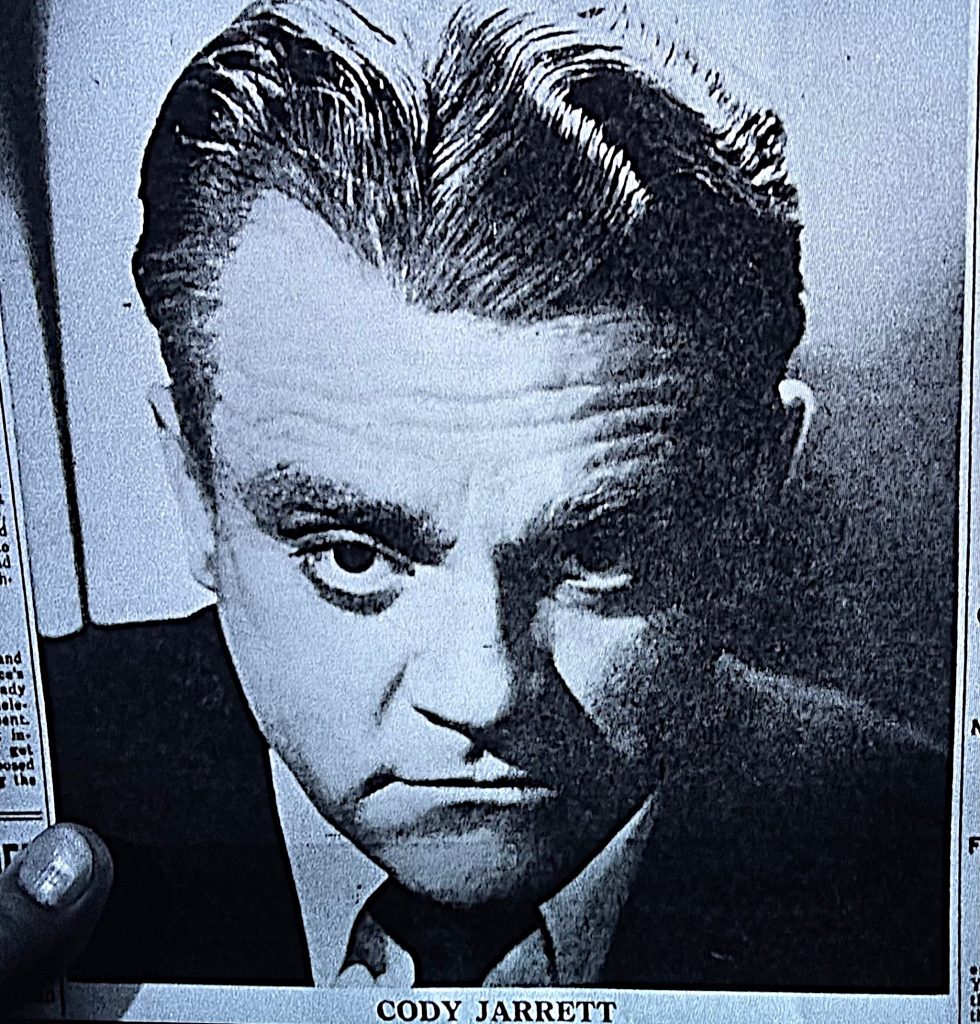
James Cagney: “You’re furious after I’ve just gotten you out of jail?”

Horst Buccholz: “You got me into jail!”

Cagney: “So we’re even.”

Read more

Five Years After

Five years after and in the cold light of day, it must be acknowledged that Spike Lee‘s BlacKkKlansman was never that persuasive and is, in fact, pretty much unbelievable in dramatic situational terms.

You could even apply the term “goofily plotted.”

The Focus Features release received a euphoric (i.e., over-hyped by shill critics) response when it premiered on 5.14.18 at the 2018 Cannes Film Festival.

I called it “Lee’s strongest since Inside Man, and before that The 25th Hour, and easily his most impassioned, hard-hitting film about the racial state of things in the U.S. of A. since Malcom X.”

The excitement was mainly due to the film’s final five minutes when Lee recalled the venality of 2017’s “Unite the Right” really in Charlottesville, which ended with the death of protestor Heather Meyer. It reminded viewers that Donald Trump‘s “very fine people on both sides” remark showed who and what he is, and made for a seriously pumped-up finale.

It opened on 8.10.18, and some of the reviews were almost laughable in their over-praise. Read A.O. Scott‘s 8.9.18 review and try not to smirk.

The truth, which I tapped out in my 5.14.18 review, is that BlacKkKlansman, despite being fact-based, is flimsy and hard to swallow. I’m not questioning the facts; I’m saying the action doesn’t “play” from an audience perspective.

“[Praising the finale] doesn’t change the fact that BlacKkKlansman is basically a police undercover caper film, based on Ron Stallworth‘s 2014 novel (“Black Klansman: Race, Hate, and the Undercover Investigation of a Lifetime”).

“Nor the fact that tonally it sometimes feels like Starsky and Hutch, or even to some extent like John Badham‘s Stakeout, especially as it involves the main cop protagonist falling in love with a girl (in this case an Afro’ed black activist, played by Laura Harrier) who shouldn’t know what he’s up to, but whom he eventually confesses to.

In this sense John David Washington‘s Stallworth is Richard Dreyfuss in the Badham film, and Adam Driver, as partner Flip Zimmerman, is Emilio Estevez.

“At times the film also reminds you of some Clarence Williams III‘s scenes from The Mod Squad.

“Set in 1972, pic isn’t literally about Stallworth joining the Ku Klux Klan but a stealthy undercover investigation of the Klan, initiated when he was the first black detective in the history of the Colorado Springs Police Department.

“After initial correspondence with the Klan, Stallworth received a call in which he was asked if he wants to ‘join our cause.’ Stallworth answered affirmatively, and in so doing launched an audacious, fraught-with-peril undercover inquiry.

Right away you’re telling yourself, “Yes, I know this actually happened and that Lee is using the facts in Stallworth’s book, but it made no sense for Fallworth to be heavily involved in this operation.” And it just feels crazy as you’re watching one silly incident after another.

Problem #1 is that throughout the film Stallworth talks to KKK members on the phone (including wizard David Duke, played by Topher Grace) and so Zimmerman, pretending to be the Real McCoy, has to sound like Stallworth as much as possible.

“Except this is a dicey game that’s unlikely to fool anyone. Early on a local KKK leader tells Stallworth that his voice sounds different, as it obviously is.

“If I was Stallworth’s supervisor I would tell him he’ll make a mistake sooner or later and that he’s too much of red flag, and that the smart move is for Zimmerman to carry the ball alone.

Problem #2 comes when a KKK member spots ‘a black guy’ (i.e., Stallworth) behind the wheel of a car that’s following as he drives with Zimmerman. Brilliant tactical maneuvering, Stallworth!

Problem #3 happens when Zimmerman is told by a suspicious klan member to submit to a lie-detector test, and so Stallworth, knowing that Zimmerman’s in a tough spot, runs up to the KKK member’s house and throws a rock through a window. It just seems nuts for Stallworth to have done that, given the likelihood that the klan might wonder why a black guy happened to be nearby.

Problem #4 occurs when the same looney-tunes KKK member looks up Stallworth’s address in the phone book and pays him a visit. Stallworth answers the door and invents a falsehood, but for a couple of minutes he and the KKK member eyeball each other.

Problem #5 happens when a Colorado Springs police supervisor insanely orders Stallworth to provide security for David Duke during a visit to their city. Before you know it Stallworth is in the same room as the same KKK member who knocked on his door, his identity protected only by a pair of shades. And then he takes them off before posing for a Polaroid photo. It’s just crazy — no undercover cop would behave this way.

“All this aside, BlacKkKlansman is semi-edgy and half-involving as far as it goes, and occasionally quite funny from time to time. It’s a reasonably good film, and I love that Lee shoots Trump between the eyes at the end, but people calling it ‘great’ need to calm down.”

Define “Crankpot”

A crackpot is a person whose views and philosophy are regarded as way too eccentric or fantastical to be taken seriously. A crankpot, according to Manhattan gadfly and all-around smartass Bill McCuddy, is a fellow who’s regarded as overly influenced by a skeptical sourpuss attitude about life and movies and whatever else — i.e., too Andy Rooney-ish.

Which, of course, is nowhere close to being a fair description of yours truly. For years I have claimed with a certain degree of sincerity to be a 21st Century incarnation of Klaus Kinski’s anti-Bolshevik in Dr. Zhivago — “the only free man on this train.” Okay, perhaps that’s putting it too strongly but it’s a reasonably close assessment, especially considering the general fanaticism out there.

Olivier’s “Othello”, Part 2

Posted on Facebook late this afternoon, the subject being Pauline Kael’s 1965 review in McCall’s:

I don’t agree that I need to explain to that little woke-ass weenie (i.e., Byrne) that the cultural atmosphere of 1965 (Dr. Zhivago, Cat Ballou, Darling, the Voting Rights Act, the aggressive escalation of the Vietnam War, Rubber Soul) was, like, a teeny bit different from the current Stalinoid terror climate of 2023. And that people who were smart and crackling and flexing their biceps in ‘65 couldn’t possibly be expected to anticipate the state of mental identity derangement that we’re currently experiencing.