What's So Bad About Hand-Puppeting?

I reviewed Jodie Foster‘s The Beaver on 3.16 from South by Southwest, and am re-posting a portion of the piece to synch with Friday’s opening.

The Beaver is more of ‘heart’ thing about healing and family and forgiving,” I said. “And it uses lots and lots of closeups of Mel Gibson‘s lined and weathered face and his graying, thinning hair. What he does about 70% of the time is look forlorn and gloomy and guilty about his shortcomings. Foster is making a film, after all, about putting demons to bed and climbing out of our personal foxholes. So at the end of the day The Beaver, which is essentially a chick flick, guides Mel’s Walter character, who goes through major hell in this film, back to health and vibrancy.

“So it’s a nice soulful movie, a film that cares and gives hugs and feels sad for poor Mel during his aberration period when he goes absolutely everywhere with that brown hand puppet and acts peppy and talks like an Australian Ray Winstone. But the Beaver scenes, unhealthy as they may be for Mel’s Walter character, give the film its sass and vigor, and when the Beaver goes away near the end, the movie loses its fuel and its raison d’etre.

“As everyone knows, The Beaver is about Gibson’s Walter being depressed and on the verge of suicide, but then snapping back to life when he surrenders his identity and personality to the Beaver puppet. The Beaver takes over and Walter is alive again — his wife (Foster) falls in love with him again, his toy business becomes revitalized, he and The Beaver go on a lot of talk shows and appear on magazine covers, his younger son loves his aliveness….although his older son (Anton Yelchin) hates the whole Beaver routine and thinks his dad is an asshole.

“I took Gibson’s decision to hide behind the hand puppet as a metaphor for the way all of us hide the weaker, softer, more vulnerable aspects of our personality from society and the business world especially. Gibson isn’t ‘himself’ during his Beaver phase, but his Beaver personality is alert and creative and crackling, and he’s walking around all day with a spring in his step and paying his employees and steering a winning ship, etc. What’s so bad about that?”

Six weeks later I feel the same way. Gibson’s Beaver personality in the film isn’t relaxed or soulful or wise or warm, but he’s definitely a live-wire and in a hell of a lot better shape spiritually than the tens of millions out there who walk around like zombies at the mall and who hate or sleepwalk through their jobs and zone out in front of the tube on weeknights and weekends.

SPOILER WARNING!

So the “problem” that Gibson’s Walter character is dealing with in The Beaver isn’t that bad of a problem. It sure as hell isn’t so bad that he has to resort to a table saw to fix things.
Point Made

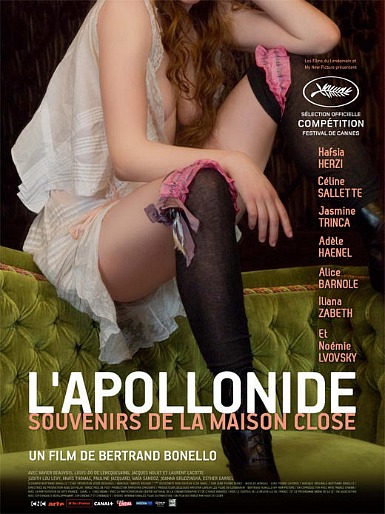
With the appearance of this poster, the intrigue factor among Cannes journalists for Bertrand Bonello‘s L’Apollonide has risen slightly. Why deny it? A drama about prostitutes shutting themselves off from the world after one of their own is disfigured by a client, period pic runs 122 minutes and cost $4 million to make. It costars Hafsia Herzi, Jasmine Trinca and Adele Haenel.

Get It Right

White House press secretary Jay Carney laid out the Osama bin Laden facts earlier today: (1) Bin laden didn’t use a woman as a human shield, (2) Bin Laden’s wife “rushed the [Navy Seals] assaulter and was shot in the leg but not killed”; (3) “Bin Laden was then shot and killed, and was not armed”; (4) “Another woman on the first floor was killed in crossfire,” which may have led to assumptions that a person in Bin Laden’s bedroom was shot and killed with him.

All Hail Bridesmaids

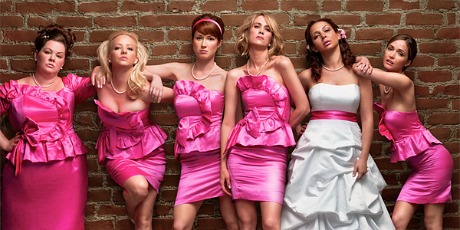
Paul Feig‘s Bridesmaids (Universal, 5.13) may not be as screamingly, howlingly funny or fast-paced as some might prefer (especially if you think like Variety‘s Joe Leydon) and is perhaps a bit sadder and darker than you might expect, but it’s way, way deeper, smarter and more realistically grounded and character-driven than any female ensemble comedy since…ever.

And it’s the best straight-up female-relationship movie since I-don’t-know-when. And it’s wiggy and a bit strange and scatalogical. And riddled with knowing tough dialogue. And about as naked (in the Mike Leigh sense of the term) as this kind of confection can get.

Yes — the term “wiggy” was a pun. Because Bridesmaids also reps a major career breakout for star and co-writer Kristen Wiig, who gives one of the most honest and believably grounded female comic performances in a long, long while. (Peter Sciretta‘s SXSW prediction that she’ll almost certainly be nominated by the HFPA for Best Female Comedy/Musical Performance was dead-on.)

Pic is a feather in the hats of director Paul Feig and producer Judd Apatow and Wiig’s co-writer Annie Mumolo. And it’s easily one of the year’s best so far.

In short, Bridesmaids is nowhere close to being dumb or primitive enough to become a big hit. The young girly-girls who like going to Kate Hudson comedies are going to be saying “what…?” But women with careers and smarts and a little life experience under their belts are probably going to get it big-time, just like the late twentysomething ladies who were sitting next to me at the Arclight last night and laughing all through it.

Bridesmaids is not so much about feuding bridesmaids as a portrait of a meltdown by Wiig’s Annie character. As Maya Rudolph‘s best friend she’s asked early on to be her maid of honor. Except the wedding sends the unstable Annie into a self-destructive downswirl. Annie has always been her biggest problem, we’re gradually informed, but to see her actually become this in action is something else.

An attractive but not-quite-knockout type in her mid to late 30s, Annie is a cupcake-and-dessert chef whose retail business has crashed. And who has a couple of idiotic -and-obnoxious overweight British roommates (which kinda makes no sense). And is in a one-sided fuckbuddy relationship with a glib asshole (Jon Hamm). And who starts to feel really bad about Rudolph’s wedding, and then feels worse when Rose Byrne‘s girly-girl character does everything she can to elbow Annie out of her slot as Rudolph’s best friend, but who also meets a nice-guy cop (Chris Dowd) who gets her and whom she likes but of course pushes away, etc.

About 1/3 of it is really funny, 1/2 is half-funny and the other 17% is fairly dark material (but in a very well written and well-acted way).

Nobody overacts in Bridesmaids. It’s “funny” but it stays on a realistic level. Most of the characters come through in a three-dimensional way…even Byrne’s villainess. I’m told that the adult comic tone is all about the “keep it smart and real” comic sensibility of the Groundlings, where a lot of the principals hail from. I don’t know what to compare this film to but it never really wallows or panders to cheap or common slapstick or sentimentality…it doesn’t lower itself.

Even I laughed out loud a few times, and that’s saying something because I’m primarily a LQTM type of guy.

When Hollywood Reporter critic Todd McCarthy and I and Pete Hammond and a couple of others were talking about it after last night’s screening, one of the things we said was ‘what is Joe Leydon’s blockage on this thing?’ Why did his Variety review pretty much flat-out pan it? From a certain perspective flat-out panning a film this tonally and uniformly together, and one this intelligently focused and which understands itself and has integrity and so on….you can’t pan a film like this!

Okay, it feels a bit too long. It runs about two hours and it probably should have run 100 or 105 minutes. Okay, 110 minutes. But Apatow’s movies always go long so whaddaya gonna do?

Here’s how I put it in an e-mail to Apatow last night:

“I’m sorry, dude, but except for the slightly sloppy and not-quite-perfect ragtag ending with [a well-known ’80s musical group], Bridesmaids is — don’t get mad — better than Funny People. It really works, is really good almost all the way and has, as you obviously know, EXCELLENT comedic writing. But it also has the courage to not be funny and even go moderately dark at times.

“Wiig is going to be nominated for something — this is a real performance and not an assemblage of SNL bits and comic attitudes. I especially loved her raging-meltdown scene at the Paris-themed shower. And Maya Rudolph and Melissa McCarthy (giving one of the best supporting performances by a calorically-challenged comedienne I’ve ever seen) and Chris O’Dowd…all great. And the bridal shop crap-in-the-street scene — a classic.

“Given that you have such a smart, stand-out, very grown-up female comedy, Universal is, I’m fairly sure, sick with worry that Bridesmaids is one of those ‘so good and mature it’s not going to make very much money’ comedies. It’s being sold as a much lower-level thing than it actually is. I know that when I like a comedy it’s always a bad sign. ‘Oh, no….Jeffrey Wells likes it!,’ a Universal exec might very well say in the next marketing meeting. ‘The kiss of death for a hopefully broad-appeal chick flick! Now we’re in real trouble!'”

Why Did This Happen?

Congratulations to the Focus Features marketing team for creating a trailer that has instantly killed any interest I had in seeing Lone Scherfig‘s One Day (8.19). I was into it initially because (a) Scherfig is an excellent director, (b) how could the woman who made An Education go wrong?, and (c) my constant enjoyment of Anne Hathaway.

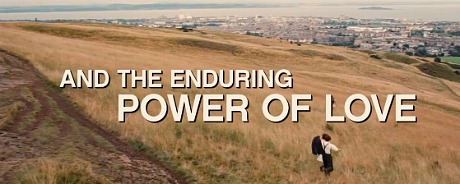
The two decisive factors that changed my mind were (a) the patronizingly old-school, talking-down-to-idiots tone used by the trailer’s narrator and (b) the use of the slogan “the enduring power of love.” In other words, they’re selling it to really dumb girls. Thanks, Focus — I can’t wait!

Faraci Zoo Shocker

I’m as blown away as the next guy by today’s revelation that Badassdigest honcho Devin Faraci has a costarring role in Cameron Crowe‘s We Bought A Zoo. The unmistakable visual proof was posted a few hours ago by none other than Zoo director-writer Cameron Crowe.


Sepia-toned, Mathew Brady-simulating shot of We Bought A Zoo costars Scarlett Johansson, Devin Faraci and Patrick Fugit.

If anyone has news about what part Faraci is playing or how big the role may be or whether his character has sex with Scarlett Johansson, please advise

Not Based On A Comic Book?

James Purefoy‘s strong leadership against Paul Giamatti’s cement-handed villainy has enough edge and seriousness to prevent Ironclad from ever sliding into campiness,” Thefilmpilgrim‘s Stefan Jenkins wrote two months ago, “and the brutally exhilarating battle sequences make it solid yet shallow popcorn fare.

“Director Jonathan English, however, is notably a name to watch, his skill at balancing budget, style and fearlessly brutal action will surely make him desirable property in years to come.” When Jenkins says “style” he means “shakycam.”

I honestly prefer the German-language version of the trailer for this British-funded action epic, which opens domestically on 7.26. Here’s the English-language trailer.

Hidden George

I realize that the consensus view about Alexandre O. Philippe‘s The People vs. George Lucas is that it trashes a corrupted emperor who deserves it big-time but without uncovering anything new. And a doc that’s essentially driven by outrage over the three Star Wars prequels is way out-of-time in 2011.

Nonetheless The People vs. George Lucas is the second theatrical motion picture featuring MSN’s Glenn Kenny (i.e., as a talking head), it does open on 5.6 at Manhattan’s Cinema Village, and then at L.A.’s Nuart on 5.13.

I’ve been in the tank for this thing for no good cinematic reason (i.e., solely based on my negative feelings about Lucas) since ’09, and I realize it’s probably pointless to try and fan the flames (or embers) for a film that’s already been judged by most critics (i.e., excuding Chris Gore) to be an okay so-whatter. Update: A screener just arrived so I’ll see it tonight.

A little more than a year ago I wrote that regardless of quality “it may be worth it to see The People vs. George Lucas just to see it, even if it doesn’t quite make it.

“Just after The Phantom Menace opened — more than ten years ago! — I told David Poland in a phone coversation that Lucas was ‘the devil.’ Poland chortled, scoffed. “George Lucas is not the devil, Jeffrey,” he said. He most certainly is, I replied, in the sense that Albert Brooks called William Hurt ‘the devil in Broadcast News.

“Lucas is an embodiment of evil in that he destroyed his own Arthurian mythology and sacrificed the church of millions of Star Wars believers on the altar of egoistic revisionism and conservative commercialism and Jake Lloyd and Jar-Jar Binks action-figures. And now the world has caught up to my view.”