Westlake Is Gone

Donald Westlake, the prolific author and father of “John Dortmunder,” the character played by Robert Redford in The Hot Rock, and “Walker,” the money-reclaiming payback machine played by Lee Marvin in Point Blank, died Wednesday night on his way to a New Year’s Eve dinner in Mexico.

The finest film based on a Westlake crime novel was John Flynn‘s The Outfit (’73), which I’ve written about over and over for not being available on DVD. Warner Home Video has the rights. Will they please remaster and issue a no-frills DVD…please? It’s a genuine B-movie gem, as lean and hard-boiled as they come. (Except for the ending.) It stars Robert Duvall as Macklin, an ex-con of fee words, and Robert Ryan as a sinister-silky gangster. The costars are Karen Black, Joe Don Baker, Timothy Carey, Richard Jaeckel, Joanna Cassidy and Sheree North.

A die-hard user of manual typewriters (he reportedly couldn’t stand the sound of the humming IBM Selectrics, and probably never even looked at a Mac Powerbook), Westlake was 75 years old. His final novel, “Get Real,” comes out in April.

Yeah, yeah, I know — “Walker” wasn’t the name Westlake chose. His literary character was called Parker. I like Walker better.

Will Huppert Meet Basterds?

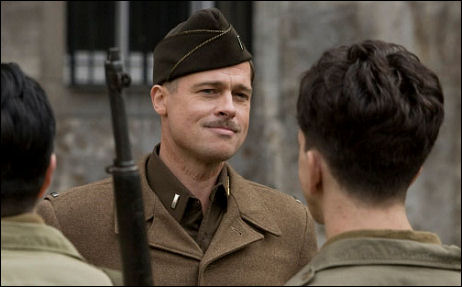
I’d like to be on a fly on the wall as Isabelle Huppert, jury president of the forthcoming 62nd Cannes Film Festival (5.13 to 5.24), steers the debate over Quentin Tarantino‘s Inglourious Basterds (Weinstein Co., 8.21). Except now that I think about it, Basterds — a surreal jape if I ever read one — is almost certain to play out-of-competition. Or am I being too straight-laced about this?


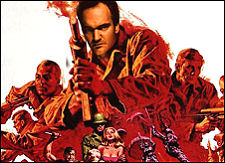
Isabelle Huppert; mock-art for Quentin Tarantino’s Inglourious Basterds

After reading the Basterds script last July I called it a “categorically insane World War II attitude comedy on top of a quasi-exploitation film about angry Jews paying back the Nazis for their many atrocities. It begins and ends in QT’s movie-nut head, and is very entertaining for that.

“It is absolutely the most inauthentic, bullshit-spewing World War II movie that anyone’s ever written. Every other line is a howl or a chortle. It almost could have been written by some 15 year-old suburban kid who used to play pretend WWII games with his friends when they were 10 or 11. Four or five times I literally laughed out loud, and that’s rare for me. And every scene is pure popcorn, pure shit-kickin’ Quentin, pure movie poontang.

The script “flaunts its fakery and movie ‘tude to such a degree that it’s pure adolescent (i.e., teenage boy) pleasure. The Europe it depicts doesn’t exist and never will exist, and that’s fine. The German and French characters are so idiotically cliched they almost sound like the kind of material that a John Candy SCTV skit would use. But not quite. It’s actually kind of perfect that way. The balance, I mean.

“The film is going to seem loony-tunes to some, and that’s good. The Cinema Paradiso section (pretty young Jewish refugee running a Paris cinema, changing reels, not smoking for fear of burning the stored silver nitrate film reels) goes on a bit, page 50 to 100, give or take. A lot of bodies hit the floor from page 100 to 165. A lotta blood and bullets. The violent finale is wackjob. It’s either insane beyond measure or wildly imaginative in a good way, or both.”

No Mercy

Last month N.Y. Times columnist David Carr, a.k.a., “the Bagger,” was at an industry screening of Stephen Daldry‘s The Reader and “totally flipped his lid,” he writes in the third person, “when the couple next to him chattered happily through a scene in which a young man walks silently through a concentration camp. ‘Are you twits really going to talk your way through a scene at a concentration camp?’ he hissed.”

Twits! The growing fashion these days, of course, is to pull out a gun and start shooting when someone talks during a film, or at least pull out a squirt gun and let ’em have it two or three times in the back of the neck, or in the ear. Such luxuries, of course, are out of bounds for a Times guy. But more and more I’m detecting a John Wayne frontier-justice attitude about theatre gabbers. Critic-columnist Marshall Fine recently expressed sympathy for the motives of the Philadelphia shooter. “Awww, I didn’t hurt him!”

Master Class

Go to the nine-minute mark and watch the last 57 seconds. Nobody does elegant slapstick like Cary Grant…nobody. His timing is just so, and he uses just enough economy with the broad stuff. A touch more or less and his bits wouldn’t be half as funny. Grant was as expert at this sort of thing as Charles Chaplin, Harold Lloyd and Buster Keaton were at their specialties.

Oh, What A Year…

A sweeping summation of 2008 movies by Neoavant’s Matt Shapiro. I don’t know, man. An awful lot of flying (or falling) bodies, explosions, and people who got punched. Don’t we need to consider (i.e., pay more attention to) the calmer, quieter stuff? I feel there’s too much emphasis on Baz Luhrman‘s Australia in this piece, and nowhere near enough clips of Che. But it made me feel half-good, this thing. 2008 had its share of moments.

Last year Shapiro assembled a first-rate assemblage called “2007: A Year for Drama.”

13 Sundance Standouts

I went into the 2009 Sundance Film Festival site and scanned through the films, A to Z. I’ve selected a few that I’m especially interested in for the usual reasons (loose talk, marquee factors, emotional allegiance). I didn’t include Mary and Max because I have a bit of a problem with claymation movies, sorry. I don’t how care “good” or popular it turns out to be. I’ll see it because I know the talk and would pay a price if I didn’t, but I’ll be going under duress.


The Anarchist’s Wife, Directors: Marie Noelle, Peter Sehr.

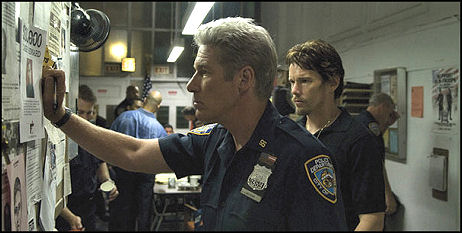
Brooklyn’s Finest, Director: Antoine Fuqua. Cast: Richard Gere, Don Cheadle, Ethan Hawke, Wesley Snipes, Ellen Barkin.

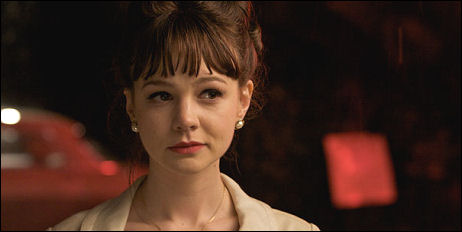
An Education, Director: Lone Scherfig. Cast: Peter Sarsgaard, Carey Mulligan, Alfred Molina, Emma Thompson.

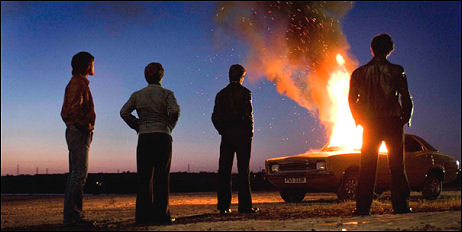
Five Minutes of Heaven, Director: Oliver Hirschbiegel (bounce-back movie after the trauma of Joel Silver, Nicole Kidman and The Invasion). Cast: Liam Neeson, James Nesbitt, Anamaria Marinca.

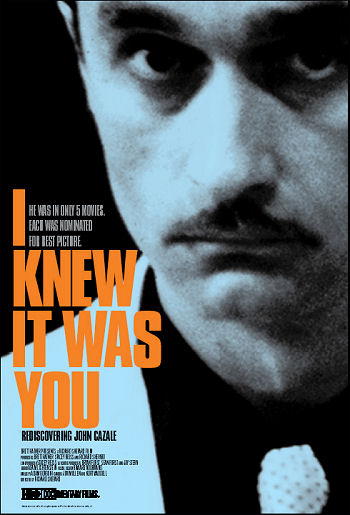
I Knew It Was You, Director: Richard Shepard. Doc about the late John Cazale, featuring Al Pacino, Meryl Streep, Robert De Niro, Francis Ford Coppola, Sidney Lumet, Gene Hackman.

I Love You Phillip Morris, Directors: Glenn Ficarra, John Requa. Cast: Jim Carrey, Ewan MacGregor.

The Informers, Director: Gregor Jordan. Cast: Billy Bob Thornton, Kim Basinger, Mickey Rourke, Winona Ryder, Jon Foster, Amber Heard.

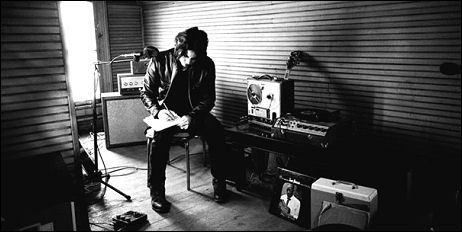
It Might Get Loud, Director: Davis Guggenheim. Rock music doc with Jimmy Page, The Edge, Jack White.

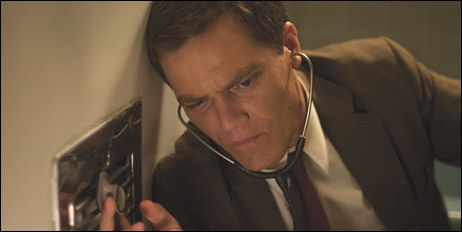
The Missing Person, Director: Noah Buschel. Cast: Michael Shannon, Amy Ryan, Frank Wood.


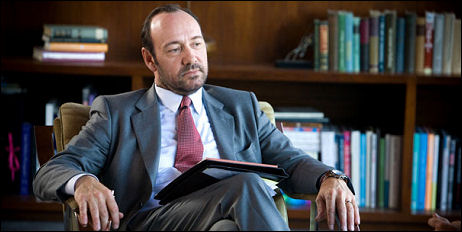
Shrink, Director: Jonas Pate. Cast: Kevin Spacey, Keke Palmer, Mark Webber, Dallas Roberts, Saffron Burrows.

Taking Chance, Director: Ross Katz. Cast: Kevin Bacon.

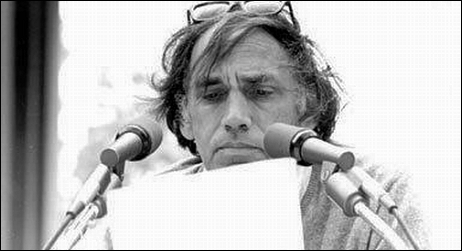
William Kunstler: Disturbing The Universe, Directors: Emily Kunstler, Sarah Kunstler. Doc about famed radical leftie attorney who came to prominence in the ’60s and ’70s.


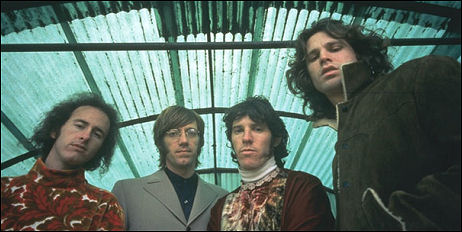
When You’re Strange, Director: Tom DeCillo. Doc about Jim Morrison, The Doors and (hopefully) everything Oliver Stone overlooked, got wrong or under-emphasized.

Still Life

The night before last I bought a bottle of Francis Coppola‘s Bianco Pinot Grigio. But it disappeared the next day. I must have left it somewhere, I figured. The idea of looking in the freezer never occured to me, simply because wine doesn’t belong where you put ice cream. But that’s where I found it an hour ago, frozen stiff, a total glass popsicle, the cork all but pushed out of the neck.

Who Are The Kanamits?

I’ve finally figured out the right real-life metaphor for “To Serve Man“, the old Twilight Zone episode. Sometimes it takes decades for the exact meaning of great art to be deciphered. “To Serve Man,” I now realize, is a parable about the unregulated Gordon Gekko Republican boom market of the last 25 years, the growing pestilence that has finally manifested in our current condition. Think about it.

The Profit

“Owners of capital will stimulate working class to buy more and more expensive goods, houses and technology, pushing them to take more and more expensive credits, until their debt becomes unbearable,” a certain visionary economist once wrote.

“The unpaid debt will lead to bankruptcy of banks which will have to be nationalized and state will have to take the road which will eventually lead to communism.”

The author was Karl Marx, writing in 1867. I don’t know about America going commie but was this guy perceptive or what, given what’s happened in this country over the last decade or so?

Hang My Head

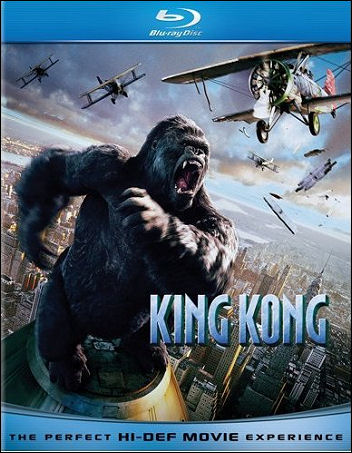
My mood perked up when I saw that a King Kong Blu-ray would be released on 1.20.09, only to crash-land when I realized it’ll be Peter Jackson‘s version.

What I would love to see would be a John Lowry de-grained version of the original King Kong on Blu-ray. The grain levels in that 1933 classic are excessive in certain portions, to say the least. That brief scene with four leads — Denham, Driscoll, Darrell, Englehorn — leaning against the rails of the ship and listening to the Skull Island drums is ridiculous. Grain first, image and sound second. An Iraqi sandstorm squared.

Where would the harm be in cleaning this classic up? I for one would buy this Blu-ray in a New York minute, providing the upgrading was done and done right.

I tried to re-watch Jackson’s version a couple of years ago on DVD and gave up about 100 minutes in. I posted a half-positive response when I first saw it, saying it kicks into gear at the 70-minute mark, but the flamboyant illogical CG insanity is all but impossible to sit through. Jackson is one of the genuine charlatans of modern cinema. The nature of his game will be understood only by future generations; present-tense moviegoers, I believe, are too swayed by the smoke and mirrors to see it.

King Kong “is too lumpy and draggy during the first hour or so to be called exquisite or masterful,” I wrote on 12.8.05. “But there’s no denying that it wails from the 70-minute mark until the big weepy finale at the three-hour mark. Monkey die, everybody cry.” I added that it’s “damned exciting in an emotional, giddily absurd, logic-free adrenalized way.”

“If I were a 14 year-old kid talking to friends about all of us seeing Kong a second or third time, I would suggest that everyone try to slip into the theatre after the first hour because who wants to sit through all that talky crap again? Kong isn’t better than Jackson’s Heavenly Creatures because it’s almost entirely about enthusiasm and has almost nothing to do with restraint (bad word!), but it’s still the most thoroughly pulse-pumping, rousingly kick-ass film Jackson’s ever delivered, and respect needs to be paid.”

Boy, am I ashamed I wrote that last sentence. Deeply ashamed. I don’t have a decent explanation except that I’m human and weak and occasionally susceptible to crap.

“Repeating what Spielberg has already accomplished in the Jurassic Park series, Jackson has fallen into a trap,” wrote the New Yorker‘s David Denby. “Spectacle must be more and more astonishing or it creates as much as boredom as wonder, yet it’s not easy, as filmmakers are finding out, to top what others have delivered and stay within a disciplined narrative.”