Attempting to Clarify “Clown Cried” Situation

Forget anyone seeing Jerry Lewis‘s The Day The Clown Cried (’72) later this year, which some seem to believe is in the cards. Just forget it.

On 1.13.24 or two and a half months ago, the belief that The Day The Clown Cried would be screened in June 2024 at the Library of Congress archive in Culpeper, Virginia (or at least sometime this year) was seemingly put to bed by Indiewire‘s Christian Zilko.

Zilko (rhymes with Sgt. Bilko) reported that an LoC representative had “confirmed to IndieWire that no public screenings are planned, as the archive does not possess a complete cut of the film.”

Oh, yeah? Then why did L.A. Times reporter Noah Bierman, after visiting the Culpeper campus nine years ago, quote the LoC’s head archivist Rob Stone saying “the library [has] agreed to not show the film for at least 10 years”? If the full version can’t be shown for lack of material why talk about screening it at all?

Two months later I inquired about also visiting the Library of Congress campus, and particularly about the possibility of viewing the metal cans containing The Day The Clown Cried.

On 10.14.15 I received an emailed reply from Mike Mashon, head of the LoC’s Moving Image section.

He said that the LoC’s agreement with Jerry Lewis places an embargo on The Day The Clown Cried “for ten years, including screenings and making any element associated with it to the public and researchers.” In other words, no can photos until 2025, and perhaps not even then.

Again: If a screening of the completed film is out of the question due to insufficient material, why mention showing it in 2025?

Even if only sections of the film are shown someday, it seems clear that the embargo will be in place until 2025 and not 2024, as some are assuming.

Yes, I’m guilty of having previously posted about a presumed June 2024 unveiling date, but I was lazy or distracted or had bees in my head.

Just to be extra double sure, early this morning I asked Mashon to confirm the embargo date. He’s no longer on the job — retired. Let’s just presume that Clown Revelation Day, if it happens at all, won’t be until the summer of ’25.

Clown Cried In A Cosmic Blink Of An Eyelash,” posted on 4.2.23:

Although the LoC apparently intends to eventually screen some kind of celluloid representation of The Day The Clown Cried at its Audio Visual Conservation campus in Culpeper, Virginia, curator Rob Stone has stated the LoC does not have a complete print of the film.

Posted on 6.15.16: I’m hardly an authority when it comes to Jerry Lewis‘s never-seen The Day The Clown Cried (’72), but…

I’ve read all the articles, I’ve read the script, I’ve seen that BBC documentary that popped last January, and I’d love to view it when the embargo is lifted ten years hence (i.e., in 2025). But I’ve never watched actual scenes.

This morning a friend passed along a 31-minute Vimeo file (posted two months ago but yanked on Thursday morning…sorry) that provides the first real taste of Clown, or at least the first I’ve ever sat through.

Read more

All-But-Forgotten Skill

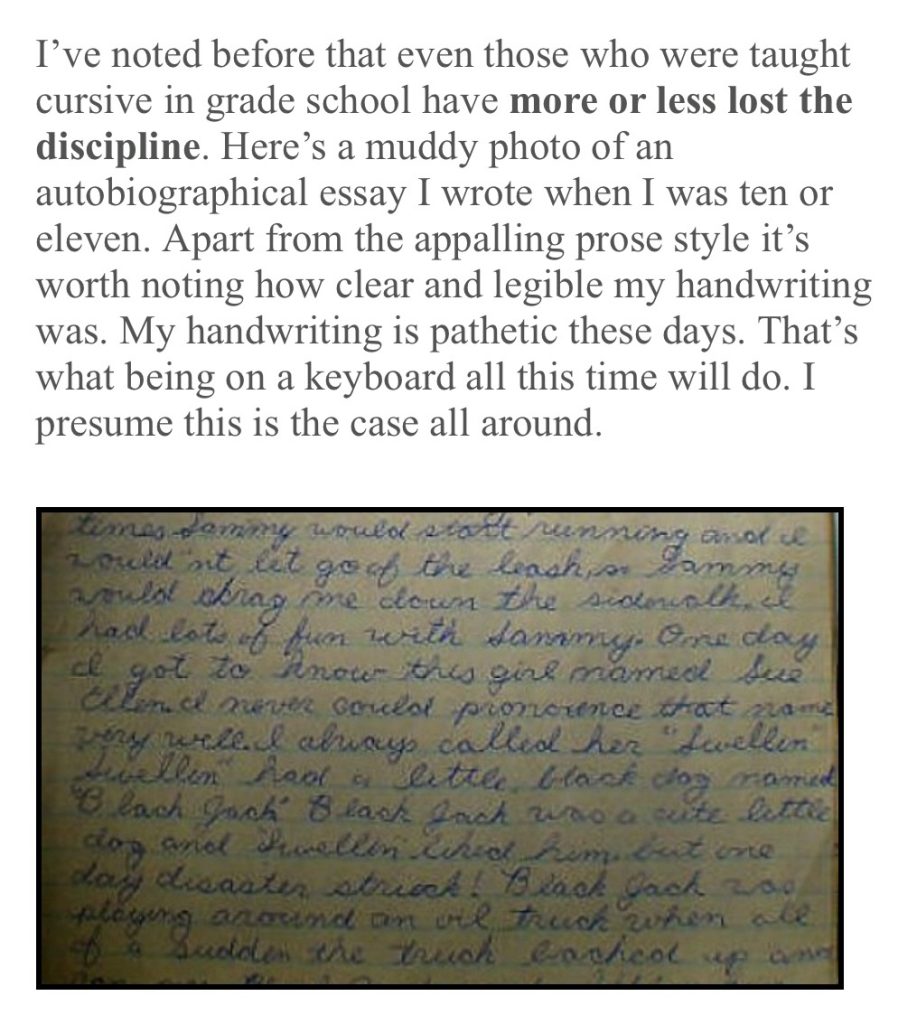
I haven’t written anything by hand in literally decades. Maybe an occasional sentence or two but I haven’t hand-penned so much as a paragraph, much less a personal letter, since the mid ‘70s. Professionally-speaking from the Jimmy Carter era onward it was all typewriting until word processing (Wordstar) began in the mid ‘80s.

Yesterday I bought a note pad and a couple of pens. It’ll take a while but I’m going to force myself into the practice of occasional hand jottings. The idea, I suppose, is that writing by hand is somehow more pure or direct or something. I only know that I want to re-learn or recreate the skill of what used to be called half-assed cursive.

Maybe I’ll branch out into occasional drawing — I used to draw faces and figures lot in my tween years. I took a drawing class at Silvermine when I was 16 or 17.

Who’s Afraid of a Political War Flick?

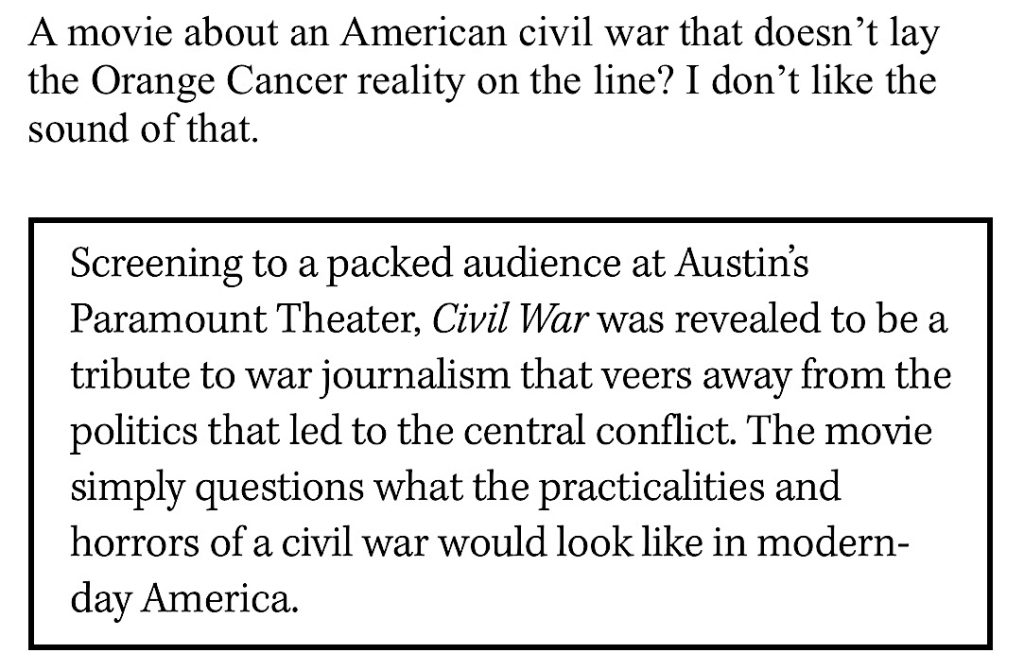
I recently invited a friend to a NYC screening of Alex Garland’s Civil War (A24, 4.12).

“Thanks but I don’t think I’m’interested,” he replied. “I’m just not in the mood for a Very Important Movie (read: explicitly political) right now.”

I was going to explain that the narrative backdrop, according to the reviews, isn’t explicitly political, at least in terms of reflecting the red-vs.-blue, Trump MAGA vs. woke libtard dynamic. But that’s okay…

Posted on 3.14 after the SXSW debut:

Son of Mad Cat Syndrome

Posted four years ago: Speaking as a life-long cat lover, I can say with authority that some cats are on the locoweed side. Inexplicable behavior. One out of several hundred, I mean.

If none-too-bright cats are unhappy or freaked about some kind of confining situation, for example, they’ll sometimes do anything they can to escape, even at their own peril. Or they’ll take revenge upon the person they think is responsible.

(1) A woman I knew was driving with an anguished male cat on the Pennsylvania Turnpike. The weather was cold, a mild snowstorm was blowing, and her car was surrounded by a fair amount of traffic. She was going the usual highway speed. For some reason she leaned over and rolled down the driver-side window, and the cat immediately leapt out.

(2) My ex-wife Maggie and I had a calico cat who was accustomed to outdoor access, and who became extremely upset when we moved into an 8th floor high-rise apartment. The first night we moved in the cat climbed onto a waist-high balcony wall that overlooked the eight-story drop. I put him inside the apartment as this obviously seemed risky. Later that night he got out and jumped. We’d loved him, petted him, fed him, etc. Go figure.

(3) In the late ‘90s I was driving down Franklin Avenue with a cat who couldn’t handle being in moving cars. Jett and Dylan were with me. The cat was howling and freaking, and at one point jumped onto my shoulder and took a serious milkshake dump all over my neck and onto my blue workshirt. I remember the smell filling the car and the kids screaming with laughter.

(4) My sister and I knew that our excitable cat hated water, so we decided to take him with us on a short rowboat trip to the middle of a pond. As a training exercise. We waited until we were 30 or 40 feet out and then let him go. He looked around, assessed the situation, jumped into the pond and swam ashore.

(5) A girlfriend and I were sharing an apartment on Boston’s Park Drive. Her male cat, Tom, was bunking with us. I love cats but Tom was extremely hostile to me — the only cat I’ve run into who was this negative. One night we came back from a restaurant and found that Tom had peed on my sleeping pillow on our conjugal bed. That was it. Over the next day or two we found someone who was willing to take him.

After The Fact

I adored Maestro for the style and reach and flourish of it, and Carey Mulligan’s last-act demise was, for me, devastating.  But before I saw it and I mean throughout my whole life, Leonard Bernstein was the soul-stirring music man — composing, conducting, Lincoln Center, Tanglewood. Maestro didn’t exactly take issue with this, but it certainly sidestepped it. What it mostly seemed to do was whisper in my ear or poke me in the ribs as it said over and over, “O, I screw a lad.”  (That’s an anagram for “Oscar Wilde.”) And I don’t relate to that. There is so much more to life than the raptures of the phallus. And this nagging focus upon young men interferes with the sad French horn I hear in my head every time I think of Terry and Edie and that rooftop pigeon cage. Or, you know, what “Somewhere” does to me every time.

Friendo to HE: ” I still don’t get why the public was willing to embrace Oppenheimer but not Maestro. Neither J. Robert Oppenheimer nor Leonard Bernstein were well known to young audiences when the films arrived.”

HE to friendo: “The public detected that Maestro was mostly about the gay stuff and said ‘okay, yeah…nope.’ J. Robert Oppenheimer may have been a weird genius dweeb but he didn’t fuck pretty boys. Imagine if Oppenheimer had been mostly about the boys and just a little tiny bit about building the A-bomb in Los Alamos and then being politically persecuted in the 50s. I know this is an unpleasant realization for some, but 95% to 96% of the country is straight. Sorry.”

Instant Alien Animus

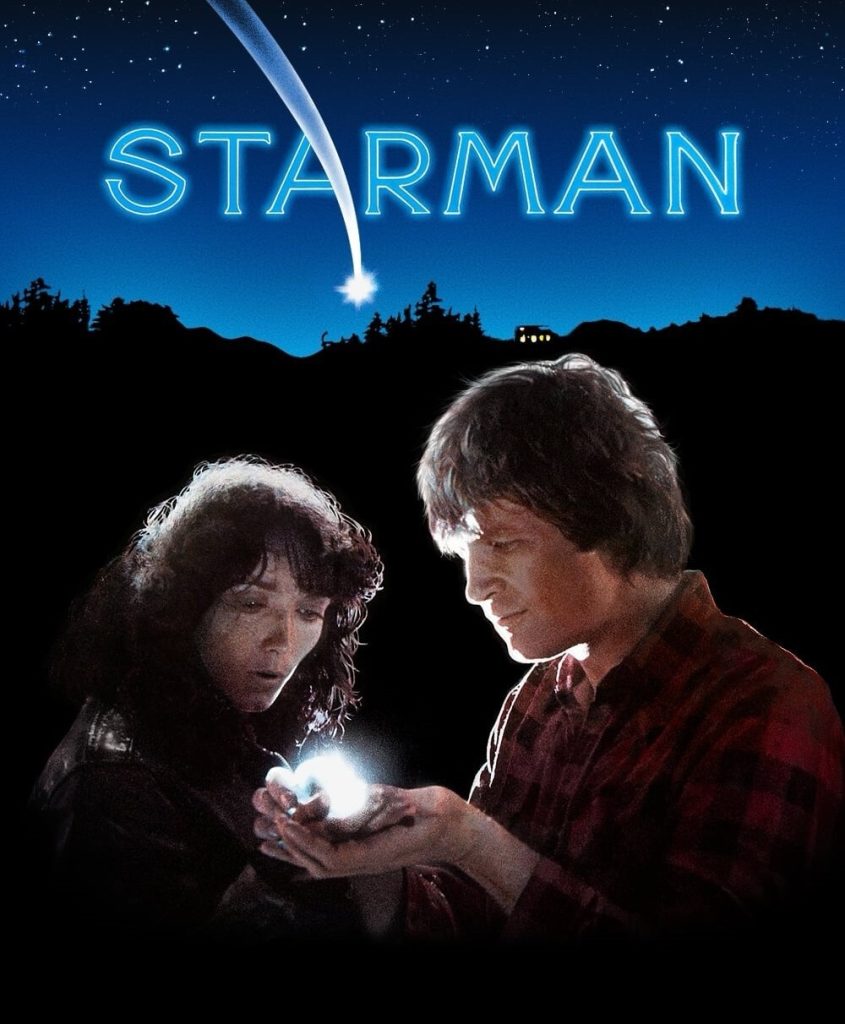
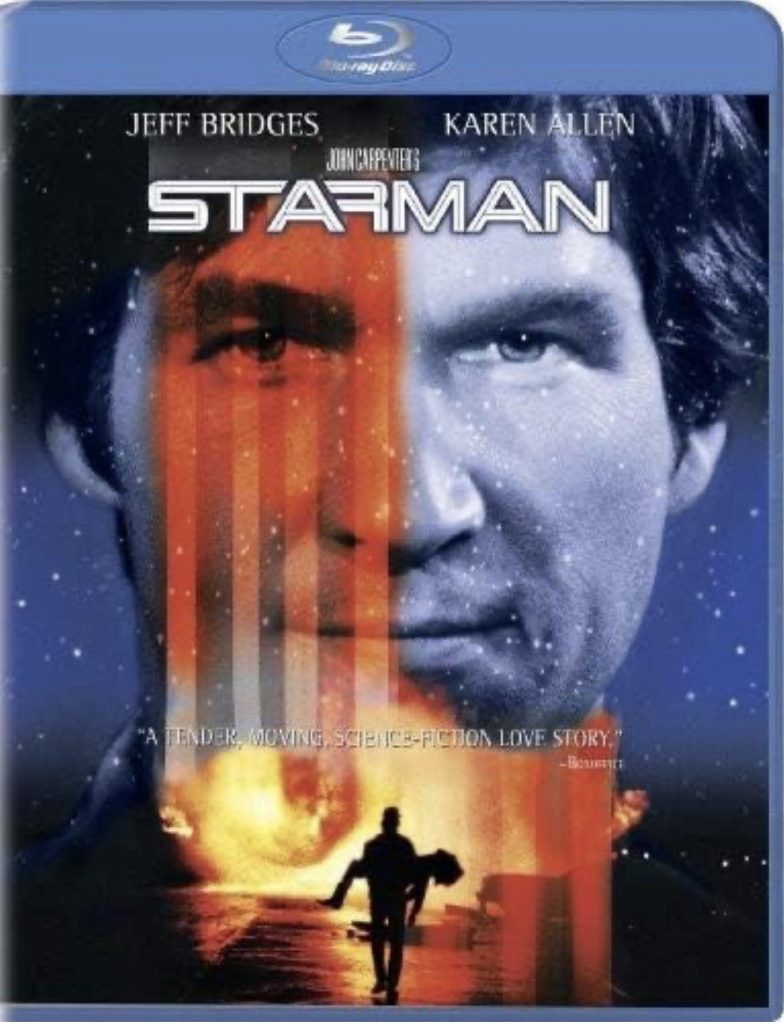
If I never see John Carpenter ‘s Starman (‘84) ever again, it’ll be too soon.

I hated hated HATED Jeff Bridges’ performance as a mentally handicapped, slow-on-the-pickup alien — the polar opposite of Michael Rennie’s “Klaatu” in The Day The Earth Stood Still. Plus I hated his hair. Less than a half-hour in I was fantasizing about ways Bridges might be murdered by the authorities.

I felt more affection for James Arness’s meowing vegetable in Howard HawksThe Thing (‘51) than I did for Bridges’ “Scott Hayden.”

Plus Karen Allen has always bothered me — she was the Sydney Sweeney of her time.

There’s a Starman 4K Bluray on the way…forget it.

Wokeys Trying to Tarnish Peltz

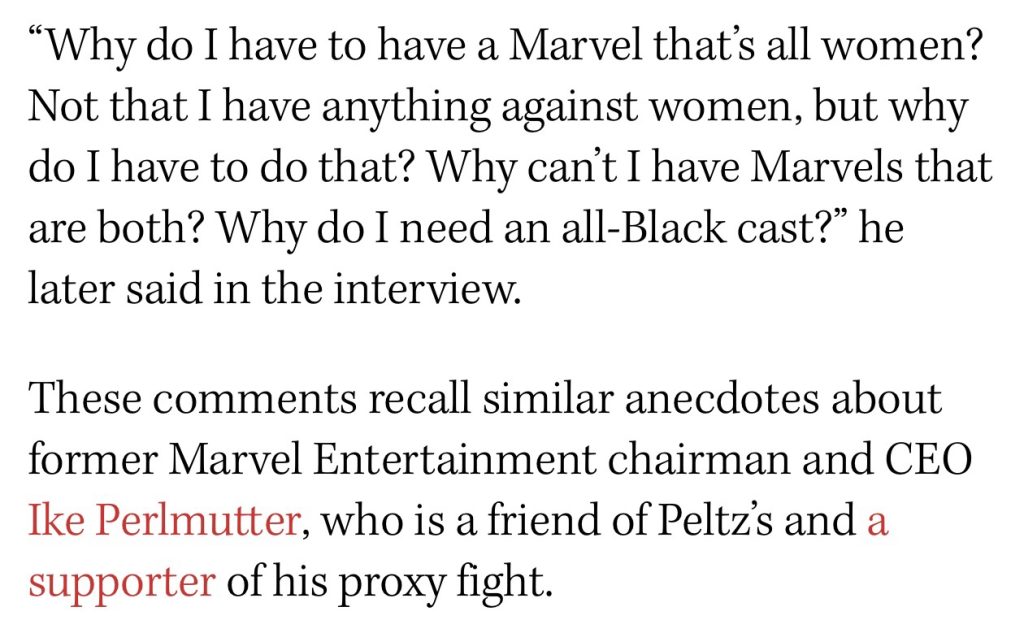
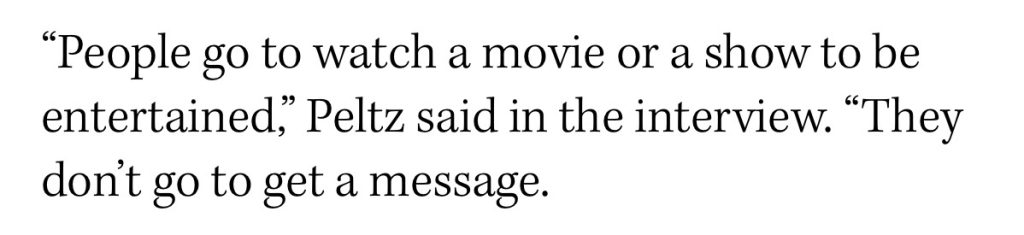
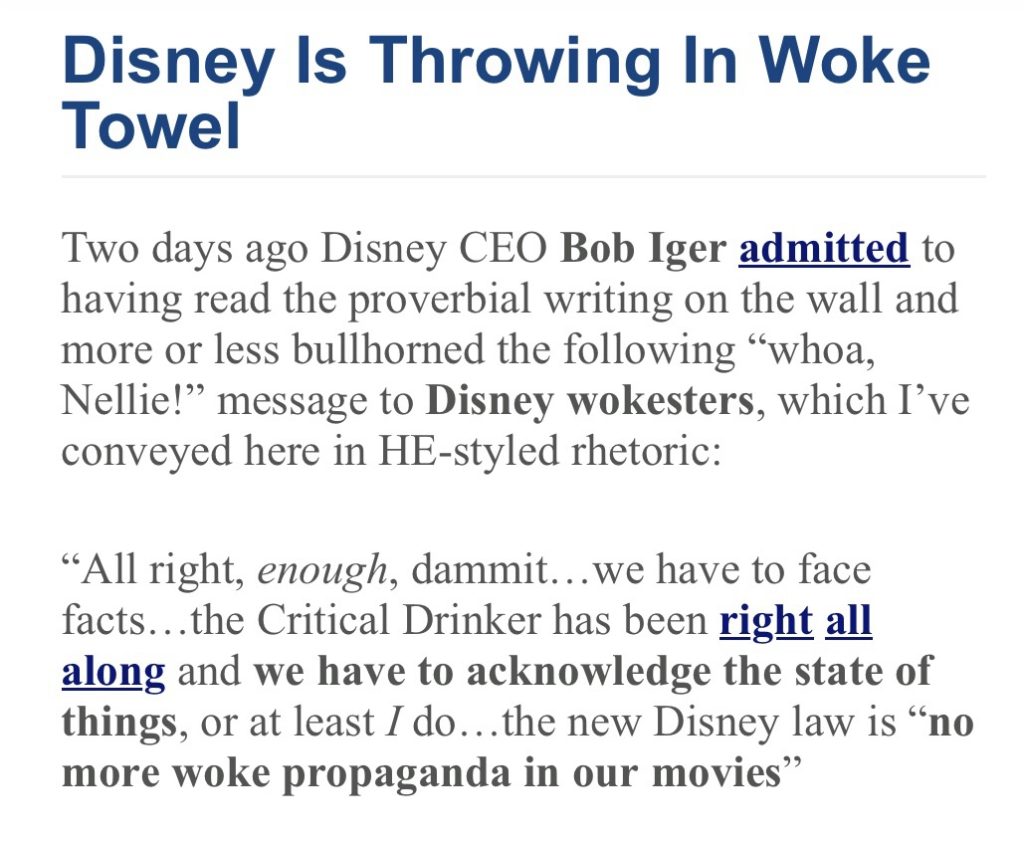
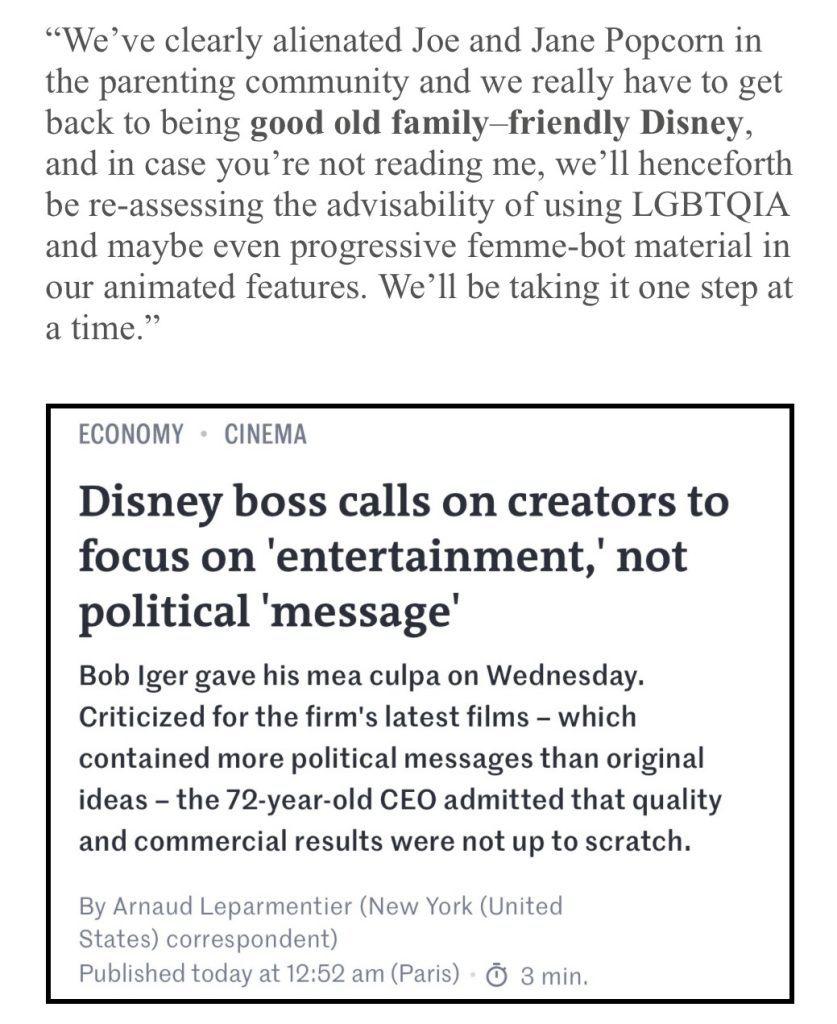
Late last November Disney CEO Bob Iger reportedly stated that Disney films had overinvested in woke messaging and that henceforth it needs creators to lean more toward traditional (nonagendadriven) entertainment content.

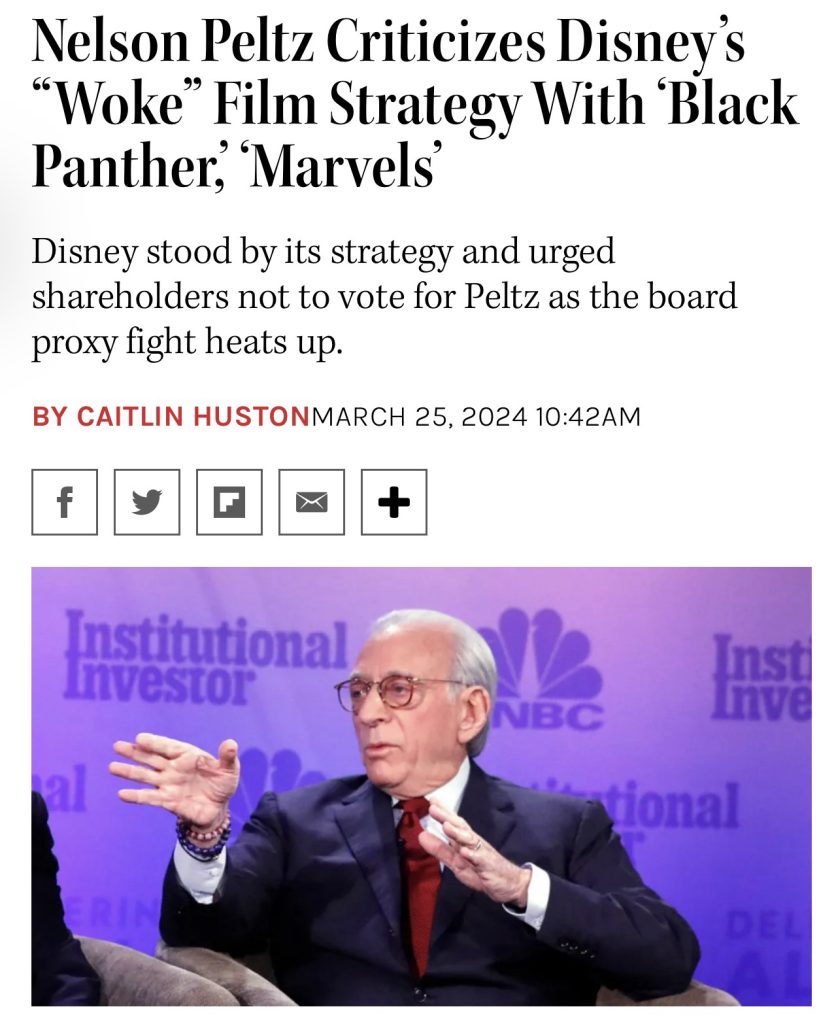
Isn’t this more or less what major Disney shareholder Nelson Peltz, a billionaire businessman and centrist Republican, has been advocating as part of an attempt to get himself elected to Disney’s board of directors on Wednesday, April 3rd?

I agree that a guy whose last name rhymes with a term for skinned mammal fur…a term commonly used by trappers and hunters (Tom Hardy barked it out a dozen times in The Revenant…”we’re gatherin’ pelts!…pelts!…we need more pelts!”)…I agree that it feels slightly inelegant for a time-honored, milk-and-honey U.S. entertainment corporation like Disney to be strongly influenced by a guy with a vaguely coarse-sounding eastern European name…and Peltz being a Florida-residing Republican on top of everything else…I get it…not cool.

And yet Peltz has a point, and it’s one that the Critical Drinker has been hammering home for a long while, and yet two days ago The Hollywood Reporter’s Caitlin Huston ran a story about Peltz that was basically a woke hit piece.

It didn’t hint that Peltz doesn’t belong on the Disney board because he sounds like a meat-and-potatoes guy who doesn’t “get” the vagaries of showbiz, although that’s been implied here and there. It did, however, indicate that his thinking is tinged by racism and sexism, and this strikes me as cheap urban-progressive character assassination.

Tens of millions of average Americans despise the way Disney has woke-ified its brand over the last several years, and Peltz is simply saying “c’mon, this stuff has gone too far, time to roll it back.”

“Unknown” Timetable

James Mangold’s A Complete Unknown would be wise to open later this year as 2024’s award season is looking a bit anemic…compared to ‘23 it’s a weak, mewing little kitten…hobbled by last year’s WGA and SAG strikes.

A boilerplate principle photography period is three months, so James Mangold’s film having begun filming a couple of weeks ago indicates a mid-June finish.

That would give Mangold a fairly comfortable post-production period — five full months — to finish A Complete Unknown for theatrical release…let’s say around Thanksgiving or thereabouts.

Joel and Ethan Coen’s Inside Llewyn Davis (‘13), an early ‘60s folk-music period drama with similar visual elements, shot in the late winter and early spring of 2012. It could have been “rushed” into that year’s Oscar season but the Coens wanted to hang back a bit.

Among the fastest post-production turnarounds in Hollywood history are Robert Webb ‘s Love Me Tender (‘56), Otto Preminger’s Anatomy of a Murder (‘59), Oliver Stone’s W. (‘08) and Lorene Scafaria’s Hustlers (‘19) — all were edited, fine-tuned and finished in the vicinity of 11, 12 or 13 weeks.

Mangold would have 20 weeks to finish and present A Complete Unknown by mid November. If he finishes principal by mid June, he could even pull a Preminger and have it ready to screen at the New York Film Festival by late September or early October.

War Against Baggy Zoomer Pants

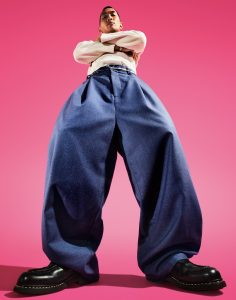
Steam hisses out of my forehead every time I see a Zoomer casually strolling around in baggy flared pants with the cuffs an inch or so above the ankle. There isn’t a dime’s worth of difference between today’s 20something fashion slaves and the Hebrew slaves who built the Great Pyramids of Egypt. Two weeks ago I hit the roof when N.Y. Times fashion maven Jonathan Weiner wrote that “skinny jeans are the new dad jeans.” I wear slim (i.e., not skinny) jeans but I saw red regardless.