Here’s the link for the latest Oscar Poker, man…

 Jeff Wells
 I’ll be delighted to call this person a “she” for the rest of my time on this planet. I hope others follow suit.
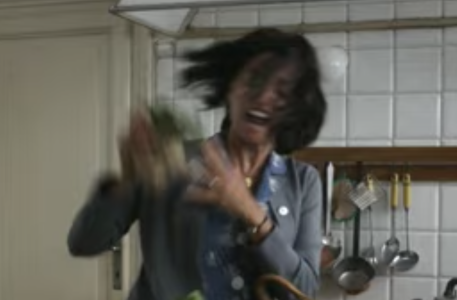
Grown adult has complete breakdown over being misgendered. This is what gender ideology does to people pic.twitter.com/NtPwoWQg35
— Libs of TikTok (@libsoftiktok) October 15, 2023
Apart from the usual sentiments I couldn’t think of anything pointed to say about the passing of Piper Laurie. She was an excellent actress and lived for a presumably fulfilling 91 years. I’m sorry her journey ended but we all have to go sometime.
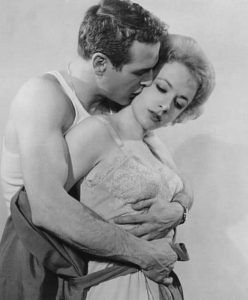
Laurie’s most celebrated performance was as Sarah, the alcoholic and melancholy girlfriend of Paul Newman‘s Eddie Felson in The Hustler. I could never figure what Sarah wanted from Eddie or from life itself. She liked drinking — that’s for sure. She admired Felson’s brilliant gift as a pool player, but strongly resented his playing pool for money or at least his partnering with George C. Scott‘s Bert Gordon.
What did she want Eddie to do, play for the sheer sport of it and forego the dough because money is the root of all evil? Kind of a silly, college-girl attitude.
Laurie was 28 or 29 when The Hustler was filmed. She was 44 or thereabouts when her other big role, Sissy Spacek‘s religious nut mother in Brian De Palma‘s Carrie, was filmed.
…even if the song isn’t all that catchy and sounds a wee bit banal…to each his own…sorry.
🎥| Swifties enjoying "The Eras Tour" film in a cinema pic.twitter.com/PmlLWnVf7P
— The Swift Society (@TheSwiftSociety) October 13, 2023
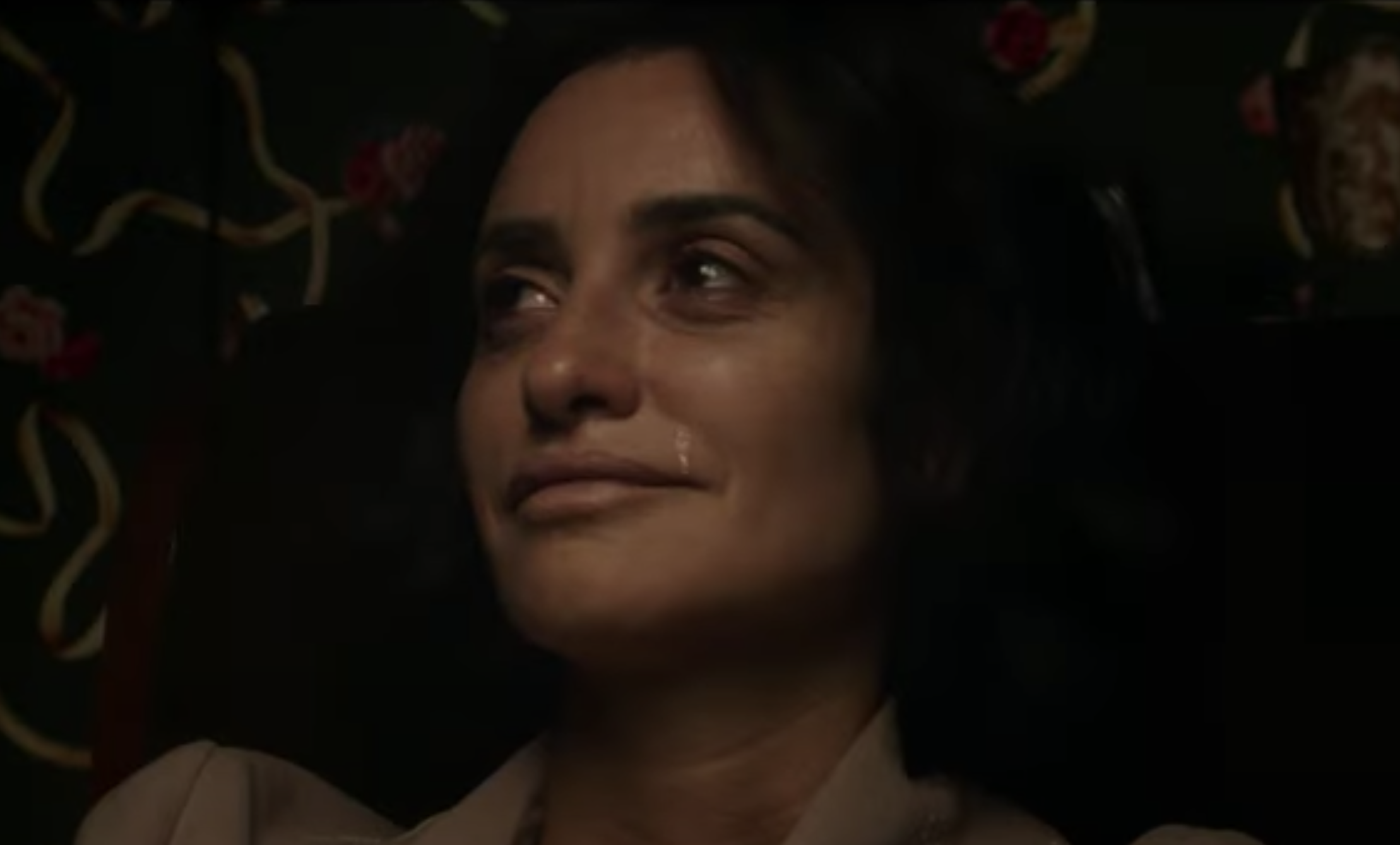
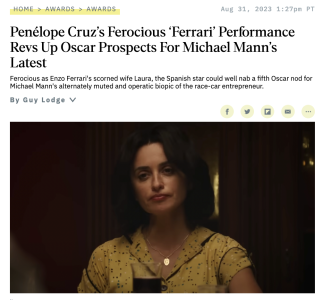
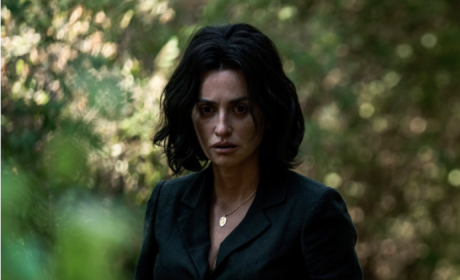
The Best Supporting Actress buzz for Penelope Cruz‘s Ferrari performance — the bitter, burning, marginalized-but-nonetheless-tough-as-nails wife of Enzo Ferrari, holding his fate and that of the car company itself in her hands — started roughly six weeks ago at the Venice Film Festival, and here I am adding a log to the fire.
Cruz and the bewigged and paunchy Adam Driver, who portrays the nearly 60-year-old Ferrari with a current of earnest conviction, perform a dining-room tabletop sex scene that out-points, I feel, the last historic milestone in this realm — the Jack Nicholson-Jessica Lange table-top in Bob Rafelson‘s The Postman Always Rings Twice (’81).
The difference is that the Cruz-Driver sex is joyful and eruptive and therapeutic while the Nicholson-Lange is merely hot and hungry.
Due respect to The Eyes of Tammy Fae‘s Jessica Chastain, but there’s no question that Cruz’s bravura performance in Pedro Almodovar‘s Parallel Mothers (’21) should have won the Best Actress Oscar — everyone understands that. So the Ferrari nomination will likely result in Cruz being regarded as the front-runner — one of those “the Academy apologizes buut this will make things right” deals.

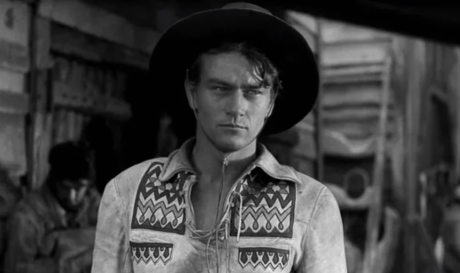
On its opening day (10.2.30) the widescreen 70mm version of Raoul Walsh‘s The Big Trail (2:1 aspect ratio) played in exactly two theatres — Grauman’s Chinese Theater in Los Angeles and the Roxy Theatre in New York City. The rest of the country saw a 35mm boxy version.
The exceptional clarity of image and seemingly enhanced sound in the 70mm version is worth the price in itself. The 70-mm version ran 122 minutes; the 35mm boxy was 12 minutes shorter.
And that was all she wrote for widescreen cinema until the debut of CinemaScope in 1953.
Jordan Ruimy‘s Best Films of Martin Scorsese poll popped yesterday. Ruimy tallied the preferences of 114 critics, and the top three — no surprise — are Goodfellas, Taxi Driver and Raging Bull. I’m sorry but those are vaguely boring, right-down-the-middle choices. The Des Moines Realtors Association would’ve picked these.
HE’s top three are Raging Bull, The Wolf of Wall Street and The Last Temptation of Christ.
The two least admired Scorsese films on Ruimy’s list are Boxcar Bertha and Who’s That Knocking On My Door?, which got no votes.
The voted-upon Scorsese flicks with the lowest counts are The Color of Money, New York, New York and The Aviator, which snagged one vote each. Alice Doesn’t Live Here Anymore, Shutter island and Gangs of New York got two votes each. Cape Fear got 3, Kundun, 4 and Silence, 7.
HE’s three least favorite Scorsese flicks are Kundun, Shutter Island and The Aviator.
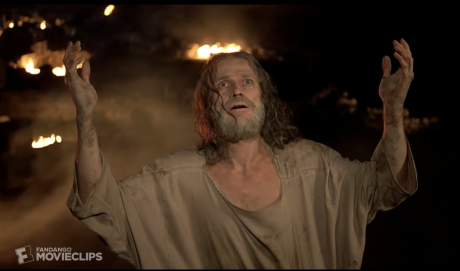
HE commenter Manwe Sulimo: “Why do you think festival critics are meh on Ferrari?”
HE: “Perhaps because festival critics don’t like it when a movie is delivering two things at once, an emotionally intimate family drama along with an exciting, high-torque racecar flick. Maybe they think it should be just one thing and not both at the same time?
“Ferrari is mostly an intimate, dialogue-driven thing about Enzo Ferrari’s family and business matters and therefore doesn’t really commit to the racing stuff in a sustained, whole-hog, Steve McQueen-in-Le Mans way until the final 35 minutes or thereabouts.
“I’m guessing that younger (Millennial, Zoomer) critics might feel a tad removed or skeptical given that Ferrari isn’t set in an era that they personally relate to. 1957 (i.e., the year of the Mille Miglia tragedy) was 66 years ago. For critics who regard the 1980s as a long time ago, that may be a bridge too far.
“What I particularly loved about Ferrari is Eric Messerschmidt‘s cinematography, which carries the Gordon Willis torch and is very reminiscent of the palette of The Godfather, Part II.”
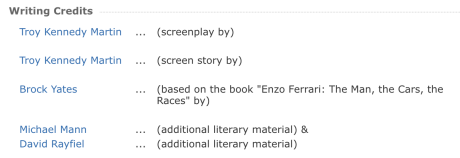
The Ferrari wikipage has a section about the genesis of the project, and right at the top it says that director Michael Mann “first began exploring making Ferrari around 2000, having discussed the project with Sydney Pollack.”
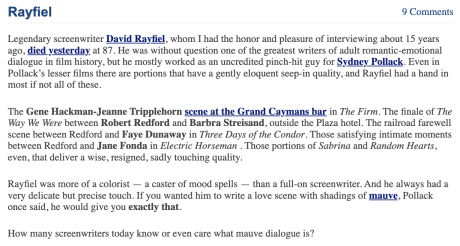
This suggests why the late David Rayfiel, the screenwriting “colorist” who worked on several respected Pollack films (The Way We Were, Three Days of the Condor, The Firm) as an uncredited “pinch hit” guy…it suggests why Rayfiel, who died 12 years ago, has an IMDB credit for “additional literary credit” on Ferrari.
Having just noticed this credit, a friend asked me if I heard Rayfiel’s voice while watching Ferrari.
HE reply: “I could not hear David’s voice — not in the same way I’ve heard his voice in all those Pollack films. But what do I know?”
“JBM” in HE comment thread: “Mann was the final writer, combining two scripts by the late Troy Kennedy Martin (died in ’09) and Rayfiel (died in ’11). But Martin did the heavy lifting.”
Enjoy it while you can, Swifties!
For one part of America young girls are flooding theaters to see Taylor Swift's movie. I wish them the best in this brief moment of time that passes all too quickly as I know all too well. pic.twitter.com/sBM2ajqa4U
— Sasha Stone at Awards Daily (@AwardsDaily) October 12, 2023