I just tapped these out off the top of my head, and when I get back to Connecticut I’ll probably add several more…I’m just roughing this out as I go along:
There are many, many female characters and performances that I will always treasure, but let’s start with Jessica Chastain in Zero Dark Thirty. And then…aww, hell: Carey Mulligan in Suffragette, An Education and She Said. Rachel McAdams in The Wedding Crashers. Jean Arthur in Only Angels Have Wings and Shane. Greta Gerwig in Greenberg and Frances Ha, Amy Adams in The Fighter, Teresa Wright in The Best Years of Our Lives. Katy Jurado and Grace Kelly in High Noon. Katharine Hepburn in The Lion in Winter, Bringing Up Baby, The Philadelphia Story. BarbraStreisand in Funny Girl and What’s Up, Doc. Sally Field in Places of the Heart. Faye Dunaway in Bonnie and Clyde, Network and Mommie Dearest. Joan Crawford in Mildred Pierce and Johnny Guitar. Katherine Ross and Anne Bancroft in The Graduate. Frances McDormand in Fargo, Almost Famous and Nomadland. Jodie Foster in The Silence of the Lambs. Charlize Theron in Monster and Mad Max: Fury Road. Sigourney Weaver in Alien (1979) & Aliens (1986).
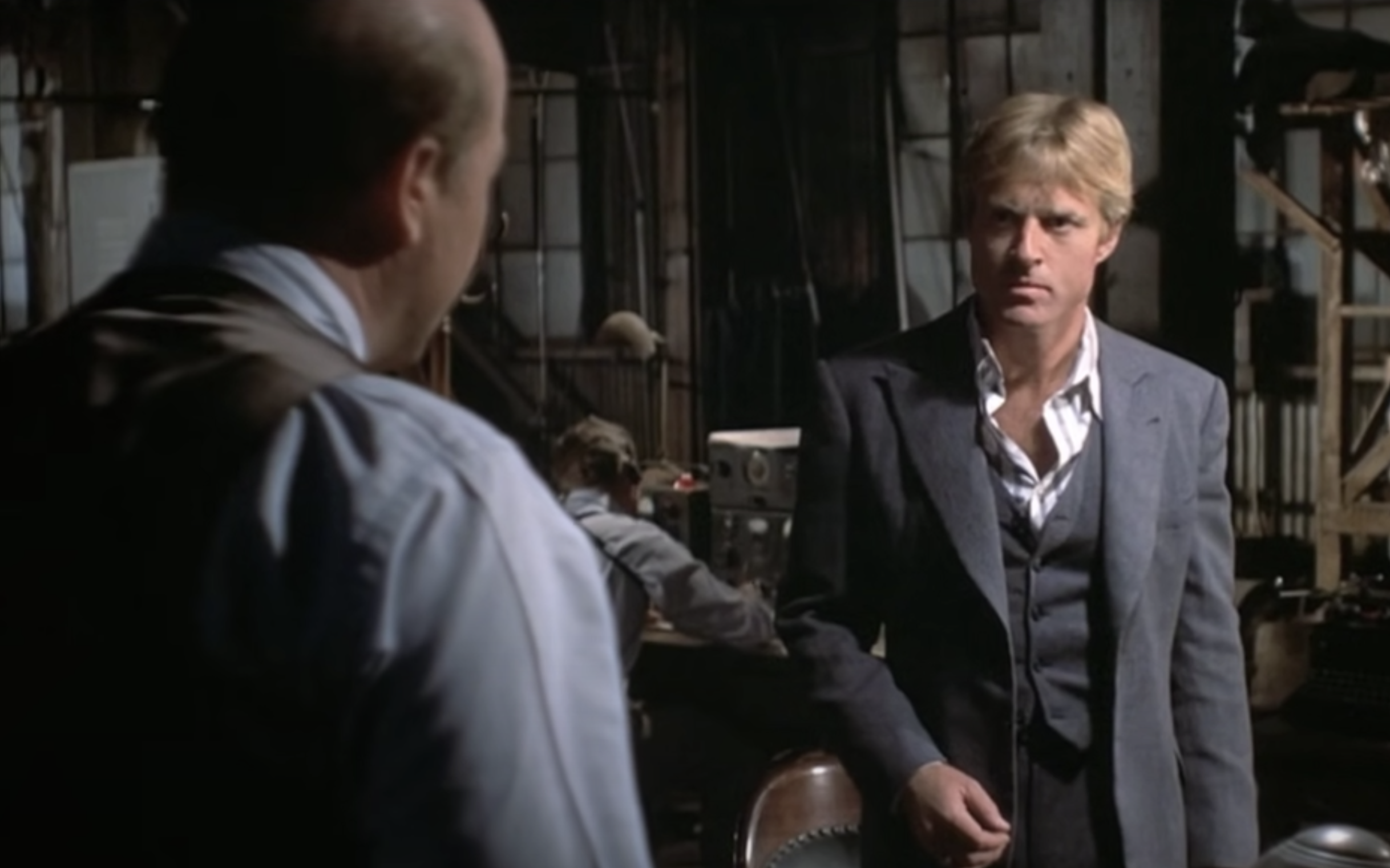
“In the late 60’s my agent (as an actor) was a wonderful guy — Bill Robinson. He didn’t represent producers (nobody did back then) or directors. I was successfully acting in movies, but I wasn’t interested in being a movie star. I, and many of my young friends, hoped we could make our way as filmmakers. Around 1970 Robinson hired Mike Medavoy to work for him. It was his first job as an agent, and I introduced Mike to many of my aspiring friends. (Not that it matters, but they included Spielberg, Malick, Coppola, Donald Sutherland and others.)
“One of my best friends [at the time] was Terry Malick — a young AFI student. Another was John Calley, a producer who then became head of Warner Brothers. I had an idea for a movie about big-rig truckdrivers, loosely based on a bunch of country & western songs about life on the road. Calley backed my idea of hiring Terry to write it, and the script, Deadhead Miles (his first), ended up being made in 1971/72 by Paramount. It was disastrous, because I made the two biggest mistakes a producer can make: (1) I hired the wrong director, and (2) I didn’t fire him.
“While licking my wounds from that project, I read a script by another young, unknown writer who was just out of UCLA — David Ward. It was called Steelyard Blues. I thought it was a fresh, original but difficult film to get made, and I asked David what he wanted to do next. He gave me a 2 or 3-minute pitch about a young con man whose best friend is killed by a guy who he decides to con out of every cent he’s got, with the help of an experienced con man. He told me the ending would be ‘his surprise’.
“That was it: I was hooked. I told him to tell it again on tape, then set out to find enough money to option Steelyard Blues and commission The Sting.
“After several months, I met Julia and Michael Phillips and we pooled our meager resources. We made Mike our agent, and got Steelyard Blues made at Warner Brothers in 1972/73. Richard Zanuck and David Brown were our executives there. When the script for The Sting was finished, we set about to get it financed. It took over a year to finish; we never saw a word of it…or knew the ending…until Ward handed it in.
“We gave it first to Redford. It was fairly easy to do as I knew him from developing a script that we’d had many discussions about, and Julia knew him from working at First Artists in NYC. We wanted to try to get Ward approved to direct it, but Redford resisted that concept. I also sent it early on to my pal John Calley, but he didn’t want David, and didn’t like the script very much. He thought it was ‘a shaggy dog story.’ He made fun of himself for years about that. Frankly, no one ‘packaged’ our project. Our package was us, Redford, and the script: take it or leave it.
“So, in gratitude to Zanuck/Brown for having treated us well on Steelyard Blues, Julia, Michael and I then gave them The Sting to present to Universal, where they had moved their company. (That’s why it’s a ‘Zanuck/Brown presentation.’ They were not producers or executive producers — a misperception they hastened to allow and refused to correct in perpetuity.) They slipped it to George Roy Hill, who told Newman about it. He read it and asked to do it.
“By the way, Robert Shaw wasn’t the first person offered the part of Lonnegan: Richard Boone was. He turned it down.
“Along the way Dan Melnick, newly installed at MGM, heard about the script and asked to read it. I think Mike may have been the one who sent it to him. But it was too late, and we continued our negotiations with Universal. Melnick was pissed: it was the first time I had heard the phrase, ‘Don’t get mad…get even.’ I guess he decided to take it out on Mike. He evidently forgave me, since he financed my next production, Hearts of The West, at MGM. I never met Jim Aubrey.
“Rob Cohen? The story I’ve always heard from him is that he went to work as a reader at ICM, where Mike Medavoy had moved after working for Bill Robinson. Rob had done coverage for the script, and Mike had then read it. I’ve read his coverage and it was enthusiastic, prescient and compelling.
“After this Julia, Michael and I optioned another script by a first-time writer, Paul Schrader‘s Taxi Driver. But that’s another story.
“A good example of the vagaries of casting: The original Sting script was written for a kid and a geezer. Perfect casting in those days would have been Jeff Bridges and Lee Marvin. That residual relationship is why Newman calls Redford ‘kid’ in the movie, despite their barely-discernable 10-year difference in age.”
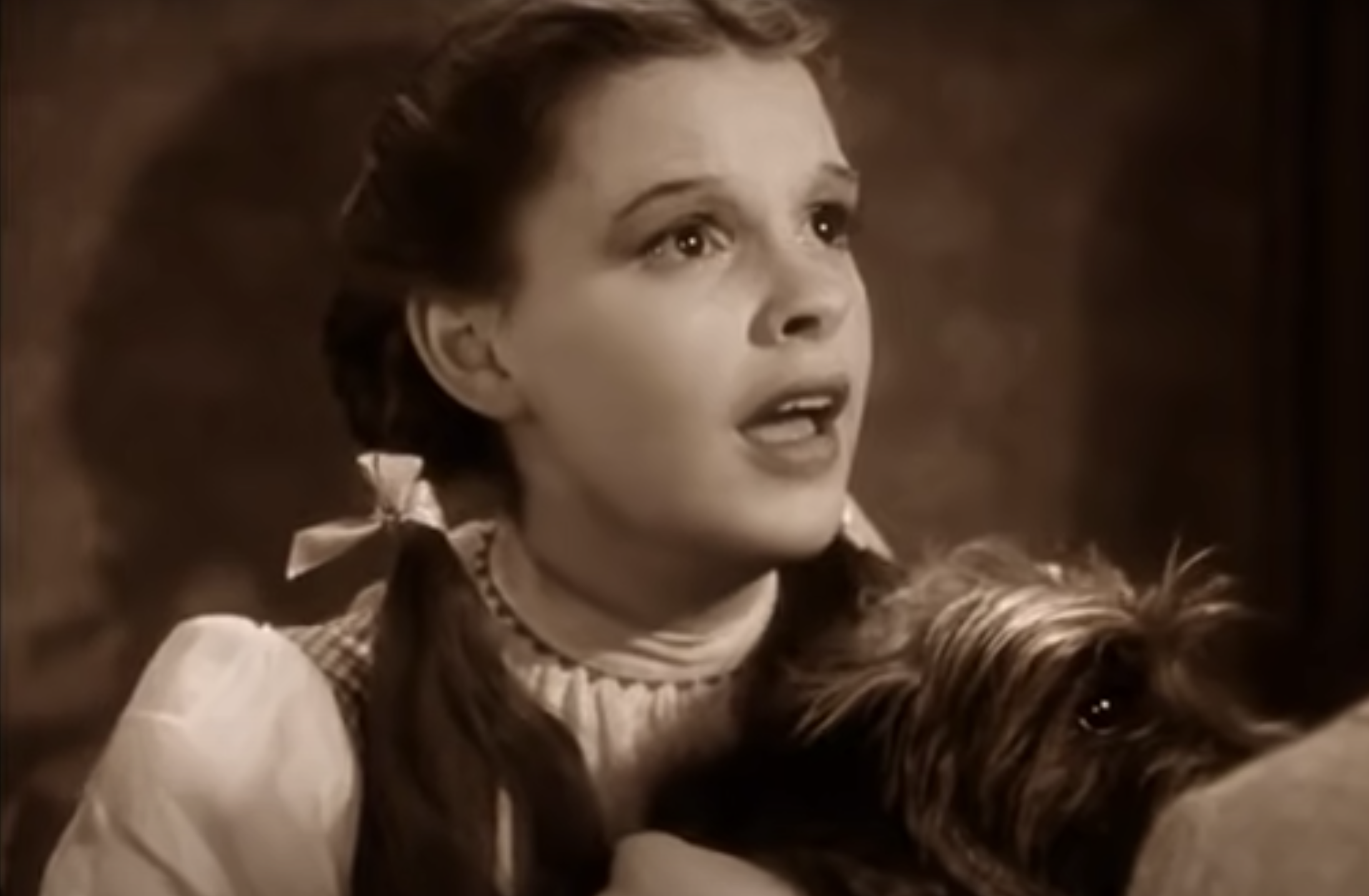
“Oh, but anyway, Toto, we’re home…home! And this is my room and you’re all here and I’m not going to leave here ever, ever again. Because I love you all! And…oh, Auntie Em, there’s no place like home!”
You can snort and sneer but Judy Garland‘s delivery of this final passage of dialogue in The Wizard of Oz (’39) is one of the most emotionally affecting moments in the history of cinema. You can just dive in and watch this scene cold without sitting through the 100-minute film that precedes it, and it still gets you every time. Because it doesn’t seem as if Garland is reciting dialogue (written by Noel Langley, Florence Ryerson, Edgar Allan Woolf and possibly Herman J. Mankiewicz), She seems to be really feeling it rather than selling it.
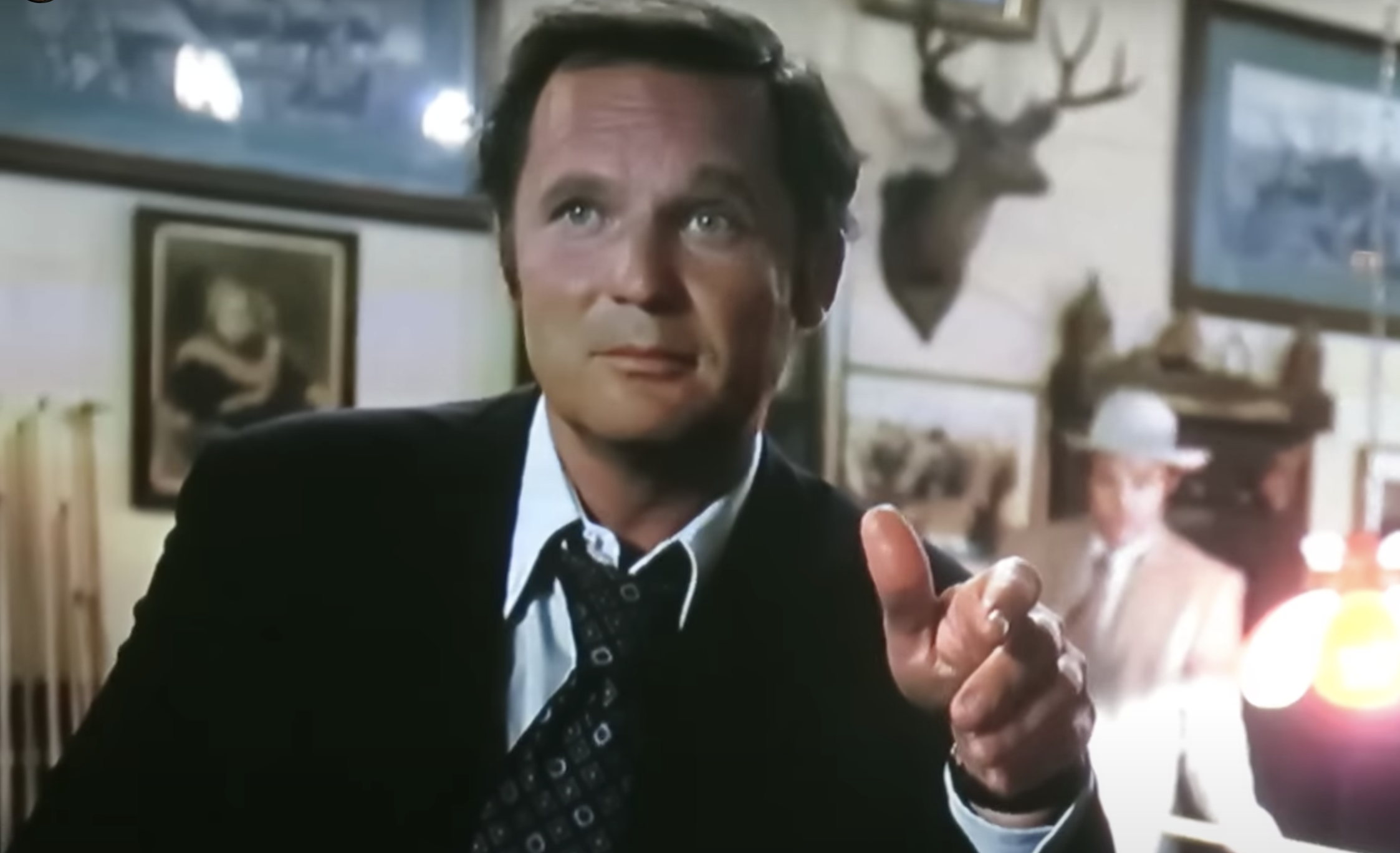
Postedtwicebefore: I adore this clip from Don Siegel‘s Charley Varrick (’73), in which Walter Matthau‘s titular character tells John Vernon, portraying a mob-connected banker, that he wants to return a pile of ill-gotten mafia money.
Just after 1:03 Vernon conveys something about serendipity with a wonderful economy, using a gently changed expression and a little gesture with his left hand. Arguably the most elegant piece of acting that Vernon ever performed, the gesture seems to say “sometimes there’s God, so quickly!” — a Tennessee Williams line from A Streetcar Named Desire.
In ’85 I was working in publicity and had a chance to speak to Vernon on the set of Hail To The Chief, a TV series about a female U.S. President (Patty Duke) in which Vernon played a hawkish military advisor. I told him I was a huge admirer of this little slice of Varrick, but he didn’t seem to get what I was saying. He just brushed it aside and indicated he wouldn’t mind if I left him alone. I was probably the only guy on the planet who’d ever recognized, much less said to him, that his Charley Varrick hand gesture was some kind of beautiful.
Or he did feel a certain pride but didn’t care to share it with a fan? Whatever. Perhaps he felt insulted by my not praising some meatier part that he once played (the Mal Reese character in Point Blank, his Cuban revolutionary Alfred Hitchcock‘s Topaz, the husband of Sophia Loren in Ettore Scola‘s A Special Day).
Vernon died at age 72 on 2.1.05, following complications from heart surgery.
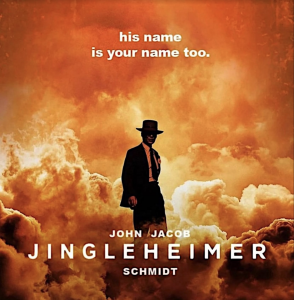
I can only come up with five: (a) Weasel J. Weisenheimer, a rodent drug dealer created by R. Crumb; (b) The singing of “happy birthday, Mr. Rosenheimer!” in an Act Three nightclub scene in The Bachelor and the Bobby Soxer ’47) (c) JohnFrankenheimer, (d) J. RobertOppenheimer, and (e) the Munich Rosenheimer Platz metro station. Others?
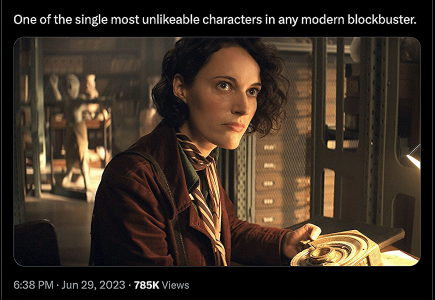
I was particularly annoyed by the second-to-last scene when Wombat wouldn’t let Indy “stay in Syracuse,” so to speak, and thereby separated the poor old guy from what he really and truly wanted (“All my life,” he said). And then she slugs him and suddenly they’re back in his New York apartment, and his heart is completely broken. So was mine.
In what realm is old, aching Indy rekindling things with old, withered Marion (Karen Allen) better than Indy hanging out with Archimedes and possibly managing to save his life from that Roman solder who slew him in actuality?
Indiana Jones and the Dial of Destiny doesn’t end on anyone’s idea of a happy, vigorous or triumphant note, but Indy and “Arky” joining forces as they explore an array of scientific possibilities as well as the physical ancient world? Are you kidding? That’s a glorious ending. It would be like being reborn.
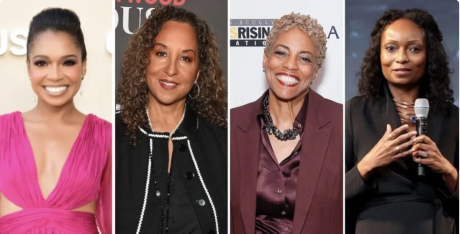
Who remembers Who Is Killing the Great Chefs of Europe? A trifle, 45 years ago, barely recalled but a catchy title. Right now it’s nonsensically coming to mind because the burning question of the moment is “who or what is behind the departures of all those DEI (diversity, equity, inclusion) executives?”
Four have ankled over the last ten days or so, and three since last Wednesday.
Disney’s chief diversity officer and senior vp Latondra Newton, hired in 2017, exited on 6.20 to pursue “other endeavors.” A symbolic beheading over the somewhat disappointing returns on Disney’s The Little Mermaid (especially in China and South Korea), which could arguably be blamed on the casting of Halle Bailey? Or is that a reach?
Eight days later (6.28) the ankling of Vernā Myers, Netflix’s chief of inclusion strategy since 2018, was announced. She’ll apparently remain as an advisor to Netflix as she focuses her attention on her consulting company, The Vernā Myers Company.
Two more diversity execs flew or otherwise exited the coop on Friday, 6.30. Karen Horne, Warner Bros. Discovery’s SVP of diversity, equity and inclusion since March 2020, was laid off, and the contributions of Jeanell English, EVP of Impact and Inclusion with the Academy of Motion Picture Arts and Sciences since July 2022, came to a sudden and mysterious end.
You can call this activity a coincidence and maybe it is, but if this was a thriller of some sort you’d be saying to yourself “something seems to be up.” A case for a latter-day Hercule Poirot a la Clayton Davis with a long pointy moustache?
Media types (critics, editors, bloggers, podcasters) love to perform for each other whenever they congregate, which mostly tends to be at all-media screenings. A lot of them live lonely, concentrated lives in front of screens (myself included), and so the emotional spigots tend to flow when they all get together, and boy oh boy, do they turn on the personality and the charm and do what they can to wow each other!
If you’re sitting solo but not too far from the crowd, you’ve no choice but to listen to all the jokes and repartee and sage witticisms and smart-ass cracks, etc. Very few of these guys are into quiet murmurings or sharing thoughts of an earnest nature. They’re all “on-stage” in a sense, and listening to them is…I don’t want to sound like a curmudgeon but listening to them can feel like a faint form of hell. The only cure is to have a conversation of your own, which is probably what I should have done, looking back.
Chickenshit Budweiser execs pretended like Dylan Mulvaney didn’t exist when the shit hit the fan. They should have reached out, maybe offered a little cover or protection or a warm word or two…something. I feel badly about what Dylan went through, and the blonde hair, by the way, works better than the dark.
I never saw Alan Arkin in Enter Laughing or Luv on the Broadway stage, but for me he was the king of fickle neuroticism and glum irreverence for decades and decades, and for decades and decades I loved him like few others. And now the journey has ended. He was 89.
If I had to pick my favorite Arkin performances in descending order, I would restrict my list to four. I would begin with his grumpy but compassionate, heroin-snorting grandpa in Jonathan Dayton and Valerie Faris‘s Little Miss Sunshine (’06). In second place is Captain John Yossarian, the numbed-out pacifist Air Force bombardier in Catch 22 (’70). Third is his wonderfully anxious ands panicky dentist in Arthur Hiller‘s The In-Laws (’79), Fourth but not least is his moustachioed Russian submarine captain in Norman Jewison‘s The Russians Are Coming (’66).
Everyone remembers a concluding line in a certain Catch 22 conversation between Lt. Milo Minderbinder (Jon Voight) and Cpt. Yossarian. It wasn’t written by original novel author Joseph Heller but Buck Henry. Heller reportedly approved.
Minderbinder: “Nately died a wealthy man, Yossarian. He had over sixty shares in the syndicate.”
Yossarian: “What difference does that make? He’s dead.”
Minderbinder: “Then his family will get it.”
Yossarian: “He didn’t have time to have a family.”
Phillip: “If you take race out of it, let’s call it socioeconomic status, whether or not they grew up wealthy or poor. Is that not something colleges might have an interest in considering?”
Xu: “The reason why you shouldn’t consider that is because you should consider the success of an applicant. Because of affirmative action, Black Americans graduate from law school at the bottom 25 percent of their classes, largely speaking. And we don’t want that. We want Black students to succeed. We want every student to succeed. Low-income students to succeed.
“You have to put them in scenarios in places where they’re likely to succeed. And lowering your standard to admit somebody of a socioeconomic status or race would not help them do that. In fact it would harm their graduation rate and excellence.”
Phillip: “Well, as the case also points out, the standard isn’t necessarily lowered because the students are all admitted. It’s the question whether race can be an added consideration, a tipping point…”
Xu: “The standard is lowered.”
When Xu said “the standard is lowered.” Phillip obviously decided to shut down the discussion:
Phillip:: “Kenny…”
Xu: “The standard is lowered. As the Students for Fair Admissions data shows, an Asian has to score 273 points higher on the SAT to have the same chance of admission as a Black person…”
Phillip: “Kenny…”
Xu: “So the standard is lowered for Black applicants.”
Phillip: “Kenny Xu, thank you for your perspective. We really appreciate it.