Matt Damon and Ben Affleck‘s Air (Amazon, 4.5) is clearly and obviously the new Moneyball — a satisfying, adult-friendly, mid-range drama about innovation in sports marketing. This is my kind of movie, my kind of vibe. Hats off to Amazon, Damon, Affleck, original writer Alex Convery and costars Jason Bateman, Chris Messina, Marlon Wayans, Chris Tucker and Viola Davis for helping to bring this kind of film back to theatres.
Sonny Vaccaro (played by Damon) was 45 when he signed Michael Jordan to his Air Jordan Nike deal, and he was never exactly the lean athletic type. That said, I wish Damon had trimmed down a bit before the film was made — he looks like he lives on McDonalds burgers and fries. I’m sorry but I’m the one watching this and I have right to state a preference, and I prefer the Jason Bourne version of Damon, who’s now 52 by the way.
Did Cary Grant (born in 1904) gain 15 or 20 pounds when he gots into his 50s? No — in fact he weighed less during that decade than he did in the 1930s. Movie stars have an obligation to look slightly better than the rest of us.
“Don’t tell me what it’s all about / ‘Cause I’ve been there and I’m glad I’m out / Out of those chains those chains that bind you / That is why I’m here to remind you…”
Between the mid to late 60s the late Burt Bacharach and his partner Hal David (also no longer with us) were well established as composers of light romantic pop tunes…light but sophisticated and even complex.
Bacharach experienced four significant career surges. One, when he became Marlene Dietrich‘s arranger (and apparently her lover) in the mid ’50s. Two, when director George Roy Hill decided to ignore classic narrative tradition by inserting a contemporary music video (“Raindrops Are Falling on My head”) into Butch Cassidy and the Sundance Kid (’69). Three, his early to mid ’80s surge when he was partnered with wife Carole Bayer Sager (cowriting “Arthur’s Theme”, “Heartlight”, “Making Love”, “That’s What Friends Are For”). And four, when Elvis Costello saved Bacharach from a fatal association with boomer schmaltz with the Grammy-winning Painted From Memory (’98), which Bacharach co-wrote with Costello.
Do the vast majority of Millennials and Zoomers even know who Bacharach was? Or who Elvis Costello is? Of course they don’t.
Bacharach’s 15-year marriage to Angie Dickinson (his second, ’65 to ’80) must have been sensually wonderful. In ’77 they had a daughter, Nikki, who sadly took her own life in ’07. From ’82 to ’91 Bacharach was married to Sager, his musical soul mate. He married his fourth wife, Jane Hansen, in ’93. Together they had two kids, Oliver and Raleigh.
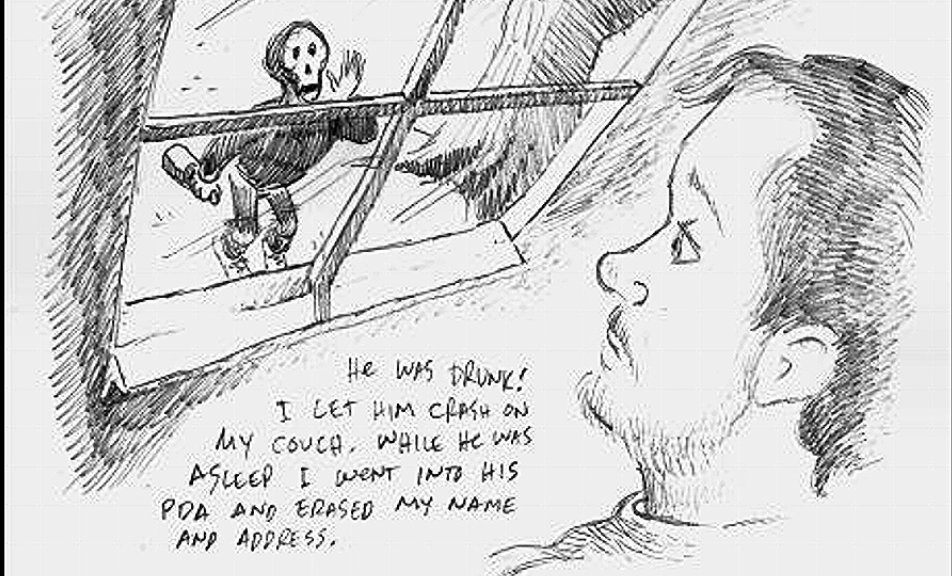
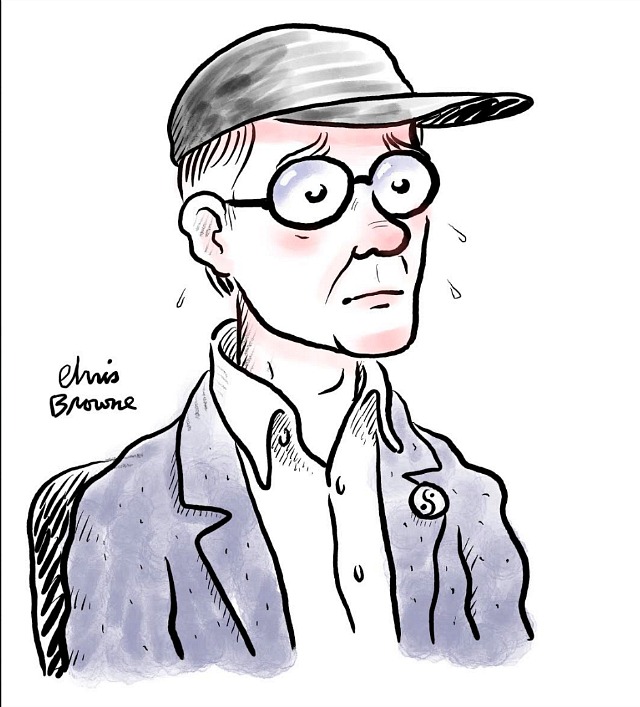
Cartoonist and longtime chum Chris Browne, son of Hi & Lois and Hagar the Horrible creator Dik Browne and the guy behind the Hagar strip since ’88, has gone to Valhalla. His ship left port sometime yesterday. He and the Viking God Odin are now equally eternal, and I really wish Chris was still mortal, not just for his sake but my own. I really loved the guy.
“The Remembering,” posted on 4.6.18: “In the spring of ’80 I took cartoonist and longtime friend Chris Browne to an early press screening of The Shining. The old Warner screening room at 75 Rockefeller Plaza, I mean, on the eighth floor. Plush, nicely carpeted, 103 seats.
Browne has been drawing the “Hagar the Horrible” strip since ’88, and is quite the guy in cartoonist circles. But he was in a not-yet place back in ’80.
We were shown the slightly longer version that ended with Overlook manager Barry Nelson visiting Shelley Duvall in a hospital room after Jack Nicholson‘s frozen-icicle death. Like Steven Spielberg after his initial viewing, I wasn’t all that knocked out. It was only years later, having watched The Shining for the eleventh or twelfth time (who remembers?), that I realized it had seeped into my system and taken hold in some curious way.
A few critics were there along with Buck Henry (glasses, tan baseball cap), Malcolm McDowell and Mary Steenburgen.
As soon as the lights came up Browne whipped out his sketch pad and, in the space of two or three minutes, drew a cartoon of Henry and his friends in their seats, their eyes wide with terror and with little piss puddles on the floor below. Browne went up to Henry in the downstairs lobby and showed him the drawing. I can recall Henry’s dryly bemused expression with absolute clarity.
Yesterday I wrote Chris on Messenger and asked if he still had that drawing. If so I asked if there was a chance he could scan it and send it my way. Or, failing that, if could he re-draw it and send it along. (As noted, the original only took him three minutes to draw it inside the screening room.) Chris graciously agreed to re-draw it but (a) without McDowell or Steenburgen, and (b) without the pee puddles. So here’s Buck again, and here’s to the lightning-fast creative derring-do of Chris Browne.
A pass-along from renowned cartoonist and old-time (i.e, ’70s and early ’80s hangover) Connecticut friend Chris Browne, who’s been writing and drawing “Hagar the Horrible” since 1988.
I wouldn’t have a huge problem with the retirement age being raised to 70. Which would save billions in terms of entitlement payouts, right? 65 isn’t the “getting old, time to downshift or even hang it up” milestone it used to be. Except for the millions of rural sea lions out there, people are generally healthier these days. (I think.) Except for the sea lions…right?
Directed and written by Brit McAdams, Paint (IFC Films, 47.23) is basically about an older guy being thrown over by a young competitor.
It’s about Carl Nargle (Owen Wilson), a Jon Gnagy-like celebrity instructor who has hosted Vermont’s #1 painting show for nearly three decades. Would Carl feel threatened by “a younger, better painter” if he didn’t wear that curly-haired white guy Jewfro? That hair is not only a problem for Carl but for me, a prospective viewer of this film.
Costarring Michaela Watkins, Wendi McLendon-Covey, Ciara Renée, Lusia Strus, Stephen Root, Lucy Freyer and Denny Dillon.
Gnagy (1907-1981) was America’s original television art instructor, hosting You Are an Artist, which began on NBC, and Learn to Draw series.
For a brief period online toxicity was the subject of Jeff and Sasha’s latest podcast, but then we decided to take it down. Drillbit condemnations and ideological feuds on Twitter and in comment threads are an unfortunate daily reality these days, so why add fuel to the fire? No need for a bloody, bruising street fight. Every so often it just feels like the better side of wisdom to ease up. This was one of those times.
Every year Hollywood Elsewhere subjects the leading Best Picture contenders to the Howard Hawks grading system. The legendary director is famed for having said that a good movie (or a formidable Oscar-seeker) always has “three great scenes and no bad ones.”
Hawks also defined a good director as “someone who doesn’t annoy you.” I don’t want to sound unduly harsh or dismissive but I’m afraid that the Daniels’ direction of Everything Everywhere All at Once…’nuff said.
How do the leading 2023 Best Picture contender films (numbering ten) rate on the Hawks chart? Here we go…
1. Edward Berger‘s All Quiet on the Western Front (Netflix): I’m thinking of several good or very good scenes that happen during the last 20 or 25 minutes, but no great ones. Paul (Felix Kammerer) and Kat (Albrecht Schuch) steal a goose from a farm they’d stolen from earlier, but Kat is shot by the farmer’s young son and dies. General Friedrichs (Devid Striesow) maliciously orders an attack to start 15 minutes before the 11 am ceasefire. And during the final battle Paul is killed with a bayonet, only a little before 11 am. AQOWF is indisputably urgent and compelling and often jarring, but I can’t honestly say that it contains a great scene, much less three of themk.
2. James Cameron‘s Avatar: The Way of Water (Disney): The climactic 45-minute battle aboard the sinking bad-guy craft — I think it’s fair to call this a great scene. But that’s the only one. Everything in this film is highly involving and proficient and certainly eye-filling, but emotionally and thematically it doesn’t really stay with you. Hawks shakes his head.
3. Martin McDonagh‘s The Banshees of Inisherin (Searchlight): It has a few weird scenes and a couple that stand out in a certain off-kilter way, but none that really sink in — not in a way that really kicks up the dust and feels great. If you disagree please tell me what I’m missing or have forgotten. The cute little donkey choking to death on one of Brendan Gleeson‘s stubby fingers? That was just weird. Kerry Condon gently rejecting Barry Keoghan‘s proposal to become Mrs. Village Idiot…kind of a gulp moment. Condon’s dialogue aside, everything said in this film is eccentric and moody and nhilist. And yet it stays with you after it’s over. How many great scenes? I’m sorry but none.
4. Baz Luhrman‘s Elvis (Warner Bros.): The first very good scene is when Colonel Parker (Tom Hanks) realizes that the unknown Elvis Presley (Austin Butler) is perfect rocket-fuel — a white guy who sings black, and who also has an intense sexual rapport with the girls in the audience. The second keeper is Presley’s 1968 NBC comeback special. The third is when fat Elvis sings “Unchained Melody” at the very end. These are certainly standout scenes, but I can’t honestly call them great. Hawks is underwhelmed.
5. Daniel Kwan and Daniel Scheinert‘s Everything Everywhere All at Once (A24): This alternate-universe hellscape subjects viewers to cruel and unusual punishment, regardless of whichever universe it may be happening in. For this is a 139-minute excursion into mind-boggling, brain-taffy torture. And yet it has one excellent scene, which happens inside Jamie Lee Curtis‘s IRS office at the end. Michelle Yeoh‘s Evelyn briefly slips into a daydream about her alternate selves and the multiverse blah blah, and when Deirdre asks if she’s paying attention Evelyn says, “I’m sorry…were you saying something?” Perfect! This is the only great scene though.
6. Steven Spielberg‘s The Fabelmans (Universal): Three strong scenes — Sammy giving direction to a young actor prior to shooting Nazis vs. good guys war footage, Judd Hirsch delivering his bedroom rant about destiny, and Sammy explaining to his dad that he created a muzzle-flash effect by sticking pins into certain frames in the celluloid. The one great scene is when blustery and cantakerous John Ford barks at Sammy about what constitutes interesting vs. shit-level horizon lines. Overall The Fabelmans isn’t a bad film, but it flunks the Hawks test.
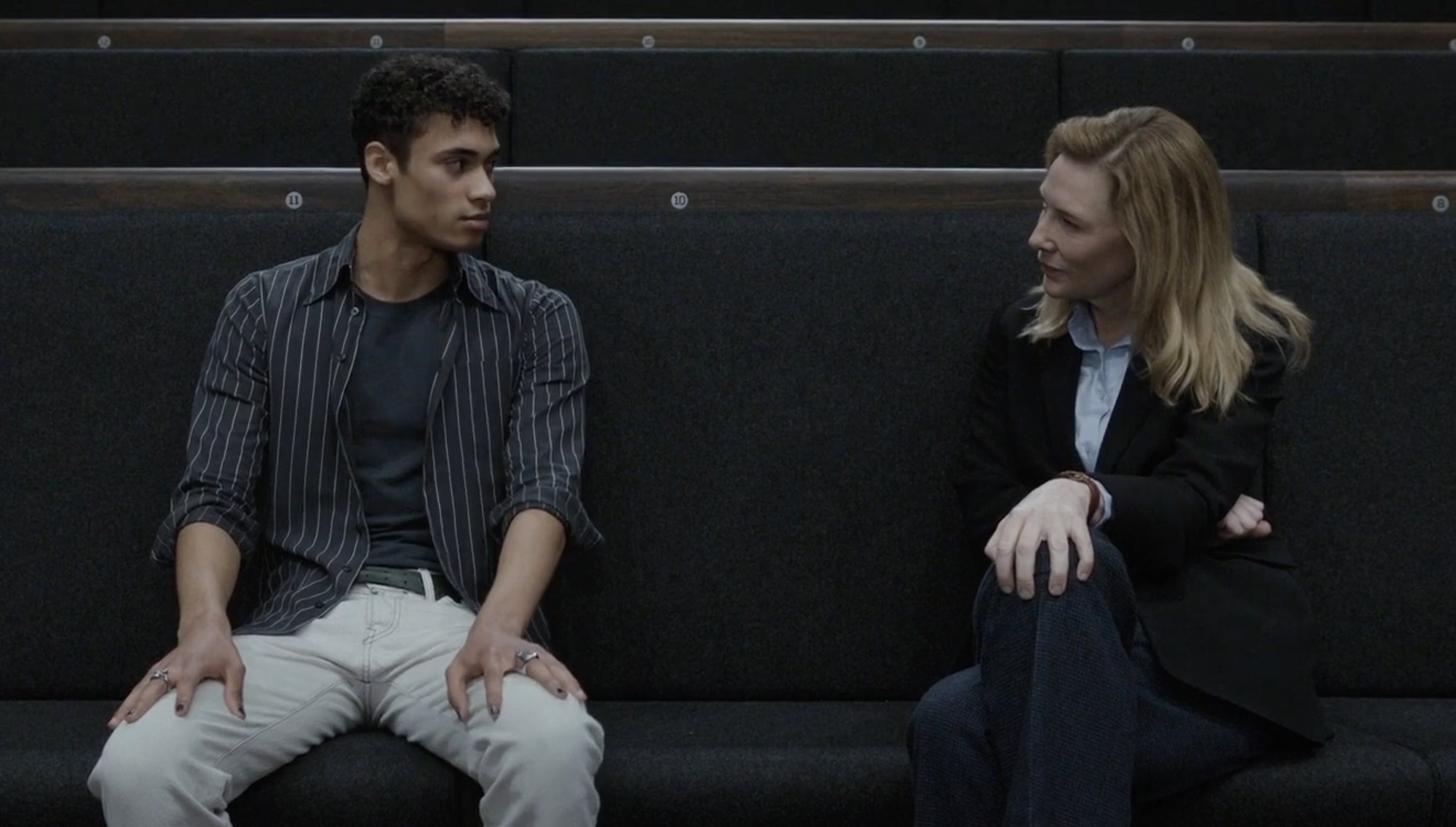
7. Todd Field‘s Tár (Focus Features): One great scene: at Juilliard Lydia (Cate Blanchett) exchanges challenging, brittle words with Max (Zethphan Smith-Gneist) about his disdain for white cisgender composers like Johann Sebastian Bach. Intriguing creepy scene #1: Running through a Berlin park, Lydia is startled by a woman screaming in the woods, but she never explores what happened or who it was or anything. Intriguing creepy scene #2: While searching around in a dank basement of a rundown Berlin apartment building, Lydia is freaked by the sight of a huge black dog, or maybe a timber wolf. She runs up the concrete stairs and falls on her face. Shocking scene: The dismissed Lydia slips into a live performance of Mahler’s Fifth and violently assaults her replacement, Eliot (Mark Strong). Alas, Tar‘s one great scene equals a failing grade.
8. Joseph Kosinski and Jerry Bruckheimer‘s Top Gun: Maverick (Paramount): In a way the entire film is filled with “great” scenes, if you accept the idea that Maverick is perfectly fused and calculated — every scene is part of a single unpretentious, super-glammy, crowd-pleasing whole. Okay, it has no great scenes but is filled with dozens of good and very good ones. TG:M is the most satisfying, least problematic film of the year, plus it earned a shitload of dough.
9. Ruben Ostlund‘s Triangle of Sadness (Neon): An ascerbic social satire that has a few stand-out moments, but no great scenes…sorry.
10. Sarah Polley‘s Women Talking (UA Releasing): It’s a decent dialogue-driven film that should have been called Decision To Leave, but it has no great scenes…sorry. I don’t even think it has any extra-good ones. It’s just a sturdy, workmanlike thing with good performances all around.
In sum, not one of the ten Best Picture nominees satisfies the Hawks definition of a really good film. But of the ten, Top Gun: Maverick is easily the “best”.
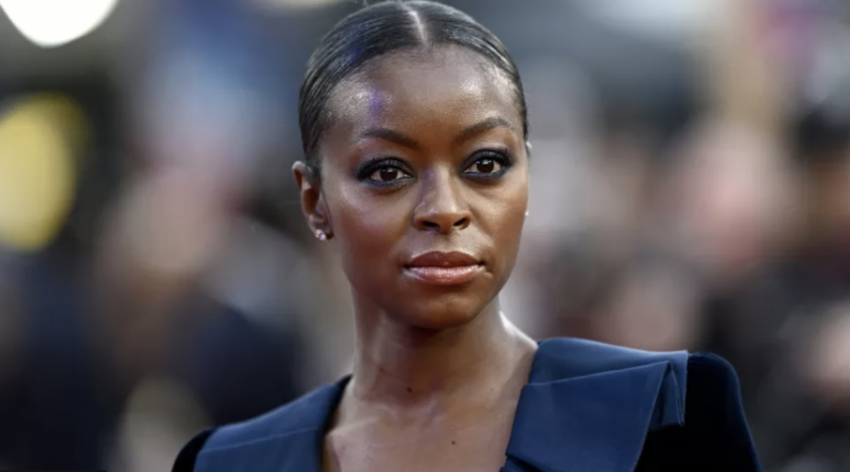
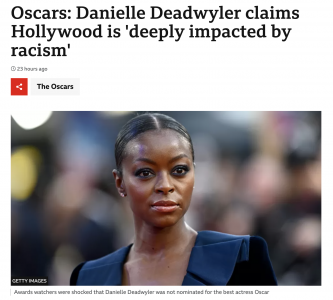
Friendo #1: “I don’t have a lot of skin in this game. I haven’t seen either Till or To Leslie. But I do have two thoughts regarding this issue.
“1. If anyone bumped Viola Davis or Danielle Deadwyler out of the five Best Actress slots, it was Michelle Williams. I don’t know a single person who likes her performance, and quite a few think she’s downright terrible in The Fabelmans, (I personally think she’s basically ‘meh’ in the film). So when I saw she was nominated, I was totally gobsmacked.
“2. The fact that an Asian woman (Michelle Yeoh) and a Latina (Ana de Armas) were nominated means 40% of the nominees in the Best Actress category are minorities. The fact that Gina Prince-Blythewood and Danielle Deadwyler are now accusing the Academy of being ‘so white’ again says to me that the people following this path are showing that they have little or no solidarity with other minorities and people of color. It’s not a good look, and I don’t think will gain them a lot of sympathy.”
Friendo #2: “In the grand scheme of things, who cares if Dave Karger interviews you onstage at the Santa Barbara Film Festival? And I do think that Riseborough had something to lose. The woke ‘take’ on this (I put take in quotes because I think the take is insane — absolutely psychotic) is that there was something racist in what went down. Who wants to show up for an interview, even with Dave ‘Softball’ Karger, and confront a hint of that kind of energy in the room? Riseborough was totally right to sidestep the whole thing until the ‘racist’ taint blows over.”
Friendo #3: “The Michelle Williams theory is dumb. She was ALWAYS a presumptive nominee. These Fabelmans haters really have a hard time with certain aspects of reality, and her performance is exactly what it’s meant to be.
“I certainly agree it wasn’t Riseborough’s intent to push Deadwyler out. But that’s the perception of what happened, and with Prince-Blythewood weighing in and all the other factors, the hurt feelings and accusations of systemic racism are gonna continue.
“And if people like Prince-Blythewood keep making simplistic gender and race-reversed stuff like The Woman King with the expectation that Hollywood is just gonna reflexively give them awards for them, the whole mess is only gonna get worse. Miss me with that nonsense.
“And yeah, if I were Deadwyler’s rep, I’d absolutely say ‘if Riseborough comes to Santa Barbara, we’re out.’
“It’s equally plausible that Santa Barbara honchos saw the writing on the wall and exercised prior restraint.”
Friendo #4: “Perhaps Deadwyler did’t push hard enough. She may have figured that she had a significant boxcheck in her favor — a woman of color playing a grieving mother of a victim on a hate crime — and that wasn’t enough. As far as the Santa Barbara thing goes, it’s a shame that there’s not going to be an intelligent discussion or maybe even a debate between Deadwyler and Riseborough…not a Maury Povich-Geraldo Rivera knock-0down, drag-out brawl but an elevated mutually respected woman-to-woman discussion about what they both did and how this has all played out.”
There’s always been something out-to-lunch about assigning gender pronouns (“God the Father Almighty”) to a mystical cosmic entity…a Star Wars-ian force devoid of emotion and indifferent to the last. You can try to quantify God in purely scientific or mathematical terms, but Joan Osborne’s definition (“What if God was one of us?…just a slob like one of us…just a stranger on the bus…tryin’ to make his way home?”) has always infuriated me. Ditto Cecil B. DeMille‘s deep-voiced, burning-bush God (“I am that I am”).
I can roll, on the other hand, with John Lennon‘s “I am he as you are he as you are me and we are all together.” I’m also down with God being defined as a perfect smile. But no gender assignments of any kind, including gender-neutral. That’s kid stuff.
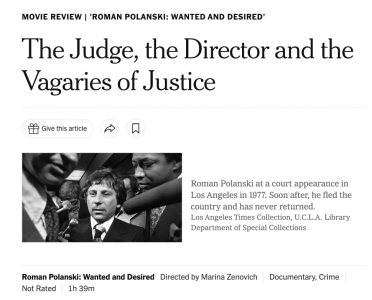
Nearly 15 years ago (i.e., 3.31.08) a favorable Manohla Dargis review of Marina Zenovich‘s Roman Polanski: Wanted and Desired appeared in the N.Y. Times. The review also conveyed a fair-minded, agenda-free reading of the politically motivated prosecution of Polanski in the wake of his arrest for “unlawful sexual intercourse” with Samantha Geimer, who was 13 at the time of the violation.
Dargis: “Douglas Dalton, Mr. Polanski’s lawyer, and Roger Gunson, the assistant district attorney who led the prosecution, pin the blame for Polanski’s flight directly on the presiding judge, Laurence J. Rittenband (who stepped down in 1989 and died in 1994). Aided and abetted by an avalanche of fluidly organized visual material, the lawyers fill in the appalling details of what was effectively a second crime, one largely perpetrated by a celebrity-dazzled judge and the equally gaga news media he courted. This crime left two victims, Mr. Polanski, who was denied a fair trial, and Ms. Geimer, who was denied justice. As [Geimer] wrote, ‘Sometimes I feel like we both got a life sentence.'”
I’m not saying that if Zenovich’s film had been released today for the first time that Dargis wouldn’t render the same opinion. Nor am I saying that she would be obliged to. Times change and highly attuned people often adjust their perspectives and follow suit.
But at the same time I doubt that Dargis would write a fair-shake review of Zenovich’s doc in the current climate. As I pointed out in a 2.3.23 HE piece titled “Dargis Crossed the Feminist Rubicon,” Dargis began to wear the cloak of woke sometime around ’19 or ’20. On top of which she knows she’d catch hell from her own crew if she were to post such a review.