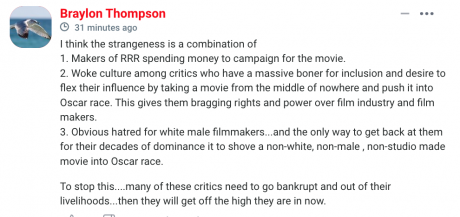
A few days ago I reminded that the RRR cult is 85% about white critics doing the virtue-signalling dance. Earlier today World of Reel commenter Braylon Thompson said more or less the same thing:


 Jeff Wells
 A few days ago I reminded that the RRR cult is 85% about white critics doing the virtue-signalling dance. Earlier today World of Reel commenter Braylon Thompson said more or less the same thing:
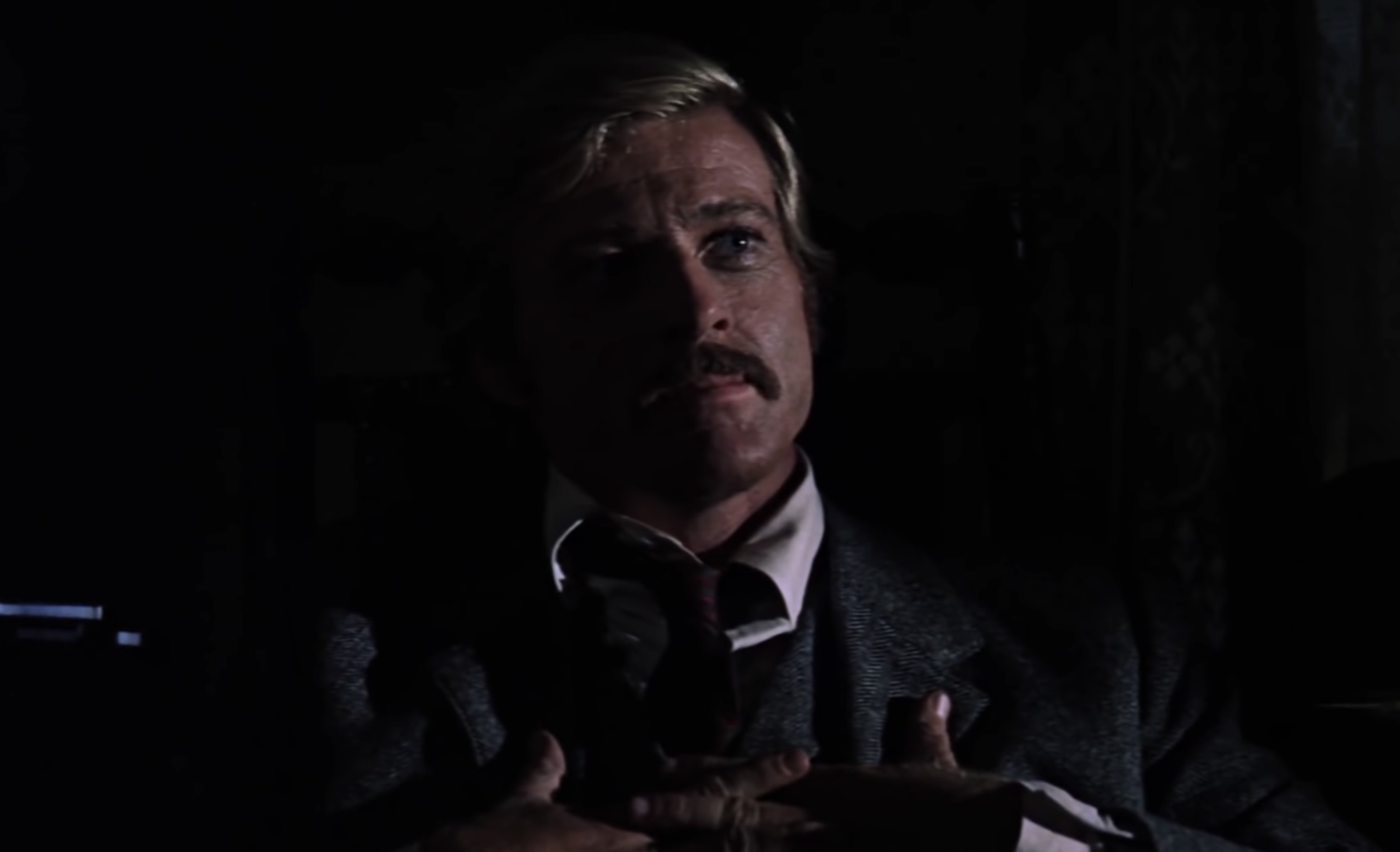
Condemn and cancel the following persons for creating this obviously deranged and predatory serving of erotic titillation — a scene that more or less gives a pass to all would-be rapists and gun fetishists: Robert Redford (alive), director George Roy Hill (passed in 2002), screenwriter William Goldman (died in 2018), actress Katharine Ross (because she went along with it!). Who else?
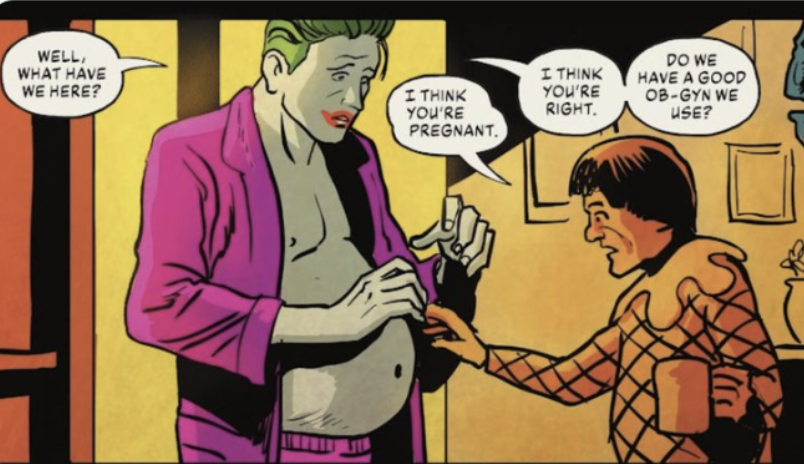
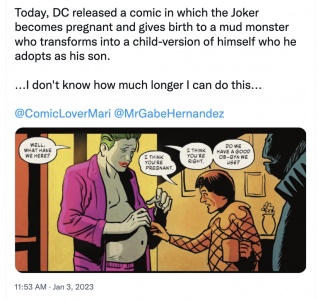
From D.C. maven Jester Bell (aka Theresa Campagna):
YouTube commenter #1 (Masked Panther): “The joker is supposed to be a respected dangerous lunatic. Not some pregnant man. So sad the direction D.C. is going / allowing.”
YouTube commenter #2 (Harley Quinn): “If this doesn’t show how dead DC is then [I don’t know] what will.”
All hail Normal World creator Dave Landau. Which comedy satire TV show wouldn’t dare present a sketch like this? These are the soft-spoken monsters who have brought terror into all of our lives. The Millennial fatass I tangled with a few nights ago in Milford was cut from this exact same cloth.
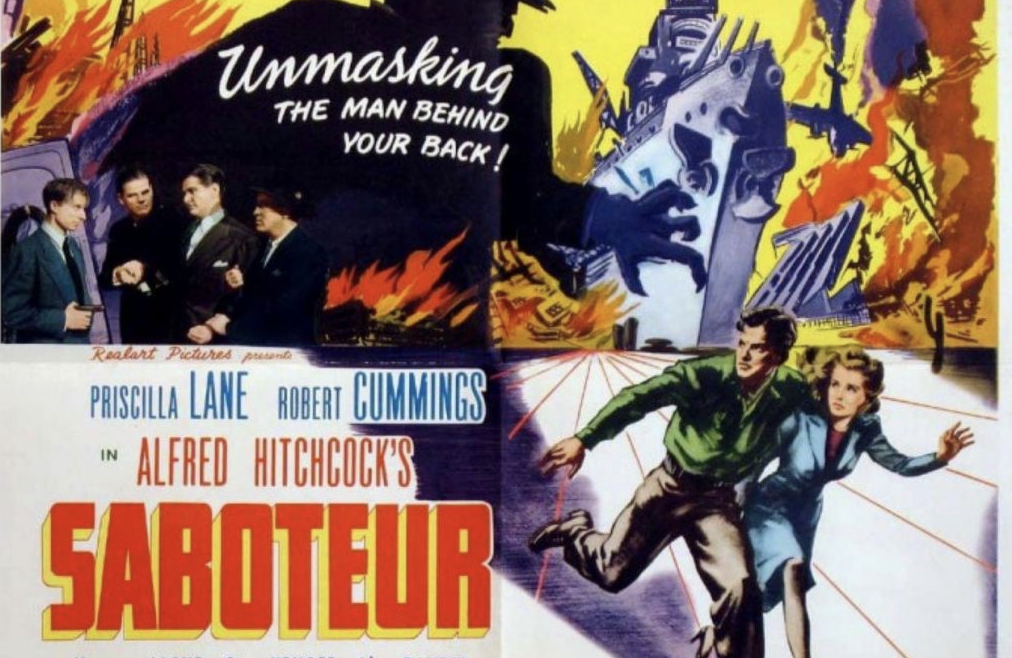
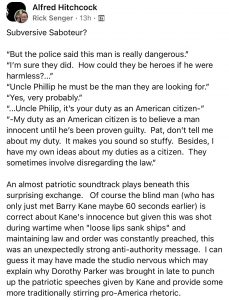
A forerunner of North by Northwest, Alfred Hitchcock‘s Saboteur (’42) is about an innocent man (Robert Cummings‘ “Barry Kane”) suspected of arson, espionage and manslaughter, and is on the run from the bulls as he darts from one location to another.
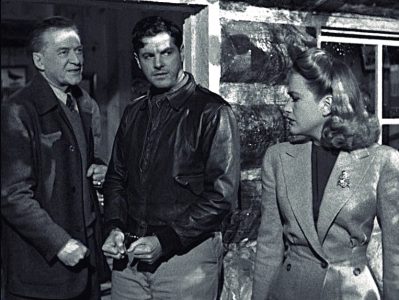
Early on the handcuffed Kane shows up at a mountain cabin occupied by “Phillip Martin” (Vaughan Glaser), a blind but kindly and obviously wise and well educated older fellow. (Phillip’s distant European cousin was the blind, bearded hermit who showed kindness to Boris Karloff‘s Frankenstein monster in The Bride of Frankenstein.)
Phillip’s niece Pat Martin (Priscilla Lane) shows up, spots Kane’s cuffs and concludes he’s the alleged arsonist the cops are after. She takes Phillip aside and warns him about the “dangerous” Kane.
Phillip patiently explains to Pat that his blindness has left him with heightened perceptions, and not just in terms of touch, hearing and a sensitivity to aromas. He knew Kane was wearing handcuffs from the get-go, he tells her, because he could hear their slight clinking, but more importantly he can sense when a person is innocent or good of heart, and he knows without question that Kane is no saboteur.
In fact, several people whom Barry encounters during the first half of Saboteur not only believe in his innocence but help him to elude capture — the mother of a deceased burn victim, a cheerful truck driver, a troupe of circus performers.
Saboteur was shot between December 1941 and February 1942. Roughly two months after finishing principal photography, the big premiere happened in Washington, D.C. on 4.22.42. It opened in New York City’s Radio City Music Hall on 5.8.42. Here’s Bosley Crowther’s review.
It was announced a few hours ago that Sara Dosa‘s Fire of Love (Neon/National Geographic) has won the North Carolina Film Critics Association award for 2022’s Best Documentary. The same award was handed out last month by the Chicago Film Critics Association. I respect Dosa’s film as far as it went, but it’s not as good as all that. Here’s my 7.13.22 review:
“Fire of Love tells the story of devoted (one could say obsessive) volcanologists Katia and Maurice Krafft, who died in a volcanic explosion atop Japan’s Mount Unzen on 6.3.91 — 31 years ago.
“The married couple — French natives, deep soulmates — had been studying, cataloguing, filming and photo-snapping volcanic eruptions since the early ’70s, and were among the most fearless and exacting in their field.
“Dosa’s 93-minute doc is mostly composed of volcano footage (color, 16mm) that the Kraffts shot over the years, and which apparently was only made accessible to Dosa and her producers somewhat recently. The film also contains a fair amount of footage of the Kraffts themselves.
“The dynamic visuals (miles-high clouds of gray ash, thunderous rumbling, pools of intense red-gold lava bubbling over and streaming down mountainsides) are exciting or at least fascinating until they become familiar, at which point you’re left with ‘okay, here are some more lava flows’ and ‘wow, more shots of nuclear blast ash clouds.’
“The problem, for me, is Dosa’s decision to weave it all together with Miranda July‘s whispering, barely enunciated narration. I was on the verge of abandoning the doc because of this aspect. July sounds like a parent quietly reading a Babar the Elephant story to a small child at bedtime.
“The idea, presumably, is to pass along a certain romantic sensibility as well as (I gathered) soft-spoken Katia’s view of volcano worship, marriage, the twists and turns of nature…the whole magilla. But if ever a narration track rubbed me the wrong way, it was this one.
.
“The honest truth is that I found Fire of Love a tad boring at first. If the Kraffts hadn’t been killed there would be no film, just as Werner Herzog‘s Grizzly Man wouldn’t have been a film if Timothy Treadwell hadn’t been eaten by a bear.
WordPress tells me that I’ve written and posted 49,645 items and stories over the last 18 and 1/2 years. 18.5 x 12 = 222 months = 223 posts per month or 7.5 posts per day. This is why I revisit and repost from time to time. Figure half of what I’ve written is better than the other half, so just under 25,000 are possibly worth a revisit or reconsideration. Narrow these down to the real creme de la creme (roughly 20%) and you’re left with 5000 gold-standard riffs, reviews and articles. Well-written articles sometimes spark ideas for fresh takes. Part of the process.
Best Picture noms won’t amount to anything when it comes to Women Talking and The Woman King, of course (Anne Thompson pretty much admits this in the piece), but being nominated in and of itself will serve as nice bellringers and keepsakes.

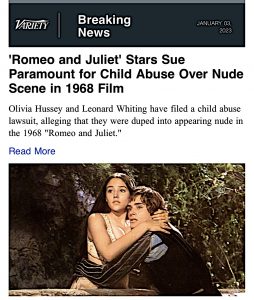
I’m guessing that Romeo and Juliet costars Olivia Hussey, 71, and Leonard Whiting, 72, are being asked right now by their business managers and agents to think about submitting to psychiatric evaluation. Just a guess.
Identifying the top ten films of 2023 is fairly easy. I’ve assigned a certain random order, but the directors (in the same order) are Ridley Scott, Alexander Payne, Martin Scorsese, Bradley Cooper, Chris McQuarrie, Chris “infuriating sound mix” Nolan, Luca Guadagnino, David Fincher, Ari Aster and Roman Polanski.
The most likely Best Picture winners (Oscar to be handed out in March of ’24) are obviously Napoleon, Killers of the Flower Moon, The Holdovers, Oppenheimer and Maestro.
What am I missing at far as the likely creme de la creme are concerned? I’ve listed 51 films here — there are several I’ve ignored. A little more comprehensiion is required.
Utterly Safe Bets (10)
Napoleon (Apple, undated)
The Holdovers (Focus, undated)
Killers of the Flower Moon (Apple/Paramount)
Maestro (Netflix, undatedf)
Mission: Impossible – Dead Reckoning Part One (July 14)
Oppenheimer (July 21)
Challengers (August 11)
The Killer (Fincher/Netflix, undated)
Beau Is Afraid (A24)
The Palace (Roman Polanski)
Respectable Sounding (6)
Megalopolis (if it opens in ’23…who knows?)
Steve McQueen’s Blitz
Asteroid City (Wes Anderson)
Poor Things
How Do You Live?
May / December (Todd Haynes)
Decent Potential (3)
Indiana Jones and the Dial of Destiny (June 30)
Barbie (July 21)
The Zone of Interest
Possibles but Cuidado (8)
Magic Mike’s Last Dance (Feb. 10)
Ant-Man and the Wasp: Quantumania (Feb. 17)
Chevalier (Apr. 7)
Renfield (Apr. 14)
No Hard Feelings (June 23)
The Flash (June 23)
Next Goal Wins (Sept. 22)
Dune: Part Two (Nov. 3)
“Four aging pallie-wallies (played by Lily Tomlin, Jane Fonda, Rita Moreno and Sally Field) travel to Houston to watch their hero Tom Brady and the New England Patriots play in the 2017 Super Bowl.”
It’s important to understand that 80 for Brady (Paramount, 2.3) was produced by Brady, and that he also costars in it.
Pic was shot by the great (and in this instance slumming) John Toll (Almost Famous, Tropic Thunder, Braveheart, The Thin Red Line, The Last Samurai, Legends of the Fall).
There was only one acceptable reaction to the traumatic, life-threatening injury suffered last night by Damar Hamlin. Everything had to stop in terms of the game. Football and “the game must go on” stopped mattering. Anyone who so much as mentioned the concurrent question of whether the game would be replayed or forgotten about was all but beaten senseless by Twitter gorillas. The biggest such episode was triggered by a single tweet by veteran sportscaster Skip Bayless). It was unanimously suggested that Bayless needed to be cancelled, stomped upon, drawn and quartered, tarred and feathered, etc.
Hamlin is reportedly okay or at least stable, but when things appeared to be touch and go, his Buffalo Bill teammates were visibly distraught. I saw some weeping. Except — hello? — this mishap was a result of the normal playing of a football game. Football is intended to be the most violent professional sport of all, a game that routinely calls for brutal tackling, bruising, body-slamming. Players occasionally get hurt or even knocked unconscious, and nobody bats an eye when they do.
Hamlin suffered a cardiac arrest (it was a freak occurence) and was a heartbeat or two away from death, and was saved on the field by fast-acting medics. Thank God he survived, but the expectation of violence and the threat of serious injury…well, isn’t that partly why people pay to see football games?
Remember that climactic scene in Jerry Maguire when Cuba Gooding, Jr.‘s Rod Tidwell was knocked unconscious during a Monday Night Football game between the Cardinals and the Dallas Cowboys? Everyone was extremely anxious and concerned for Rod, and thank God he came to. But what if he hadn’t recovered and had slipped into some kind of coma? Would the game have been forgotten about out of respect for poor Rod and his wife and kids? Put it this way: If you were the screenwriter and Rod slipping into a coma was an irreversible plot point, would you have cancelled the game out of compassion for the poor guy? I honestly don’t think that would or could have happened in the world of 1996 and Jerry Maguire.
Hamlin’s physical survival is obviously the most important issue, but at the same time no one is allowed to even mention other aspects of this situation…no other considerations. Last night’s Twitter mood was unmistakable. If you stepped out of line and talked about anything else besides the paramount issue of Hamlin’s health, you were vermin and deserved to die.