The term “blockbuster” means “important, heavy-hitting, big-studio powerhouse film that everyone has to see theatrically…an expensive, eye-filling, big-swing spectacle that not only earns a ton of money but feels like a cultural touchstone in hindsight.”
The term does not, however, necessarily mean “rooted in otherworldly CG fantasy.”
Steven Spielberg’s somewhat realistic, 51-year-old Jaws, for example, was a blockbuster. Jim Cameron’s Avatar (‘09) and Chris Nolan’s Oppenheimer, for sure. Was David Fincher’s The Social Network (2010) a blockbuster? In a certain cultural sense, yeah. Mike Todd’s Around The World in 80 Days (‘56) was a blockbuster; ditto Cecil B. DeMille’s The Ten Commandments (‘56). It is HE’s humble opinion that the richest and most resonant big-scale blockbuster of all time was David Lean’s Lawrence of Arabia (‘62).
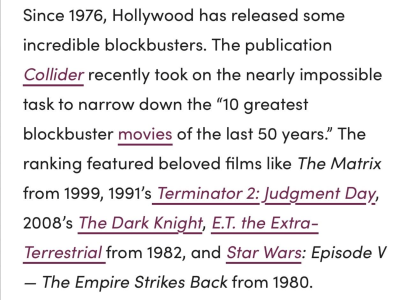
Try telling this to Collider ‘s Diego Pineda Pacheco, who believes that within the realm of the last 50 years, only teen-friendly CG fantasies qualify.
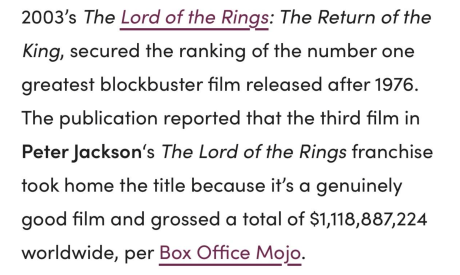
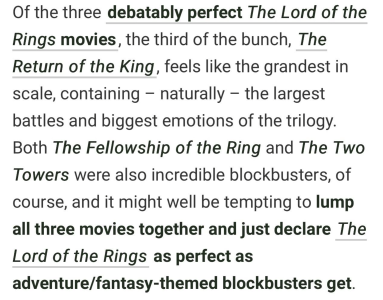
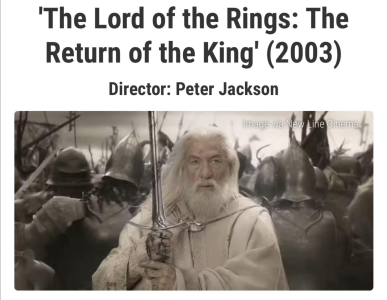
Worse, Pacheco believes that Peter Jackson’s The Lord of the Rings: The Return of the King (2003) sits at the top — the greatest blockbuster flick of the last half-century. To which HE responds by going “eccch!” and spitting on the sidewalk. Jackson was an over-rated flash in the pan, and is pretty much sidelined now; if you ask me the Rings trilogy was an endurance test before and it certainly is now. I’ll never sit through those films ever again.
If the greatest blockbuster of the last 50 years has to be a big-budget, geek-franchise fantasy, The Empire Strikes Back easily rules the roost.