Put It To Bed

From Zero Dark Thirty collaborators Kathryn Bigelow and Mark Boal: “This was a 10-year intelligence operation brought to the screen in a two-and-a-half-hour film. We depicted a variety of controversial practices and intelligence methods” — like buying a Lamborgini in the dead of night — “that were used in the name of finding bin Laden. The film shows that no single method was necessarily responsible for solving the manhunt, nor can any single scene taken in isolation fairly capture the totality of efforts the film dramatizes.

“One thing is clear: the single greatest factor in finding the world’s most dangerous man was the hard work and dedication of the intelligence professionals who spent years working on this global effort. We encourage people to see the film before characterizing it.”

Tarantino Mitchell

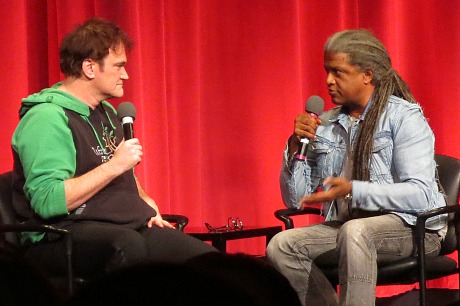
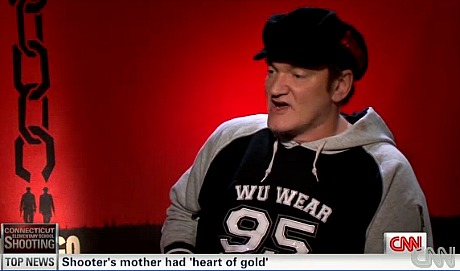
I went to Wednesday night’s Academy screening of Quentin Tarantino‘s Django Unchained, and stayed for the q & a between Tarantino (who really, really needs to hit the treadmill) and Elvis Mitchell. His movies are one thing; his interview patter another. Tarantino will always be a great conversationalist, story-teller, educator, what-have-you.

They Quoted Poland?

I actually don’t care who they quote. As long as Zero Dark Thirty gets its Best Picture due & as long as Lincoln doesn’t win. I don’t get the attacks about the film depicting torture. Obviously Al Qeada allies were tortured during the Bush admistration so what’s the problem? How do Diane Feinstein, Carl Levin and John McCain know for a fact that no good information resulted from torture? They believe this because they’ve been told this, but how do they really know?

Where There’s Hope…

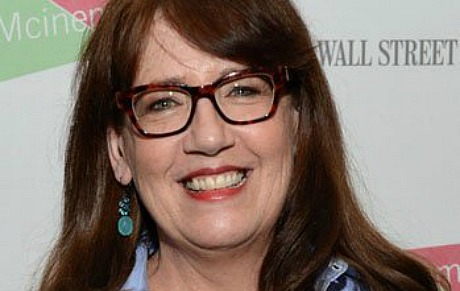
Hollywood Reporter columnist Scott Feinberg is reporting that because Magnolia Pictures wouldn’t pay $13K for screeners to support the Best Supporting Actress campaign of Compliance‘s Ann Dowd, Dowd and her husband have coughed up the cash themselves. Senior Magnolia marketing guy Matt Cowal says the company has already taken a bath on the release of the film (Compliance only made $319,285 before being yanked) and “so we just are trying to be as responsible as we can.”


Compliance cstar Ann Dowd.

Dowd, who got paid a pathetic $1600 for acting in Compliance over a 16-day period, is basically doing a Melissa Leo. If there’s a SAG God she’ll get more quality work out of the acclaim for her Compliance performance, but this sucks all the same. Save Ann Dowd’s bank balance! She won Best Supporting Actress from the National Board of Review, and has been nominated in this category by the Broadcast Film Critics Association and the Independent Spirit Awards.

The reason Compliance didn’t make more money is because too many people refused to believe that the fast-food employees (principally Dowd’s manager character) in the film were too gullible in not challenging the pervy guy on the phone who claimed he was a cop…even though this scam happened several times in the mid-to-late ’90s and early aughts, and it worked particularly well in the Kentucky case that the film is based upon.

Carey Gatsby

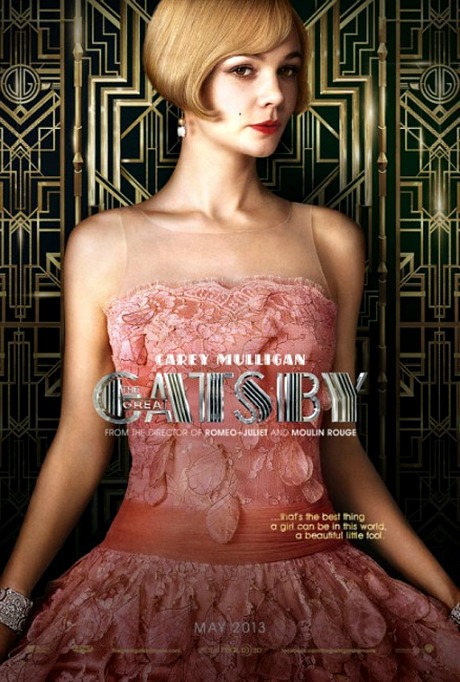
Baz Luhrman‘s The Great Gatsby was pulled from December 2012 release because Luhrman wanted to further refine it, or something along those lines. I immediately presumed this was code for “it wasn’t quite working,” but I loved the Gatsby footage I saw at Cinemacon last April so I still have hope and faith, despite the nightmare of Australia.

McQuarrie’s Reach-Out

An hour ago Jack Reacher director-writer Chris McQuarrie called from a car heading out to LaGuardia or Newark for a flight to tonight’s Pittsburgh premiere. We went over the basics, which can be boiled down to the fact that Jack Reacher isn’t a game-changer as much as a game-restorer — an urban thriller in a ’90s or ’80s or ’70s vein of Walter Hill, which is to say intelligent, detailed, restrained and nailed down. Straight, lean and plain. No sick-whack digital jizz-foam. Here’s the mp3.


(l. to r.) Jack Reacher costars Tom Cruise, Rosamund Pike, director-writer Chris McQuarrie.

Sundance Cats

There’s a reason, of course, why winners of the Sundance Audience Awards always seem a bit more vital and exciting than the awards handed out by Sundance jurors. Because Sundance jurors are always the same cool enlightened industry people who would never stray outside their tasteful, sensitive perimeter. It’s a club, the Sundance juror fraternity-sorority…a clique. And becoming a member is no duckwalk. You have to prove that you’re one of them and that you get their sensibility and their lifestyle, and that means observing certain rules and conditions.

It’s the same with joining any elite golf course or elite tennis club or elite Hollywood poker game.

The just-announced Sundance jurors are total club members. They’re all hip professionals with excellent credentials and elegant educations and an enviable dress sense. If I were doing the inviting I’d pick these guys also. I’m not saying they’re not cool. I’m just saying there’s not a madman or wildcat or loose cannon among them. They all “talk the talk and walk the walk,” so to speak. Nothing wrong with that, but it tends to result in the same kind of films winning Sundance juror awards.

The 2013 U.S. Dramatic Jury is composed of Ed Burns (Fitzgerald Family Christmas), Wesley Morris (film critic for Boston Globe, Grantland), Rodrigo Prieto (cinematographer of Brokeback Mountain, 8 Mile, 25th Hour, 21 Grams), Tom Rothman (former 20th Century Fox chairman), Clare Stewart (British Film Institute).

The 2013 Documentary Jurors are Liz Garbus (Ghosts of Abu Ghraib), Davis Guggenheim (Waiting or Superman), Gary Hustwit (Urbanized), Brett Morgen (Crossfire Hurricane, The Kid Stays in the Picture) and Diane Weyermann (Participant).

And it goes on like that. It’s all fine, all groovy. But the Audience Awards, no offense, are where it’s at.

“Where Have You Been?”

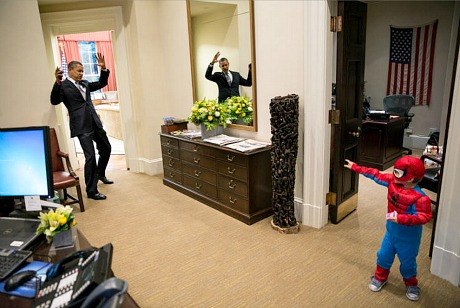
I was about to post this photo…well, I am posting it, one of my favorite Obama captures in a long time. (Especially because of the mirror reflection.) Then along came this morning’s “where have you been?” moment [after the jump] in which Obama basically says that he hasn’t made gun control a priority because he didn’t want to weaken or jeopardize his political alliances on other major initiatives.

Read more

Tarantino Shakespeare

“This has gone back all the way down to Shakespeare’s days. When there’s violence in the street, the cry becomes ‘blame the playmaker.’ And you know, I actually think that’s a very facile argument to pin on something that’s a real-life tragedy.” — Quentin Tarantino on the cultural interplay between (for one example) the casual, cine-stylish, mock-ironic violence in Django Unchained and the real-life slaughters that are happening daily in this country.

The fact that Shakespeare resolved his dramatic conflicts with third-act violence is hardly analogous to the way Tarantino soaks his characters (and, in Django, the walls of his sets) in blood and brain matter. Tarantino’s blood baths are done with a wink, “referenced,” in no way earnest. They’re a jape, and yet underneath that jape is a message that says two things, in my view. One, bullets slamming into a long line of racist bad guys is at the very least amusement for jaded cineastes, and if I, Quentin Tarantino, could think of some way to make blood, entrails and brain matter more amusing, I would. And two, the slaughter of a long line of Southern racists is justified payback for the sins of slavery, and so I can go to town all I want because I’m wrapped in an anti-slavery, anti-racist cloak.