Sleepover Time

I saw and quite liked David Robert Mitchell‘s Myth of the American Sleepover (Sundance Selects 7.22) at the 2010 Cannes Film Festival — 14 months ago. And now it’s finally opening a week and a half from now. And it deserves a looksee because as small-town teenage community movies go, Mitchell’s film isn’t far from the realm of George Lucas‘s American Graffitti, and that ain’t hay.

I said in Cannes that Myth “goes against the grain of typical teen-relationship flicks by being much smarter, better acted, more subtle and not reliant on animal-level humor (or animal-level sensibilities in the seats).” I said that “nothing feels written or faked…each and every scene has a natural ease and honesty.”

Also: “It goes without saying that a teen movie of this calibre is doomed to fail because it’s not coarse or stupid enough….kidding! Well, half-kidding. But what is it about under-25 Eloi not only seeming to prefer movies packed with tedious cliches and recoiling when something fresh and true and semi-original (like Myth) comes along?

My only complaint was as follows: “The characters in Myth all seem so passive, so low-energy whatever. If I was under fire and taking cover in Afghanistan, I’m wondering which of these kids, if they were also there, would have the cojones to shoot back like Val Kilmer did in Heat? They’re all about whim and instinct and going with dreamy feelings.

“That’s the realm and the psychology of being 18, of course, but what is life at any age without tests of character in hairy (or at least semi-hairy) situations? You know, like with Richard Dreyfuss showed in American Graffitti when he hung out with the Pharoahs?
Underline This

“If you’re talking social mobility, yes…that has always been the American Dream. The ability of one generation to do better than the generation that spawned them. That was always the American Dream. Well, we’re tenth in the American Dream [ratings] right now. We’re tenth in social mobility, compared to other countries around the world. Which is like Sweden coming in tenth in Swedish meatballs or something. It’s just a shame.” — Blll Maher talking to CNN’s Piers Morgan, video posted July 11th.

This clip about Bachmann vs. Palin isn’t too bad either.

Dolby Immersion

I’ve finally figured out what the big deal is with Dolby Surround 7.1, which is not new and has actually been installed in some 2100 theatres. But until tonight I didn’t fully understand what makes this sound system a distinctive development. The ins and outs were discussed this evening by several sound specialists at a Dolby headquarters seminar in San Francisco, but I didn’t really get it until I spoke to Dolby marketing manager Stuart Bowling after it ended.


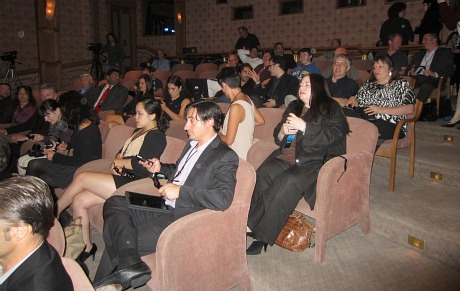
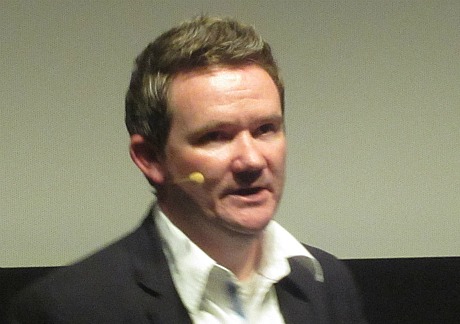
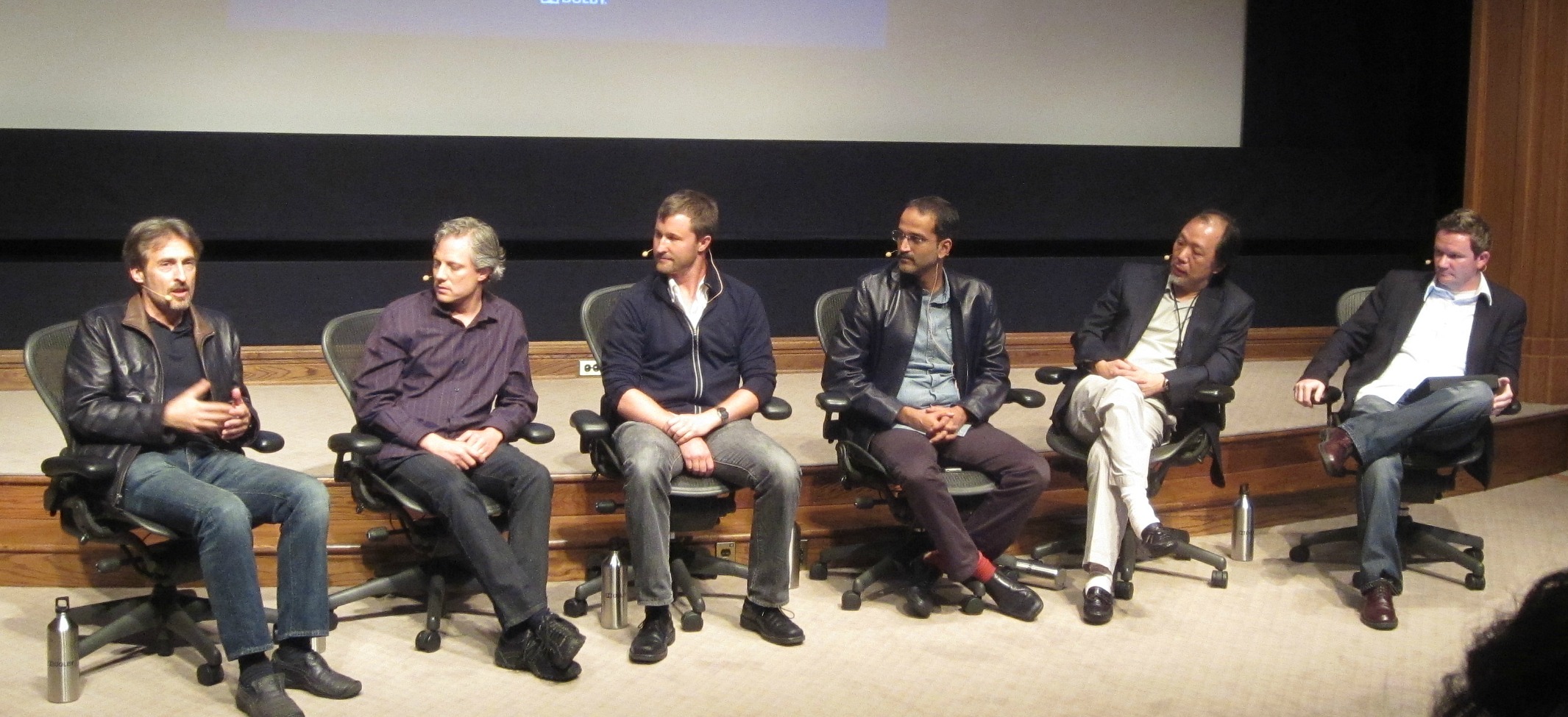
At this evening’s Dolby Labs seminar on Dolby 7.1 Surround: (l. to r.) Eric Brevig, Skywalker Sound’s Michael Semanick, Transformers 3/Tree of Life sound designer Eric Aadahl, director-producer Rohan Sippy, sound designer Kinson Tsang, and (far right) Stuart Bowling, Dolby Laboratories technical marketing manager.

So here’s the shot in layman’s terms. Dolby Surround 7.1 basically delivers super-clear, highly immersive sound from four discreet sound “zones” — front, left, right and rear. But that’s what Dolby 5.1 delivered, right? No, there’s a difference. To really hear all four channels with Dolby 5.1 you had to sit in a theatre’s “sweet spot,” which is more or less dead center. Dolby 7.1 delivers loud and distinct super-quad sound in almost any section in the theatre. You don’t need to be in a sweet spot to really hear it. So there you go. That’s the thing.**

Early this evening Dolby management and publicists hosted an elegant dinner on the third floor of company’s headquarters on Potrero Street. I arrived a bit late due to my Burbank-to SFO plane being delayed by fog. The seminar, an agreeably informative thing, lasted for a couple of hours. The panelists were Eric Brevig, Skywalker Sound’s Michael Semanick, Transformers 3/Tree of Life sound designer Eric Aadahl, director-producer Rohan Sippy, sound designer Kinson Tsang, and moderator Stuart Bowling, Dolby Laboratories’ technical marketing honcho.

I asked a question about how everyone at sound seminars always talks about creating big, loud soundtracks for big tentpole blockbusters while I prefer subtle, more human-level sounds, and that the world of aural cinema (including the realm of Dolby Surround 7.1) is far too vast and delicate and all-encompassing for seminars like this one to focus only on the sounds of explosions, blam-blams, face-punchings, rib-punchings, gunfire, helicopter blades, and blah, blah.

There’s a breakfast tomorrow morning from 8 am to 9 am, and then Ioan Allen‘s “The Egg Show” (i.e., some kind of instructive lecture about the history of sound design) and then a lunch and bunch of other seminars and screenings of Legend of the Fist: The Return of Chen Zhen and Dum Maaro Dum and then a cocktail party from 8 pm to 10pm and so on. A very full day.

** Dolby Surround 7.1 is also savorable through Bluray and other non-theatrical modes with the same four-channel discretion.


Dolby technical marketing manager Stuart Bowling, a.k.a. “Answer Man.”

Pacino Spector

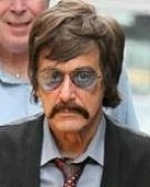
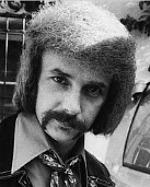
A day or so ago a New York Post photographer captured Al Pacino in one of his Phil Spector guises in the currently-rolling HBO biopic of the now-imprisoned music producer, which David Mamet is directing. Spector wore a big moustache and long, side-combed frizzy hair in the ’70s or early ’80s, so that seems to be the inspiration. Except Al’s hair isn’t frizzy. Get it right, fellas. It’s not hard.


(l.) Pacino as Spector; (center) Spector with moustache and frizzy hair in the ’70s; (r.) courtroom Spector.

More Moneyball Praise

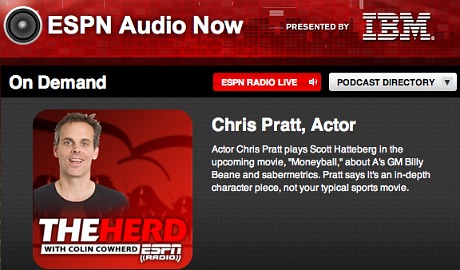
ESPN’s Colin Cowherd recently spoke to Chris Pratt about Bennett Miller’s Moneyball (Columbia, 9.23), in which Pratt costars. Pratt has seen the film and not surprisingly speaks highly of it. But what he says lines up with a review/description that I posted last March.

“If you liked the book you’re going to love the movie,” Pratt says. “If you love baseball you’re going to love the movie. It’s different than what you [might] expect from a baseball movie. It’s a great movie [and] really authentic to the sport. But it’s not a ‘baseball movie.’ It’s not Major League or Angels in the Outfield. There are funny moments but it’s not a comedy. It’s an in-depth character piece.”

Thanks to Ty Landis for the heads-up.

Due Respect

The characters, dialogue, pacing, framing and cutting are all standard-issue Spielberg-Jackson stuff, but the digitally reconstituted water is, I feel, exceptional. Especially the crashing waves. H20 is very hard to get right, or so I’m told.

Zoo

I’m sorry but the atmosphere inside the once-exclusive and high-toned Beverly Wilshire hotel, which I visited last weekend, is like that of a shopping mall in Riyadh. Like much of Beverly Hills itself, it’s been overrun by nouveau-riche Middle Eastern families. They’re staying there for the social-statement and luxury factors, of course, but their presence, no offense, seems to de-luxurize the place.

Groups of loudly chattering women in black hijabs, rich kids running around in loud T-shirts, overdressed Eurotrash guys in their 30s with cream-colored suits with bling and tall blonde trophy girlfriends, Baby Huey-sized Arab tweens and teens hanging out in basketball shorts and sneakers, sleazy-sounding disco music emanating from the first-floor bar, etc.

It’s quite a different establishment than it was in the ’90s, let alone the ’70s or ’80s. I used to walk into the Beverly Wilshire lobby and say to myself, “Ah, yes…a touch of class. A hushed sense of refinement. Only the best people.” No longer.

Cutting Out

My flight to San Francisco and the Dolby Surround 7.1 hoo-hah event leaves from Burbank at 1:45 pm, so that’s it for now. For the first (and probably only) time in my life I’ll be staying at the Mark Hopkins hotel on Nob Hill, which was used as a setting in Bullitt and Kiss Them For Me and (I think) two or three other films. Question to publicist: “Does the Hopkins have a shuttle from SFO to the city? Or should I take a BART train?” Publicist: “Take a cab.”